

Experts believe that the risk of a diphtheria outbreak is due to existing vaccination gaps.
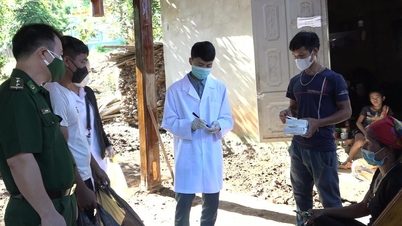
In Pha Khao village, Pha Danh commune, Ky Son district, Nghe An province, one death due to diphtheria has been recorded; this is the first case in the locality in many years.
 |
| Experts believe that the risk of a diphtheria outbreak is due to existing vaccination gaps. |
Additionally, in Hiep Hoa district, Bac Giang province, one case of the disease was recorded due to close contact with the deceased case in Nghe An.
Given the recent community transmission of diphtheria after a period without outbreaks, people are worried about the risk of diphtheria spreading, a disease that is difficult to detect and can be fatal.
Earlier, at the end of 2023, outbreaks of diphtheria reappeared in the provinces of Ha Giang, Dien Bien , and Thai Nguyen, with dozens of cases.
Explaining the recent sporadic diphtheria outbreaks in Vietnam after a long period of infrequent occurrences, experts suggest that the diphtheria pathogen still exists in the community, but this is due to the high vaccination rates in previous years, including in mountainous areas.
However, in recent years, especially during the Covid-19 pandemic, the shortage of vaccines led to a decrease in vaccination rates, and people were unable to get vaccinated during the outbreak.
In particular, recently, many families have been neglecting to vaccinate their children, and some even have a tendency to not vaccinate their children at all; therefore, the spread of pathogens can easily lead to outbreaks. As a result, outbreaks have occurred recently, scattered across various localities.
Regarding the recent occurrence of diphtheria outbreaks in mountainous areas, it is suggested that these areas often have low vaccination rates, especially in remote and inaccessible regions.
Even delivering vaccines via cold chain storage is difficult; meanwhile, people working in fields and mountains have limited access to healthcare, resulting in inadequate vaccination coverage in these areas, making disease outbreaks more likely.
Diphtheria is preventable with a vaccine, and protection against infection can be achieved through individual isolation and increased vaccination rates.
Given the current situation of sporadic diphtheria outbreaks, localities need to increase vaccination rates and support the preventive health system in areas where cases have been reported to fill vaccination gaps. This is because even if vaccination rates were high previously, the effectiveness of the immune barrier may decrease over time.
The main thing is that if children are well-vaccinated and have sufficient immunity, the disease is less likely to re-emerge. Regarding whether people should get vaccinated against diphtheria when outbreaks occur, experts suggest that children can be vaccinated in areas where outbreaks have occurred, or in families where there are confirmed cases.
Children should receive all necessary vaccinations (Diphtheria-Pertussis-Tetanus, DPT) according to the immunization program. Adults should get a diphtheria booster shot every 10 years to strengthen their immunity.
In Vietnam, thanks to the Diphtheria-Pertussis-Tetanus (DPT) vaccination strategy in the Expanded Immunization Program since 1981, the incidence of diphtheria decreased sharply in the 2010s.
The diphtheria vaccine is recommended for all young children, with three doses at 2, 3, and 4 months of age, and a booster dose at 18 months. Children aged 4-6 years may receive a booster dose of the 4-in-1 vaccine against diphtheria, pertussis, tetanus, and polio.
For young children, adults, and women before or during pregnancy (between 27 and 35 weeks of gestation), a booster dose of the diphtheria, pertussis, and tetanus vaccine may be given, followed by a booster every 10 years to maintain long-term antibody protection against diphtheria bacteria.
Children, as well as adults, who receive all the recommended vaccinations according to the recommended schedule can protect themselves from diphtheria.
This means that people who have been vaccinated against diphtheria are not at risk of contracting the disease. Adults only need one dose, and a booster shot is recommended if possible to boost antibody immunity.
Diphtheria belongs to group B (dangerous infectious diseases with the potential for rapid transmission and death) in the Law on Prevention and Control of Infectious Diseases.
Diphtheria is an acute, epidemic infectious disease, primarily transmitted through the respiratory tract, caused by the diphtheria bacillus (Corynebacterium diphtheriae).
The disease is primarily transmitted through the respiratory tract via contact with droplets from an infected person when coughing or sneezing. In addition, it can be transmitted indirectly through contact with objects contaminated with nasal and throat secretions from an infected person. Infection can also occur through contact with skin lesions caused by diphtheria.
The disease can occur at any age, but 70% of cases are in children under 15 who have not been vaccinated. Even with treatment, the mortality rate is as high as 5-10%.
Diphtheria can cause many dangerous complications, known as malignant diphtheria, if not treated promptly. The most common complications are cardiac complications (usually myocarditis and conduction disorders in the heart) and neurological complications, causing paralysis. In addition, complications affecting the kidneys, liver, adrenal glands, etc., can also occur.
The most common form of diphtheria is respiratory tract infection (nose, throat, larynx, trachea), with 70% being pharyngeal diphtheria. Other sites of infection include cutaneous diphtheria and ocular diphtheria.
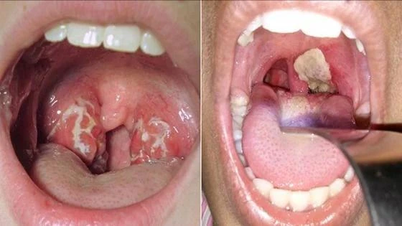
In pharyngeal diphtheria, after an incubation period of 2-5 days, patients begin to experience symptoms such as a mild fever of 37.5-38 degrees Celsius, sore throat, discomfort, and a runny nose that may contain blood. Examination of the throat may reveal slightly reddened throat and tonsils with faint white spots; small, mobile, and painless cervical lymph nodes may be palpable.
After about 3 days, the disease enters the full-blown stage with the most typical symptoms: fever rising to 38-38.5 degrees Celsius, painful swallowing, pale skin, extreme fatigue, runny nose with white or purulent nasal discharge; examination of the throat reveals widespread pseudomembranes on one or both tonsils, possibly covering the uvula and soft palate; swollen and painful lymph nodes in the neck, with bull neck being a sign of a severe case.
Widespread pseudomembranes can cause wheezing, airway obstruction, and respiratory failure, even death if not treated promptly. If diagnosed and treated early, the pseudomembrane resolves quickly (1-3 days), the patient's fever subsides, and they gradually recover after 2-3 weeks.
Diphtheria can cause many dangerous complications, known as malignant diphtheria, if not treated promptly. The most common complications are cardiac complications (usually myocarditis and conduction disorders in the heart) and neurological complications (causing paralysis). In addition, complications affecting the kidneys, liver, and adrenal glands may also occur.
Diphtheria needs to be detected and treated early to avoid complications and death. The primary treatment for diphtheria is diphtheria antitoxin serum (SAD), which should be administered as soon as possible to neutralize the diphtheria toxin circulating in the blood (most effective within the first 48 hours).
In addition, antibiotics (usually penicillin and erythromycin) are also used to inhibit the growth and toxin production of bacteria and reduce the spread of infection.
Other combination therapies are also used, such as corticosteroids, airway management, cardiovascular management, and nutritional support.
All patients suspected of having diphtheria must be hospitalized for isolation, monitoring, diagnosis, and treatment. The patient's home, room equipment, belongings, and clothing must be disinfected and sterilized. Proper handwashing with soap or disinfectant solution should be practiced.
To prevent the disease, in addition to vaccination, people need to ensure hygiene and safety in livestock farming and slaughtering to prevent transmission to humans; eat cooked food and drink boiled water, use poultry from a reliable source, do not eat sick or dead poultry, and wash hands with soap after slaughtering and processing poultry...
In areas where cases have been reported, doctors advise that all patients suspected of having diphtheria should be hospitalized for isolation, monitoring, diagnosis, and treatment.
The patient's home, room equipment, belongings, and clothing must be disinfected and sterilized. Proper handwashing with soap or disinfectant solution should be practiced. Individuals who have been in contact with diphtheria patients should receive prophylactic antibiotics.



![[Photo] General Secretary and President visit the China-ASEAN AI Application Cooperation Center](https://vphoto.vietnam.vn/thumb/1200x675/vietnam/resource/IMAGE/2026/04/17/1776404277677_vna-potal-tong-bi-thu-chu-tich-nuoc-tham-trung-tam-hop-tac-ung-dung-ai-trung-quoc-asean-8706616-2286-jpg.webp)


























![[Photo] National Assembly Chairman Tran Thanh Man attends the policy seminar to promote Vietnam-Türkiye cooperation.](https://vphoto.vietnam.vn/thumb/1200x675/vietnam/resource/IMAGE/2026/04/16/1776351415367_vna-potal-chu-tich-quoc-hoi-tran-thanh-man-du-toa-dam-chinh-sach-thuc-day-hop-tac-viet-nam-tho-nhi-ky-8705791-jpg.webp)







































































Comment (0)