

Vaccines: A "steel shield" protecting people's health – Part 1: Vaccine shortages trigger a disease outbreak.
Diphtheria, measles, whooping cough, chickenpox, Japanese encephalitis… swept through, engulfing several localities in a vortex of disease, causing significant consequences for people's health and lives.
According to experts, only by focusing on investing human resources, material resources, and funding for research, production, and vaccination, and with the public having a correct understanding of vaccine effectiveness, can we create a "steel shield" to help each individual avoid the burden of disease, contributing to building a physically healthy and intellectually developed nation, ensuring a happy future.
Article 1: Vaccine shortage triggers a pandemic storm.
Diphtheria, measles, whooping cough, chickenpox, Japanese encephalitis… swept through, engulfing several localities in a vortex of disease, causing significant consequences for people's health and lives.
"One epidemic after another" attacks
Decades after the World Health Organization (WHO) declared diphtheria almost eradicated, the disease has reappeared with complex developments and rapid spread in several provinces and cities across the country. The death of PTC, a female student (born in 2006) residing in Pha Danh commune (Ky Son district, Nghe An province), in early July 2024 due to diphtheria was shocking news for her family and caused widespread public concern.
The grief of C.'s family is perhaps beyond words, as she passed away at the prime of her life, leaving behind so many unfulfilled dreams. The young girl's death also caused turmoil in Nghe An's health sector, as nearly 200 people had to be quarantined and subjected to epidemiological investigations. From Nghe An, the diphtheria outbreak spread to Bac Giang, causing both localities' health departments to scramble to combat the epidemic.
 |
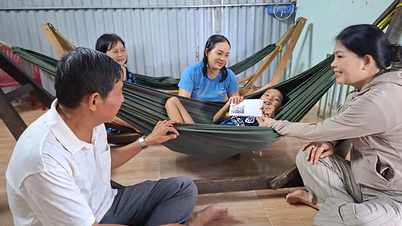
| The child is currently receiving treatment in the Intensive Care Unit at the National Children's Hospital. |
Previously, since 2020, diphtheria outbreaks had occurred in many localities, such as Dak Lak, Dak Nong, Gia Lai, Kon Tum, Quang Ngai, and Quang Tri, with over 200 cases. By 2021, the number of cases had decreased to 6, and in 2022 there were only 2 cases.
However, the epidemiological curve has been steeply upward since 2023, when the number of cases increased many times compared to 2022, reaching 57 cases and 7 deaths. Currently, the number of cases has decreased compared to the same period last year, but there are still unfortunate deaths.
Statistics from cases and deaths show that none of them had received a booster dose of the diphtheria vaccine or had an unknown vaccination history.
Along with diphtheria, another disease that was previously rare, whooping cough, is also making a comeback. According to the Hanoi Department of Health, hundreds of cases of whooping cough have been recorded in children since the beginning of the year, compared to no cases during the same period in 2023. Scattered outbreaks have also occurred in Phu Tho, Ha Nam, Ho Chi Minh City, and Dong Nai.
Whooping cough is a dangerous disease with a high risk of death in children under 3 months old. Most affected children are unvaccinated or have not received the full course of vaccination, with many contracting whooping cough before the age of 2 months. Witnessing the sight of frail, tiny infants lying weakly, wheezing, surrounded by tubes and IV lines in pediatric treatment facilities, it's impossible to avoid feeling heartbroken.
Speaking of children, one heartbreaking and haunting event that anyone who has ever heard of it is the measles epidemic 10 years ago, like a great flood that swept away so many lives. Even now, perhaps hundreds of families from that time still haven't gotten over the pain of losing their children.
Currently, a severe measles outbreak is also occurring in Ho Chi Minh City, with nearly 700 cases and 3 child deaths. Notably, 74% of the children with measles in the city had not been vaccinated against measles, despite being of the appropriate age. Many other provinces and cities such as Long An, Dong Nai, Binh Duong, and Hanoi are also experiencing measles outbreaks, causing anxiety among parents.
Another disease with an extremely high mortality rate threatening the health of Vietnamese people is Japanese encephalitis. According to Phu Tho Provincial Obstetrics and Pediatrics Hospital, from the beginning of June 2024 to the present, the number of hospitalizations due to meningitis has increased fivefold compared to the same period in 2023. During the same time, the National Children's Hospital has received more than 50 cases of meningitis, 10 cases of Japanese encephalitis, and hundreds of cases of encephalitis caused by bacteria and viruses.
Doctors are concerned that this disease has a high mortality rate and high rate of sequelae (25-35%). For example, in 71 cases of Japanese encephalitis from June 2022 to August 2023 at the National Children's Hospital, the success rate of treatment was only about 50%, with the rest resulting in neurological sequelae.
With many years of experience treating meningococcal meningitis cases and witnessing numerous tragic deaths among young patients due to the disease, Dr. Do Thien Hai, Deputy Director of the Center for Tropical Diseases (National Children's Hospital), stated that this disease can kill healthy individuals within 24 hours. Children may be healthy in the morning, but by evening they could be in critical condition and die.
According to Dr. Hai, the disease has two most common forms: meningitis and sepsis, and other less common forms such as pneumonia and arthritis. People of all ages are at risk, but children under 5 years old, teenagers aged 14-20, and people with weakened immune systems have the highest infection rates.
 |
Declining vaccination rates: A warning sign of a new threat.
It is estimated that in 2023 alone, the world recorded over 300,000 cases of measles, three times the number from the previous year. All 103 countries that experienced measles outbreaks in the last five years had low measles vaccination rates (below 80%), while 91 countries with high vaccination rates did not experience outbreaks. To prevent the disease, 95% of children need to receive the second dose, but the actual figure is only 74%.
According to the WHO, disruptions in healthcare services, vaccine hesitancy, and inequalities in access to services have caused childhood vaccination rates to fall to their lowest level in 15 years.
In Vietnam, 1.5 million children under one year old need vaccinations under the Expanded Immunization Program. The rate of full vaccination for children under one year old has consistently been above 90% at the provincial level since 1993. However, since 2021, the vaccination rate among children has decreased sharply in some localities.
Experts believe that the resurgence of many infectious diseases after years of absence, creating immunity gaps, is a consequence of vaccine disruptions following the Covid-19 pandemic, the shortage of vaccines in recent times, and the anti-vaccine sentiment among many parents.
Both government agencies and medical professionals agree that the recent measles outbreak in Ho Chi Minh City and neighboring provinces is partly due to a shortage of vaccines in previous years, particularly from 2022 to the end of 2023. This has resulted in up to 74% of children with measles not having been vaccinated against measles, despite being of the appropriate age.
In Long An province, the target was to vaccinate 85% of children in the eligible age group, but in reality, only about 70% was achieved due to vaccine shortages. As a result, the province has had over 60 cases of measles, of which about 90% were unvaccinated.
In Hanoi, according to the head of the Department of Health, since 2023, localities have been tasked with independently bidding for vaccine procurement, but this has been impossible due to numerous bidding obstacles, resulting in vaccine coverage falling short of expectations. Specifically, 5 out of 10 types of vaccines in the Expanded Immunization Program were not supplied in sufficient quantities for children, including single-dose measles vaccine, diphtheria-pertussis-tetanus vaccine, tuberculosis vaccine, hepatitis B vaccine, and injectable polio vaccine.
Analyzing the resurgence of infectious diseases in Vietnam, the United Nations Children's Fund (UNICEF) reported that more than 20 types of vaccines have experienced disruptions in routine immunization, including tuberculosis, diphtheria, pertussis, tetanus, polio, Hib, hepatitis B, measles, rubella, etc. In particular, the vaccination rates for bOPV (oral polio vaccine) and IPV (intravenous immunization) in 2021 were only 67% and 80% respectively; in 2022, they reached 70% and 90% respectively.
Ms. Lesley Miller, Deputy Representative of UNICEF in Vietnam, stated that when the Covid-19 pandemic broke out, childhood vaccination activities were disrupted in most countries, including Vietnam, due to increased demand on the healthcare system, the reallocation of resources for routine vaccinations to Covid-19 vaccinations, shortages of healthcare workers, and the implementation of home isolation measures. Another reason was the delay in vaccine procurement and supply, which disrupted the vaccination process and led to a resurgence of the disease.
Looking at the recent outbreaks of infectious diseases, it can be affirmed that if we are complacent and neglect vaccination efforts, the painful lessons learned from the measles outbreak 10 years ago could return. In addition, diseases that cause shockingly rapid deaths, such as meningococcal encephalitis, are still lurking, threatening children every day. Not to mention, the Covid-19 pandemic, although no longer a global health emergency, remains a threat to human health.
According to WHO statistics, approximately 1.5 million people die worldwide each year from infectious diseases that are preventable by vaccines.
In addition, more than 2 billion people are infected with the hepatitis B virus; 2.56 million people die from pneumonia; 2 million people die from cirrhosis and liver cancer; approximately 300,000 people die from whooping cough; and 650,000 people die from influenza.
In addition, a series of other serious infectious diseases such as measles, rubella, meningitis, and cervical cancer are constantly increasing and directly threatening human health.
(To be continued)
![[Photo] General Secretary and President To Lam presides over a meeting with the Central Organizing Committee.](https://vphoto.vietnam.vn/thumb/1200x675/vietnam/resource/IMAGE/2026/06/03/1780482764658_a1-bnd-4741-3342-jpg.webp)
![[Photo] Secretary of the National Assembly Party Committee, Chairman of the National Assembly presides over the meeting of the Standing Committee and Executive Committee of the National Assembly Party Committee.](https://vphoto.vietnam.vn/thumb/1200x675/vietnam/resource/IMAGE/2026/06/03/1780480353201_ndo_br_bnd-2585-jpg.webp)

![[Photo] First session of the 14th Congress of the Vietnam Trade Union](https://vphoto.vietnam.vn/thumb/1200x675/vietnam/resource/IMAGE/2026/06/03/1780465947883_ndo_br_img-3852-jpg.webp)













































![[Video] Sunset at Lap An Lagoon – Where the sun sets over the fishing nets](https://vphoto.vietnam.vn/thumb/1200x675/vietnam/resource/IMAGE/2026/05/31/1780192137701_beach-landscape-sea-water-nature-grass-745871-pxhere-com.jpeg)

































Comment (0)