Rapid progress
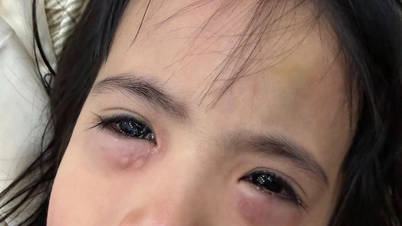
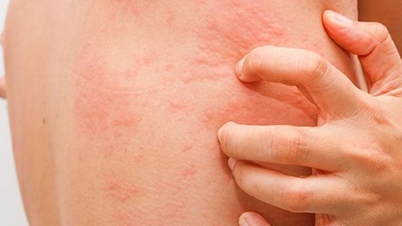
On a weekend afternoon in early May, Mr. Tran Quoc Bao (38 years old, residing in Binh Tan ward) took his 10-year-old daughter to eat seafood hotpot at a restaurant near their home. About 15 minutes after the meal, the child began complaining of an itchy throat, developed red rashes around her face, and coughed continuously. The family thought she had a mild allergy and gave her over-the-counter allergy medication.
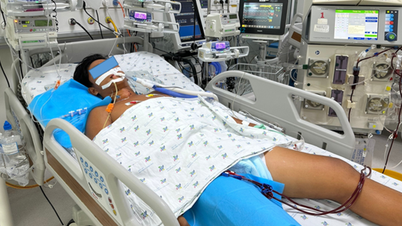
However, less than 5 minutes later, the child suddenly had difficulty breathing, his lips turned blue, and he became listless. “At that time, he was having great difficulty breathing, his eyes were glazed over, he didn’t respond to calls, and he was rushed to the emergency room at the City Children’s Hospital in a state of hypotension and respiratory failure due to severe anaphylactic shock related to seafood. The doctor said that if the family had delayed bringing him to the hospital for even a few minutes, the risk of death would have been very high,” shared Mr. Tran Quoc Bao.

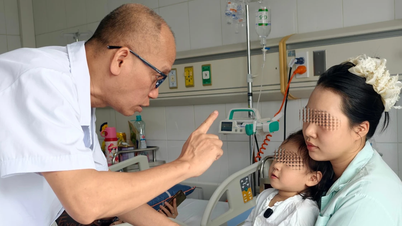
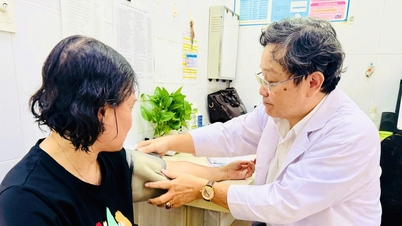
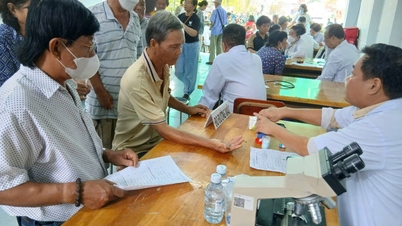
Doctors at the University Medical Center of Ho Chi Minh City examine a patient with allergies.
Many hospitals have also reported cases of anaphylactic shock occurring after eating, taking medication, receiving antibiotic injections, or even after insect bites. Recently, People's Hospital 115 admitted a 40-year-old male patient in critical condition after taking painkillers a few minutes earlier, with symptoms including swelling of the lips and tongue, widespread hives, and difficulty breathing.
Doctors determined the patient was suffering from grade 2 anaphylactic shock, suspected to be due to medication, with a risk of progressing to life-threatening respiratory failure. Previously, Binh Chanh General Hospital also admitted 11 workers from a company in Hung Long commune, suspected of having an allergic reaction (anaphylaxis) after lunch, with symptoms including restlessness, facial flushing, fatigue, mild shortness of breath, and a rash on both hands and chest.
The City Children's Hospital recently saved the life of a 3-year-old patient, LNPKh, who suffered from grade 3 anaphylactic shock and respiratory failure due to a bee sting. Dr. Nguyen Minh Tien, Deputy Director of the City Children's Hospital, shared that anaphylactic shock is a severe systemic allergic reaction that occurs when the body overreacts to allergens such as medications, food, chemicals, vaccines, or insect venom.
Among these, medications and food are the two most common causes of anaphylaxis. Anaphylactic shock progresses rapidly; initially, the patient may only experience itchy skin, hives, or mild discomfort. Within minutes, this can progress to difficulty breathing, bronchospasm, hypotension, and cardiac arrest. If treatment is delayed, the risk of death is very high.
Allergies can occur in people of all ages.
According to allergy and immunology experts, anaphylactic shock can occur in anyone, even those with no prior allergy history. Children and the elderly are particularly susceptible to severe complications due to weaker immune systems or difficulty in early symptom detection. This condition can progress very rapidly, leading to respiratory failure or anaphylactic shock, which can be life-threatening if not treated promptly.
Common food allergens include seafood, eggs, milk, peanuts, and nuts. In young children, food allergies are becoming increasingly common due to changes in their living environment and eating habits.
Meanwhile, antibiotics, painkillers, and anti-inflammatory drugs are also common causes of drug allergies, especially since many people have a habit of buying and using medication without a doctor's prescription. Many people experience rashes and difficulty breathing but try to endure it at home or self-medicate. Some think that resting will help, only seeking medical attention when symptoms worsen, such as cyanosis and low blood pressure, by which time it's often too late.
According to Dr. Nguyen Huu Truong, Deputy Director of the Clinical Allergy and Immunology Center at Bach Mai Hospital, people who have previously experienced allergic reactions to seafood or any food should not be complacent and eat it again, as subsequent reactions may be more severe. With unfamiliar foods, it's advisable to try a small amount and monitor your body's reaction for about 30 minutes. If symptoms such as severe abdominal pain, chest tightness, shortness of breath, or dizziness occur after eating, seek immediate medical attention.
Dr. Nguyen Huu Tin, Specialist in Intensive Care and Toxicology at People's Hospital 115, advises that if suspicious signs of anaphylaxis appear, such as rash, hives, swelling of the lips or mucous membranes; difficulty breathing, wheezing, laryngeal spasm; hypotension, dizziness, fainting; nausea, abdominal pain, diarrhea; anxiety or altered consciousness..., patients should immediately go to the nearest medical facility for timely treatment.
The World Health Organization warns that by 2050, approximately 50% of the world's population could suffer from at least one form of allergy, a sharp increase from the current rate of around 30% and the 5%-10% of the 1980s. Experts call this a "silent epidemic" due to the impact of urbanization, climate change, and changing lifestyles.
MINH NAM
Source: https://www.sggp.org.vn/phong-tranh-soc-phan-ve-do-di-ung-voi-thuoc-thuc-pham-post853306.html



































































































Comment (0)