

Whenever I travel along National Highway 9, passing by the Lang Vay stronghold historical site in Tan Long commune, Huong Hoa district, I am reminded of the liberating vision in the poem by Ngo Kha from more than half a century ago: "We will see, and certainly will see / A golden city on Lao Bao hill / A charming town through Lang Vay."

The Lang Vay stronghold historical site - Photo: TH
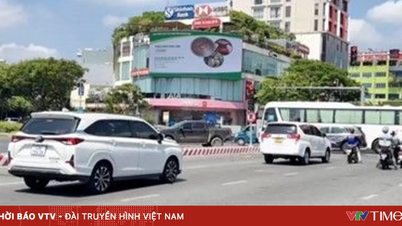
Standing on Lang Vay hill today, where the 268th tank of the Armored Corps, which first appeared on the battlefield in Huong Hoa district – "strange and terrifying," as the American and South Vietnamese soldiers described it in 1968 – one can see the vibrant development of Lao Bao, the "golden city," at the gateway to the Vietnam-Laos border, and the charming town of Khe Sanh in the district center. Interestingly, from the vantage point across Lang Vay towards the Tan Long intersection, the constant stream of people and vehicles is like a festival, revealing the miraculous changes along the dreamlike Trans-Asian Highway and the fertile southern region of Huong Hoa district. It seems that all roads converge here.
While chatting with the Chairman of the Tan Long Commune People's Committee, Vo Van Cuong, we were truly surprised to learn that although Huong Hoa district has the Lao Bao Commercial Center and the district's central market in Khe Sanh town, the trade and purchasing power of the people are not as strong as in the Tan Long commune market area.
Tan Long commune is the "banana capital" of Huong Hoa district. Every day, 5-7 large trucks belonging to traders come here to buy bananas for export to China, with a total output of over 100 tons of fresh bananas per day. At a selling price of 5,000-6,000 VND/kg, the daily revenue from banana cultivation exceeds half a billion VND.
On average, banana cultivation brings in nearly 200 billion VND annually for farmers in Huong Hoa district. Since the Tan Long commune Party Committee issued a resolution on restructuring crop patterns and moving the honey banana variety from home gardens to hillside farms for commercial production in 1993, the area planted with bananas has expanded significantly, becoming a distinctive and advantageous product of the locality.
In Huong Hoa district, there are currently over 3,000 hectares of banana plantations, and approximately 2,000 hectares are cultivated in cooperation between local people in Huong Hoa district and people from neighboring Laos, with the people of Tan Long commune accounting for about a quarter of the total area. The trucks carrying bananas to the market bring with them televisions, refrigerators, smartphones, and other modern conveniences to the villages, transforming the material and spiritual lives of the people in these highland hamlets.
But the Lia area in the south of Huong Hoa district isn't just about bananas "making money." Cassava from the southern communes of Huong Hoa district is transported along the Lia road (Provincial Road 568) to the Huong Hoa Cassava Starch Factory, and the money is then spent in the Tan Long market intersection area. The Tan Long intersection, where National Highway 9 and Provincial Road 568 meet, has become the center of trade and commerce for the entire region.

The spacious Lìa road - Photo: TH
Huong Hoa is often described as a land of "golden fruits." The communes south of National Highway 9 and the Lia region are blessed with fertile land and a favorable climate for the flourishing growth of various fruit trees. However, when discussing the systematic planning and investment for the development of this region, the establishment of the Huong Hoa Cassava Starch Factory, a subsidiary of Quang Tri General Trading Corporation, is a key factor.
In 2004, with the establishment of the Huong Hoa cassava starch factory, the large-scale cultivation of cassava in the Lia region brought about economic, political , and social changes for the people of western Quang Tri province, the majority of whom are ethnic minorities such as the Van Kieu and Pa Ko.
According to Le Ngoc Sang, Director of the Huong Hoa Cassava Starch Factory, cassava is currently a crop that helps alleviate poverty and create wealth for more than 5,000 households in the Lia area, with a planted area of approximately 4,500 hectares and a yield of 17-20 tons of fresh cassava tubers per hectare. Annually, the factory purchases about 80,000-110,000 tons of fresh cassava tubers from the Lia region, generating sales equivalent to 200-290 billion VND.
For the 2023-2024 crop year, cassava production in the Lia region is expected to reach approximately 80,000 tons. The purchase price varies depending on starch content, currently averaging around 2.85 million VND per ton. To increase the value per unit area of cassava cultivation, in 2023, the factory collaborated with the Huong Hoa District Department of Agriculture to implement 14 demonstration models on intensive fertilization and intercropping with mung beans. These models were implemented in the Lia region, with two models per commune. The models are currently in their final stages and are showing promising results.

Banana market in Tan Long commune, Huong Hoa district - Photo: TH
Previously, people's lives were difficult, with barren land overgrown with weeds because there were basically no processing plants to purchase agricultural products from farmers. Understanding the hardships and struggles of the local people, Huong Hoa Cassava Starch Factory, together with the local government, organized campaigns to raise awareness and invited experts to conduct training for cassava farmers, making them clearly see the benefits of growing cassava.
Furthermore, the factory collaborates with scientists to research and develop solutions to increase yield, improve quality, and reduce costs through the application of high-tech farming techniques. Implementing a four-party linkage (State, businesses, scientists, and farmers), the factory has committed to purchasing the products produced by farmers at a profitable price through contracts, while also providing fertilizers, seedlings, training, and technical guidance on cultivation to the people. This is gradually building a relationship of mutual existence and development between the Huong Hoa Cassava Starch Factory and the people of the Lia region.
Now, entering the villages of the Lìa region (including Thuận, Thanh, Xy, Lìa, A Dơi, and Ba Tầng) via the Tân Long commune intersection, one can easily notice the dramatic changes in the mindset and approach to economic development and building a new life for the people. We visited the family of Pả Nhờ (Hồ Văn Pờng) in Bản 10, Thanh commune, during the cassava harvest season. Pả Nhờ was preparing to drive his tractor to prepare the land for planting cassava for the villagers.
This year, Pả Nhờ's family sold 13 truckloads of cassava, totaling over 100 tons, earning 300 million VND. Along with cassava cultivation, Pả Nhờ bought a tractor worth over 400 million VND to provide plowing services for farmers in the commune, earning 5 million VND per day. Thanks to cassava farming, in 2010, Pả Nhờ built a beautiful two-story stilt house worth nearly 600 million VND, the most beautiful in the commune.
In addition, with the money she had saved, Pa Nho invested over one billion VND in a partnership with people in Laos to plant 25 hectares of bananas. Before COVID-19, Pa Nho earned nearly 4 million VND per day from selling bananas. Since the pandemic, due to difficulties in crossing the border, the banana plantation in Laos had to be put on hold.

The Pa Nho family became wealthy from cassava cultivation - Photo: TH
Not far from Pả Nhờ's house, the family of Ms. Hồ Thị Hương, in Thanh 1 village, cultivates 3 hectares of cassava. Thanks to good care and fertilization, her family harvests an average of about 70 tons of cassava per year, sometimes exceeding 100 tons. Besides cassava cultivation, Ms. Hương also collaborates with people in Laos to grow 1.5 hectares of bananas and has purchased a large truck for delivery services. The family's total annual income is approximately 200 million VND.
In the mountainous ethnic minority villages of Huong Hoa district, Huong's family was the first to invest in building a spacious, sturdy two-story house with modern amenities, designed like houses in the lowlands. Furthermore, Huong has always been at the forefront of eliminating outdated customs and elevating the status of women in investment decisions, production development, business, and building happy and prosperous families.
In the Lìa area of Hướng Hóa district, there are currently 97 households participating in a club that earns over 100 million VND per year from cassava cultivation, including the families of Pả Nhờ and Hồ Thị Hương in Thanh commune. With their innovation, boldness, and willingness to think outside the box and develop their production and business, they deserve to be considered economic leaders and shining examples for their fellow villagers to follow.
This spring of 2024 marks the 50th anniversary (1974-2024) of people from various localities in the province migrating to build new economic zones in Huong Hoa district. Currently, five new economic zone communes along National Highway 9, namely Tan Hop, Tan Lien, Tan Lap, Tan Long, and Tan Thanh, have successfully completed the construction of new rural communes according to the 2015-2020 plan. Leaving behind the hardships of the early days of establishing their lives, thousands of households from the lowlands are now working side-by-side with ethnic minority communities to build new lives. The convergence and exchange of cultures, customs, and traditions between the lowlands and the highlands have refined the good and created new momentum for people to learn from each other and develop together.
Passing through Lang Vay, turning onto the wide Lia road, the once desolate hills, overgrown with reeds and weeds are gone. Instead, there is the endless green of banana and cassava plantations, providing a high income for the people. The highland villages have taken on a new appearance, with a new life of prosperity and wealth.
Thanh Hai
Source
![[Photo] General Secretary and President To Lam presides over a working session with the Central Policy and Strategy Committee on the development of the materials industry.](https://vphoto.vietnam.vn/thumb/1200x675/vietnam/resource/IMAGE/2026/05/21/1779359935432_a3-bnd-3129-1412-jpg.webp)






















































Comment (0)