

On January 19, 2024, a reporter from Thanh Nien Newspaper observed four temporary vehicle impoundment lots run by traffic police in District 7, Binh Tan District, and Thu Duc City (Ho Chi Minh City). Besides the overcrowding and the risk of thousands of vehicles becoming scrap metal after prolonged exposure to rain and sun, the risk of fire and explosion at these lots is also a potential hazard.
Overcrowded impound lots for vehicles seized for traffic violations: Overload and wasteful.
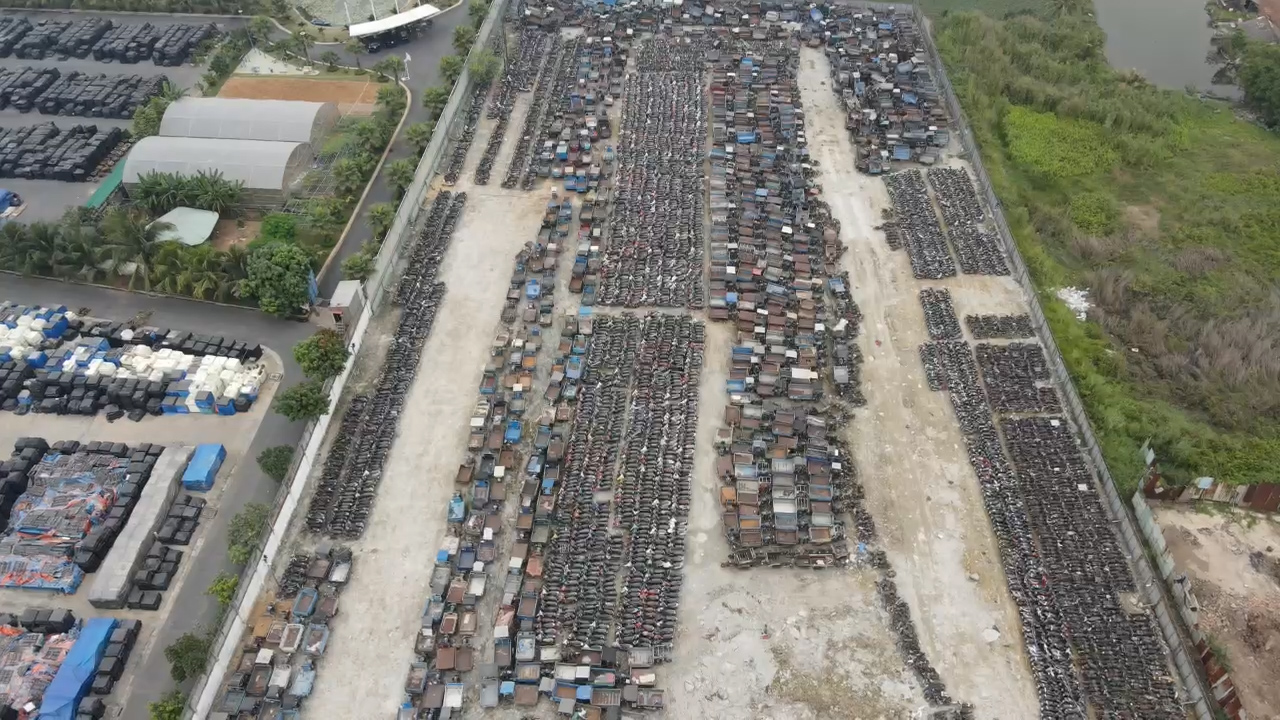
The vehicle impoundment lot at the intersection of Ho Van Long and Vo Tran Chi streets, belonging to the Binh Tan District Police, looks quite "impressive," but in reality, most of the vehicles are old and rusty.
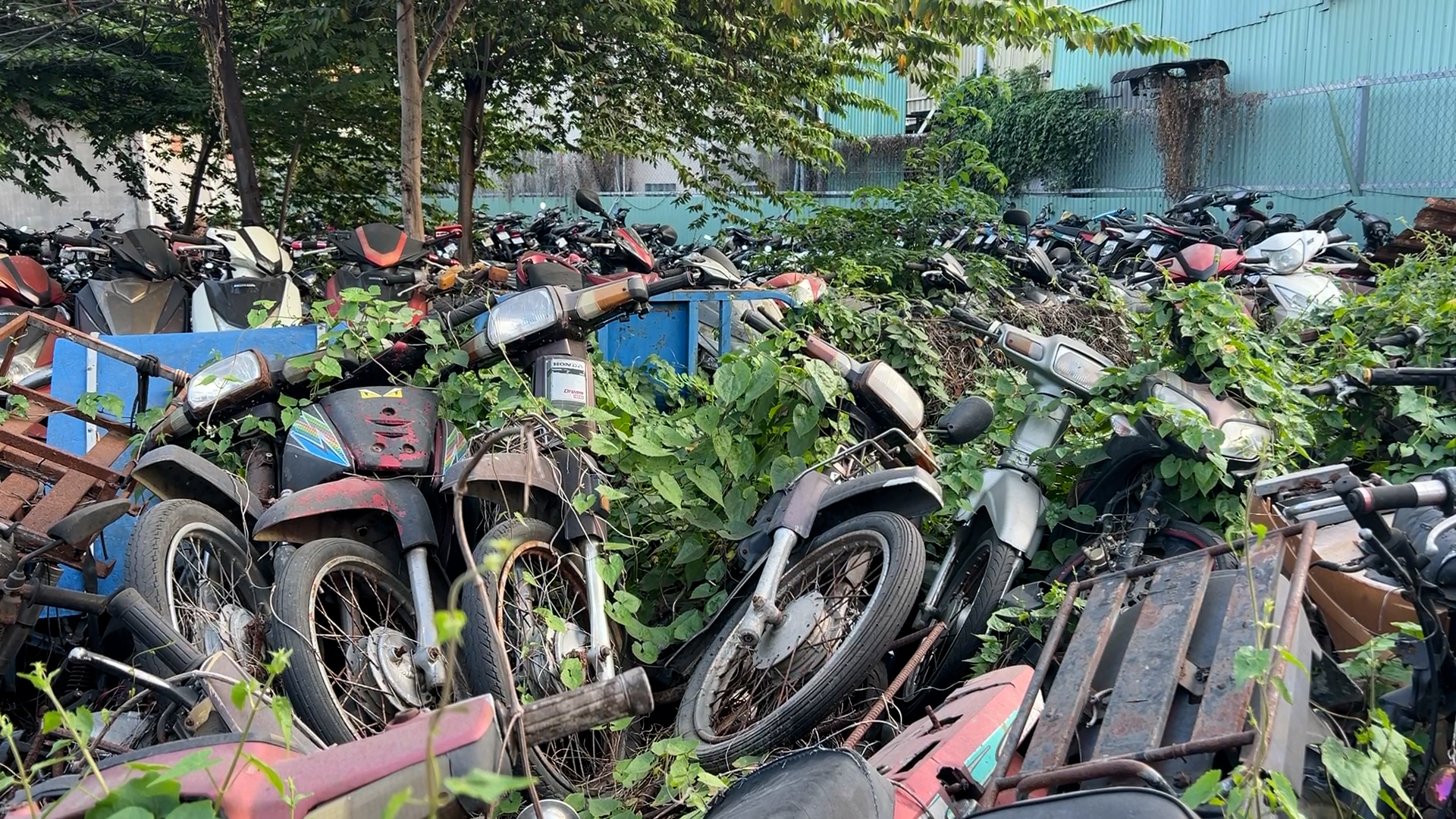
Inside the approximately 3,000-square-meter parking lot on Nguyen Van Quy Street (District 7), numerous vehicles are piled up without a roof, and weeds grow profusely.
The offender abandoned the vehicle.
The Traffic Police Department (PC08) of Ho Chi Minh City Police said that besides drunk drivers abandoning their vehicles, a large number of dilapidated vehicles and three-wheeled carts seized during enforcement campaigns are also "forgotten" by violators. This is also the main reason why temporary vehicle impoundment facilities are overloaded.
According to PC08, the unit has tried to arrange for the storage of vehicles and confiscated items related to administrative violations in warehouses and yards. However, the current warehouse and yard space does not meet the needs for receiving confiscated items and vehicles.
Ironically, dilapidated vehicles are fined: No registration papers, no lights or mirrors, and no vehicle required.
The liquidation and disposal process is lengthy.
The Ho Chi Minh City Police Department recognizes that the process of auctioning confiscated vehicles and other items relates to citizens' ownership rights as stipulated in the Constitution.
Therefore, the regulations regarding the procedures for confiscating, handling, and auctioning seized evidence and vehicles are very strict and time-consuming.
Specifically, to confiscate and auction off seized items and vehicles, several steps must be taken in accordance with the law, such as: verifying and examining the vehicle's chassis and engine numbers; publishing notices to find the owner; and developing a plan for handling the confiscated items and vehicles, which must be reported to the Ministry of Public Security (through the Department of Operations for approval).
Subsequently, the Ho Chi Minh City Police Department issued a decision approving the auction plan and organized the auction process in accordance with regulations.
From the 'innocent' livestream selling of 7,000 motorbikes: How will the police dispose of the seized evidence?
A traffic police officer in Ho Chi Minh City said that the current procedure for liquidating vehicles abandoned by violators involves many steps and takes a lot of time.
With a confiscated vehicle, the process of liquidating it from the time the offender abandons it must comply with the 12-month statute of limitations for administrative violations. In addition, the verification, notification, confiscation, valuation, and auction processes take approximately two years. Furthermore, there are no regulations for collecting fees for temporarily impounded vehicles, resulting in no funds for reinvestment, renovation, or repair of storage facilities.
This situation makes it difficult to manage, operate, and repair illegally parked parking lots to ensure safety, especially fire prevention and control.
Source link

![[Photo] National Assembly Chairman Tran Thanh Man working with the Standing Committee of the National Assembly's Delegation Affairs Committee.](https://vphoto.vietnam.vn/thumb/1200x675/vietnam/resource/IMAGE/2026/05/20/1779294340023_ndo_br_1-1691-jpg.webp)
![[Photo] General Secretary and President To Lam works with the Party Committee of the Ministry of Health on the work of Vietnamese traditional medicine.](https://vphoto.vietnam.vn/thumb/1200x675/vietnam/resource/IMAGE/2026/05/20/1779294323718_a1-bnd-2978-3319-jpg.webp)
![[Image] "Journey of Hope" promotes the organ and tissue donation movement in Vietnam.](https://vphoto.vietnam.vn/thumb/1200x675/vietnam/resource/IMAGE/2026/05/20/1779294400833_1-8910-jpg.webp)























































































Comment (0)