

Shipping companies profit from surcharges.
Since February, Yangming Shipping has continued to list surcharges on top of the international container shipping rates at Vietnamese ports for export goods. Specifically, the Terminal Handling Charge (THC) charged by the shipping company is over 3 million VND per 20-foot container and approximately 4.6 million VND per 40-foot container. Compared to before, this fee has increased by more than 15%.
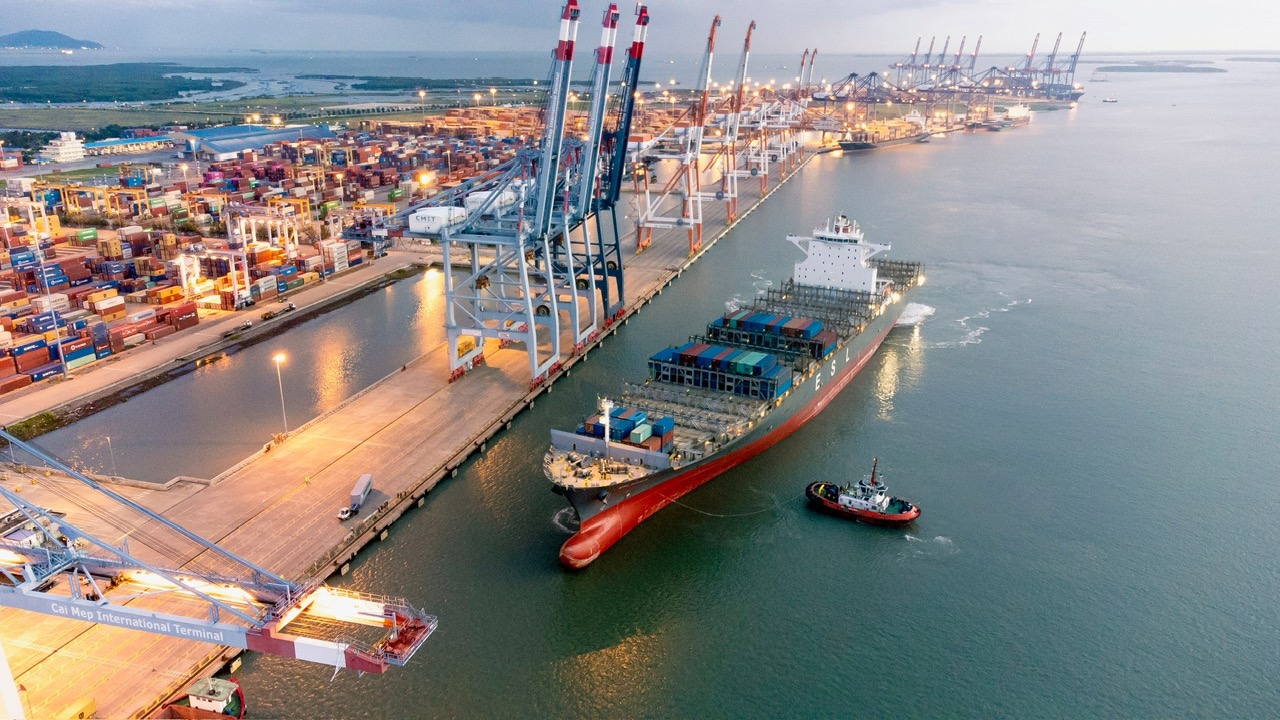
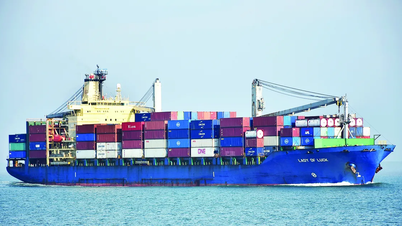
The types of surcharges imposed by foreign shipping companies in Vietnam are currently at the discretion of each company (Illustrative image).
HMM shipping company has not changed its port handling surcharges since March of this year, and is still collecting THC (Terminal Handling Charge) at rates ranging from approximately 3 million VND to over 5 million VND for 20-foot and 40-foot containers, depending on the container type. This represents a slight increase of about 10% compared to before.
According to statistics from the Vietnam Maritime Administration, from the beginning of February 2024 to the present, several foreign shipping companies have increased surcharges on import and export goods at Vietnamese seaports. The increase is mainly in the container handling surcharge (THC), with an average increase of 5-20%. Notably, the prices and surcharges are determined and imposed by the shipping companies themselves on Vietnamese shippers.
Noting that in Vietnam, many shipping companies have at times increased surcharges by up to 10-20%, Mr. Pham Quoc Long, Chairman of the Vietnam Association of Maritime Agents, Brokers and Services (Visaba), believes that shipping companies are enjoying large profit margins from the Vietnamese market.
According to Mr. Long, shipping companies have stopped increasing surcharges, but it cannot be guaranteed that they will not increase them at any time in the future. Especially since once surcharges have increased, they will never decrease again.
The Chairman of Visaba noted that Vietnam is currently the second largest market (after China) in the Asian region. Each year, up to 25 million TEU of goods pass through Vietnamese seaports. Foreign shipping companies typically charge an average port handling surcharge (THC) of around 100-200 USD and pay Vietnamese port businesses 50-80 USD per container.
This allows foreign shipping companies to reap billions of USD in profit annually from the Vietnamese market. This is detrimental to Vietnam, especially considering that over 95% of our import and export goods are transported by foreign shipping companies.
"At seaports, shipping companies can complete a delivery order in just 30 seconds, but they charge shippers up to 800,000 VND per container. Vietnam basically still conducts trade according to the custom of buying CIF and selling FOB, so the costs are paid by Vietnamese shippers. If not closely monitored, shipping companies can increase surcharges arbitrarily," Mr. Long emphasized, adding that there should even be a special consumption tax on foreign shipping companies as they are making super profits from these surcharges.
The Visaba chairman affirmed that amending regulations to strengthen the management of surcharges imposed by shipping companies is necessary to protect Vietnamese shippers and to prevent money from flowing into the pockets of foreign businesses.
Require shipping companies to declare their prices.
According to a shipping company, the THC surcharge is an international practice and is adjusted according to market developments. Even when freight rates are negative, companies still charge a surcharge as a way to compensate for the low rates. However, for domestic shipping lines, the surcharge is relatively low, averaging from 500,000 VND to over 1 million VND per container.
According to Phan Thong, Secretary General of the Vietnam Shippers Association, in recent times, the management agency has advised associations to cooperate with their members to secure better transportation contracts and avoid being affected by rising freight rates and surcharges.
However, this remains difficult to implement due to the varying import and export needs of each business, in terms of location, time, etc. Therefore, state management is crucial. Mr. Thong assessed that the most important thing is to have specific measures to manage surcharges.
"We can break down the surcharges to understand their nature, determine which types need to be managed, and how to manage them specifically. This way, if there are fluctuations in each type, we can adjust and manage them accordingly," Mr. Thong shared.
According to a representative of the Vietnam Maritime Administration, Government Decree No. 146/2016 stipulates that the listing of prices and surcharges in addition to the price of containerized cargo transportation services by sea, and port service prices, all types of surcharges in addition to the transportation service price are subject to price listing.
Currently, shipping companies apply about 10 types of surcharges, such as THC surcharge, container cleaning surcharge, documentation surcharge, and other fees, along with some seasonal surcharges such as peak season surcharge, port congestion surcharge, fuel surcharge, etc.
However, this representative argued that the price listing regulation does not manage the current situation of shipping companies increasing prices and surcharges. In particular, the surcharges that shipping companies are collecting at seaports, such as THC, container cleaning, sealing, documentation, container imbalance, etc., are surcharges that arise at Vietnamese seaports.
Shipping companies provide services and collect fees from customers to cover the costs incurred in providing those services (unaffected by freight rates).
"Therefore, this is not an additional payment to the carrier beyond the shipping service fee, but rather for goods and services at the seaport," a representative of the Vietnam Maritime Administration affirmed.
Currently, the Ministry of Transport is finalizing the draft Circular amending and supplementing several articles of Circular No. 12/2024 regulating the mechanism and policies for managing service prices at Vietnamese seaports.
This includes adding to the list of port services subject to price declaration, such as maritime pilotage services; services for using piers, berths, and mooring buoys; services for loading and unloading goods at piers, berths, and port warehouses, including: containerized goods, bulk cargo, liquid cargo, and other goods; tugboat services; goods storage services at port warehouses; services for counting, packing, and sorting goods at the port; and mooring and untying services at the pier.
Notably, there are also services such as sea freight documentation; sealing of sea freight containers; provision of empty containers at seaports (container imbalance); cleaning services for sea freight containers, along with other services arising at seaports; and THC (Terminal Handling Charge) services at seaports.
In that case, shipping companies wishing to increase surcharges would need to explain the reasons and structure of the surcharge increase to the state management agency.
In many countries with developed maritime industries around the world, the management of port surcharges varies. Singapore, however, has the most liberal regulations. The Singaporean government almost never requires businesses to declare or list prices. Freight rates and various port surcharges are determined by the market.
Meanwhile, countries like China, the United States, and Vietnam have almost identical regulations regarding price declaration and listing. Specifically, in the case of price increases, shipping companies must list the new prices 15 days in advance (for Vietnam) and 30 days in advance (for the United States and China) before the new prices can be implemented. Japan, however, does not have a regulation on the listing time for price increases.
Source: https://www.baogiaothong.vn/quan-chat-phu-phi-tau-bien-192241001173944952.htm


![[Image] A brilliant symphony and explosive power in the skies of Da Nang.](https://vphoto.vietnam.vn/thumb/1200x675/vietnam/resource/IMAGE/2026/05/31/1780193150738_anh-bia-copy-jpg.webp)

![[Video] Sunset at Lap An Lagoon – Where the sun sets over the fishing nets](https://vphoto.vietnam.vn/thumb/1200x675/vietnam/resource/IMAGE/2026/05/31/1780192137701_beach-landscape-sea-water-nature-grass-745871-pxhere-com.jpeg)














![[Video] Sunset at Lap An Lagoon – Where the sun sets over the fishing nets](https://vphoto.vietnam.vn/thumb/800x450/vietnam/resource/IMAGE/2026/05/31/1780192137701_beach-landscape-sea-water-nature-grass-745871-pxhere-com.jpeg)











































![[Video] Sunset at Lap An Lagoon – Where the sun sets over the fishing nets](https://vphoto.vietnam.vn/thumb/402x226/vietnam/resource/IMAGE/2026/05/31/1780192137701_beach-landscape-sea-water-nature-grass-745871-pxhere-com.jpeg)































Comment (0)