

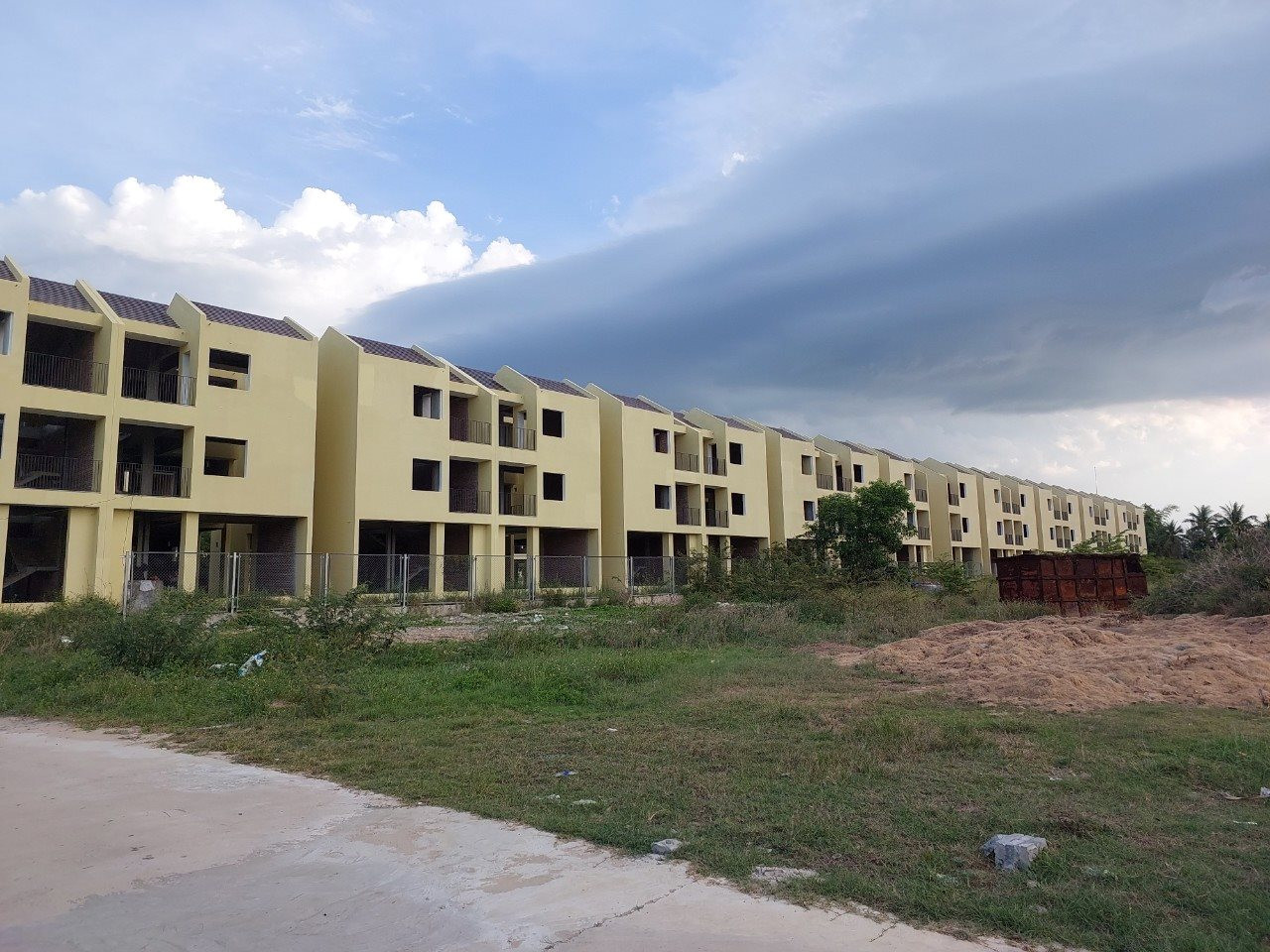
Collection progress is too slow.
Quang Nam's domestic revenue collection in 2023 exceeded the forecast by 2.7% amidst an economic downturn (negative 8.25% GRDP), a surprising result that surpassed many predictions (including the government and management agencies). This impressive achievement is considered a "spectacular turnaround" in local revenue collection.
However, analyses show that while budget revenue increased, revenue from land use fees was not promising, failing to reach the projected figure of 2,300 billion VND, and only collecting over 1,911.6 billion VND (reaching only 83.1% of the projected amount).
A surprising development has occurred. Quang Nam's budget revenue plan is increasingly declining. All major revenue streams for 2024 are lower than both the projected and actual figures for 2023 (set at only 20,100 billion VND instead of 20,880 billion VND as in 2023). However, instead of the projected 2,300 billion VND as in the previous year, or even lower, the revenue from land use fees has been projected at 2,700 billion VND. This figure represents a 17.4% increase compared to the projected amount and a 35% increase compared to the actual revenue in 2023.
The projected revenue from land use fees has increased by 400 billion VND, while the economy remains unstable and the real estate market shows no signs of recovery. This is truly an excessively large amount. Many management agencies predict a risk of not meeting the collection target because they do not know, or have not yet known, which sources of revenue to collect from.
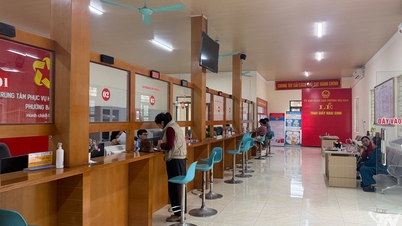
The tax authorities also anticipate difficulties in collecting revenue from land use fees, but hope to rely on the plan to receive and process documents, and determine the completion of land financial obligations electronically, which has been implemented since October 2023. In addition, they will calculate the amount collected from businesses owing land use fees from previous years and from newly arising projects.
The reality is far more challenging than the estimates. The tax authorities announced that, as of April 30, 2024, electronic land records had been linked across all 18 districts, towns, and cities, with nearly 9,900 electronic transfer slips received from the Department of Natural Resources and Environment, and outstanding land-related taxes had decreased by 104 billion VND. However, budget revenue as of May 31, 2024, had reached only 43.3% of the projected target (over 8,694 billion VND).
Most revenue and tax collection targets were met, but revenue from land use fees only reached 14.2% of the projected amount. With only a small percentage of outstanding land use fees from newly initiated projects remaining uncollected, the amount owed by businesses also remains uncollectible, thus continuing to face difficulties in securing revenue from land rent.
Mr. Nguyen Van Tiep, Director of the Quang Nam Tax Department, said that land development projects are slow to auction land use rights. The real estate market is frozen. Projects cannot be transferred.
Some projects have been allocated or leased land, but the land price has not yet been approved... Many businesses owe large amounts of land use fees, leading to a failure to meet the projected revenue targets.
“Although all debt enforcement measures have been fully and systematically applied, the Tax Department has still not recovered the outstanding land use fees and land lease fees. Businesses are facing financial difficulties and are unable to fulfill their financial obligations. Some projects have not been granted extensions, making it difficult for them to access loan capital from banks…” - Mr. Tiep said.
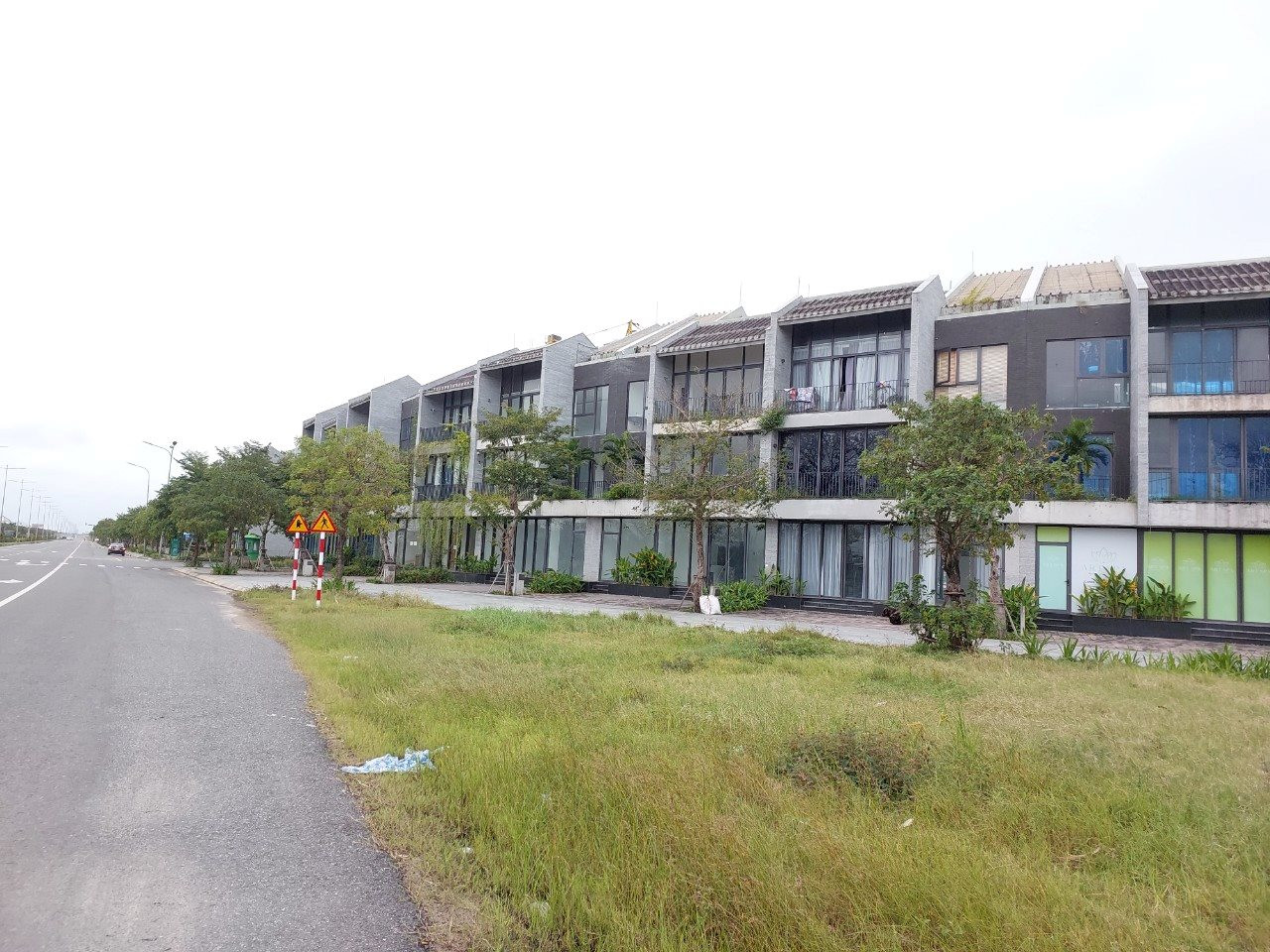
Based on which address will the collection take place?
Land rent is considered one of the main sources of revenue for localities to supplement investment in development. Financial agencies estimate that revenue from land will increase by 10-11% annually, but this is not easy to achieve.
The local financial system is still not strong enough to create effective solutions for collecting taxes from these sectors. Furthermore, it is difficult to monitor and control when buying, selling, and transferring properties in the market are all below market value. Not all real estate transactions are yet to be listed on a public, transparent exchange.
Quang Nam province has been forced to adjust its medium-term public investment plan for 2021-2025 due to a shortfall in revenue from land use. The target of 14,290 billion VND in land revenue will be very difficult to achieve, given the forecast of even greater challenges in the remaining two years.
It is projected that approximately 5,400 billion VND will need to be collected in 2024 and 2025 to meet the budget target. Mr. Nguyen Hung, Deputy Director of the Department of Planning and Investment, said that they will rely on urban areas to collect land use fees (about 90%). However, this will be very difficult due to slow urban projects, tightened real estate credit, and overlapping laws that are difficult to resolve.
According to tax authorities, there are currently about 30 residential and urban development projects in Quang Nam province that are still in arrears with financial obligations totaling over 1,860 billion VND, with 13 businesses owing large amounts of land use fees and land lease fees. The tax authorities will do everything possible to collect these debts into the state budget.
In addition, there are 31 land allocation and lease decisions issued by the Provincial People's Committee, granting land and leasing it to businesses for investment projects.
However, to date, the Department of Natural Resources and Environment, the Department of Finance (land valuation council), and related agencies have not yet advised the Provincial People's Committee to approve land prices so that the Tax Department can issue notices for payment of land use fees and land lease fees, which has directly affected the implementation of the state budget revenue forecast.
According to the Tax Department's analysis, it is possible to collect nearly 1,840 billion VND in revenue from just 4 projects in 2024: Cau Hung - Lai Nghi residential and service area (phases 2 and 3 with 584 billion VND); Quang Nam Smart City urban area (250 billion VND); Con Tien urban area (581 billion VND); and Thanh Ha urban area (phase 2, with 423 billion VND). However, collecting land rent from these and many other projects requires more than just the tax authorities' resources and is not an easy task.
According to the Tax Department, in order to complete and exceed the assigned budget for 2024, the tax authorities have requested the Standing Committee of the Provincial Party Committee and the Provincial People's Committee to direct relevant departments, agencies, and localities to plan meetings with the investors of each project to resolve difficulties and obstacles.
Specifically, the decision approves specific land prices for projects that have already received land allocation or lease decisions. Land use right certificates are issued for projects that have fulfilled their financial obligations regarding land and completed 100% of their technical infrastructure, facilitating investors' access to loan capital from banks for subsequent projects.
Mr. Tran Quoc Bao, Chairman of VN Da Thanh Group, said that businesses are willing to pay, but collecting money without issuing land ownership certificates to businesses still presents many difficulties.
The government and management agencies are exploring all possible ways to collect land rent into the state budget. According to Nguyen Van Tiep, Director of the Tax Department, projects will be categorized to flexibly apply solutions, especially for projects where land compensation and clearance have been completed and infrastructure is fully developed. Project implementation deadlines should be extended as soon as possible. Conditions will be created to allow businesses to borrow capital from banks so they can pay taxes.
Furthermore, higher authorities need to direct relevant departments and agencies to promptly process the land use fees and land lease fees that investors have deposited into the temporary holding account of the Department of Finance. This is to ensure timely payment into the state budget, enable businesses to fulfill their financial obligations, and protect their rights in carrying out related administrative procedures.
Source
![[Photo] The heat at the fireworks display site on the opening night of the Da Nang International Fireworks Festival 2026](https://vphoto.vietnam.vn/thumb/1200x675/vietnam/resource/IMAGE/2026/05/27/1779889741485_ndo_br_z7872039145157-fecaba5112f39e8352544099d7ef4738-5140-jpg.webp)


![[Photo] The courage of new recruits of Brigade 144 on the training ground.](https://vphoto.vietnam.vn/thumb/1200x675/vietnam/resource/IMAGE/2026/05/27/1779881651341_anh-man-hinh-2026-05-27-luc-18-32-52.png)


















































![[Photo] The courage of new recruits of Brigade 144 on the training ground.](https://vphoto.vietnam.vn/thumb/402x226/vietnam/resource/IMAGE/2026/05/27/1779881651341_anh-man-hinh-2026-05-27-luc-18-32-52.png)
























Comment (0)