

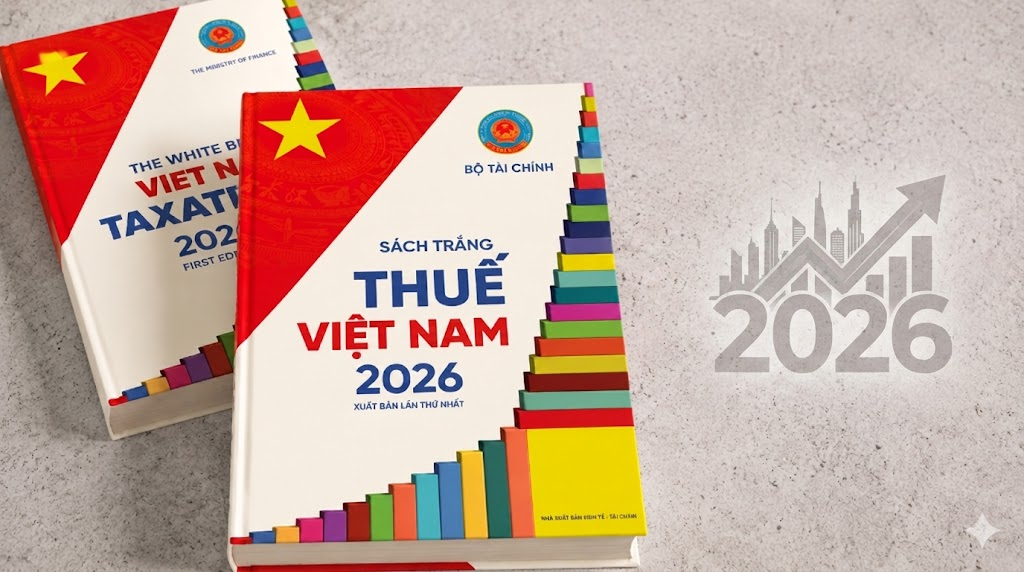
Sharing her thoughts on the 2026 Tax White Paper, Ms. Nguyen Thi Lan Anh, Head of the Legal Department (Tax Department), said that this is the first time the Vietnamese Tax White Paper has been published. It is not only an important document for guidance and management but also carries a strong policy message, affirming the partnership and strengthening the firm trust between the Tax sector and the business community and society as a whole.
The "Vietnam Tax White Paper 2026" clearly demonstrates the tax sector's efforts to enhance transparency, ensure consistency in information, and gradually innovate management methods, aiming for a modern and sustainable national financial system. It also serves as a document for guidance and management, and as an official information channel for policy dissemination, thereby contributing to strengthening trust and increasing the cooperation of taxpayers, the business community, and society as a whole.

According to the introduction, the Vietnam Tax White Paper 2026 focuses on three prominent areas. The first section provides a comprehensive overview of Vietnam's current tax system in accordance with international practices, including direct taxes, indirect taxes, and specific tax categories. The publication affirms that the tax system is not only a tool for generating sustainable financial resources for the state budget but also plays a role in macroeconomic regulation, promoting social equity, and supporting vulnerable groups.
By systematizing tax policies and functions, the Vietnam Tax White Paper 2026 contributes to the transparency of national financial policies, enhances access to information for citizens and businesses, and promotes the process of international integration.
One of the notable aspects of the publication is the overall picture of budget revenue collection and tax administration modernization during the 2021-2025 period. According to published data, total budget revenue during this period reached approximately 9,922 trillion VND, equivalent to about 120% of the target set by the National Assembly . Revenue managed by the Tax authorities alone reached approximately 8,569 trillion VND, accounting for 86.4% of total state budget revenue.
The White Paper also reflects the significant transformation of the tax sector from a traditional management model to a data-driven and risk-based governance model. Accordingly, the tax sector is promoting the application of digital technology in taxpayer management, inspection, auditing, and transaction monitoring. Although the number of inspections and audits has decreased compared to before, the efficiency of handling has improved significantly; revenue collected through inspections and audits in 2025 will more than double compared to 2021 thanks to the application of risk data management and digital transformation.
In the period 2026-2030, the Vietnam Tax White Paper 2026 outlines the development direction of the tax sector towards modernization, professionalism, and integration, with four key focuses: perfecting institutional policies; promoting digital transformation and simplifying administrative procedures; putting taxpayers at the center of service; and improving the quality of tax governance.
Source: https://daibieunhandan.vn/ra-mat-sach-trang-thue-2026-10416726.html


![[Photo] National Assembly Chairman Tran Thanh Man working with the Standing Committee of the Law and Justice Committee](https://vphoto.vietnam.vn/thumb/1200x675/vietnam/resource/IMAGE/2026/05/21/1779378929214_ndo_br_1-4610-jpg.webp)
![[Photo] General Secretary and President To Lam presides over a working session with the Central Policy and Strategy Committee on the development of the materials industry.](https://vphoto.vietnam.vn/thumb/1200x675/vietnam/resource/IMAGE/2026/05/21/1779359935432_a3-bnd-3129-1412-jpg.webp)





























































































Comment (0)