To implement career guidance and student streaming, the Provincial People's Committee issued Plan No. 171 dated May 3, 2026, on the implementation of career guidance and streaming in education in the province for the period 2026-2030. Accordingly, along with the high school system, the province will continue to promote the role of continuing education centers, vocational education centers, and vocational training institutions in receiving students after lower secondary education. The goal is to maintain approximately 70% - 75% of lower secondary school graduates continuing their studies at upper secondary education institutions; and 25% - 30% of students choosing other study paths suitable to their abilities and career orientation.

According to our research, in the 2025-2026 school year, the province will have nearly 13,300 ninth-grade students. Based on the tenth-grade enrollment plan for the 2026-2027 school year approved by the Provincial People's Committee, 37 high schools in the province have registered to enroll more than 9,000 students, corresponding to approximately 70% - 75% of students graduating from junior high school. Meanwhile, the network of continuing education centers, vocational training centers, and vocational education institutions continues to provide more learning options for students after junior high school, thereby contributing to the province's goal of educational streaming.
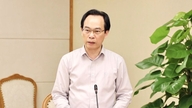


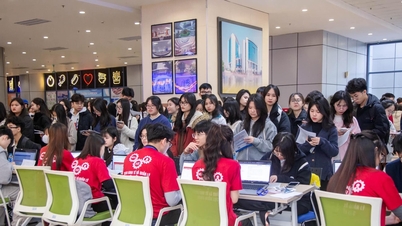
In fact, over the years, in addition to enrollment in public high schools, the provincial education sector has intensified its career counseling and guidance efforts to help students and parents better understand their educational options after lower secondary school. Mr. Dang Hong Cuong, Deputy Director of the Department of Education and Training, stated: Along with enrollment in public high schools, the department has issued guidelines for enrollment in continuing education programs at the upper secondary level for continuing education centers, vocational training centers, and vocational training institutions in the province. A new feature is that these units are required to proactively visit each lower secondary school to provide enrollment counseling; organize visits, experiences, and meetings with teachers and students currently enrolled to help students better understand the combination of academic and vocational training, opportunities for further education at higher levels, or entry into the labor market after graduation. When receiving applications, these units also advise on the selection of subject combinations based on students' academic performance in lower secondary school, their strengths, and their career aspirations.
Currently, the province has 1 Continuing Education Center for Foreign Languages and Informatics; Continuing Education Center 2; and 9 vocational training and continuing education centers. In recent years, the system of centers has maintained a scale of approximately 4,000 students studying continuing education programs at the high school level and vocational training programs. Some units have a large enrollment scale, such as Continuing Education Center 2 with about 900 students, and Cao Loc Vocational Training and Continuing Education Center with about 700 students in grades 10, 11, and 12.
Maintaining a stable enrollment scale over the years demonstrates that the continuing education and vocational training network plays a crucial role in guiding students after lower secondary education. Beyond providing general education, these institutions also promote vocational training partnerships, career counseling, and create opportunities for students to complete their upper secondary education while simultaneously accessing careers that match labor market demands.
Mr. Trieu Tuan Anh, Deputy Director of the Cao Loc Vocational Education and Continuing Education Center, said: "Each year, the center enrolls more than 200 students in grade 10. For the 2026-2027 school year, the center will begin enrollment from the end of May 2026. Prior to that, the center established an enrollment counseling board, coordinating with junior high schools in the area and neighboring communes to disseminate information and provide advice to students and parents. To date, the center has received nearly 100 applications. The center strives to complete the enrollment target of 6 grade 10 classes before the start of the new school year."
Along with existing training models, the Ministry of Education and Training recently issued Circular No. 46 dated June 10, 2026, promulgating the Charter of Vocational High Schools, creating a legal basis for the establishment of vocational high schools within the national education system. This is considered a new training direction, further supplementing learning options for students after completing the lower secondary education program. A notable point is that the cultural subjects are structured to be closely linked to vocational content, helping learners see the practical application of knowledge. The program is also organized with a mix of cultural and vocational studies in each semester, creating a balance in the learning process.



From the high school system, the continuing education network, vocational education and training-continuing education, to the emerging vocational high school model, educational pathways after lower secondary school are becoming increasingly diverse. This expansion helps to gradually improve the effectiveness of educational streaming, while also creating conditions for learners to choose a path that suits their abilities, aspirations, and the demands of the labor market.
Source: https://baolangson.vn/mo-rong-loi-di-sau-thcs-5096326.html