Due to prolonged heatwaves and nearly two months without rain, many reservoirs and dams in the northern localities of Quang Tri province have dried up, with localized areas showing alarming levels of water shortage. The Quang Tri Department of Agriculture and Environment is directing local authorities and the Quang Binh Irrigation Works Exploitation Company Limited to focus resources on drought relief for rice crops.
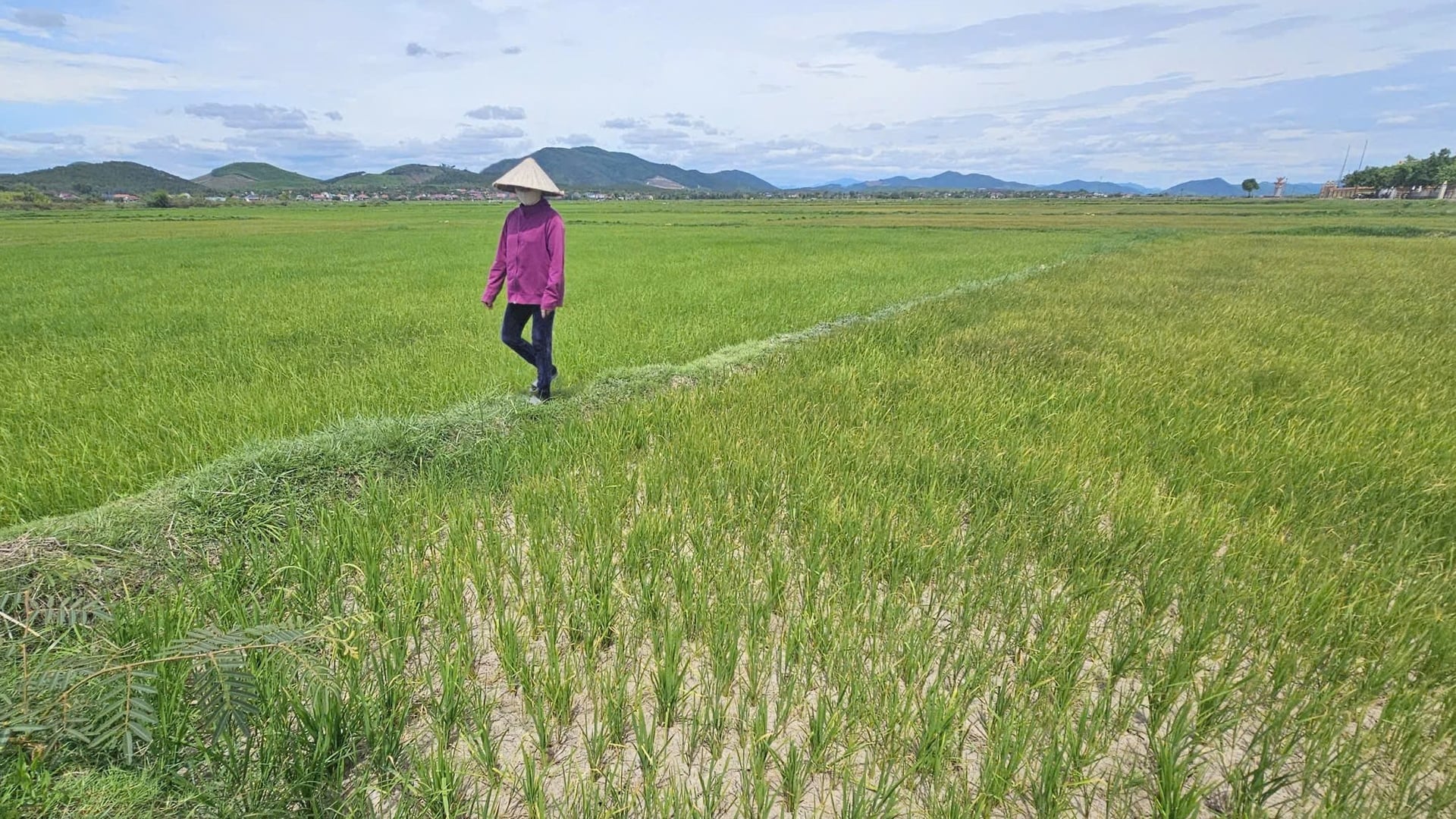
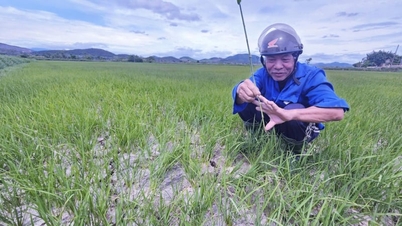
A drought-stricken field in Bac Trach commune. Photo: Tam Phung.
Summer-autumn rice crop in "critical condition"
In the middle of the morning, the sun blazed down on the northern part of Quang Tri province. Mr. Nguyen Duy Huynh (village 6, Bac Trach commune) carried his hoe to check on his fields. He said that for nearly three months, there hadn't been a single drop of rain, and the sun was scorching. The entire rice field in the village, spanning dozens of hectares, had run out of water, causing the rice plants to wither. "If there's no rain or irrigation in the next ten days, the rice in this field will die," Mr. Huynh worried.
Mr. Huynh's family owns five acres of rice paddies that have dried up, their surfaces riddled with deep cracks. He squatted in the middle of the cracked field, poking a piece of wood into the cracks before pulling it up to measure the depth. "It's already deeper than a handspan. The rice plants are turning yellow and dying," he worried.
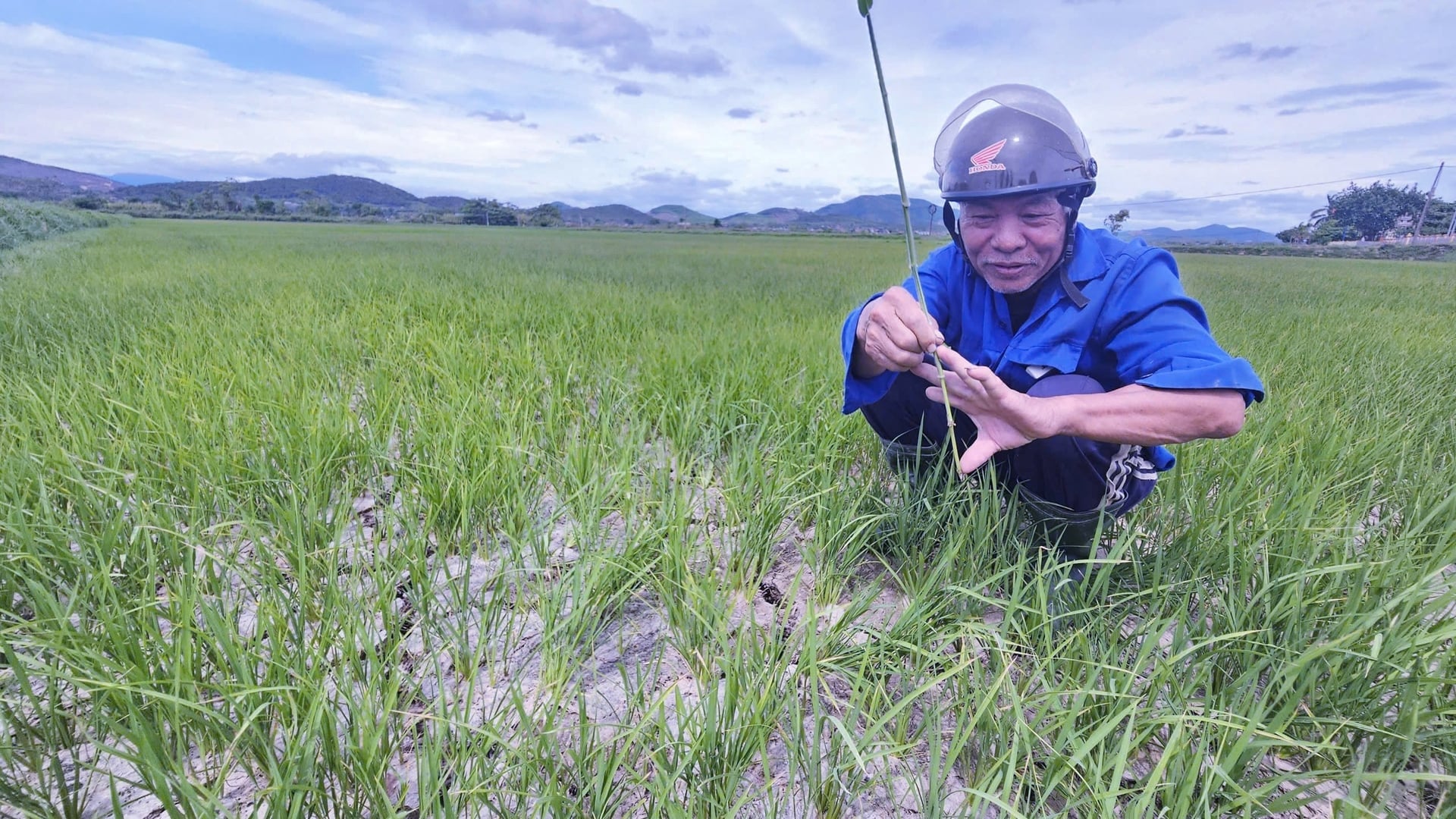
Mr. Nguyen Duy Huynh: "The cracks in the rice field are deeper than an adult's hand span." Photo: Tam Phung.
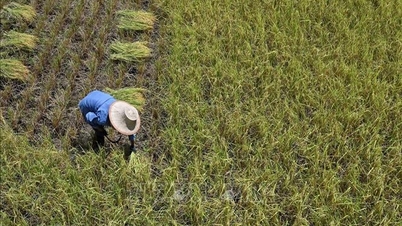
The small irrigation ditch had dried up, and the rice fields of Hamlet 5 were also turning yellow due to the drought. Mrs. Nguyen Thi Luong (Hamlet 5, Bac Trach Commune) put on her old hat and went to the field. She knew that going out to the fields meant scorching heat, but she couldn't rest easy at home hearing news of the drought affecting the rice crops. "Seeing the rice plants turning yellow and wilting in clumps breaks my heart. I don't know if it will rain, or if the irrigation system will be able to bring water. If this continues for a few more days, I'm afraid the rice will all die," Mrs. Luong lamented.
According to Mr. Luu Ba Lam, Head of the Economic Department of Bac Trach commune, this year's summer-autumn rice crop in the entire commune covers nearly 700 hectares, and currently nearly 70 hectares in the Ha Trach area are experiencing severe drought. If there is no rain or irrigation in the next 10 days, the area severely affected by drought will double. "We have also conducted on-site inspections in the fields and held meetings with villages and irrigation branches to implement drought relief measures to save the rice crop," Mr. Lam said.
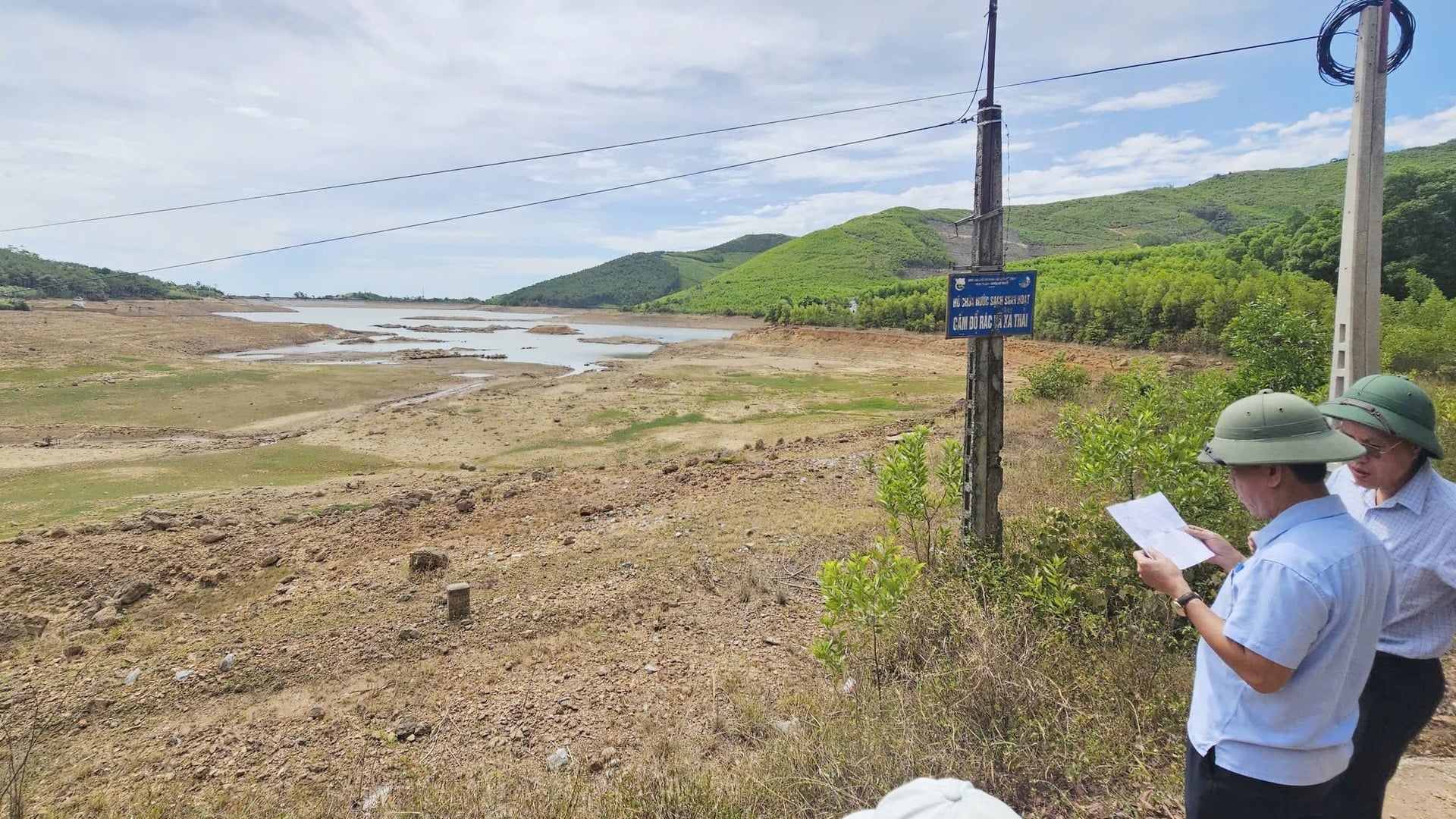
The Đầu Ngọn irrigation reservoir is basically dry. Photo: Tâm Phùng.

By the end of June, more than 1,000 hectares of summer-autumn rice in localities of the former Quang Binh province had been affected by drought, hundreds of hectares of rice had turned yellow and cracked, and nearly 40 hectares of other rice fields were threatened by saltwater intrusion…
Draining water into the rice fields.
“We have conducted numerous field inspections of small reservoirs managed by local authorities to gain a thorough understanding of the drought situation. At the same time, we have selected locations and are ready to implement a plan to simultaneously connect large-capacity mobile pumping stations to bring water from reservoirs up to the irrigation canals leading to the fields,” said Mr. Nguyen Huu Sang, Deputy Director of Quang Binh Irrigation Works Exploitation Company Limited.
According to Mr. Sang, most of the small reservoirs managed by the local authorities have dried up and reached critically low water levels. The company has a plan to combat the drought if there is no further rain.
"Currently, we are directing local irrigation branches to concentrate small, mobile pumps to recover water from natural lakes and streams, supplementing irrigation canals to alleviate drought for rice crops in downstream areas. This will save water and reduce the need to draw water from large reservoirs and dams, as these are reserves in case of prolonged extreme weather."
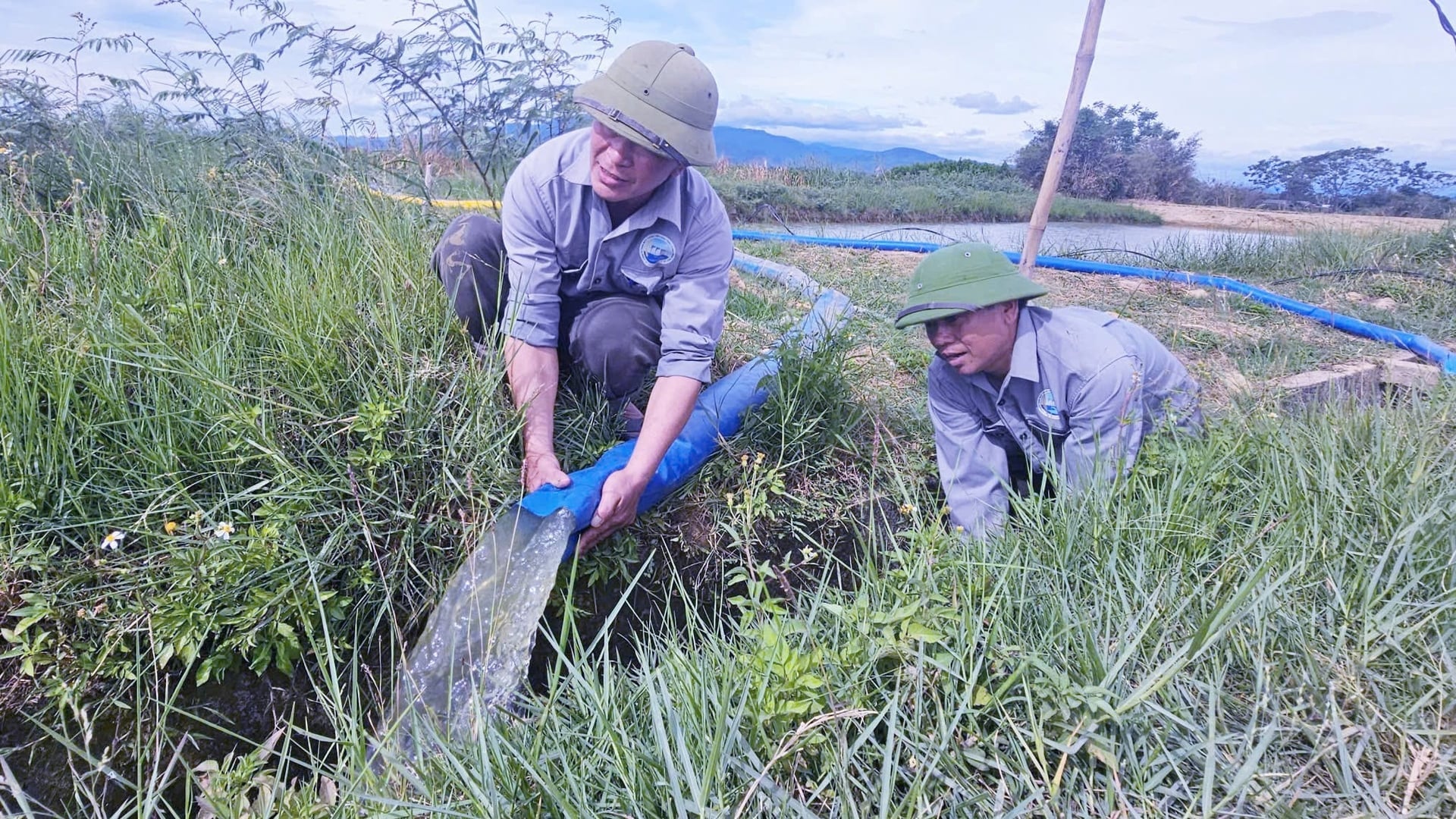
Officials from the Bo Trach Irrigation Branch pump return water from natural ponds and lakes into the irrigation canals leading to the fields. Photo: TP
"We also inspected the actual situation of the reservoirs managed by the company. Many large reservoirs have significantly depleted. Vuc Noi Reservoir, with a capacity of over 12 million m3, now has only about 3 million m3 left; Vuc Sanh Reservoir, with a capacity of 3.8 million m3, has only 600 m3 remaining; Dau Ngon Reservoir, with a capacity of over 1.8 million m3, has only about 43,000 m3 left… If there isn't timely replenishment from rainwater, the reservoirs will have no water left for irrigation," Mr. Sang said.
At the Bo Trach Irrigation Branch, workers are focusing on maintaining and servicing oil pumps, electric motors, and other equipment to prepare for drought relief efforts.
In the Van Trach field, Mr. Nguyen Viet Sy, Head of the Bo Trach Irrigation Branch, is directing workers to install two mobile electric pumping stations to draw water from ponds and lakes and distribute it through the canal system to the drought-stricken fields.



Mr. Sy said that the unit has been deploying water pumps for the past three days. However, electric pumps are used where electricity is available, while diesel pumps are used where there is no electricity. "Thanks to this, the rice in the fields has recovered. Although the green color hasn't completely overshadowed the withered color yet, the rice will be able to flower without being affected by drought," Mr. Sy shared.

Many pumping stations of Quang Binh Irrigation Works Exploitation Company Limited are running at full capacity to bring water to the fields. Photo: Tam Phung.
According to Mr. Nguyen Huu Sang, Deputy Director of Quang Binh Irrigation Works Exploitation Company Limited, the unit has launched a drought prevention plan with 8 large-capacity electric and diesel pumping stations at predetermined locations to increase water supply for drought relief if the hot weather persists. In addition, affiliated units are also ready to operate more than 20 mobile pumping stations to bring water back to the canals and ditches, supporting the "water shortage" for specific fields.
Source: https://nongnghiepmoitruong.vn/ruong-nut-ne-lua-sap-chet-kho-d819185.html

![[Image] National conference summarizing one year of operation of the overall organizational model of the political system, the three-tiered government model.](https://vphoto.vietnam.vn/thumb/1200x675/vietnam/resource/IMAGE/2026/07/01/1782882811691_ndo_br_1-jpg.webp)