

More than just a fashion accessory, the Piêu scarf is a thread connecting history, encapsulating the aesthetic beauty, religious beliefs, and cultural soul of the Thai people. A small piece of cloth, yet powerful enough to hold the depth of culture, imbued with love for the village and carrying the weight of memories of the fertile land in the heart of Northwest Vietnam.
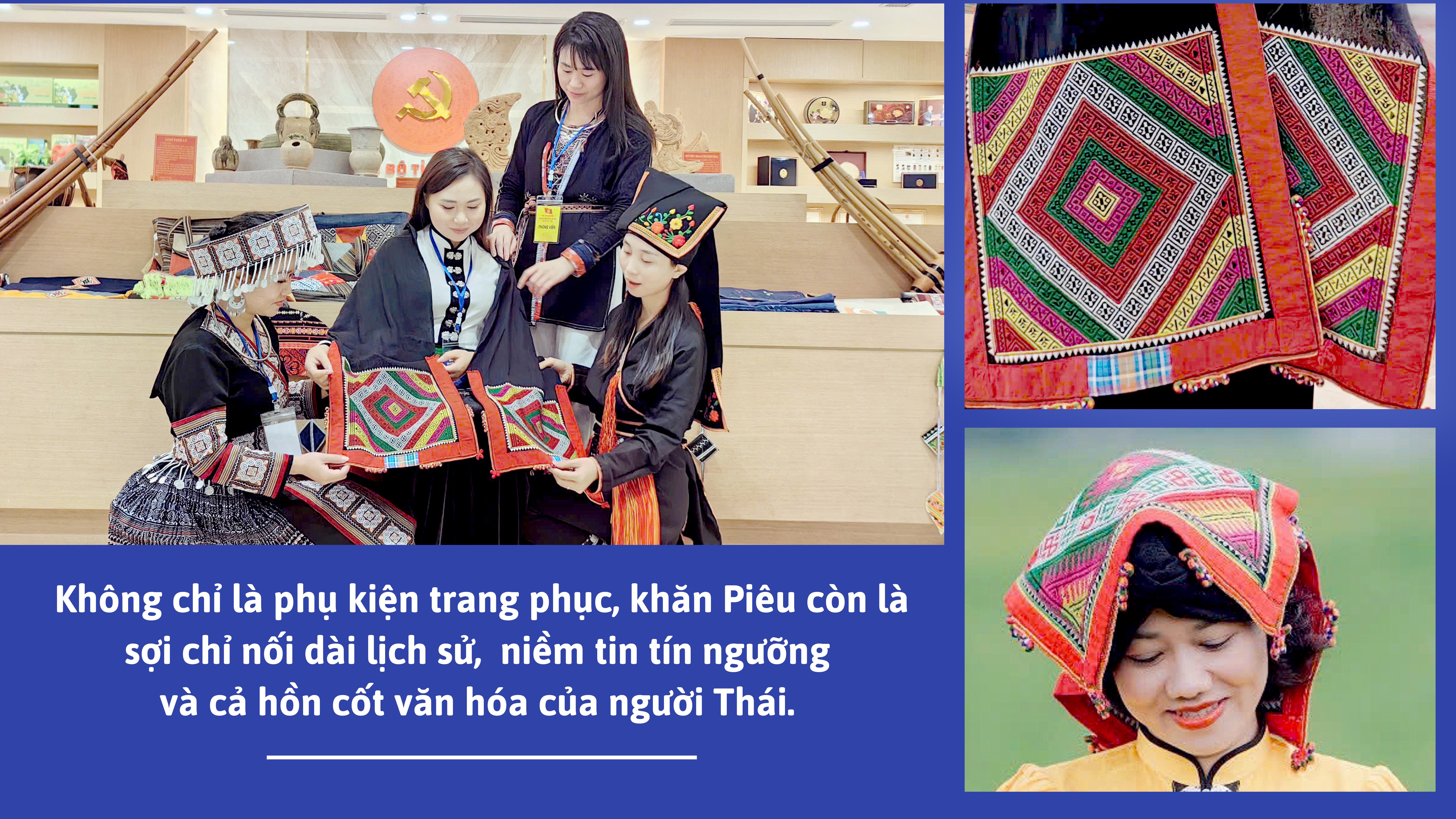
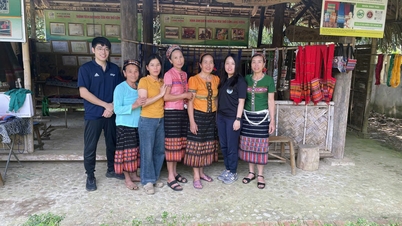
To better understand the Piêu scarf, I visited Thai ethnic villages, meeting women who still preserve and weave and embroider the soul of the Northwest mountains. "Piêu" in ancient Thai means headscarf, woven from cotton, dyed with indigo, and meticulously hand-embroidered. The scarf is typically 30-35 cm wide and 150-200 cm long, depending on the wearer.
However, what makes it truly special is not its length, but the intricate patterns and skillful embroidery techniques. One of the most unique techniques is hidden needle embroidery – a method used by Black Thai women to embroider from the reverse side of the scarf, allowing the patterns to appear sharp and delicate on the right side.
Ms. Dong Thi Thich, a passionate advocate for preserving and honoring the traditional intangible cultural values of the Thai ethnic group in Duong residential area, Cau Thia ward, slowly recounts the embroidery technique preserved through generations of Black Thai women: Instead of embroidering on the right side as is customary, Black Thai women perform the embroidery from the reverse side.
This technique doesn't allow for mechanical imitation; on the contrary, it encourages the subjective creativity of the embroiderer. It requires the craftsman to be skillful, meticulous, and culturally knowledgeable. The patterns appear on the right side, but the handwork is done on the reverse. This cannot be learned hastily, nor can it be done carelessly. Making a Piêu scarf is about embroidering memories and the identity of one's ethnic group into it.
Unlike many popular forms of embroidery, the patterns on Piêu scarves are not simply decorative, but a tightly structured system inspired by life and nature, from blades of grass and branches of flowers to birds, mountains, and hills… All carry symbolic meanings, reflecting the Thai people's philosophy of living in harmony with nature.
The two ends of the piêu scarf are the distinctive features, with "cút piêu" and "sài peng". According to the Thai people, "cút piêu" are small, rolled-up fabric buttons attached to the ends of the scarf, which can be in pairs, threes, fives, or even a cluster, showcasing skill and intricacy. "Sài peng" are colorful fabric tassels that sway when young women dance, like a gentle breeze caressing the tranquil indigo background.
Each scarf, whether it takes weeks or months to complete during leisure time, is the culmination of affection, aspirations, and love songs woven amidst the high mountains.
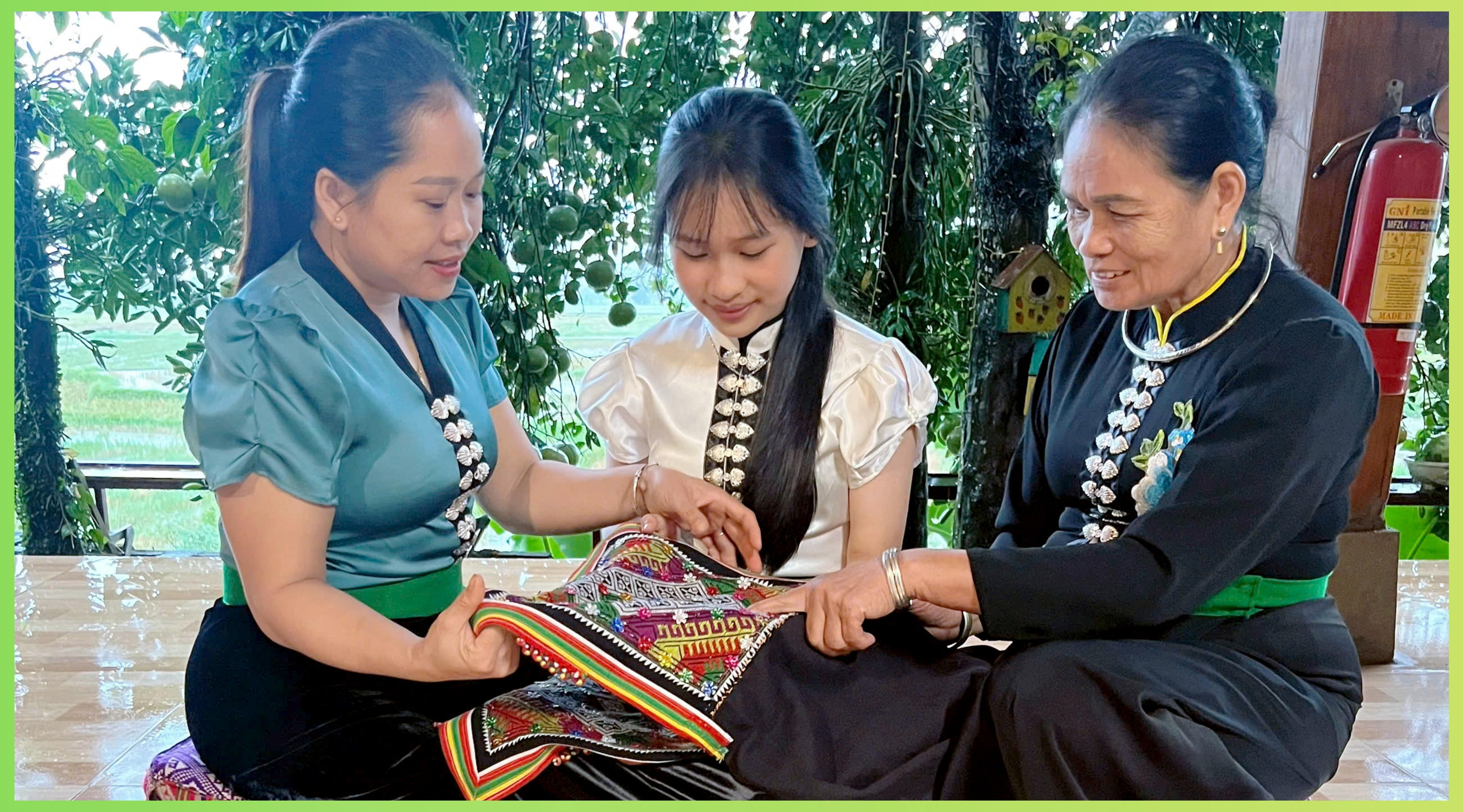
The Piêu scarf is not only an item for keeping warm and protecting from the sun, but also a silent testament to the refinement and grace of Thai women. It is a sacred gift in the love between a couple, an indispensable keepsake on the wedding day. Before going to her husband's home, a Thai girl usually prepares 20 to 30 scarves to give to her husband's parents, siblings, and relatives. The quantity and exquisite beauty of each embroidered scarf are a measure of the diligence, skill, and sincerity of the new bride.
According to traditional beliefs, a Thai girl might be clumsy in the kitchen, but she must know how to weave brocade and embroider Piêu scarves. This is proof of the ingrained "character" of Thai women – patience, refinement, love for their village, and the ability to preserve traditional beauty.
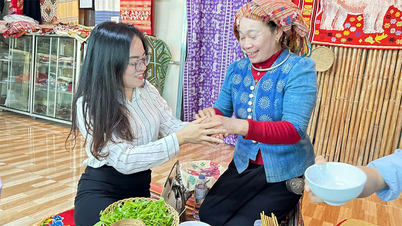
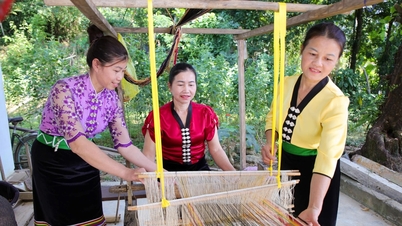
Then I sought out the mothers and grandmothers whose hair was streaked with gray, diligently preserving the craft. There, I witnessed the training sessions for young people in embroidery. Their patient gazes, their delicate hands guiding each stitch, and their gentle admonition filled the cozy stilt houses.
Ms. Dieu Thi Xieng, an outstanding artisan in Deu 1 residential area, Nghia Lo ward, shared: "Teaching scarf embroidery is not just about teaching a craft. It's about teaching children to preserve the character of Thai women, teaching them to cherish the heritage of their ancestors. As long as children love Piêu scarves, our culture will continue to live."
Sitting next to Mrs. Xieng, Luong Quynh Trang, a resident of Deu 1 neighborhood, Nghia Lo ward, shyly said: "At first, I found it very difficult because I wasn't used to seeing the reverse side. But the women and mothers taught me very carefully, and now I can embroider. After embroidering the scarf, I feel I understand more about my ethnic group and love my village more than before."
To ensure the enduring preservation of the cultural values of the Thai people of Muong Lo in general, and the Piêu scarf in particular, the local government has implemented several specific policies, including: creating a dossier on folk knowledge about the Black Thai costume, developing a plan to recognize the Piêu scarf as a national intangible cultural heritage, and organizing training classes in cultural villages…
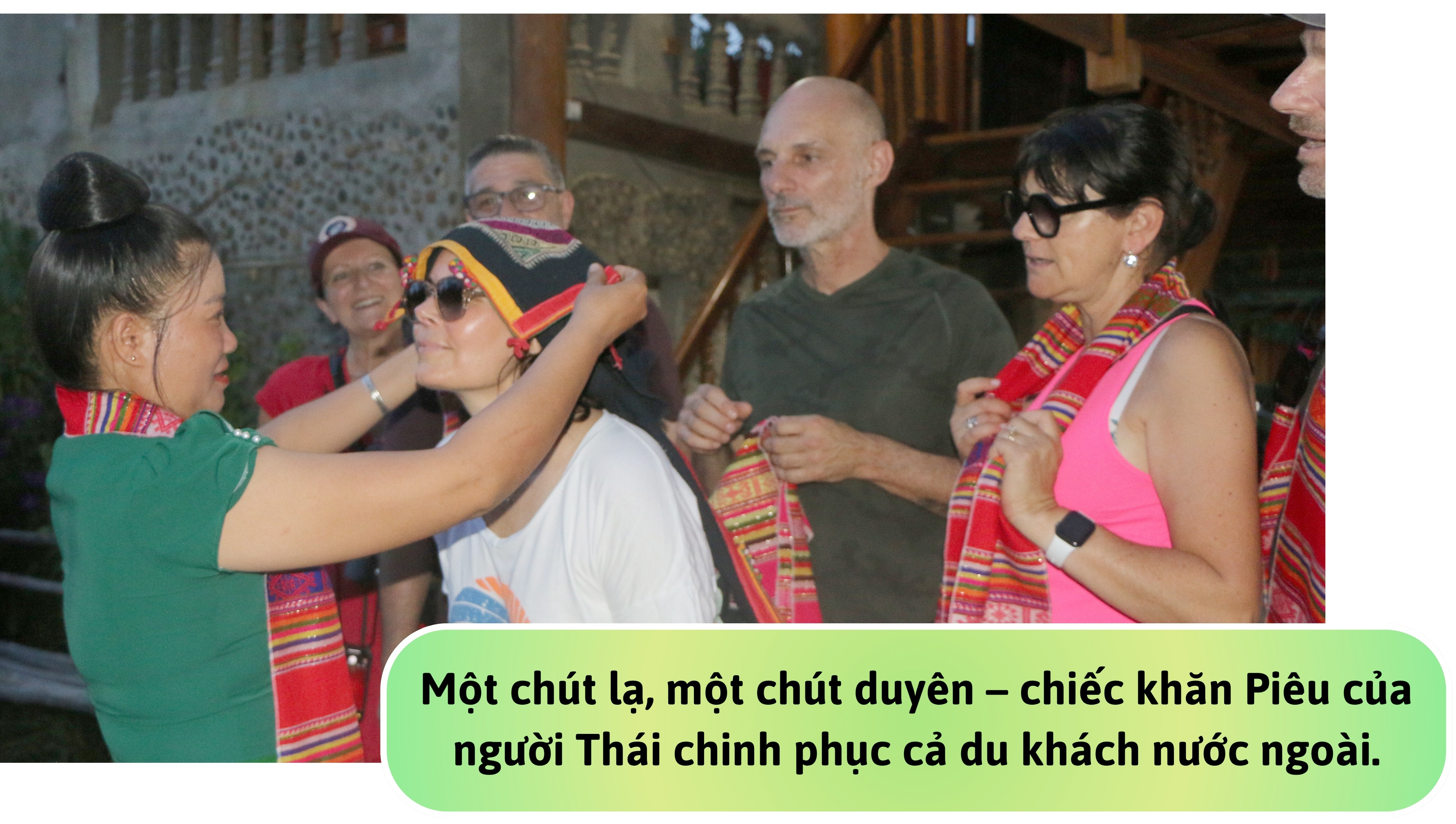
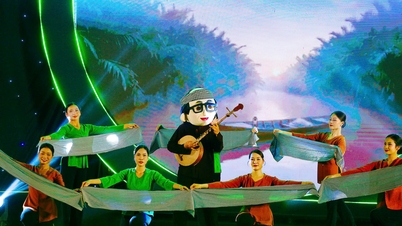
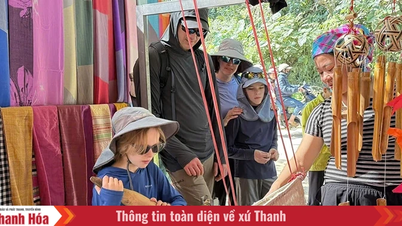
In particular, events such as the Muong Lo Cultural and Tourism Festival and the Northwest Cultural and Tourism Week, held annually, provide opportunities for the Piêu scarf to shine, not only in the dazzling traditional dances but also in the eyes of tourists from all over. From the headscarf worn during festivals to the sought-after handcrafted souvenir, the Piêu scarf is transcending village boundaries, transforming itself into a unique cultural product, carrying within it the memories and pride of the Thai people.
Whether worn on the head during festivals, wrapped around the waist during traditional dances, or displayed in souvenir shops, the Piêu scarf remains a part of the memories, aspirations, and love of the Mường people. Thanks to the dedication of the artisans and the attention of the local government, the Piêu scarf, both subdued and vibrant, continues to be preserved and shines brightly, a lasting promise of the national spirit in the culturally rich Mường Lò region.
Source: https://baolaocai.vn/sac-mau-khan-pieu-post883826.html
![[Image] "Journey of Hope" promotes the organ and tissue donation movement in Vietnam.](https://vphoto.vietnam.vn/thumb/1200x675/vietnam/resource/IMAGE/2026/05/20/1779294400833_1-8910-jpg.webp)

























































Comment (0)