

 |
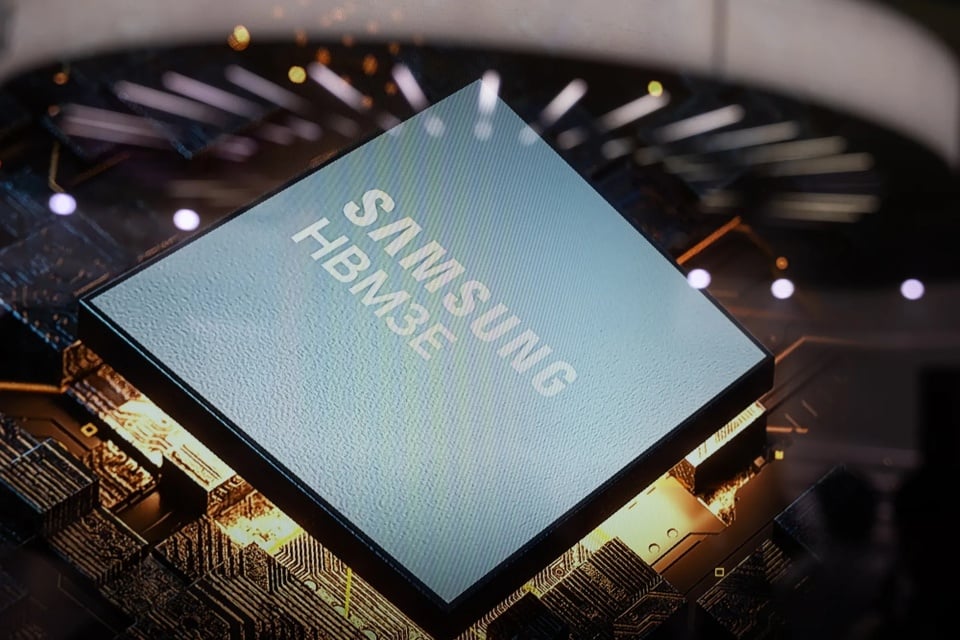
A sample of a high-bandwidth memory chip from Samsung. Photo: Bloomberg . |
Samsung Electronics has just announced that its Q4 2025 profits increased more than threefold compared to the same period last year, thanks to a shortage of memory chips and a surge in demand for AI server equipment.
Samsung's revenue in the fourth quarter of 2025 reached $65.58 billion , an increase of approximately 24% compared to the same period last year. The company's profit also set a record at $13.98 billion , an increase of more than 200% compared to the same period the previous year.
According to CNBC , Samsung's previous record profit was recorded in the third quarter of 2018, at $12.34 billion . Key business indicators all exceeded analysts' estimates.
Memory chip profits reach record high.
Samsung remains the South Korean company by market capitalization. According to its financial report released on January 29th, the company's profits mainly come from its memory chip business, part of its Device Solutions (DS) division.
Samsung's chip business alone saw a surge in Q4 2025 profits of 470%, reaching a record high of $11.49 billion , accounting for over 80% of the company's total profits.
Scarcity leads to an upward price trend, boosting sales of high-bandwidth memory chips and other value-added products.
High-bandwidth memory (HBM) is memory used in chips for AI data centers. In 2025, Samsung shifted its focus to this technology, amidst competition from AI chip companies like Nvidia for HBM orders, leading to demand exceeding supply.
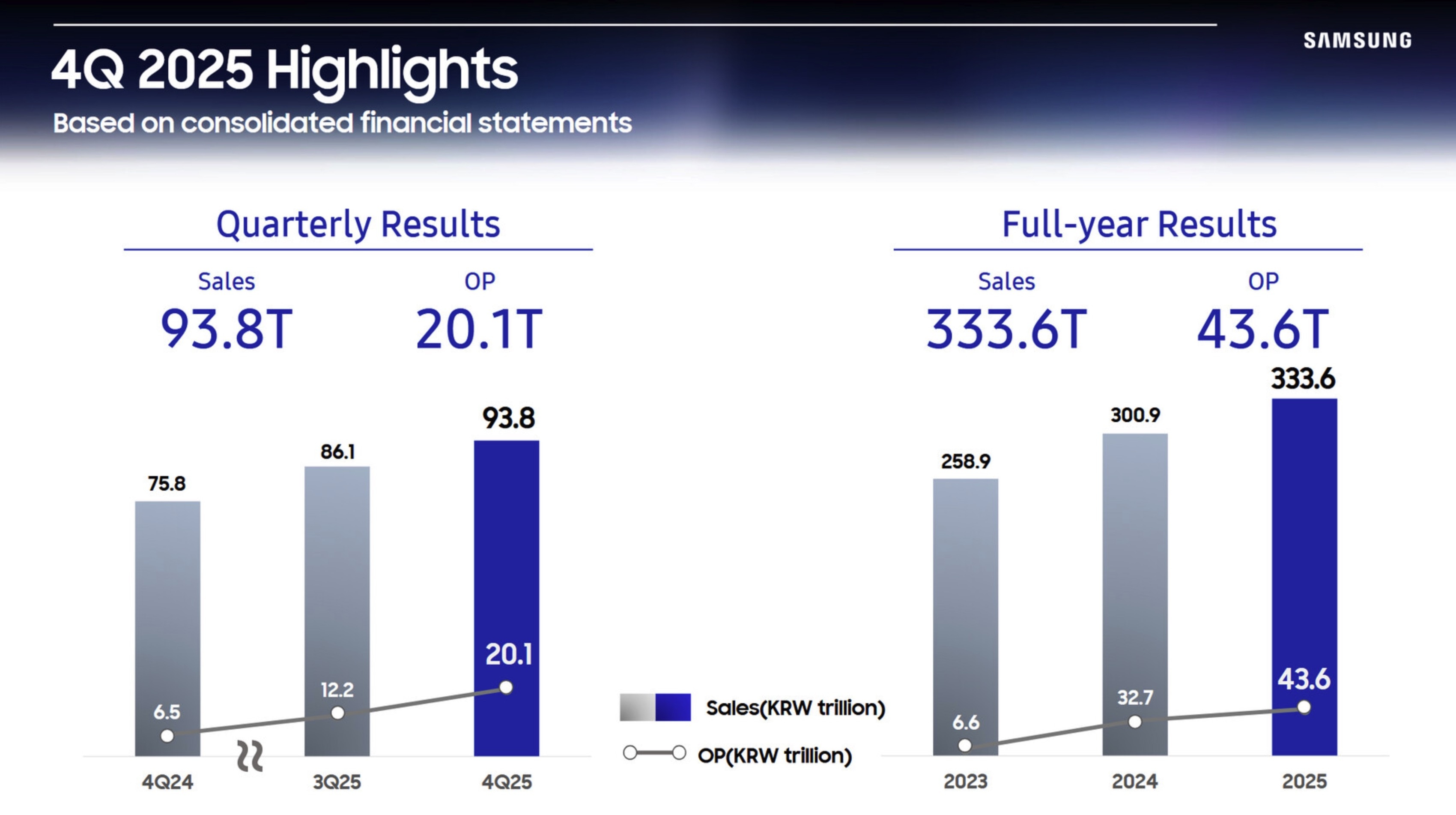 |
Samsung Electronics' Q4 2025 and full-year 2025 business results. Photo: Samsung . |
As chip manufacturers shifted their focus to high-performance memory, the mainstream chip market faced significant challenges. This shortage drove up the prices of chips used in personal computers and mobile devices.
This benefits major companies in the industry such as Samsung and SK Hynix. On January 28, Samsung's rival also announced record-breaking profits for its most recent quarter.
"In Q1 2026, the DS division will continue to focus on profitability by emphasizing high-performance products," Samsung said.
Samsung has revealed it will ship its next-generation high-bandwidth memory chips (HBM4) to customers in the first quarter. Analysts predict the first batches of chips will be shipped to Nvidia.
Recently, Samsung has been trying to catch up with rival SK Hynix, a supplier of advanced memory chips to major clients such as Nvidia. Last year, supply delays impacted Samsung's profits and stock price.
Many departments are experiencing difficulties.
The mobile experience segment, responsible for selling smartphones, tablets, wearables, and some other products, recorded weaker results in Q4 2025.
Specifically, the division's operating profit was approximately $1.33 billion , down 9.5% year-on-year and more than 45% quarter-on-quarter.
Samsung stated that the decline stemmed from the lack of fanfare surrounding the launch of new smartphone models, combined with intense competition in the market.
In the first quarter of 2026, the South Korean company plans to ramp up the development of AI-integrated smartphones, including "agent AI experiences" on the upcoming Galaxy S26 series.
Samsung also faces a more competitive market, with pressure from Chinese companies and geopolitical tensions. Company leaders have stated that they will prioritize profitability through supply chain stability and cost control rather than pursuing sales volume.
Memory chip shortages also pose significant challenges for the smartphone division. The South Korean company warned that rising chip prices would increase the cost of manufacturing smartphones and displays. According to Reuters , this forecast caused Samsung's stock to fall 1.2% on the same day.
"The significant shortage of large-scale memory products will continue for the foreseeable future," said Kim Jaejune, head of memory chip division at Samsung.
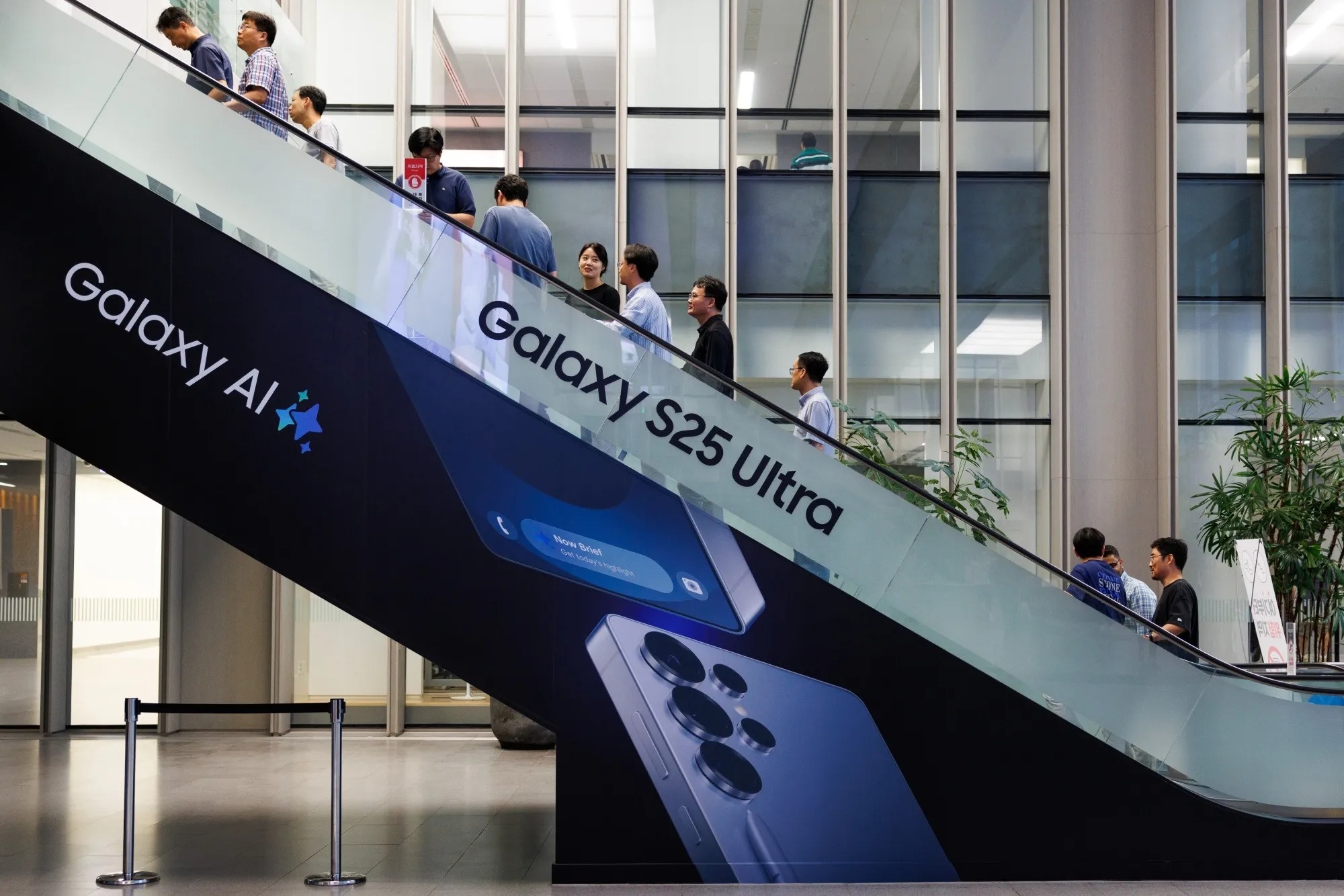 |
Samsung will continue to push AI in the successor to the Galaxy S25. Photo: Bloomberg . |
Sohn In-joon, an analyst at Heungkuk Securities, believes that the upward trend in memory prices could positively impact overall profits, but the burden of memory costs will weigh heavily on the mobile business.
Earlier this year, Samsung™ co-CEO Roh described the current chip shortage as "unprecedentedly severe," and did not rule out the possibility of price increases.
According to analyst Ko Yeongmin from Daol Investment & Securities, Samsung's strategy for protecting its mobile division's profit margins in 2026 will be a key concern.
Samsung Display's display business also forecasts weaker smartphone demand in the first quarter, due to memory shortages leading to increased costs, and potential customer pressure for price reductions.
In the most recent quarter, Samsung's display business nearly doubled its profits to $1.4 billion , driven by strong sales of Apple's iPhone 17 series. Larger display revenue also improved during the year-end peak season, driven by OLED and QD-OLED products.
The weakness continued to come from the consumer electronics division with a loss of $420 million . According to DigiTimes , this was due to competitive pressure in the TV sector and a seasonal decline in air conditioning demand. Meanwhile, audio company Harman recorded a slight increase in profits thanks to supplying automotive parts to European manufacturers.
In Q1 2026, Samsung expects demand related to AI and servers to continue to grow, contributing to profits in its semiconductor division. Company leaders consider AI to be a key growth driver for the year, pointing to a sustainable investment strategy in advanced memory, logic chips, and AI-powered devices.
Source: https://znews.vn/samsung-cong-bo-loi-nhuan-ky-luc-post1623858.html



















































































Comment (0)