


Providing farmers with the knowledge to produce coffee sustainably.
On the afternoon of April 11th, in Da Lat City (Lam Dong province), the National Center for Agricultural Extension organized a workshop to summarize and evaluate the project on building policy dialogue and raising awareness about the responsible use of agricultural inputs, waste collection, and treatment in coffee production in Vietnam. The project, implemented in 2024-2025, aims to promote sustainable coffee production in Vietnam.
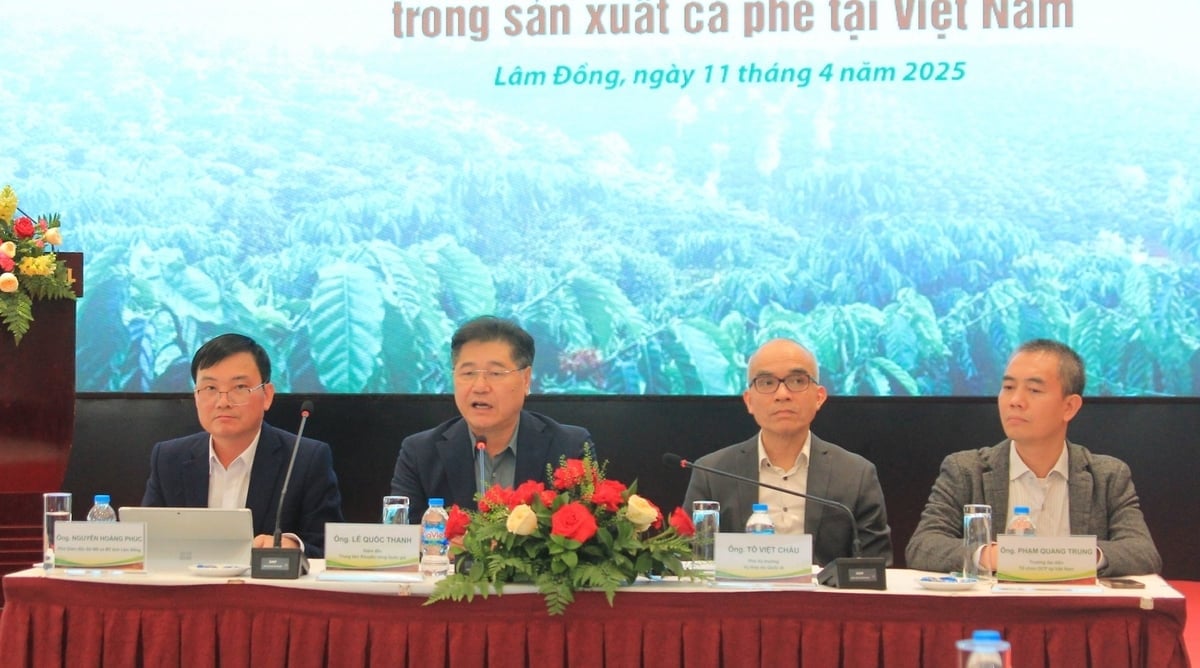
Leaders of the participating units chaired the discussion at the workshop. Photo: PC.
According to the National Center for Agricultural Extension, despite its great potential, the Vietnamese coffee industry is facing many challenges in the process of sustainable development, especially in waste management and the responsible use of agricultural inputs.
Currently, waste management in Vietnam's coffee industry faces many limitations due to public awareness, inconsistent treatment technologies, and a lack of supportive policies. Waste from coffee production (fruit husks, coffee grounds, processing wastewater, fertilizer packaging, pesticides, etc.) is not collected and treated according to regulations, causing negative impacts on the environment and soil degradation due to the inappropriate use of chemical fertilizers and pesticides, disrupting the balance of microorganisms, and emitting greenhouse gases from processing and transportation.
Therefore, ensuring the responsible use of agricultural inputs and the proper collection and disposal of waste is a long-term process that requires synchronized changes from policy to the behavior of producers.
To achieve the project objectives, the National Agricultural Extension Center organized 12 training courses for 360 participants on advanced weed management practices and good coffee farming practices, occupational health and safety, as well as skills training for members of the community agricultural extension network in 4 Central Highlands provinces; 2 consultative workshops with stakeholders to find solutions and share responsibilities for waste collection and management in coffee production; and 2 communication seminars with the participation of 240 delegates to disseminate the results and impacts of the project.
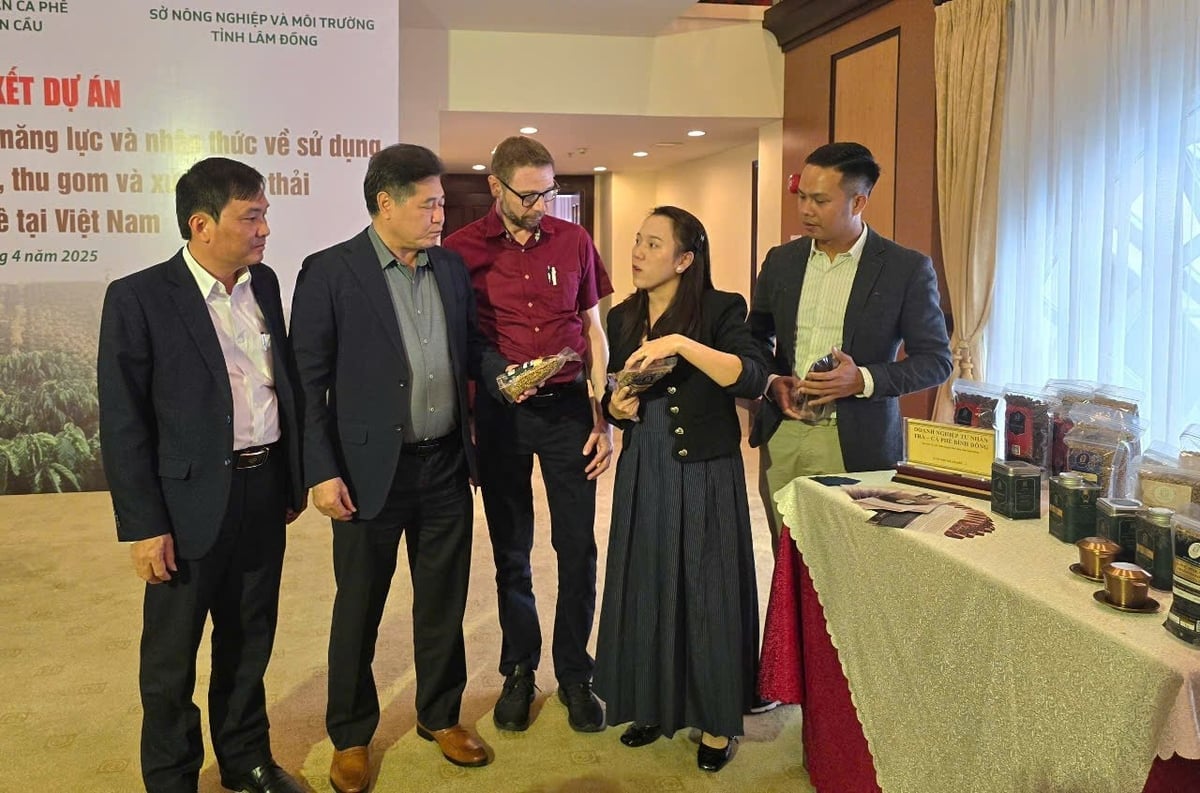
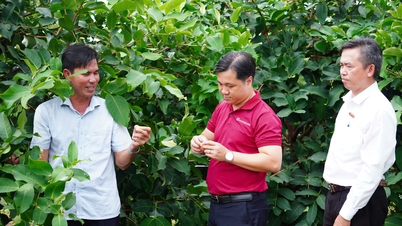
Mr. Le Quoc Thanh (second from the left), Director of the National Agricultural Extension Center, visits the coffee display booth of Binh Dong Farm. Photo: PC.
Through this, the project has achieved remarkable results in raising awareness among agricultural extension officers, members of community agricultural extension groups, and coffee producers about the necessity of proper waste collection and treatment measures, minimizing negative impacts on the environment. It has also addressed the stringent market requirements for food safety and hygiene and the sustainable development of the coffee market.
In addition, trainees were equipped with essential knowledge and skills to apply sustainable farming practices, manage agricultural supplies effectively, and carry out initial waste collection and treatment at the household level. The community extension force was strengthened and the operational capacity of its members was enhanced.
Consultative workshops and seminars provided important information and recommendations to management agencies, extension officers, community extension workers, and stakeholders in reviewing and adjusting policies related to sustainable waste management and agricultural input use in coffee production.
Environmentally friendly production
With an area of approximately 176,000 hectares and a production of nearly 600,000 tons per year, in recent years, to enhance the value of the coffee industry, Lam Dong province has focused on developing sustainable coffee production according to certified standards, covering over 86,000 hectares, such as: Organic certification, VietGAP, 4C…
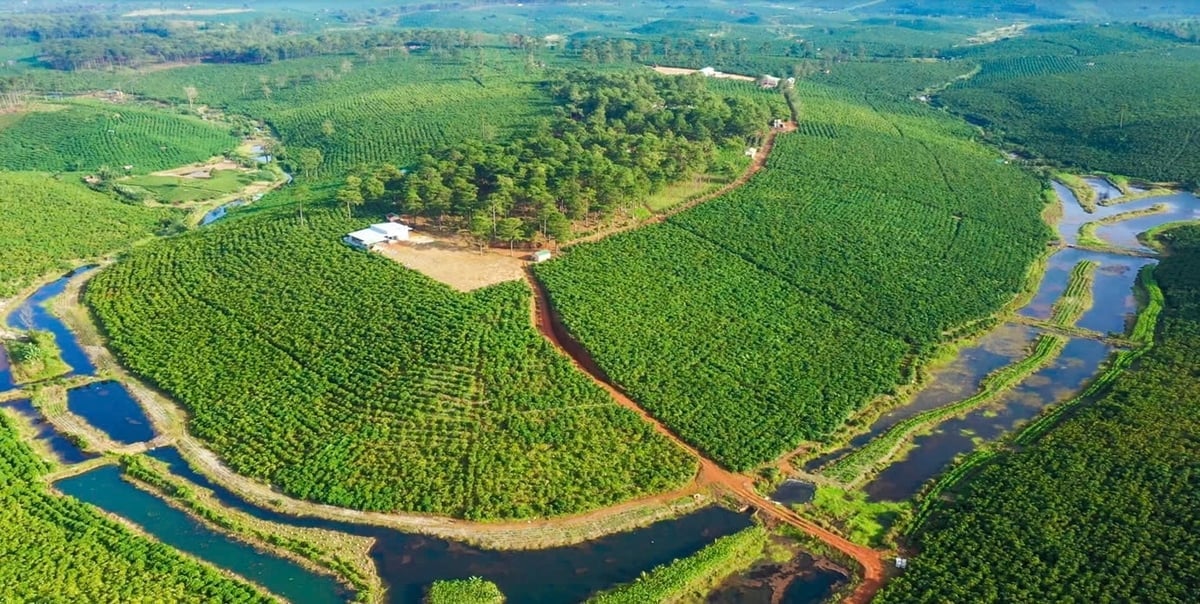
Lam Dong province has focused on developing sustainable coffee production according to certified standards, covering over 86,000 hectares, such as organic certification, VietGAP, 4C, etc. Photo: PC.
According to Mr. Nguyen Hoang Phuc, Deputy Director of the Department of Agriculture and Environment of Lam Dong province, coffee farmers in the province use over 350,000 tons of fertilizer annually, including approximately 140,000 tons of organic fertilizer and over 200,000 tons of inorganic fertilizer. In addition to fertilizer use, the widespread use of chemical pesticides, if not properly collected and processed, will significantly impact the ecological environment.
"Therefore, over the years, the leaders of Lam Dong province have always paid attention to directing safe and sustainable agricultural production. They have especially focused on environmental protection through resolutions, programs, and plans of the Provincial Party Committee and the Provincial People's Committee. As a result, agricultural products in general, and coffee in particular, always ensure quality and meet export requirements," said Mr. Nguyen Hoang Phuc.
The clearest example is Binh Dong Farm, with its 111-hectare coffee cultivation and production area in Loc Ngai commune, Bao Lam district (Lam Dong province). Of this, 90 hectares are dedicated to coffee cultivation, over 5 hectares to ponds and lakes, and 2.5 hectares to factory space…
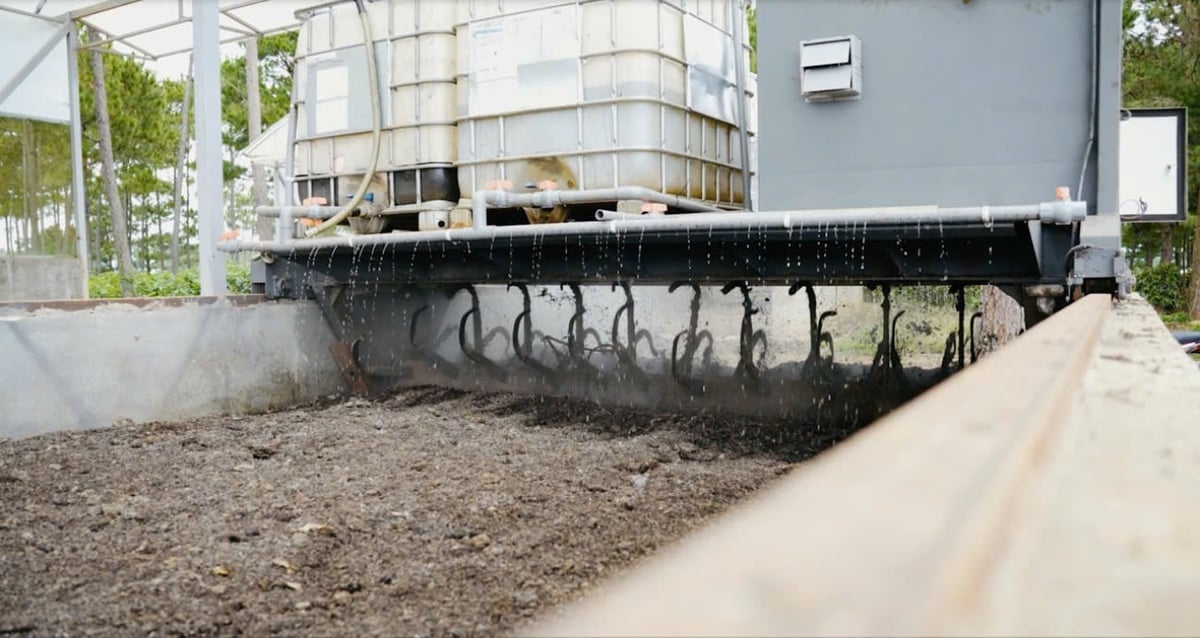
The area for processing coffee husks for composting at Binh Dong Farm. Photo: PC.
To enhance the value of coffee and transform ordinary coffee into a higher-value product on the market, Binh Dong Farm decided to shift from traditional production to high-quality coffee. This process is carried out using organic, environmentally friendly methods, without the use of herbicides, and providing a balanced blend of organic and inorganic nutrients.
Mr. Nguyen Thanh Loc, CEO of Binh Dong Farm, said that not only has the quality of raw coffee improved, but the coffee processing process has also been enhanced. Binh Dong Farm utilizes the principle of water flow to wash and remove impurities and substandard coffee, prioritizing the selection of waterless (or minimally water-free) hulling machines. The coffee husks after initial processing are combined with biological preparations for composting. After being thoroughly mixed and composted for 3-5 months, the compost is used as fertilizer for crops.
The wastewater from the preliminary processing will flow into three settling ponds, and the farm will use additional probiotic strains to quickly treat organic matter in the waste and enhance the efficiency of wastewater treatment. After being treated in the three settling ponds, the wastewater is then discharged into the external water system and used for irrigating coffee plants.

Mr. Nguyen Thanh Loc, CEO of Binh Dong Farm, presented the results of wastewater treatment in the farm's sustainable coffee production at the workshop. Photo: PC.
“Through sustainable coffee farming and production, coffee yields have increased from 3-4 tons/ha to 5-6 tons/ha, quality has improved significantly, and the sugar content in the fruit has increased. In addition, the number of international customers is growing, and Binh Dong Farm's coffee is now exported to countries such as Turkey, Belgium, New Zealand, and South Korea…,” said Mr. Nguyen Thanh Loc.
According to Mr. Le Quoc Thanh, Director of the National Agricultural Extension Center, in recent years, the Ministry of Agriculture and Environment has directed localities to develop raw material areas, focusing on solutions to support farmers and cooperatives in connecting with businesses, emphasizing safe and sustainable solutions, especially for value-added export product chains.
“Last year, our country exported over $5 billion worth of coffee. Although production decreased, the value of the coffee industry is increasing. This is proof that we have accessed value-added production chains through sustainable, high-quality, and green growth production,” Mr. Le Quoc Thanh emphasized.
In 2024, Vietnam's coffee exports are estimated to reach 1.32 million tons, with a value of US$5.48 billion, a decrease of 18.8% in volume but an increase of 29.11% in value compared to the same period in 2023. The average export price of coffee in 2024 is estimated at US$4,151 per ton, an increase of 56.9% compared to the same period in 2023.
Source: https://nongnghiep.vn/san-xuat-ca-phe-sach-ben-vung-d747772.html

![[Photo] The General Secretary presents the title of Hero of the People's Armed Forces to the Navy.](https://vphoto.vietnam.vn/thumb/1200x675/vietnam/resource/IMAGE/2026/02/28/1772251730336_vna-potal-tong-bi-thu-to-lam-du-va-trao-danh-hieu-anh-hung-llvt-nhan-dan-cho-quan-chung-hai-quan-8612073-jpg.webp)











![OCOP during Tet season: [Article 4] Elevating local products](https://vphoto.vietnam.vn/thumb/402x226/vietnam/resource/IMAGE/2026/01/29/1769652810578_2935-z6982071462129_649e82db06fb2f2ea701388b1f5f5b0b-173322_176-185229-202804_457.jpeg)


























































Comment (0)