

Compact living space in a vehicle.
Over the past five years, the demand for converting cars into mobile homes (mobihomes) for long-distance road trips and camping has become increasingly popular. On social media, many groups have emerged, such as Mobihome Vietnam, Mobihome & Camping Car Vietnam, etc., becoming places to share experiences in designing, modifying, and even renting, buying, and selling this type of vehicle.
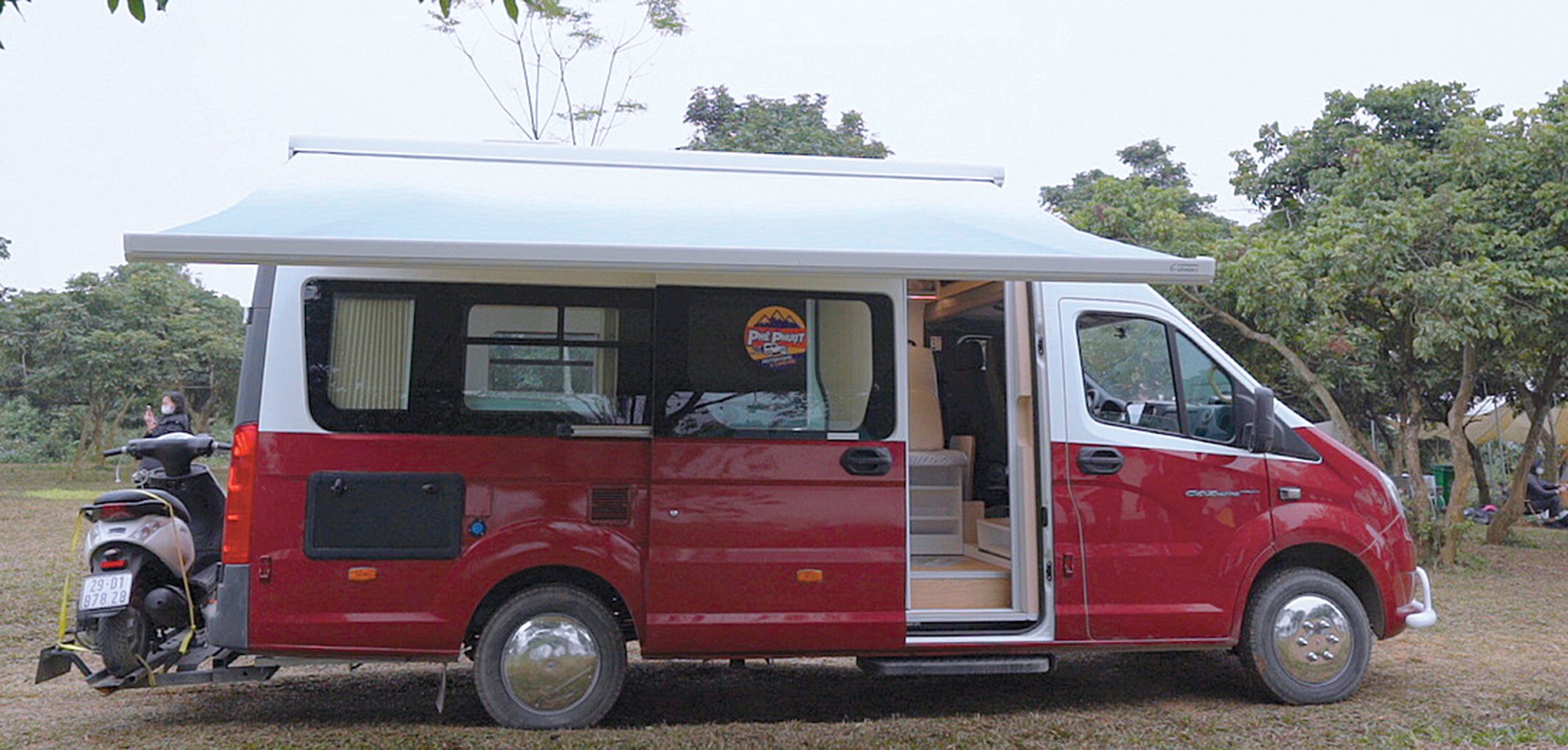
This is the location where Mr. Doan Kieu Dung's family stopped to set up their makeshift tent and campsite during their 42-day journey in their motorhome.
Returning from a 42-day cross-Vietnam trip in his mobile home, Mr. Doan Kieu Dung (residing in Hoang Mai, Hanoi ) recounted his longest journey on the motorhome he designed, assembled, and equipped himself, naming it the T-Love: "The current road infrastructure is good enough for this type of vehicle."
Inside the modified 19-seater GAZ van imported from Russia, living amenities including sleeping space for 4 people, blankets, pillows and mattresses, a toilet, a kitchen and sink, pots, pans, dishes, food, and a foldable dining table are arranged meticulously down to the millimeter.
The vehicle is equipped with a retractable awning to protect from sun and rain, and a set of folding tables and chairs for outdoor seating. It also carries an 11kW battery pack to power lighting, fans, a refrigerator, and air conditioning. A cleverly designed 500-liter container of fresh water is provided for bathing and flushing the toilet.
"All the amenities of everyday living are packed into a 16-seater vehicle with a floor area of about 8 square meters. When in traffic, it's like a normal vehicle, but when stopped, it transforms into a fully equipped house," Mr. Dung said.
The cost is in the billions of dong.
A memorable experience during Dung's trip was when his car got stuck in quicksand and he couldn't get out on his own, so he had to call for rescue. According to him, this was a valuable lesson when camping on the beach: it's essential to survey the parking location and access road to see if there's a risk of the car wheels getting stuck in the sand.
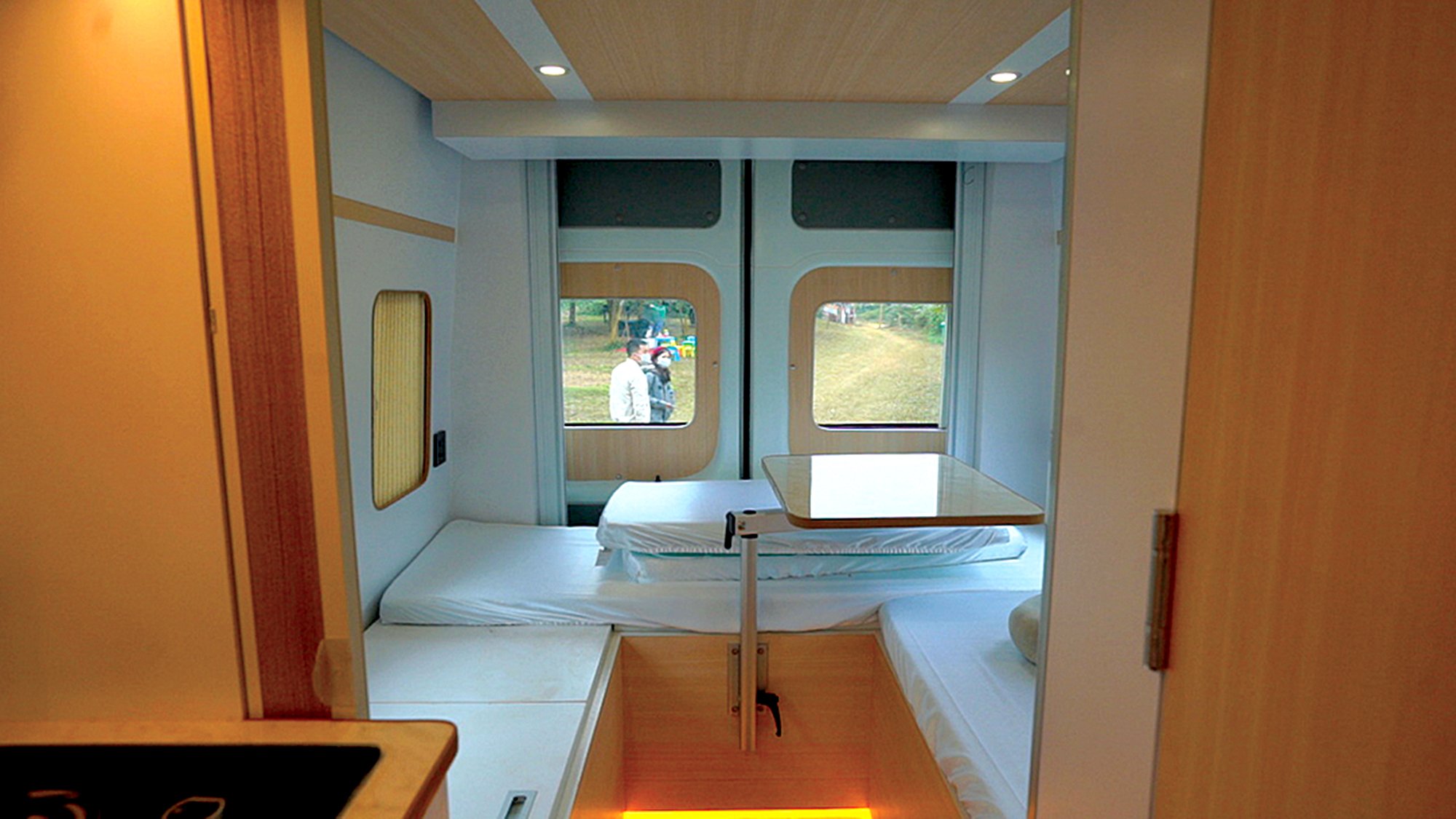
The sleeping area is set up inside Mr. Doan Kieu Dung's T-Love motorhome.
Waste from the vehicle and household garbage must be collected and disposed of properly. During his 42-day journey, Mr. Dung often chose to stop at gas stations to refuel and also to dispose of household garbage and toilet waste.
According to Mr. Dung, there are currently over 100 motorhomes operating in Vietnam, mainly built on the platforms of two models: the Russian GAZ (19-seater) and the Hyundai Solati (16-seater). The Ford Transit is less commonly used as a motorhome due to its limited height and space.
The cost to transform a 16-19 seat minibus into a motorhome ranges from 1.5 to 1.7 billion VND, including the 1 billion VND vehicle price. The cost of interior finishing alone ranges from 500 to 700 million VND, depending on the equipment and materials used.
The motorhome community currently has thousands of members, including architects, doctors, and many artists.
Mr. Dung is currently a businessman and chairman of a media group, but he still enjoys traveling extensively with his wife and children. He says that in the motorhome community, many people still work normally during their trips, as the vehicle can effectively meet their work needs while on the go.
"Unleashing" motorhomes
According to Mr. Bui Tuan Khanh (Duong Kinh district, Hai Phong), the owner of a self-made motorhome converted from a 12-seater Toyota Hiace, his vehicle has only been used for a distance of 20km, from his home to Do Son district for camping and back. The reason is that owners of this type of vehicle are always apprehensive when going out on the road, as there are no clear regulations regarding this type of vehicle, making it impossible to register for inspection.
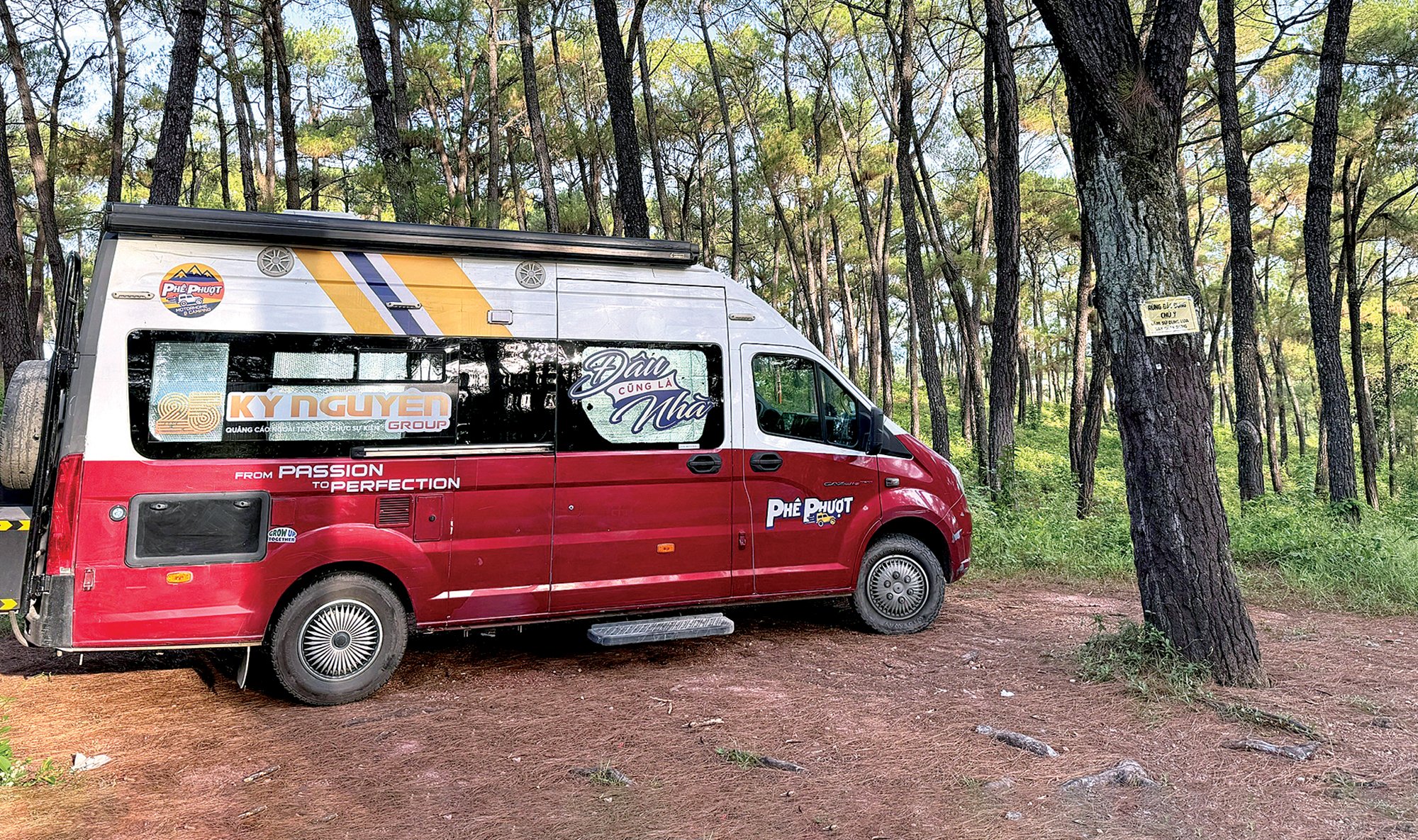
The motorhome community currently has over 100 vehicles operating nationwide, with many people living and working in their vehicles.
"I'm very pleased that the new draft regulations have clearly defined it. Furthermore, allowing the import of refurbished used motorhomes (according to Decree 66/2024) will pave the way for this type of vehicle to enter Vietnam in a proper manner," said Mr. Khanh.
According to Mr. Doan Kieu Dung, having regulations on motorhomes means that this type of vehicle is officially recognized, and he can drive a motorhome through ASEAN countries with valid vehicle documents and an international driving license. This official recognition will promote the development of mobile home tourism.
From a business perspective, workshops specializing in customizing motorhomes, as well as those selling accessories and equipment, will thrive, making it easier for enthusiasts to access the latest equipment.
Commenting on the upcoming regulations, Mr. Doan Kieu Dung suggested that several points need updating to improve them. Firstly, regarding the vehicle inspection cycle, it should be based on the vehicle's lifespan. For imported used vehicles (manufactured from 2015 onwards), a one-year inspection cycle should be applied.
Secondly, regarding road maintenance fees, they should be applied the same as for passenger cars with the same number of seats (for motorhomes, it's based on the number of sleeping berths). Thirdly, regarding driver's licenses, motorhome drivers should use the current B2 license, as the number of seats in this type of vehicle after modification is usually less than 9, typically only 2 seats in the cabin and 4 sleeping berths in the rear compartment.
In the draft of the new regulations (amended to QCVN 09:2024/BGTVT), the management agency has clearly defined: Recreational Vehicle (Motor Caravans; Motorhome or Mobilehome) is a specialized passenger vehicle designed with a living compartment equipped with minimum amenities: sleeping space (which can be converted from seating), cooking equipment, table, chairs, storage or other storage cabinets.
The draft outlines the necessary safety conditions and equipment, as well as minimum standards to ensure comfortable living conditions on the vehicle, such as minimum bed and door sizes, separate electrical systems for household use from the vehicle's electrical system, the presence of fuses, and the secure placement of cooking appliances, among many other regulations.
Source: https://xe.baogiaothong.vn/dan-choi-nha-di-dong-sap-duoc-thua-nhan-192240829160233822.htm





























































![[Infographic] Vietnam's Economic Situation Report, Q1 2026: Strong Growth Momentum](https://vphoto.vietnam.vn/thumb/402x226/vietnam/resource/IMAGE/2026/04/04/1775298512042_tang-truong-kinh-te-viet-nam.jpeg)
![[Image] Close-up view of the 10-lane road connecting to Long Thanh Airport](https://vphoto.vietnam.vn/thumb/402x226/vietnam/resource/IMAGE/2026/04/04/1775291871988_ndo_br_1-resize-5690-jpg.webp)
























Comment (0)