

Digitize all records and data as soon as possible.
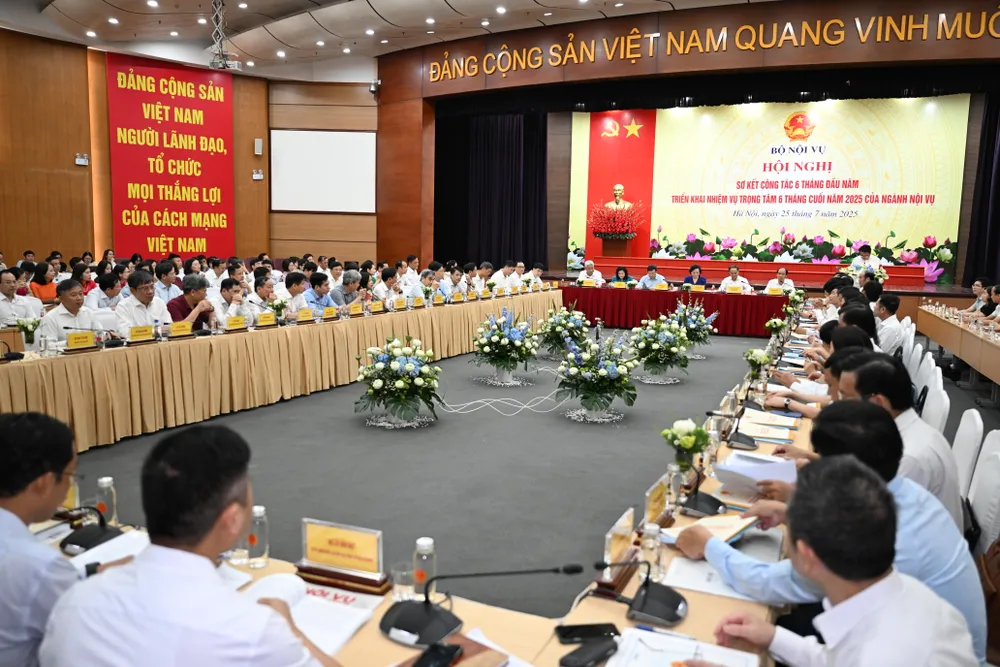
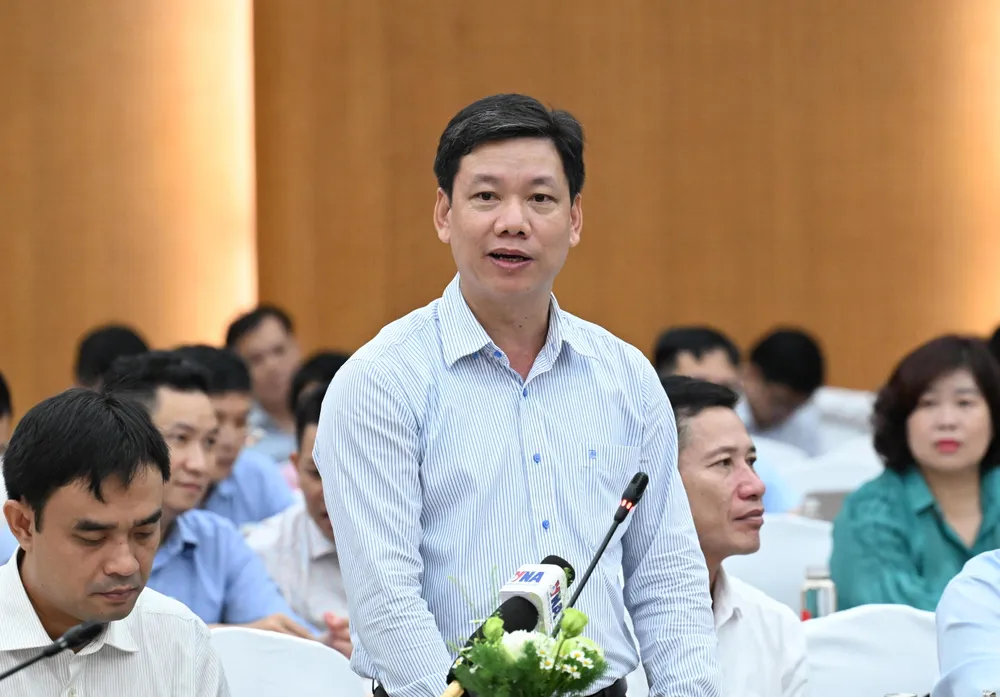
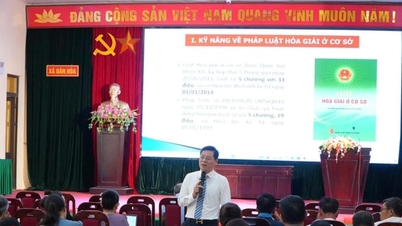
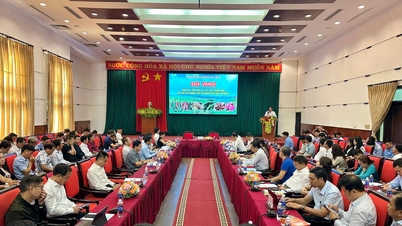
At the conference, the Director of the Department of Internal Affairs of Nghe An province, Nguyen Viet Hung, shared that over the past six months, the locality has implemented the plan to reorganize commune-level administrative units and build a two-tiered local government system in the province according to the set plan and roadmap.
Accordingly, before the reorganization, Nghe An province had 412 commune-level administrative units (including 362 communes, 33 wards, and 17 towns). After the reorganization, Nghe An province has 130 commune-level administrative units (including 119 communes and 11 wards).
Following the reorganization, the task of document archiving under the new local organizational model has become an urgent requirement, especially in the context of Nghe An province suffering from the heavy rains and floods caused by typhoon No. 3.
Mr. Nguyen Viet Hung stated that the Department of Internal Affairs had established two working groups to directly work in districts, cities, and towns (before the reorganization) to inspect and compile statistics on the existing volume of documents and provide guidance on safe preservation, preventing document loss, and providing professional guidance on document management and archiving before, during, and after the reorganization of the organizational structure and the implementation of the two-tiered local government.
After review, the People's Committee of Nghe An province approved the plan for arranging, allocating, and handling public assets for the (new) commune-level governments after the reorganization, in order to promptly hand over assets and ensure that the (new) commune-level governments operate smoothly, efficiently, effectively, and efficiently; preventing disruptions to management, asset losses, and impacts on state management and public service provision.
"The workload at the commune level is heavy, and much of it has been decentralized. The chairman of the commune People's Committee basically performs the duties of the former chairman of the district People's Committee. Currently, the volume of archived records is enormous, and localities often suffer from floods that threaten the safety of record storage. Therefore, this requires data digitization and specific regulations for preservation," Mr. Hung raised the issue.
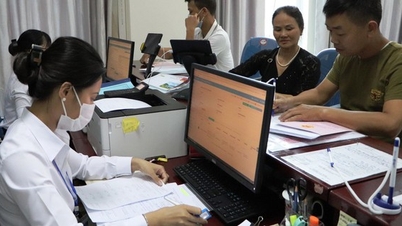
According to Mr. Nguyen Viet Hung, Nghe An province has encountered several difficulties and obstacles in the operation of its two-tiered local government model. Firstly, in some areas, the infrastructure and equipment are still inadequate and insufficient to meet the demands of the job.
Furthermore, the quality of commune-level officials and civil servants is uneven, requiring time for familiarization, adaptation, and assignment of tasks that match their abilities and strengths. In Nghe An province, some communes and wards currently lack personnel with the necessary training and experience in state management in the fields of health, education , and science and technology, leading to difficulties in advising and implementing tasks. There is also a localized surplus and shortage of officials and civil servants among communes, especially in remote and disadvantaged areas.
“The volume of files and documents accumulating and being reorganized at the People's Committees of districts, cities, and towns (before reorganization) is large; the facilities and equipment for collecting, preserving, and protecting files and documents are still limited,” Mr. Hung raised the issue and suggested that the Government clearly define the authority in the recruitment, management, and use of civil servants in educational institutions at the grassroots level to facilitate implementation. Along with that, he requested an early assessment of the project “Completing the modernization of administrative unit maps.”
The software connection system is not stable.
Meanwhile, sharing about the difficulties in operating the two-tiered local government model, Mr. Nguyen Quoc Huu, Director of the Department of Internal Affairs of Thai Nguyen province, said that when operating the new model, it requires diligent and hardworking officials who are not passive in order to be proactive in their work. In Thai Nguyen, when implementing the new government model, even at 10 PM, upon receiving instructions, officials at the department immediately hold meetings to report to the provincial leaders the next morning.
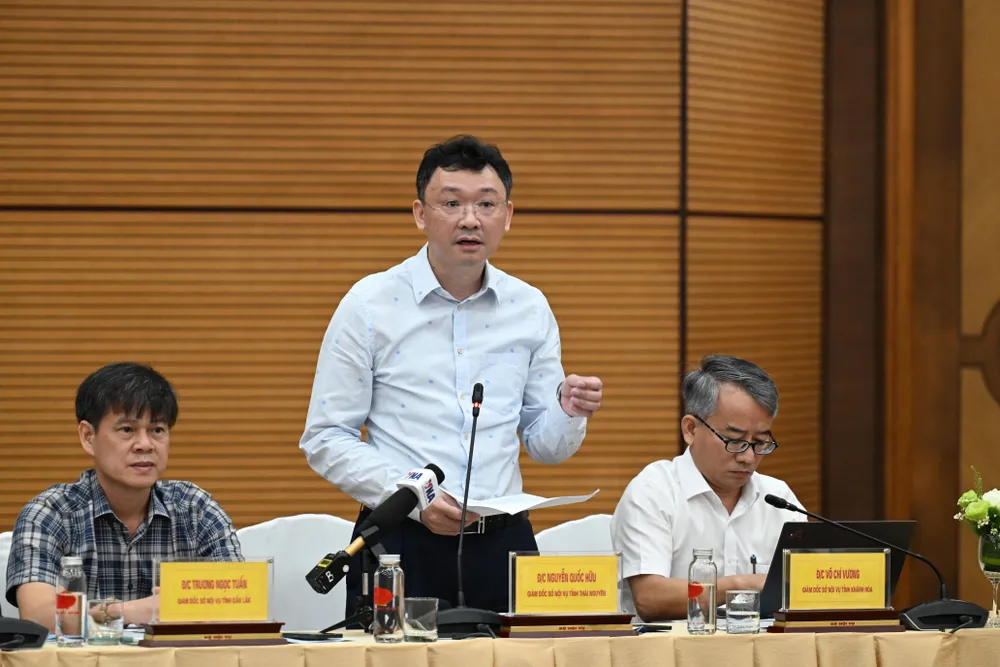
"The courage, intelligence, and dynamism of internal affairs officers must be promoted. It's very stressful, and sometimes we 'take a beating' because of the heavy workload and hard work. We also have to go down to the communes to guide people through bottlenecks, showing them how to do things step by step. If we don't resolve issues at the grassroots level, they might turn into big problems when we get to the provincial level," Mr. Huu said.
Mr. Nguyen Quoc Huu suggested that, in mountainous areas, especially among ethnic minorities, where young people have a good understanding of the local area, the ethnic language, and technology, the Ministry of Interior should provide guidance on recruiting part-time officials at the commune level to carry out assigned tasks, as the workload at the commune level is very large.
The Director of the Department of Internal Affairs of Lam Dong province, Do Van Chung, also highlighted the current situation when operating the new local government organizational model. According to Mr. Chung, currently, specialized civil servants at the commune level have not received in-depth training, and sometimes encounter many difficulties in implementation. Mr. Chung cited the example of the Department of Culture and Social Affairs, where all tasks from labor management and organizational structure to salaries are handled by a single person, which is very challenging.
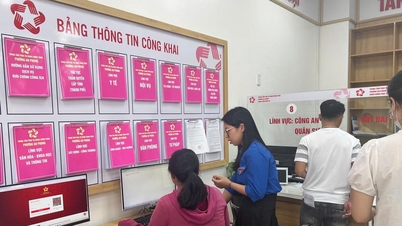
According to Mr. Chung, the locality still has many small, scattered office buildings, some of which are dilapidated and in need of investment. In addition, the software system connecting with ministries and agencies is unstable and frequently malfunctions, making it difficult to handle administrative procedures. For example, the business registration software of the Ministry of Finance is slow and inadequate; the land database is not synchronized; and the map system and tax department are not connected in a timely manner…
According to Mr. Do Van Chung, the current anti-malware software system is also incomplete, which hinders digital transformation. Based on this situation, Mr. Do Van Chung proposed the need to promptly adjust internal procedures for handling applications, grant higher levels of authority; improve data in conjunction with the National Public Service Portal, and organize more training courses…
“During operation, the large number of land records creates many difficulties for communes and wards; civil servants face many challenges in implementation, and the number of qualified civil servants is insufficient compared to reality, especially in science and technology and land management. Many areas lack suitable specialized personnel,” Mr. Do Van Chung shared, adding that the department is proposing to add more civil servants or second civil servants to support the commune level.
Source: https://www.sggp.org.vn/so-luong-cong-chuc-cap-xa-co-trinh-do-con-thieu-post805369.html




























































































Comment (0)