

How will the 89,574 villages and residential areas be reorganized before June 30th?
Recently, Deputy Prime Minister Pham Thi Thanh Tra signed and issued Directive No. 21/CT-TTg dated May 20, 2026, of the Prime Minister on the merger of villages, reorganization of villages and residential areas, and arrangement, utilization, regime, and policies for part-time officials at the commune, village, and residential area levels.
Speaking to a reporter from Dan Viet Newspaper on the afternoon of May 21st, a leader from the Department of Local Government (Ministry of Interior) stated that the Ministry of Interior is urging and accelerating the process of streamlining the administrative apparatus to ensure its effective and efficient operation. Currently, the draft Decree on the organization and operation of villages and residential areas, and the policies and regulations for those working in villages and residential areas, is being reviewed by the Ministry of Justice .
In the latest draft, the Ministry of Interior stated that the country has streamlined 47,250 villages and residential areas, bringing the total number to 89,574 by the beginning of 2026. However, in reality, many residential areas still do not meet the targets regarding size and number of households. This is most prevalent in the mountainous regions of the North, where some villages have very low population densities.
Statistics show that there are 21,199 villages concentrated in the northern mountainous region with fewer than 150 households. Meanwhile, in Hanoi and Ho Chi Minh City, there are many large residential areas with over 1,000 households.
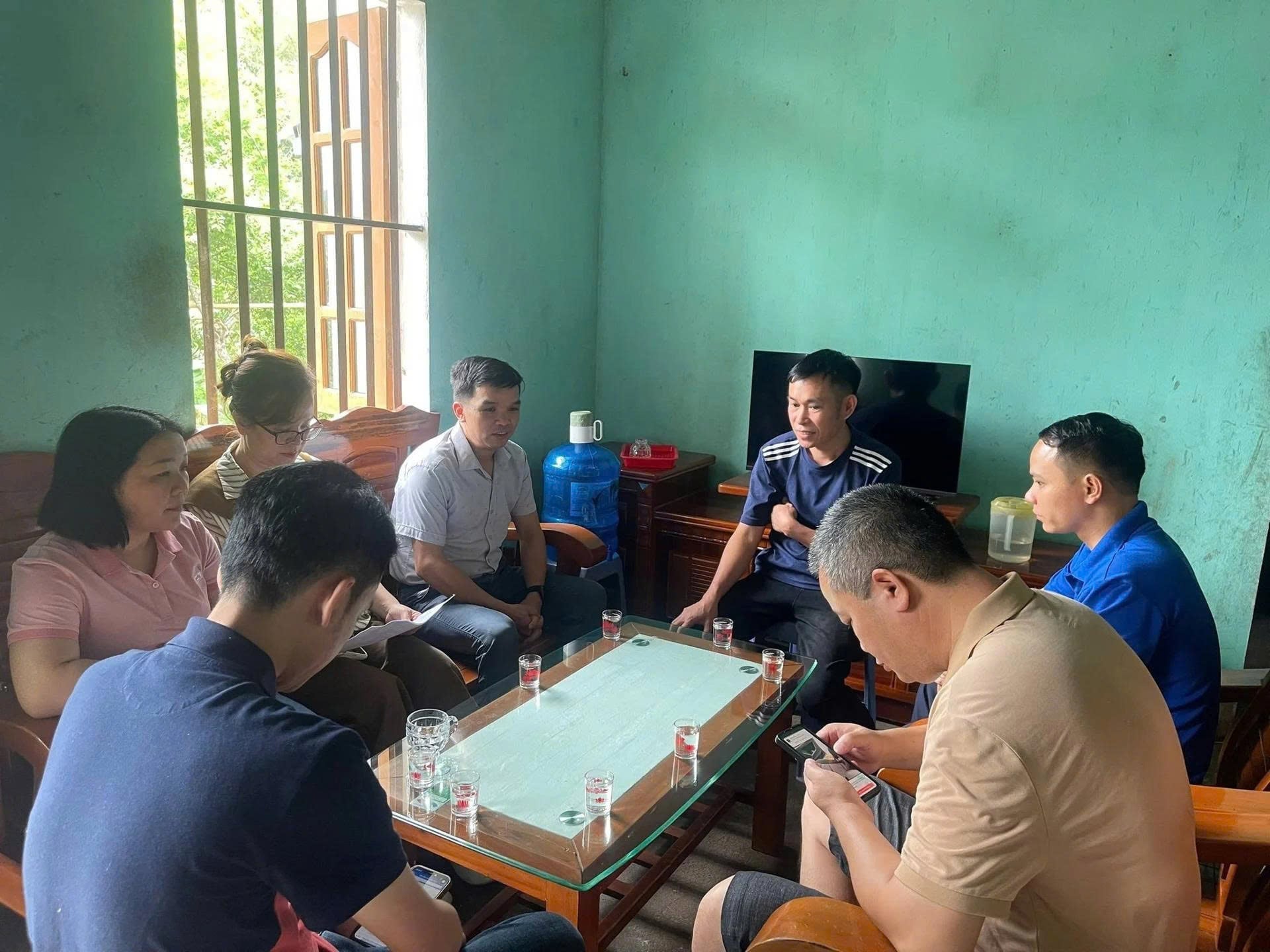
Meanwhile, before the nationwide reorganization, there were only about 9 villages/communes, but now that number has tripled to about 27 villages/hamlets/communes/wards. Therefore, this increases the number of administrative units and creates significant pressure on the management of commune governments as well as the budget for salary payments.
At the same time, the large number of part-time village-level officials—268,722 nationwide—creates significant pressure on the budget when paying salaries and allowances.
Therefore, it is necessary to reorganize neighborhood units in order to reduce the operational and financial burden on the locality.
The reorganization of villages and residential areas to conform to the two-tiered local government model is a step towards strengthening the political system at the grassroots level. The reorganization is scheduled to be completed before June 30th.
Currently, the Ministry of Justice is reviewing the draft Decree regulating the organization and operation of villages and residential areas, and the regime and policies for part-time officials in villages and residential areas. The Ministry of Interior is the lead agency in drafting the Decree.

Regarding the principles for establishing, arranging, reorganizing, dissolving, and naming/renaming villages and residential areas, the draft decree basically inherits the current regulations, while amending and supplementing the principles to suit the two-tiered local government organizational model and the management requirements of the commune-level government.
Accordingly, the establishment, arrangement, reorganization, dissolution, and naming or renaming of villages and residential areas must ensure compliance with legal regulations, be democratic, open, and transparent; and be consistent with the natural, socio-economic conditions, demographic characteristics, customs, traditions, and aspirations of the community.
Issuing regulations on the use and recruitment of part-time officials at the commune level.
According to the recently issued Decree regulating the organization and operation of villages and residential areas, and the regime and policies for part-time officials in villages and residential areas, the People's Committees of provinces and cities will terminate the employment of part-time officials at the commune level before May 31, 2026.
Accordingly, the relevant authorities are urged to promptly develop, issue, and implement a plan for the placement, utilization, and provision of benefits and policies for part-time officials at the commune level; ensuring that this is completed in conjunction with the completion of the reorganization of villages and residential areas, before June 30, 2026.
The plan for deployment and utilization must be linked to the requirements of restructuring and improving the quality of commune-level officials and civil servants in accordance with the spirit of Directive No. 18/CT-TTg dated May 8, 2026, of the Prime Minister on improving the quality of local government officials and civil servants at the commune level, meeting the requirements of the new situation, in the following direction:
Based on the staffing allocation for 2026, select and recruit into commune-level civil servant positions those with suitable qualities, capabilities, and professional qualifications that immediately meet the job requirements and job positions.
Implement a contract system for civil servants and public employees to fill necessary positions that meet job requirements and are filled by individuals who possess the required qualifications and conditions.
Selecting and recommending part-time community workers in villages and residential areas, ensuring they meet the required conditions, standards, and procedures for placement. Addressing the entitlements and policies for those who are no longer assigned or employed in these positions fully and promptly.
Earlier, at a press conference in early May, Ms. Nguyen Thi Tu Thanh, Deputy Director of the Department of Local Government (Ministry of Interior), also stated that the issuance of the Decree is an important legal basis for localities to implement the merger of hamlets and villages in the coming time. The drafting of the Decree was thoroughly researched, ensuring its feasibility and suitability to practical realities.
“The general direction is to streamline the organizational structure, reduce the number of villages and residential areas, ensuring suitability to the scale, characteristics, and conditions of each region, in order to improve the efficiency of the political system at the grassroots level, facilitate the organization and implementation of tasks, and reduce the pressure of direct management on the commune-level government. The reorganization must be completed in the second quarter of 2026,” Ms. Thanh said.
The latest draft specifically addresses the size of each village and residential area: Specifically, the drafting agency proposes that in Hanoi and Ho Chi Minh City, a village must have at least 500 households, and a residential area must have at least 700 households. In addition, villages must have at least 150 households, and residential areas at least 300 households in the Northern Midlands and mountainous regions.
In the Red River Delta, the Southeast region, and the Mekong Delta, a village must have at least 400 households, and a residential area must have at least 550 households.
Furthermore, in the North Central region, a village must have at least 350 households, and a residential area must have at least 450 households.
In the South Central coastal region and the Central Highlands, a village must have at least 350 households, and a residential area must have at least 500 households.
Specifically for the provinces of Gia Lai, Lam Dong, and Dak Lak, a village must have at least 300 households, and a residential area must have at least 450 households.
Source: https://danviet.vn/so-thon-xa-tang-gap-3-lan-ap-luc-len-ngan-sach-d1428483.html




























































































Comment (0)