Mr. Healey and Prime Minister Starmer (right) had disagreements regarding defense spending. Photo: UNPIXS
On June 11th, British Defence Minister John Healey – considered one of the most experienced and influential figures in the government – unexpectedly resigned. In a letter to Prime Minister Starmer, Healey stated that the government was not prepared to allocate the necessary defense resources to ensure national security in the face of escalating threats.
According to Healey, crucial investments continue to be delayed, while current security challenges demand strong policy decisions. “ The Treasury is unwilling to allocate the resources the nation needs to protect the country,” Healey wrote in his resignation letter, warning that a lack of investment would undermine the military’s combat capabilities and leave Britain vulnerable to external threats. Shortly after Healey’s resignation, the UK Armed Forces Secretary Al Carns also announced his departure for the same reason.
The unexpected resignations of the two defense leaders have further increased pressure on the head of 10 Downing Street (the Prime Minister's Office). Earlier this May, Health Minister Wes Streeting also resigned. Recent polls show a decline in approval ratings for Prime Minister Starmer's government. Within the Labour Party, an increasing number of MPs are openly expressing dissatisfaction with the government's current handling of the situation. Opposition parties are also quickly seizing this opportunity to increase pressure. Conservative leader Kemi Badenoch commented that the Defense Minister's resignation shows that Starmer's government is losing direction. Liberal Democrat leader Ed Davey considered it a "wake-up call" for the Prime Minister about the need to invest more in defense.
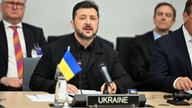


According to The Independent, the current crisis is unfolding against a particularly sensitive backdrop for Britain. The conflict in Ukraine continues, strategic competition between major powers is intensifying, while European allies are under pressure to significantly increase their defense budgets. At the NATO summit scheduled for July, London is expected to continue facing demands from allies to enhance its military capabilities and share the security burden.
Although the British government has committed to increasing defense spending to 3% of GDP in the next parliamentary term and aiming for 3.5% of GDP by 2035, many experts believe the current pace of deployment is not commensurate with the severity of security challenges. General Richard Barrons, former commander of the UK Joint Chiefs of Staff, argues that the government is aware of the risks but has not translated that awareness into concrete action. According to him, political commitments are unlikely to yield tangible results without corresponding financial resources.
In fact, Britain's defense capabilities have been significantly impacted by years of budget cuts. According to published figures, the country's actual defense spending fell by around 22% between 2009 and 2017 before rebounding in recent years. However, many experts warn that the long-standing capacity gap has yet to be fully addressed.
Facing increasing pressure, Prime Minister Starmer pledged that the government would continue its defense modernization program and increase investment in the military. On June 14, he announced that the British government would soon unveil a new defense investment plan ahead of the NATO summit. Prior to this, he quickly appointed Dan Jarvis, Minister of State at the Government Office, to replace Healey in an effort to ensure stability within the administration. However, analysts believe these steps are unlikely to immediately alleviate the deep divisions within the Labour Party. With a slowing economy, high public debt, and a strained budget, Starmer's government will face a difficult dilemma balancing national security and fiscal discipline.
According to Reuters, the recent government reshuffles not only reflect disagreements over the defense budget but also highlight significant challenges to Prime Minister Keir Starmer's leadership capabilities. Amidst numerous domestic and international upheavals in Britain, how Starmer handles the current crisis could determine the future of the Labour-led government, as well as his own political standing.



According to Nhandan.vn
Source: https://baoangiang.com.vn/song-gio-tai-pho-downing-a489139.html
![[Image] Ho Chi Minh City: Ma Lang area, Chicken-Rice Market about to change its appearance](https://vphoto.vietnam.vn/thumb/1200x675/vietnam/resource/IMAGE/2026/06/25/1782377698627_ndo_br_m1-jpg.webp)


![[Photo] General Secretary and President To Lam receives Palestinian Ambassador Saadi Salama](https://vphoto.vietnam.vn/thumb/1200x675/vietnam/resource/IMAGE/2026/06/25/1782365384740_a1-bnd-9423-8322-jpg.webp)
![[Image] Schools organize meetings and introduce teaching models to students admitted to grade 10.](https://vphoto.vietnam.vn/thumb/1200x675/vietnam/resource/IMAGE/2026/06/25/1782368077271_ndo_br_z7970052192242-1ec8daeb77a6eed1a4e9f58c564ddd3e-jpg.webp)