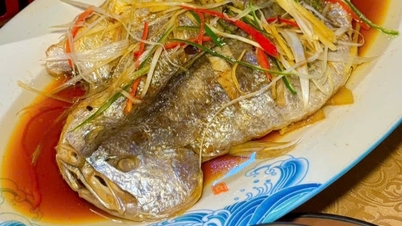
Braised fish in a clay pot, crab soup with jute leaves, pickled eggplant, stir-fried pork with crispy edges, boiled water spinach, fried tofu, or jute leaf soup with minced meat were once common dishes in the daily meals of many Vietnamese families. Without elaborate ingredients or cooking methods, these dishes preserve the familiar flavors of rural life and memories of family meals.
Nowadays, alongside modern culinary trends, these traditional dishes are increasingly appearing on restaurant menus. What attracts diners is not only the traditional flavor but also the feeling of returning to familiar memories of family and hometown.

When childhood favorites become a worthwhile experience.
It's not difficult to find restaurants in big cities that specialize in serving "home-style meals" with menus including braised goby fish with pepper, braised tilapia in clay pot, stir-fried pork with crispy edges, crab soup with jute leaves, sour fish soup, pickled eggplant, pickled mustard greens, or boiled vegetables with dipping sauce.
These are all dishes that were once common in traditional Vietnamese rural meals. Without elaborate ingredients or cooking techniques, they win over diners with their familiar flavors and comforting feel.
Interestingly, diners flock to these restaurants not to discover new things, but to relive old memories. For many young people living far from home, a pot of braised fish with fragrant pepper, a bowl of crab soup, or a plate of crispy pickled eggplant can evoke memories of home-cooked meals and the feeling of togetherness that is increasingly rare in modern life.


From "eating until full" to "eating through memories"
Culinary experts believe that the resurgence of traditional dishes reflects a consumer trend that is increasingly driven by emotional factors. As material needs are increasingly met, consumers begin to seek spiritual values and cultural identity in each experience.
Dishes like braised fish from Vu Dai village, crab soup, shrimp fried with starfruit, pickled eggplant with shrimp paste, or boiled vegetables with soy sauce are not simply food. They are a part of collective memory, linked to the image of the countryside, family, and traditional way of life of the Vietnamese people.
The restaurant elevates traditional Vietnamese dishes.
The change lies not in the dishes themselves, but in how they are presented and served.
Dishes that were once found on traditional rural dinner tables are now presented more elegantly in earthenware pots, bamboo trays, or handcrafted porcelain bowls. Many restaurants even recreate the atmosphere of old houses, brick courtyards, wooden tables and chairs, or old kitchens to create a complete experience for diners.
Besides familiar dishes like braised fish, stir-fried meat, crab soup, and boiled vegetables, many places also offer regional specialties such as steamed free-range chicken with lime leaves, grilled freshwater fish, stir-fried crab with salt, braised eel with banana and peanuts, and traditional fermented fish sauces. These dishes, once associated with rural life, have now become highlights attracting both domestic and international tourists.
It's not just a passing trend.

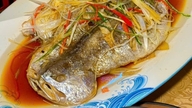

The increasing number of restaurants offering traditional Vietnamese cuisine shows that this is not just a short-lived trend. In a context where many people seek a balanced lifestyle and value local traditions, traditional dishes are being recognized as part of a cultural heritage that needs to be preserved.
From a simple bowl of crab soup to a rich and flavorful pot of braised fish, the journey from a country meal to a restaurant menu demonstrates the enduring vitality of traditional cuisine. Amidst countless modern choices, it is these familiar flavors that are helping many people find a sense of closeness and connection to their roots.
Source: https://baovanhoa.vn/doi-song/su-len-doi-cua-nhung-mon-an-dan-da-235427.html
![[Photo] General Secretary and President To Lam receives Palestinian Ambassador Saadi Salama](https://vphoto.vietnam.vn/thumb/1200x675/vietnam/resource/IMAGE/2026/06/25/1782365384740_a1-bnd-9423-8322-jpg.webp)

![[Image] Schools organize meetings and introduce teaching models to students admitted to grade 10.](https://vphoto.vietnam.vn/thumb/1200x675/vietnam/resource/IMAGE/2026/06/25/1782368077271_ndo_br_z7970052192242-1ec8daeb77a6eed1a4e9f58c564ddd3e-jpg.webp)

![[Photo] General Secretary and President To Lam attends the 13th National Congress of the Ho Chi Minh Communist Youth Union](https://vphoto.vietnam.vn/thumb/1200x675/vietnam/resource/IMAGE/2026/06/25/1782356968989_ndo_br_1-jpg.webp)