

According to Minister of Planning and Investment Nguyen Chi Dung, the purpose of drafting the Law is to promptly address urgent institutional difficulties and obstacles, simplify administrative procedures, and promote decentralization and delegation of power in the fields of planning, investment and business, investment through public-private partnerships, and bidding.
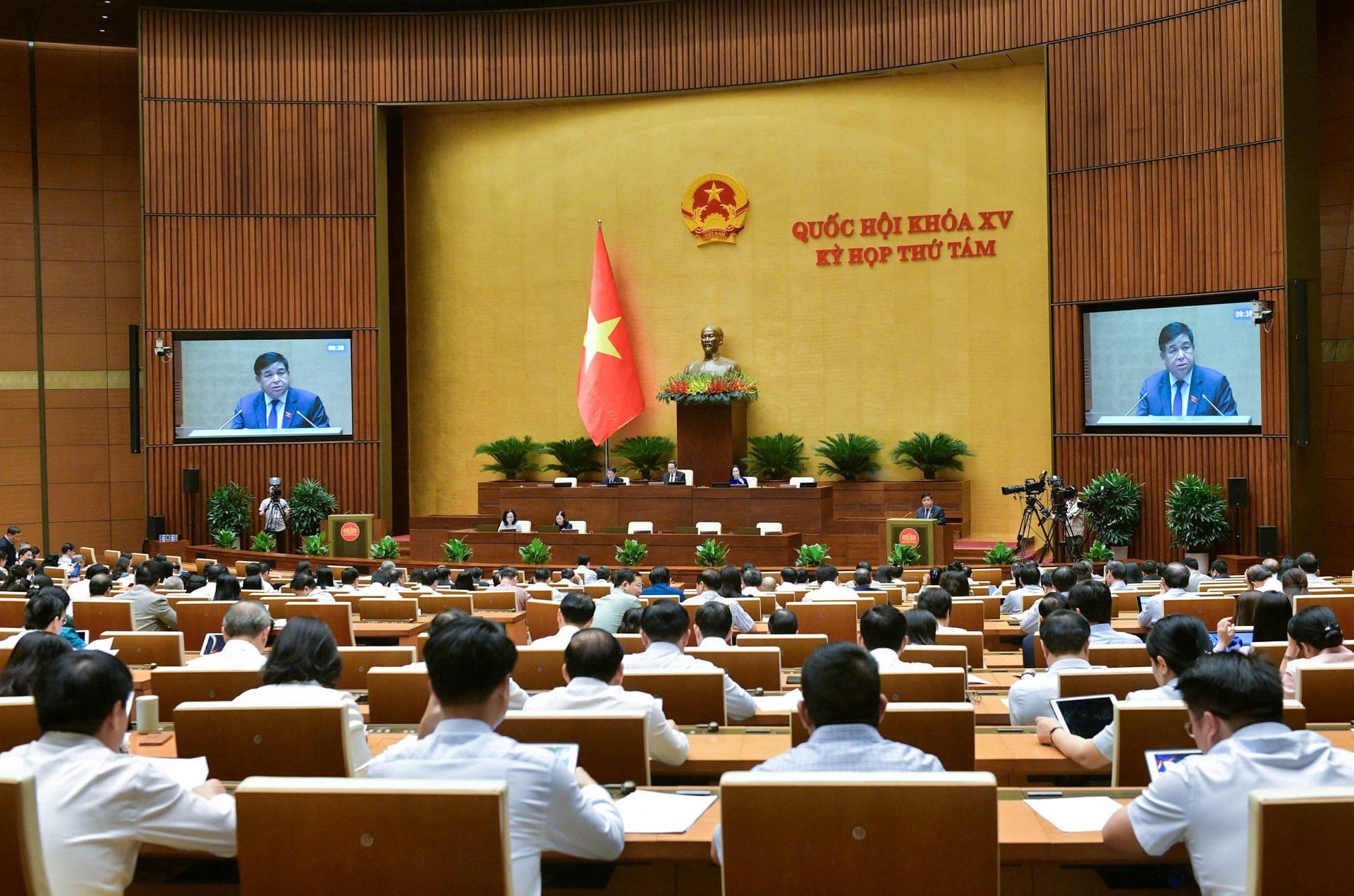
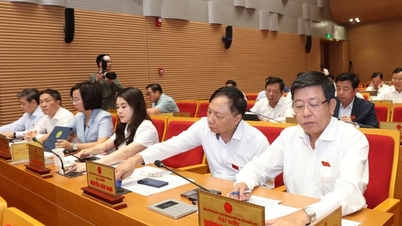
On October 30th, the National Assembly held group discussions on the draft Law amending and supplementing a number of articles of the Planning Law, the Investment Law, the Law on Investment under the Public-Private Partnership Method, and the Bidding Law.
The draft law aims to focus on amending conflicting regulations that are causing difficulties and urgently need revision to create favorable conditions for investment, production, and business activities.
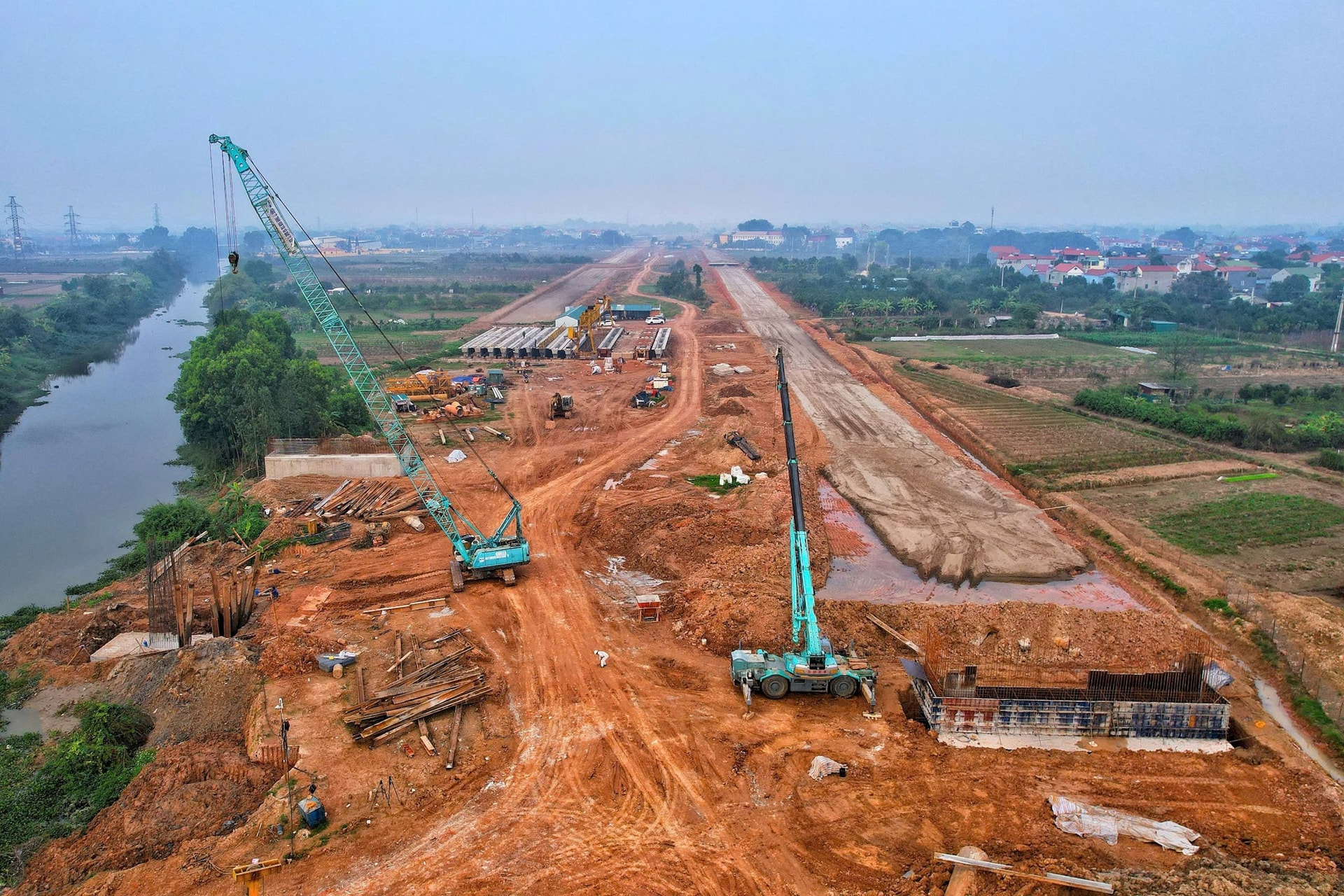
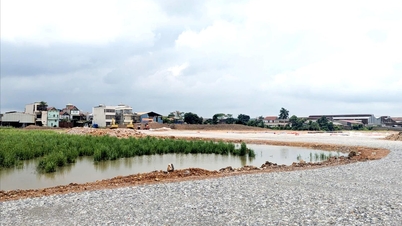
Terminate projects that are behind schedule and causing land waste.
Specifically, according to the Minister of Planning and Investment, Nguyen Chi Dung, the amendments to the Planning Law include: clearly defining the relationship between technical and specialized plans and plans within the national planning system to address difficulties in establishing a basis for planning when higher-level plans have not yet been approved; delegating authority to provincial People's Committees to issue provincial planning implementation plans; and adding regulations on adjusting planning implementation plans to create proactive and flexible approaches for localities in organizing planning implementation.
Regarding the amendments to the Investment Law, Mr. Dung stated that this revised law delegates the authority to approve investment policies from the Prime Minister to provincial People's Committees for projects involving the construction and operation of infrastructure in industrial parks and export processing zones. It also stipulates the termination of operations for projects that are behind schedule or have not been implemented for many years, causing land waste, in order to free up resources for socio-economic development.
Regarding the amendment of the Law on Investment under the Public-Private Partnership (PPP) method, the Minister of Planning and Investment stated that this Law adds a type of BT contract that does not require payment, applicable to infrastructure projects and public service provision proposed and constructed by investors themselves and transferred to the State without requiring payment of construction costs.
Regarding the financial mechanism for PPP projects, a flexible mechanism will be applied in allocating state capital to participate in PPP projects. This will continue to stipulate a 50% state capital contribution rate, while allowing the Prime Minister or the Provincial People's Council to decide on a higher state capital contribution rate, but not exceeding 70% of the total investment. The authority to appraise feasibility studies for projects under the Prime Minister's investment policy decision-making power will be delegated to the People's Councils at the grassroots level.
The amendments to the Law on Bidding include revisions to several provisions, allowing for the approval of contractor selection results before project approval or the signing of contracts with contractors before international treaties or foreign loan agreements are signed, thereby contributing to saving time and accelerating the progress of projects and bidding packages. Simultaneously, other provisions are being amended and supplemented to address obstacles, increase competitiveness in bidding, and ensure the rights of all parties involved in the bidding process.
Reviewing the draft Law, Mr. Vu Hong Thanh, Chairman of the National Assembly's Economic Committee, stated that the Economic Committee found the draft Law's dossier to basically meet the requirements of the Law on the Promulgation of Legal Normative Documents. The draft Law amends and supplements many regulations related to planning, investment and business activities, investment under the public-private partnership method, and bidding activities, including regulations directly related to resources, state budget, authority, decentralization, delegation of power to ministries, sectors, and localities, and administrative procedures.
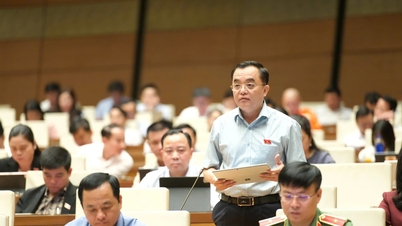
Regarding project revocation, National Assembly Deputy Hoang Duy Chinh (Bac Kan delegation) proposed stricter regulations, stipulating that projects must be revoked if commitments are not met, instead of revoking them only after delays in land use as in the current law. He also suggested amending regulations on investment licensing to ensure greater rigor and prevent resource waste.
According to National Assembly Deputy Vu Dai Thang (Quang Binh delegation), the Investment Law, the PPP Law, and the Bidding Law are newly passed laws that have not yet truly contributed to socio-economic development. Specifically, there are difficulties in land clearance, slow disbursement, delays in investment procedures, delays between different levels of planning, and delays in land and forest use conversion. Therefore, it is necessary and urgent for the Government to submit to the National Assembly a comprehensive amendment of the problematic and conflicting provisions. Otherwise, it will lead to a waste of national resources.
Creating equality through market mechanisms.
National Assembly Deputy Ta Dinh Thi - Vice Chairman of the National Assembly's Committee on Science, Technology and Environment - expressed the necessity of enacting a law that amends four laws in one course to address practical difficulties and obstacles, especially those related to the Planning Law and specialized laws that need adjustment.
Regarding the Planning Law, according to Mr. Thi, the Law on Geology and Minerals and the Law on Electricity lack consistency and uniformity with the Planning Law, therefore this needs to be addressed immediately. Currently, there are specialized plans that specify many detailed parameters. Electricity has developed its power supply network, but according to current plans, this is no longer the case and is integrated into provincial plans without specific details. In reality, these parameters need timely adjustments.
For example, the Prime Minister approves the national electricity plan. The government proposes delegating this authority to the Minister of Industry and Trade. In principle, the level that approves the plan is also the level that adjusts it. At the provincial level, this authority would be delegated to the Chairman of the Provincial People's Committee. Therefore, this issue needs further consideration and research. If adjustments are necessary, they should be made immediately to resolve the obstacles.
Regarding the Investment Law, Mr. Thi emphasized the significant need for marine economic development. The central government has issued a specialized resolution on the strategy for marine economic development until 2030, with a vision to 2024. This resolution aims for coastal provinces to contribute 70-75% of the country's GDP to national growth. "Currently, investment projects on land are clearly defined, but the authority and responsibility for projects at sea are not clearly specified. For example, the issue of offshore wind power needs further research to facilitate the development of coastal localities in the future," Mr. Thi stated.
National Assembly Deputy Hoang Van Cuong (Hanoi Delegation) also argued that in adjusting planning, it is important to note that the level that approves the adjustments should be the same level that makes them. However, localized adjustments need to be decentralized but should not change the project's objectives and spatial layout. "For example, planning to build a school but then adjusting it to move the school to a remote area does not ensure spatial considerations. Conversely, the Thien Y waste-to-energy plant not being allowed to adjust its capacity from 70-90MW is unreasonable when it remains in the same location, only the capacity is changed," Mr. Cuong explained.
Regarding the PPP Law, according to Mr. Cuong, it needs to be attractive. Currently, investors are "afraid" of PPPs and are hesitant to invest due to the inherent risks. "For example, with toll-collecting transportation projects, if toll collection is no longer allowed, who would dare invest? Therefore, a mechanism for handling risks, a commitment to shared responsibility, and clear accountability are needed, including clearly defining the responsibilities of the agency approving the PPP project. Otherwise, investors will be afraid to invest."
Regarding BT projects, Mr. Cuong said they are "like a double-edged sword." The benefits are significant and the efficiency is high if managed well. Otherwise, the opposite is true. Therefore, conditions must be met to ensure quick turnaround times and cost efficiency. They must operate on an equal footing according to market mechanisms; creating "barriers" or creating negative practices is unacceptable.
Shift from pre-audit to post-audit
Regarding the PPP Law, Deputy Prime Minister Nguyen Hoa Binh stated that we have many methods for mobilizing social resources (stock market, bonds). The public-private partnership method is a form of mobilizing social resources. The Deputy Prime Minister cited the example of the North-South high-speed railway project, which is currently under discussion, where state resources are only a part; other resources must be mobilized to make it possible.
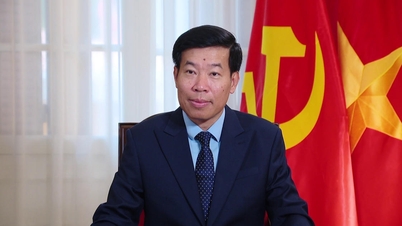
According to Minister of Planning and Investment Nguyen Chi Dung, countries are constantly innovating and reforming. If Vietnam does not innovate and reform, investors will certainly not come, or they will come and then leave. The State currently has many powers: the power to decide what to do, who to do it, where to do it, and how to do it. Investors, on the other hand, only have one power: "not to do it." Therefore, the design of the Law must harmonize state management while simultaneously encouraging domestic and foreign investors to invest capital. If the regulations of the law fail to achieve this, the country will lose opportunities. Losing opportunities means losing everything: jobs for the people, state budget revenue, and development opportunities.
According to Minister of Planning and Investment Nguyen Chi Dung, previously, we primarily focused on management, but now we must not only manage but also promote development. We must abandon the "if we can't manage it, ban it" and "request-and-grant" systems, and the "my power, your power" mentality. Ministries and agencies often cling to power dynamics, from general laws to specialized laws, mainly creating procedures and power. When there is power, vested interests, group interests, and personal interests become intertwined. This hinders national development. This time, we must overcome this, and this time, we must shift strongly from "pre-approval" to "post-approval," decentralizing power more thoroughly, and cutting administrative procedures more effectively. Procedures must be concise to reduce time and costs for investors, so as not to miss opportunities for them.
Ninth working day, 8th session, 15th National Assembly
On October 30th, the National Assembly continued its 9th working day of the 8th session of the 15th National Assembly at the National Assembly building, under the chairmanship of National Assembly Chairman Tran Thanh Man.
Morning: Under the chairmanship of Deputy Speaker of the National Assembly Nguyen Duc Hai, the National Assembly held a plenary session to hear the following presentations: Minister of Planning and Investment Nguyen Chi Dung, authorized by the Prime Minister, presented the draft Law amending and supplementing a number of articles of the Planning Law, the Investment Law, the Law on Investment under the Public-Private Partnership Method, and the Bidding Law; Chairman of the National Assembly's Economic Committee Vu Hong Thanh presented the report on the examination of the draft Law amending and supplementing a number of articles of the Planning Law, the Investment Law, the Law on Investment under the Public-Private Partnership Method, and the Bidding Law...
Subsequently, the National Assembly held group discussions on: the draft Law amending and supplementing a number of articles of the Planning Law, the Investment Law, the Law on Investment under the Public-Private Partnership method, and the Bidding Law; and the draft Resolution on piloting the handling of evidence and assets during the investigation, prosecution, and trial of certain criminal cases.
Afternoon: The National Assembly will hold a plenary session to address the following matters:
Content 1: Under the chairmanship of Vice Chairman of the National Assembly Tran Quang Phuong, the National Assembly heard the report presented by the Member of the Standing Committee of the National Assembly, Chairman of the National Assembly's Committee on National Defense and Security, Le Tan Toi, explaining, receiving feedback, and revising the draft Law on People's Air Defense. Following this, the National Assembly discussed several remaining points of disagreement in the draft Law on People's Air Defense... At the end of the discussion, Minister of National Defense Phan Van Giang gave an explanation, clarifying some issues raised by National Assembly deputies.
Content 2: Under the chairmanship of Vice Chairman of the National Assembly Nguyen Khac Dinh, the National Assembly heard the following presentations: Minister of Home Affairs Pham Thi Thanh Tra, authorized by the Prime Minister, presented the Government's submission on the draft Resolution on the organization of urban government in Hai Phong City; Chairman of the National Assembly's Law Committee Hoang Thanh Tung presented the report on the examination of the draft Resolution on the organization of urban government in Hai Phong City; Minister of Home Affairs Pham Thi Thanh Tra, authorized by the Prime Minister, presented the Government's submission on the establishment of Hue City directly under the Central Government...
Source: https://daidoanket.vn/sua-doi-luat-loai-bo-xin-cho-10293474.html






























































































Comment (0)