

 |
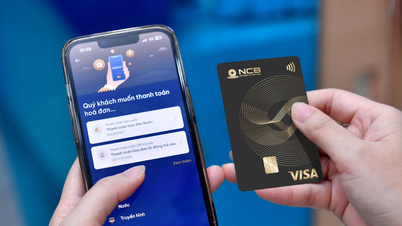
| MBBank offers a diverse range of card payment products. |
Fulcrum
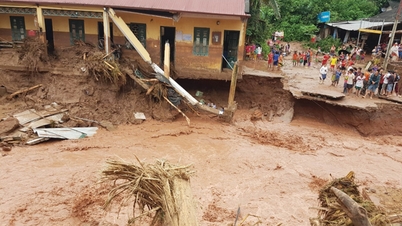
During the heavy rains and floods in late October and early November, roads in the area were cut off, and trade was almost completely paralyzed. Cash payments were therefore restricted, with many bank branches temporarily closing and power outages rendering many ATMs inoperable. This reminded many people of the time when the COVID-19 pandemic disrupted travel and in-person transactions, making digital payments a crucial channel for maintaining cash flow and ensuring that business and trade activities did not come to a standstill.
Ms. Dinh Thi Thuy Hang from Vy Da ward said: “The recent floods rose quite quickly and unexpectedly, so I didn't have time to withdraw cash. My biggest worry was having several payments due. Luckily, the 5G network remained stable, and digital banking was still operational, so my family's payment activities continued during this time. Even boat transportation services accepted bank transfers during this period. People here are really quick to adapt to new trends!”
Digital payments are not only useful for daily expenses, but they also help maintain the efficient flow of cash during natural disasters, especially for businesses. Even though stores may close, internal operations cannot stop. Businesses must pay suppliers, reconcile accounts payable, etc. In such situations, digital cash flow becomes a lifeline, preventing businesses from coming to a standstill.
According to Le Phan Quynh Huong, Director of VietinBank's Hue branch, the implementation of numerous digital solutions to eliminate physical barriers has significantly contributed to ensuring transactions continue even during floods. Currently, all of the most important business processes are 100% digitized. VietinBank has implemented online loan application and disbursement through the VietinBank eFAST system, so businesses no longer need to send accountants or managers to brave the floods to the bank. Business owners can approve expenses from anywhere. The system automatically processes transactions, and the money is transferred directly to the partner's or supplier's account. In addition, the bank has also implemented online guarantee services such as bidding and contract execution, helping businesses not miss any business opportunities even during storms.
In flood-prone areas, digital payments help maintain cash flow, while in management, they become a measure of business transparency. It's no coincidence that in financial management classes, Mr. Nguyen Tan Binh, Director of the Leadman Institute for Leadership and Business Management Research, always emphasizes the role of cash flow management in businesses. In reality, digital payments allow businesses to easily access payment history, manage expenses transparently, quickly reconcile sales, and minimize off-book transactions. Simultaneously, they open up opportunities to access preferential credit sources from credit institutions.
At a recent forum connecting banks and businesses, Mr. Le Quang Manh, Deputy Director of BIDV Phu Xuan branch, shared that transparency in cash flow makes it easier for banks to assess and evaluate the credit needs of businesses, as well as support preferential credit programs. Transparency in cash flow from the outset will create an effective and sustainable cooperation environment for both banks and businesses.
 |
| Vietcombank staff assist customers with biometric authentication. |
Payment infrastructure has been invested in.
Digital payments promote transparency in business cash flow. That's also why banks are investing heavily in digital payment infrastructure.
Data from the State Bank of Vietnam, Region 9, shows that, in addition to the extensive network of transaction offices of 27 commercial bank branches, the banks have also invested in 244 ATMs, 2,458 POS and mPOS machines. 100% of commercial banks in the area have implemented multi-channel provision of internet banking and mobile banking services, and installed over 40,000 QR codes at business establishments, hotels, etc.
Thanks to infrastructure investment, during the period 2021-2025, the total value of transactions through electronic channels increased eightfold in terms of the number of transactions and more than fourfold in terms of transaction value, with mobile payment transactions experiencing exceptional growth of 14 times. The average annual growth rate of the number of internet and mobile banking payment transactions reached 77% and 140%, respectively. The average annual growth rate of the value of internet and mobile banking payment transactions reached 64% and 135%, respectively.
The application of electronic payment methods has created a positive shift towards cashless payments, making digital payments a habit for people in urban areas and gradually developing in rural and remote areas, reducing costs associated with cash.
 |
| The bank is implementing various digital solutions to support payments. |
Mr. Pham Ba Nam, Deputy Director of the State Bank of Vietnam Region 9, said that the banking sector has been investing in developing and improving the infrastructure serving digital payments. Specifically, 100% of commercial bank branches in the city have implemented multi-channel, diverse payment methods and new connection models providing online banking services with a diverse and increasingly complete ecosystem. They regularly upgrade and equip their branches with many features so that customers can experience most personal banking services on digital platforms. The direct connection with e-wallets on the Hue-S application also contributes to increased convenience and a rise in cashless transactions.
Commercial bank branches are also launching many new products and diverse promotional programs, offering modern cashless payment methods through digital banking channels such as OpenBanking, QR Code, and POS to customers. They are increasing credit granting through payment accounts and encouraging cashless transactions at card-accepting points for shopping and payment.
In addition, the State Bank of Vietnam Region 9 regularly directs commercial bank branches in the area to continue upgrading, improving, synchronizing, and ensuring the smooth operation of payment infrastructure, expanding the payment network; developing convenient, easy-to-use payment and digital banking products and services at affordable costs for people in rural and remote areas. It also promotes cashless payments in the government sector and public administrative services, and applies policies to waive or reduce service fees. Furthermore, the State Bank of Vietnam Region 9 regularly directs commercial banks to implement security solutions in online payments and bank card payments, and to strengthen the collection and verification of customers' biometric information.
Source: https://huengaynay.vn/kinh-te/suc-ben-thanh-toan-so-161228.html



![[Image] A brilliant symphony and explosive power in the skies of Da Nang.](https://vphoto.vietnam.vn/thumb/1200x675/vietnam/resource/IMAGE/2026/05/31/1780196945787_anh-man-hinh-2026-05-31-luc-10-08-51.png)





















![[Video] Sunset at Lap An Lagoon – Where the sun sets over the fishing nets](https://vphoto.vietnam.vn/thumb/340x192/vietnam/resource/IMAGE/2026/05/31/1780192137701_beach-landscape-sea-water-nature-grass-745871-pxhere-com.jpeg)












































































Comment (0)