

Vietnam possesses all the "ingredients" to create soft power: a long-standing culture, a resilient people, a dynamic economy , and a rapidly rising, creative generation—all driving forces for the development of a creative economy. Vietnam has the opportunity to rewrite how it appears in the eyes of the world. However, if we look deeply into its potential and explore ways to shape Vietnam's soft power through its cultural industries, we must acknowledge that Vietnam has the ingredients, but lacks a strong enough story to tell the world.

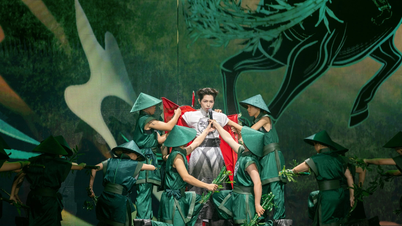
Chi Pu has made a strong impression in the Chinese entertainment market. Photo: NSCC
The story is the foundation of trust.
In 2025, a series of outstanding cultural achievements of our country have strongly resonated throughout the world . Hoa Minzy, with her hit song "Bac Bling " and folk melodies, has taken Asia by storm. Duc Phuc has taken the top spot with his song "Phu Dong Thien Vuong" at the Intervision 2025 international music competition. " Mua Do" has been nominated for an Oscar. The game "Tiem Pho cua anh Hai" has become a global sensation. And, Chi Pu has become a phenomenon in China for three consecutive years.
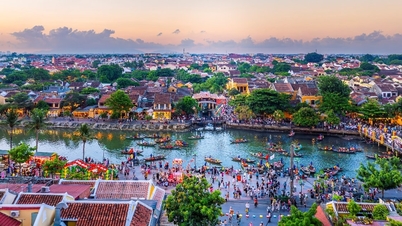
Furthermore, Hoi An was ranked 6th in the World's Best Awards 2025 list of the world's top 25 cities. Hanoi made it into Time Out magazine's top 15 most popular cities for tourists . Ho Chi Minh City ranked 77th in the top 105 greatest cities in the world (Telegraph Travel 2025). Images of the Golden Bridge with its hands at Ba Na Hill went viral on the internet. The friendly images of heads of state enjoying Vietnamese cuisine and jogging on the streets are beautiful symbols demonstrating Vietnam's peaceful nature.
Each industry, each locality, each artist, each brand is telling its own story – but somewhere along the line, there's a lack of connection within the overall narrative. Culture exists, but it hasn't been "designed" into a deliberate identity; values haven't become cultural capital. Vietnam doesn't lack content, but it lacks the cohesion of a national symphony.
This fragmentation means that Vietnam's image internationally remains vague, or is often perceived through outdated lenses: a country of war, a cheap tourist destination, a place of manufacturing. In reality, 21st-century Vietnam is a nation of innovation, peace, humanity, and creativity. The problem is that we haven't yet been able to tell that story in the compelling language of the digital age.
The Japanese promote their tea ceremony culture, kimonos, cuisine, manga, and anime not just to introduce specific cultural products, but to convey the spirit of wabi-sabi. The Koreans brought the Hallyu wave with K-pop, K-drama, fashion, and cuisine to other countries to portray a modern society that knows how to cry, love, and dream. People come to Thailand for the warm, human, and instinctive hospitality of a nation that knows how to smile.
The question for Vietnam is: When the world looks at us, what do they see? A resilient nation rising from war? A tourist destination? A new manufacturing hub of Asia? All of that is true, but it lacks the most important thing: the story we ourselves proactively tell.
We have all the "ingredients"—a rich culture, a nation that knows how to rise after every loss, a youthful economy—but we lack the common "spirit" to contribute a unified voice and conquer the world. The story of Vietnam is still fragmented; each piece is excellent, but it lacks a common melody.
And that's where media and creativity come into play.

The game "Brother Hai's Pho Restaurant" is a worldwide sensation.
Every country has a story – and telling it well becomes a soft power.
No soft power exists without a story. South Korea writes the story of modern Asian confidence through K-pop. Japan tells the story of absolute sophistication through each piece of sushi. Thailand tells the inviting story of its “Amazing Thailand” identity. Their stories don't begin with budgets, but with the awareness that culture can become power.
Soft power is an ecosystem where communication, creativity, and identity intertwine, like three drum beats balancing a piece of music: Communication is the path, the flow; Creativity is the energy, the content; and Identity is the silently burning flame from thousands of years of culture. When these three elements meet, they form a soft power infrastructure – where every film, every song, every dish, every designer, every Vietnamese person… becomes an “ambassador” carrying the image of the nation to the world.
Vietnam also has stories beautiful enough to move the hearts of the world, but we have only told them as scattered fragments. A little bit of pho, a little bit of ao dai, a little bit of war memories, a little bit of a friendly smile. All of these are true, but not enough to create a shining identity. Identity exists, but it is not something that is deliberately created.
What we need is not to tell more, but to tell more consistently. It's not about producing more content, but about designing identity. Many commendable efforts have been made, but what's missing is a conductor for the symphony, an architect to design unique cultural experiences, a strategist to build a distinctive concept that accurately defines and widely accepts Vietnam's soft power identity globally.
In 2023, we launched an international media campaign promoting tourism in Ho Chi Minh City, with a consistent overarching theme – evolving cuisine. The campaign portrayed Ho Chi Minh City as a melting pot of culinary delights from across the country and around the world, transformed over time by unique local characteristics. It was a rare effort to tell a shared story amidst a series of individual narratives, striving to showcase everything we have to offer.
Some people think soft power is just a few tourism promotion campaigns or cultural exchange programs. That's not enough. Soft power is an ecosystem where communication, creativity, and identity blend together, like three drum beats keeping a balanced piece of music: Communication is the path, the flow; Creativity is the energy, the content; and Identity is a flame that has burned silently for thousands of years of culture. When these three elements meet, they form a soft power infrastructure – where every film, every song, every dish, every designer, every Vietnamese person… becomes an “ambassador” carrying the image of the nation to the world.
A country is only truly strong when it knows who it wants to be in the world's mind. Through the cultural industry, we can present Vietnam as a "nation of creativity from heritage," with stories of renewing traditions – such as Bat Trang ceramics combined with contemporary design, folk music blended with EDM, and the ao dai (traditional Vietnamese dress) in the language of international fashion. Or, "Vietnam – a nation of inspiring cuisine," with the philosophy that "food connects people"; or, "Vietnam – a nation of compassion and humility," with the image of a people who know how to share, welcome, preserve virtue, and "humanity" as a subtle energy, not just a slogan...

Soft power is not something the government can create alone. It's something each citizen contributes a little of, through their way of life, their way of working, and their way of loving this country in a very natural way.
An artist who dares to innovate. A business that knows how to tell its brand story with Vietnamese essence. A journalist who writes with kindness. A student who lives with self-confidence. All of them are “shaping” Vietnam in the eyes of the world, even without knowing it. And when these pieces are put together, a new picture emerges: Vietnam – a nation that knows how to tell stories that make others want to connect with it.
That is soft power. And that is also how Vietnam steps into the future with heart.
(Expert Le Quoc Vinh )
Four paths to becoming a soft power nation for Vietnam.
If Vietnam wants to enter the "soft power map," there are four paths it must pursue simultaneously.
First , rediscover your own cultural code. Who are we? What makes us different? A thirst for knowledge, kindness, creativity in adversity, adaptability… Only when we understand ourselves can we tell a story that the world wants to listen to.
Secondly , we need to build a creative ecosystem. Hanoi – the city of design. Hue – the city of living heritage. Hoi An – the city of handicrafts. Da Lat – the city of music. Each locality is a “creative hub” – a center for nurturing the flame of creativity.
Thirdly , developing cultural brands can go a long way. From fashion, film, and cuisine to games, design, and music, Vietnam can have cultural product icons that reflect its own unique identity.
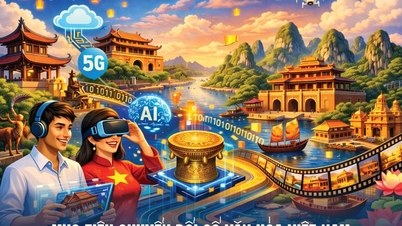
Fourth , use technology to enhance innovation. AI doesn't kill innovation—AI expands the boundaries of innovation. If we know how to leverage it, Vietnam can leapfrog ahead and jump straight into the digital innovation economy.
With the right strategy for developing the cultural industry, the soft power of the future lies not in policy documents, but in the hands of young people wielding cameras, writing music, creating games, vlogging, editing films, designing fashion... These are the new "Vietnamese storytellers" through culture - people who understand their roots but are not bound by the past; confident enough to speak to the world in their own voice.

Da Lat - the city of music. Photo: TRAN HUAN
In conclusion
Soft power is not something the government can create alone. It's something each citizen contributes a little of, through their way of life, their way of working, and their way of loving this country in a very natural way.
An artist who dares to innovate. A business that knows how to tell its brand story with Vietnamese essence. A journalist who writes with kindness. A student who lives with self-confidence. All of them are “shaping” Vietnam in the eyes of the world, even without knowing it. And when these pieces are put together, a new picture emerges: Vietnam – a nation that knows how to tell stories that make others want to connect with it.
That is soft power. And that is also how Vietnam steps into the future with heart.
Source: https://baovanhoa.vn/van-hoa/suc-manh-mem-viet-nam-204933.html
![[Photo] My Son at night: A thousand-year-old heritage site amidst the Milky Way](https://vphoto.vietnam.vn/thumb/1200x675/vietnam/resource/IMAGE/2026/04/15/1776261039184_ndo_br_chon6-jpg.webp)
![[Photo] Mrs. Ngo Phuong Ly meets and exchanges views with Mrs. Peng Li Yuan](https://vphoto.vietnam.vn/thumb/1200x675/vietnam/resource/IMAGE/2026/04/16/1776277858080_phu-nhan-1-jpg.webp)
![[Photo] National Assembly Chairman Tran Thanh Man attends the opening session of IPU-152](https://vphoto.vietnam.vn/thumb/1200x675/vietnam/resource/IMAGE/2026/04/16/1776277863731_ctqh5-jpg.webp)
![[Photo] The General Secretary, President and his wife meet with Vietnamese-Chinese friendship leaders.](https://vphoto.vietnam.vn/thumb/1200x675/vietnam/resource/IMAGE/2026/04/15/1776264829725_vna-potal-tong-bi-thu-chu-tich-nuoc-to-lam-gap-mat-nhan-sy-huu-nghi-viet-nam-trung-quoc-8703641-3130-jpg.webp)














































Comment (0)