

In the context of cultural industries being identified as one of the new drivers of growth, effectively exploiting the potential of traditional craft villages not only opens up a path for sustainable economic development but also contributes to preserving and spreading the cultural identity of Hanoi, a capital city with a thousand years of history.
"Treasures" of traditional craft villages
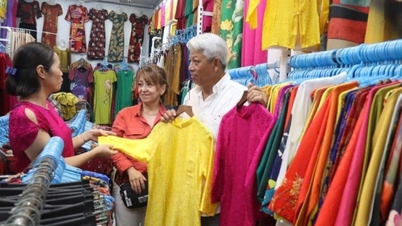
In the days leading up to the Lunar New Year of the Horse 2026, the Van Phuc silk weaving village (Ha Dong ward) is busier than ever. Along the silk street, shops are bustling with customers, some choosing silk, others trying on ao dai (traditional Vietnamese dress) and silk scarves in preparation for the traditional Tet holiday. The spring atmosphere is present in every shimmering, soft silk fabric. Ms. Le Thi Minh Phuong (Thanh Xuan ward) shared that her family visits Van Phuc several times every year, especially during the Tet season. "The silk here is beautiful, and there are many ready-made ao dai designs at prices suitable for various segments. Shopping in the craft village also gives me a feeling of being immersed in a very unique Tet atmosphere," Ms. Phuong said.
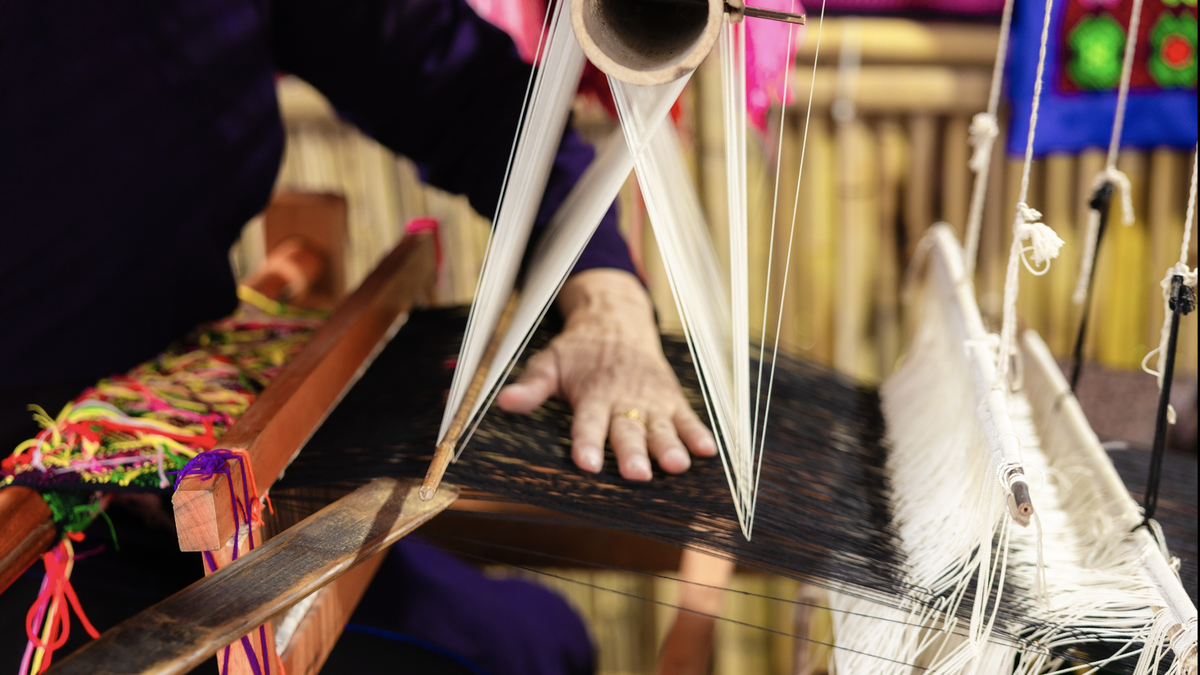
More than just a shopping destination, Van Phuc is also an attractive cultural space for young people. These days, the area around the village gate, Cong Bridge, the communal house, the pagoda of Van Phuc, and along the silk street... are crowded with people, mostly young people, coming to take photos. Young men and women in traditional ao dai costumes pose against the ancient backdrop of the silk village, creating both a place for recreation and promoting the beauty of the traditional craft. According to Ms. Tran Thi Ngoc Lan, Vice President of the Van Phuc Silk Weaving Village Association, this is a silk weaving village with a history of over 1,000 years. Currently, the people of Van Phuc still weave about 70 types of silk, brocade, and satin with many traditional patterns such as dragons, phoenixes, flying clouds, and the four seasons..., among which the patterned silk, with its raised, glossy, smooth patterns, is considered the essence of traditional silk weaving. Beyond preserving the craft, Van Phuc actively connects with tourism tours, bringing visitors to explore the village's traditional craft space, historical sites, experience the silk weaving process, and purchase products. This harmonious combination of production, culture, and tourism has helped Van Phuc silk village gradually transform, becoming a shining example in the development of the capital's cultural industry.
Hanoi, a land of thousand-year-old culture, is not only known for its vast historical relics, rich traditional festivals, and exquisite cuisine , but also as the "capital" of traditional craft villages in the country. Over hundreds of years of formation and development, the capital's craft villages have forged unique cultural values, crystallized in each exquisite handcrafted product, bearing the distinct mark of history, art, and the spiritual life of the people of Thang An (Hanoi). In the context of Hanoi's implementation of the Cultural Industry Development Strategy, considering it one of the important pillars to promote economic growth and enhance the capital's status, traditional craft villages are seen as a "gold mine" with rich potential, requiring a systematic, creative, and sustainable approach to exploitation.
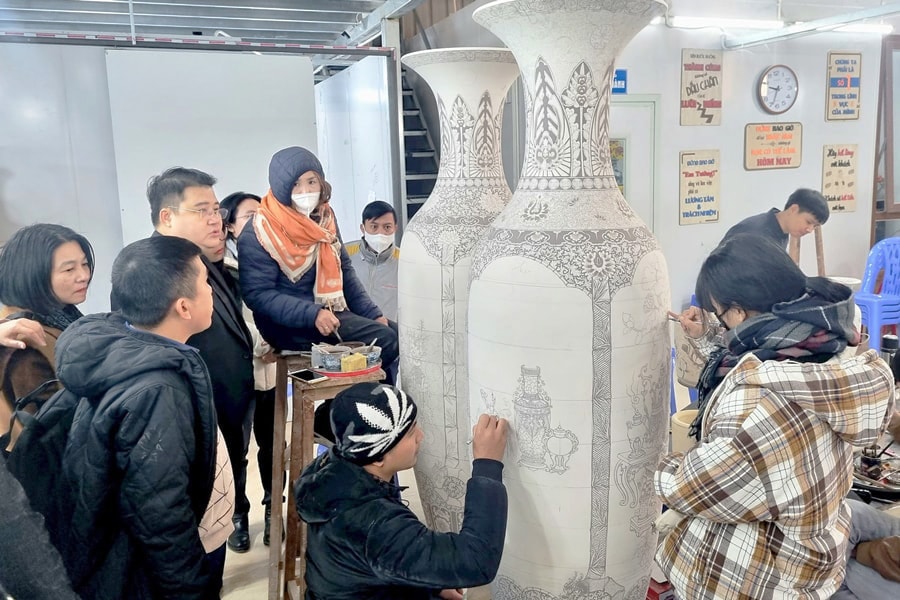
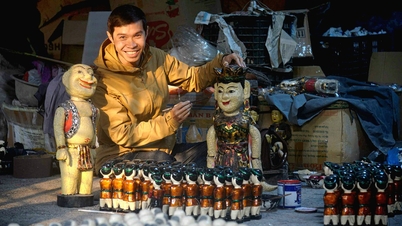
According to experts, Hanoi's craft villages possess all the elements that constitute cultural industrial products, from long-standing historical stories and distinctive cultural spaces to exquisite craftsmanship, aesthetically valuable products, and the potential for strong integration with tourism. Bat Trang ceramics, Van Phuc silk, Ha Thai lacquerware, Phu Vinh rattan weaving, and Chuyen My mother-of-pearl inlay... each craft village not only provides livelihoods for its people but also preserves the essence of craftsmanship, art, and the cultural identity of Thang Long - Hanoi. With proper investment and guidance, these values can become important resources for the development of creative tourism and experiential economy.
Adding growth drivers for Hanoi.
Leveraging the value of traditional craft villages in socio-economic development, especially in the development of cultural industries, is an effective approach. Recognizing this, Hanoi is gradually planning and developing craft village tourism routes linked to historical sites, scenic spots, and ecological spaces. The "each craft village, one cultural destination" model is expected to create a chain of distinctive and culturally rich tourism products. Currently, the city offers many half-day and full-day experiential tours to craft villages such as Bat Trang, Van Phuc, Duong Lam, and Phu Vinh, attracting a large number of domestic and international tourists. Visitors not only visit but also directly experience making products, meet artisans, and enjoy local cuisine. This is a form of cultural consumption with high added value, contributing to extending the length of stay and increasing tourist spending.
A crucial factor in the development of cultural industries stemming from traditional craft villages is the indispensable role of the State. For sustainable development of craft village tourism, comprehensively addressing issues related to infrastructure, environment, landscape, and service quality is an urgent requirement. Preserving traditional architecture, maintaining the rural landscape, and improving environmental sanitation are prerequisites for craft villages to become attractive long-term destinations.
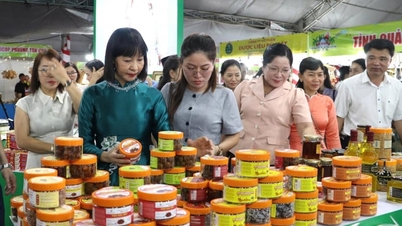
According to Nguyen Dinh Hoa, Deputy Director of the Hanoi Department of Agriculture and Environment, the city has recently issued many mechanisms and policies to encourage the preservation and development of traditional craft villages linked to the creative economy; focusing on training human resources, honoring artisans, and supporting startups in the handicraft sector. The city also clearly defines that the development of craft villages must be linked to overall planning, avoiding fragmentation and spontaneous development. The establishment of design and creative centers, and centers for introducing and selling craft village products in the inner city and key tourist destinations is considered an important solution to expand the market and enhance the competitiveness of Hanoi's handicraft products.
Simultaneously, digital transformation is becoming a crucial tool for craft villages to access the global market. Many production facilities in craft villages have proactively brought their products to e-commerce platforms, applying digital technology in promotion and telling the story of their craft villages through images, videos, and social media. This is a direction that aligns with modern consumer trends and contributes to the further development of the craft village's cultural industry. In particular, along with the Bat Trang ceramics village and the Van Phuc silk village, which have already been recognized by the World Craft Council as official members of the Creative Cities Network, it is expected that in February 2026, the Chuyen My mother-of-pearl inlay village and the Son Dong handicraft village will also receive recognition. This will make Hanoi the first locality in the country to have four craft villages honored on the global handicraft map.
To facilitate development, in early 2026, the Hanoi People's Committee approved the detailed plan for the preservation and development of traditional craft villages combined with tourism in Van Phuc silk weaving village (scale 1/500). This plan clearly defines areas for preservation, renovation, and new development; preserving the traditional spatial structure, village road system, waterways, historical relics, and handicraft production spaces. This is an important step, providing a basis for preserving and maximizing the cultural, historical, architectural values, and especially the traditional craft, creating a foundation for developing an attractive destination in the capital city.
It can be affirmed that exploiting the potential of traditional craft villages for the development of cultural industries not only aims at economic goals but also contributes to preserving heritage and maintaining the cultural identity of the capital city. When traditional crafts bring good income, young people have more motivation to stay involved and continue the creative legacy of previous generations. With clear direction and the coordinated efforts of all levels and sectors, Hanoi's craft villages will become "living creative spaces," making practical contributions to the goal of making the capital city the cultural industry center of the whole country.
Source: https://hanoimoi.vn/moi-lang-nghe-mot-diem-den-van-hoa-733894.html




































































Comment (0)