

At the 11th International Lion and Dragon Dance Festival held in Singapore, the Tinh Anh Duong Lion and Dragon Dance troupe from Vietnam participated for the first time, overcoming many strong competitors from Singapore, Malaysia, Hong Kong (China), etc., to win the top prize.
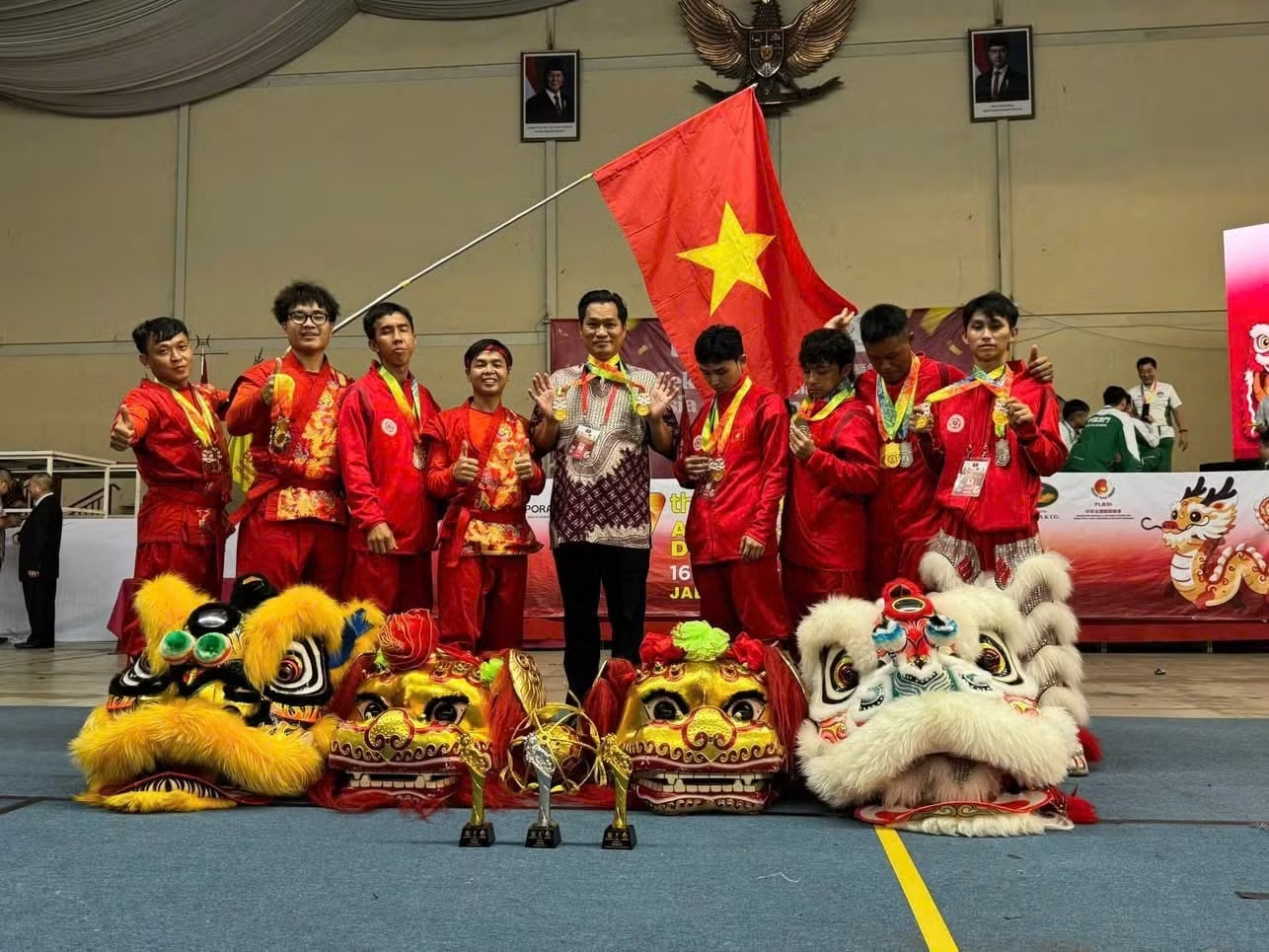
In 2025, at the 7th Asian Lion and Dragon Dance Championship held in Indonesia with the participation of over 300 athletes, the Vietnamese team won 2 gold medals and 1 silver medal in the official competition categories, including a gold medal (champion) in the Plum Blossom Lion Dance category, a gold medal in the Speed Lion Dance category, and a silver medal (runner-up) in the Speed Lion Dance category.
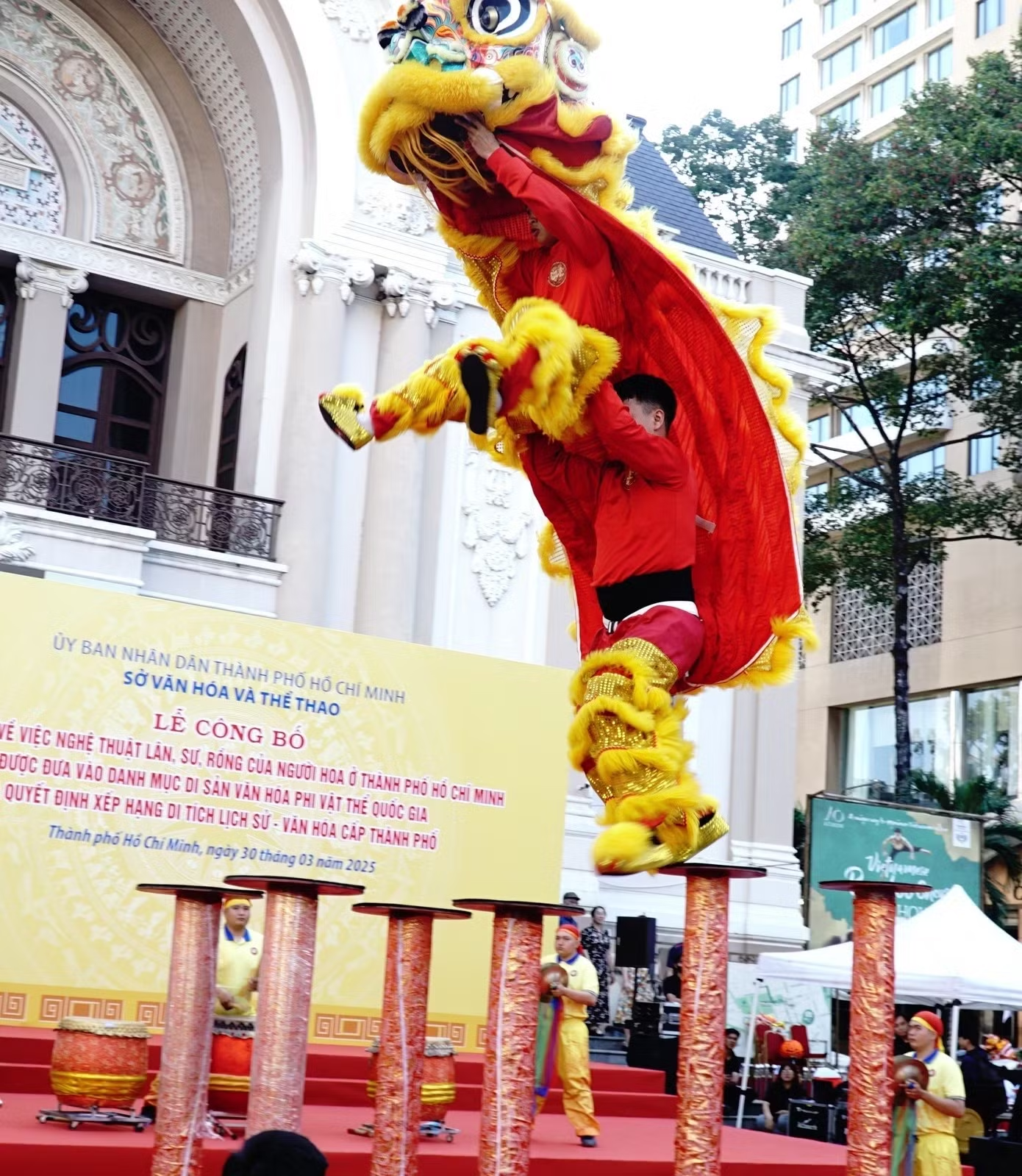
2025 also marks the year that the Lion Dance art in Ho Chi Minh City will be officially recognized as a National Intangible Cultural Heritage. This recognition is not just a title, but an affirmation that lion dance is no longer a mere form of entertainment, but an art form with profound preservation potential and strong integration capabilities.
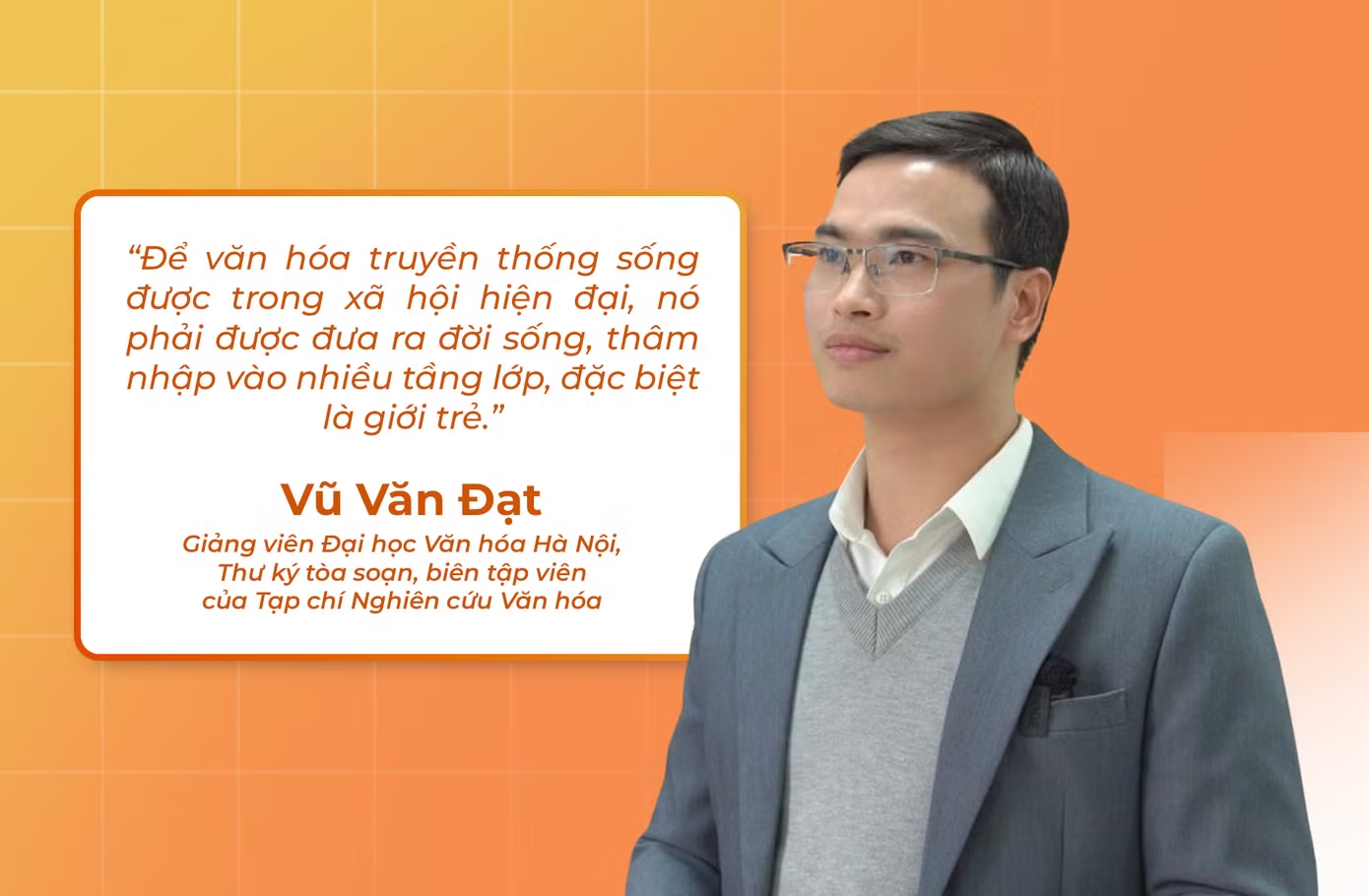
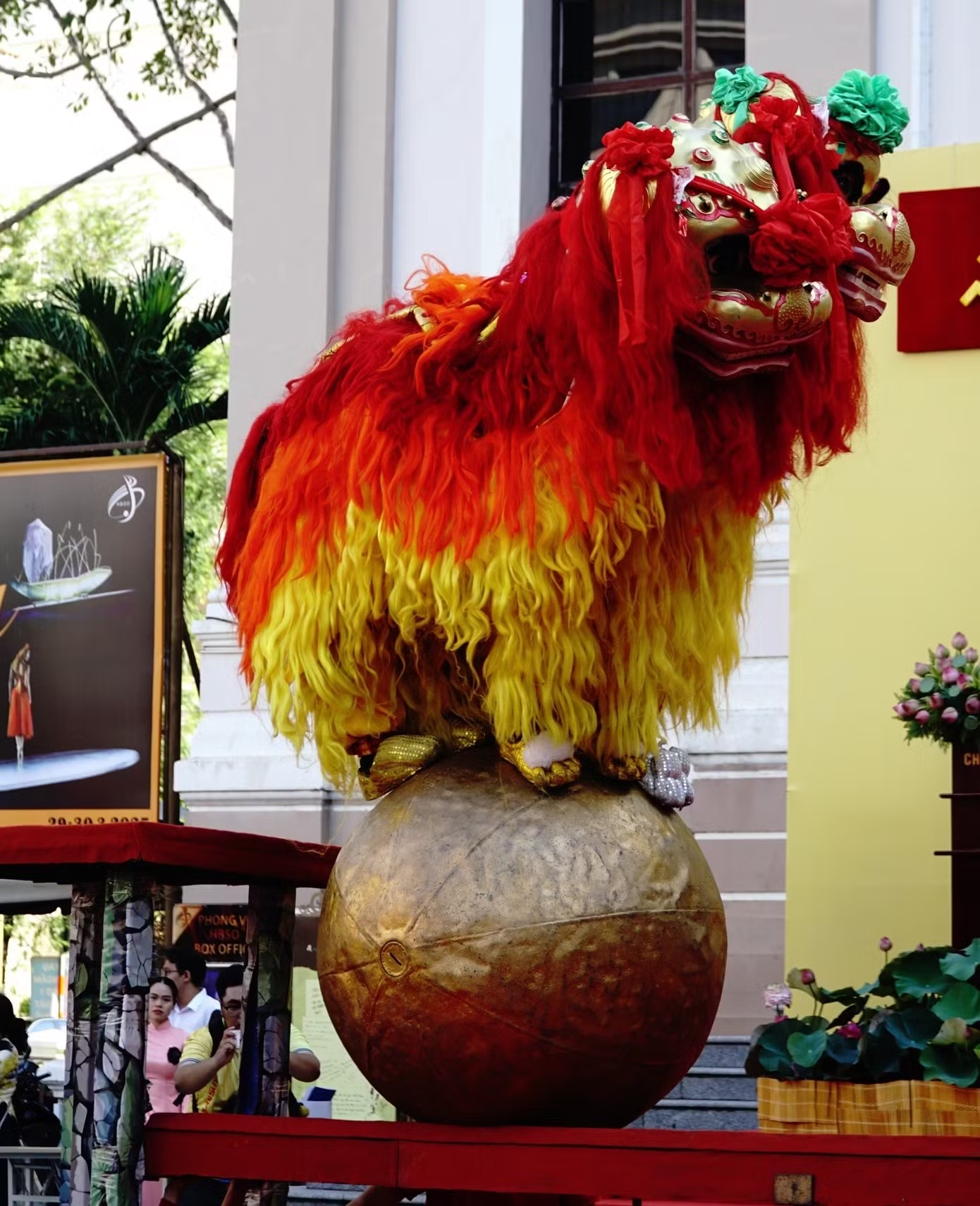
According to Mr. Vu Van Dat, lecturer, editorial secretary, and editor of the Journal of Cultural Studies ( Hanoi University of Culture), lion dance is a cultural form originating from China, appearing approximately over 2,000 years ago. When it was introduced to Vietnam, at least during the Ly-Tran dynasties, this form was skillfully Vietnamized.
Instead of its heavy, regal character, Vietnamese lion dance has gradually transformed to become more approachable, joyful, and focused on community bonding and gatherings. That's why the image of the lion is so familiar at opening ceremonies, weddings, and the Mid-Autumn Festival.
My passion originated from the sound of drums in my childhood.
Behind the dazzling medals and stage glamour lie hidden corners rarely seen – where artisans painstakingly mend memories with sweat and pride on the practice floor. Their love for their craft often doesn't begin with lofty ideals, but with a single drum beat that unexpectedly resonated in the heart of a child watching a lion dance years ago.
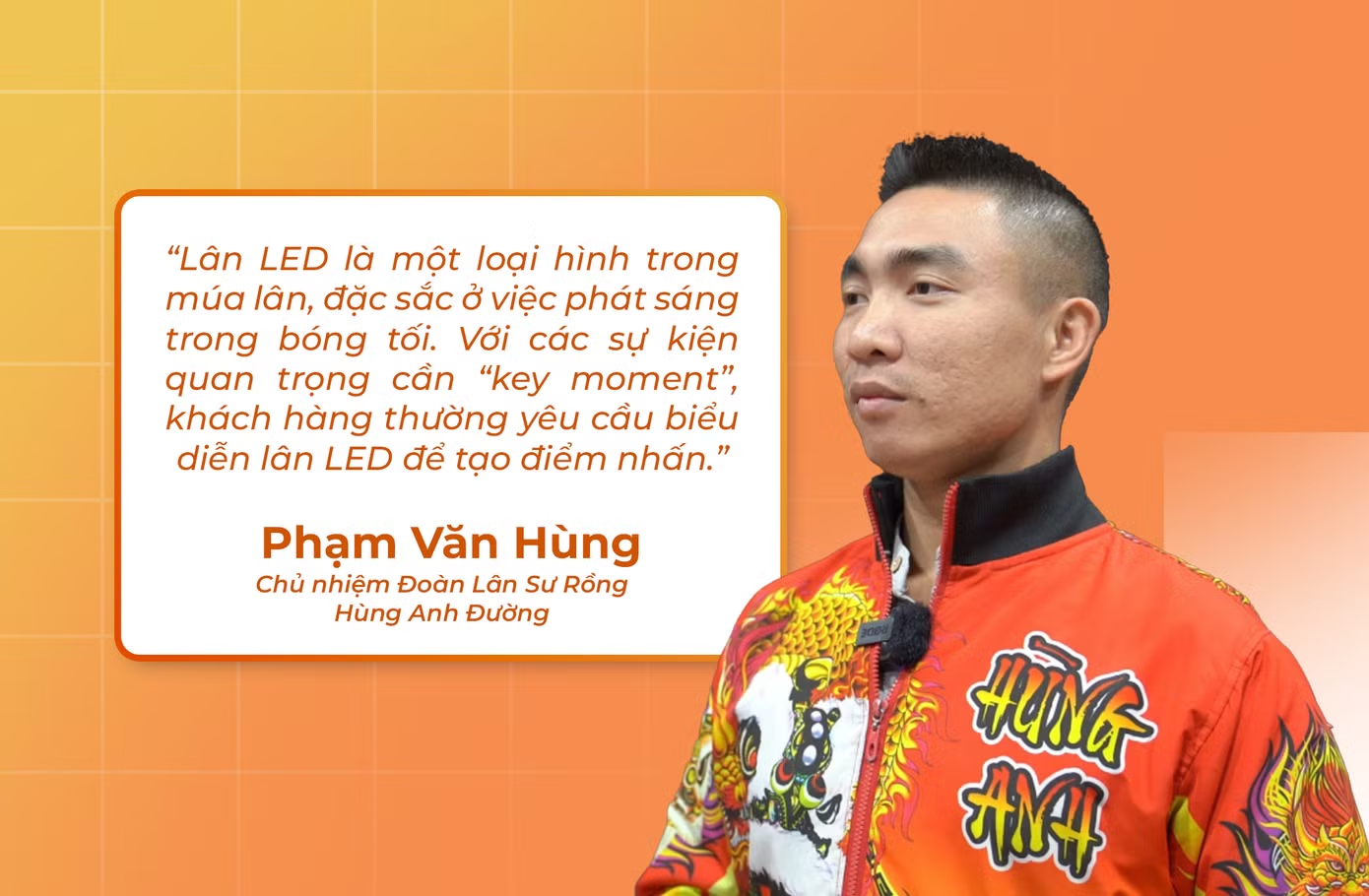
For artisan Pham Van Hung (Head of Hung Anh Duong Lion and Dragon Dance Troupe), that love originated from Mid-Autumn Festival afternoons in his hometown. "Back home, every Mid-Autumn Festival, there were so many lion dancers. I would run after them as if I were being drawn to the sound of the drums," he recounted, his voice filled with nostalgia.
Back then, the lion dance troupes in the village didn't have LED lights or advanced techniques; they only had firecracker smoke and the crisp sound of drums. But they were powerful enough to inspire a young boy to later build a large lion dance troupe and an event media business to make a living from the profession.
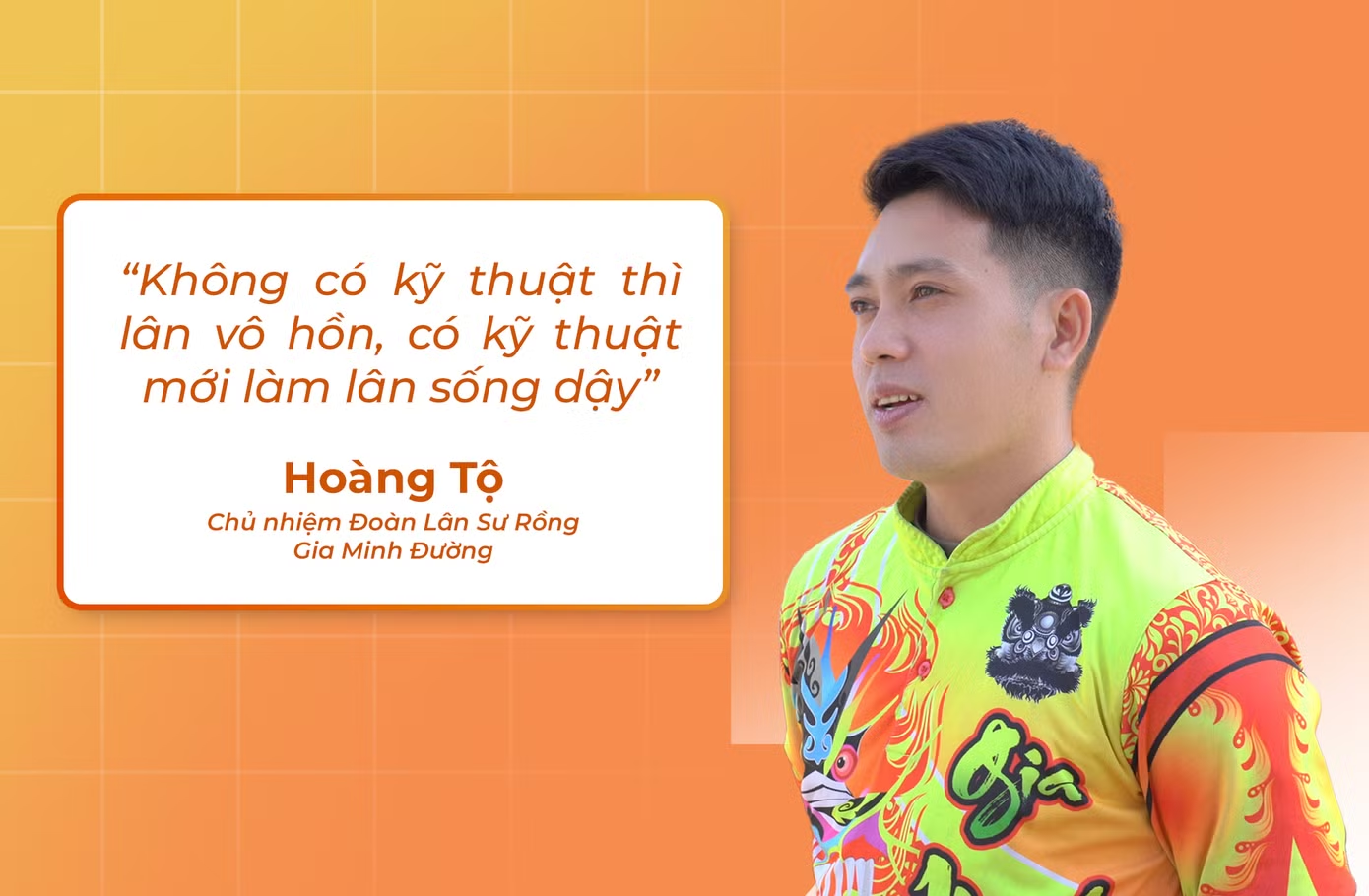
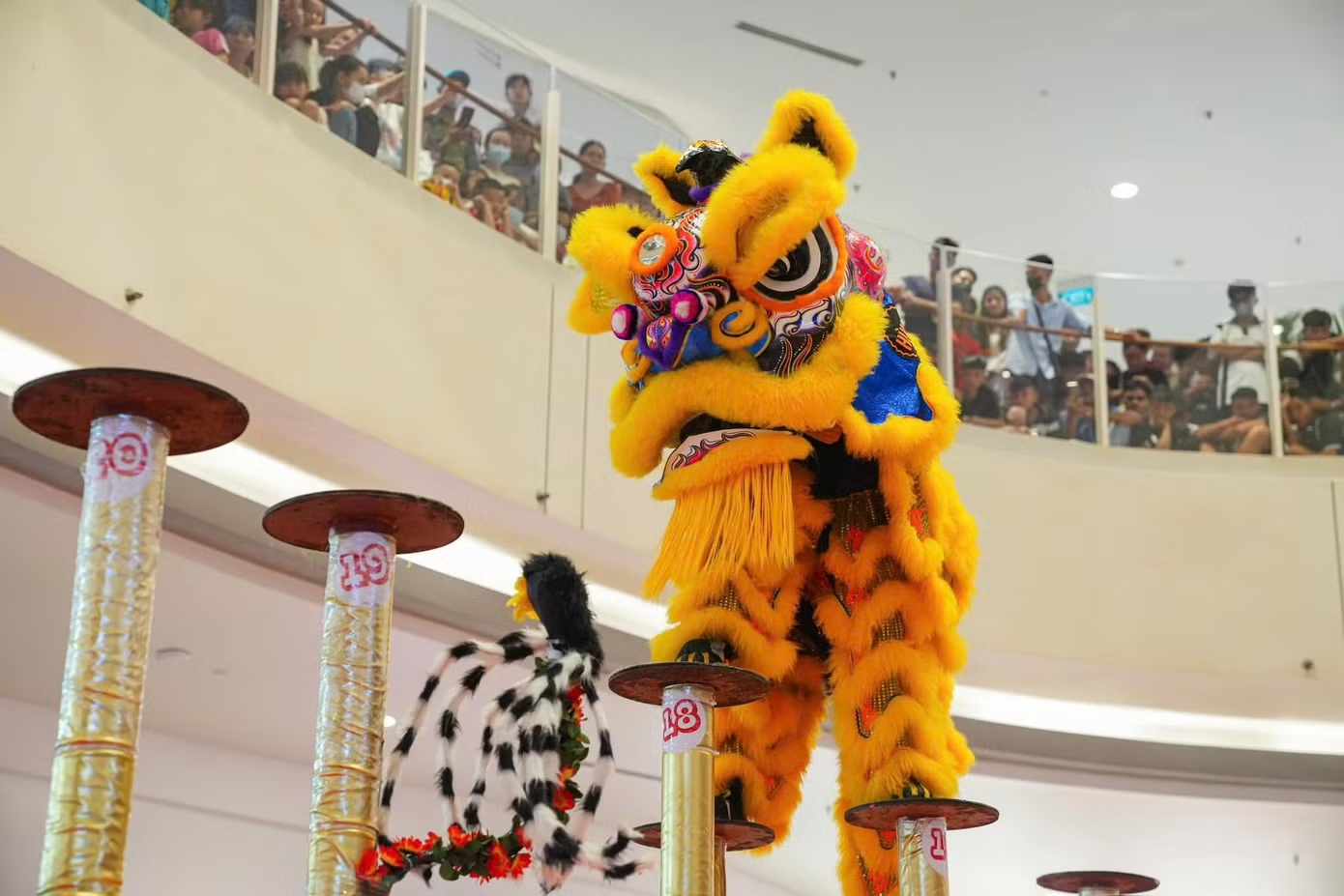
Unlike Hung, Hoang To (team captain of Gia Minh Duong) found his passion for lion dance through martial arts. His curiosity as a martial artist led him to the lion dance profession, and he fell in love with it without even realizing it. He recalls his first fall while practicing: “Thinking I was strong, I was overconfident and slipped while jumping onto the pole. The fall hurt so much I thought I’d broken my leg, but luckily it was only a sprain.” But that fall didn’t make him give up; the camaraderie of his teammates and the smiles after each fall are what have kept him going for the past 14 years.
However, the journey from children chasing after the drums to actually stepping inside the velvet and brocade lion dance costumes is a long one of transformation. To preserve the beautiful memories of childhood for future generations, artisans like Mr. Hung and Mr. To must be tempered with iron discipline, where passion is concretized in every step and every breath.
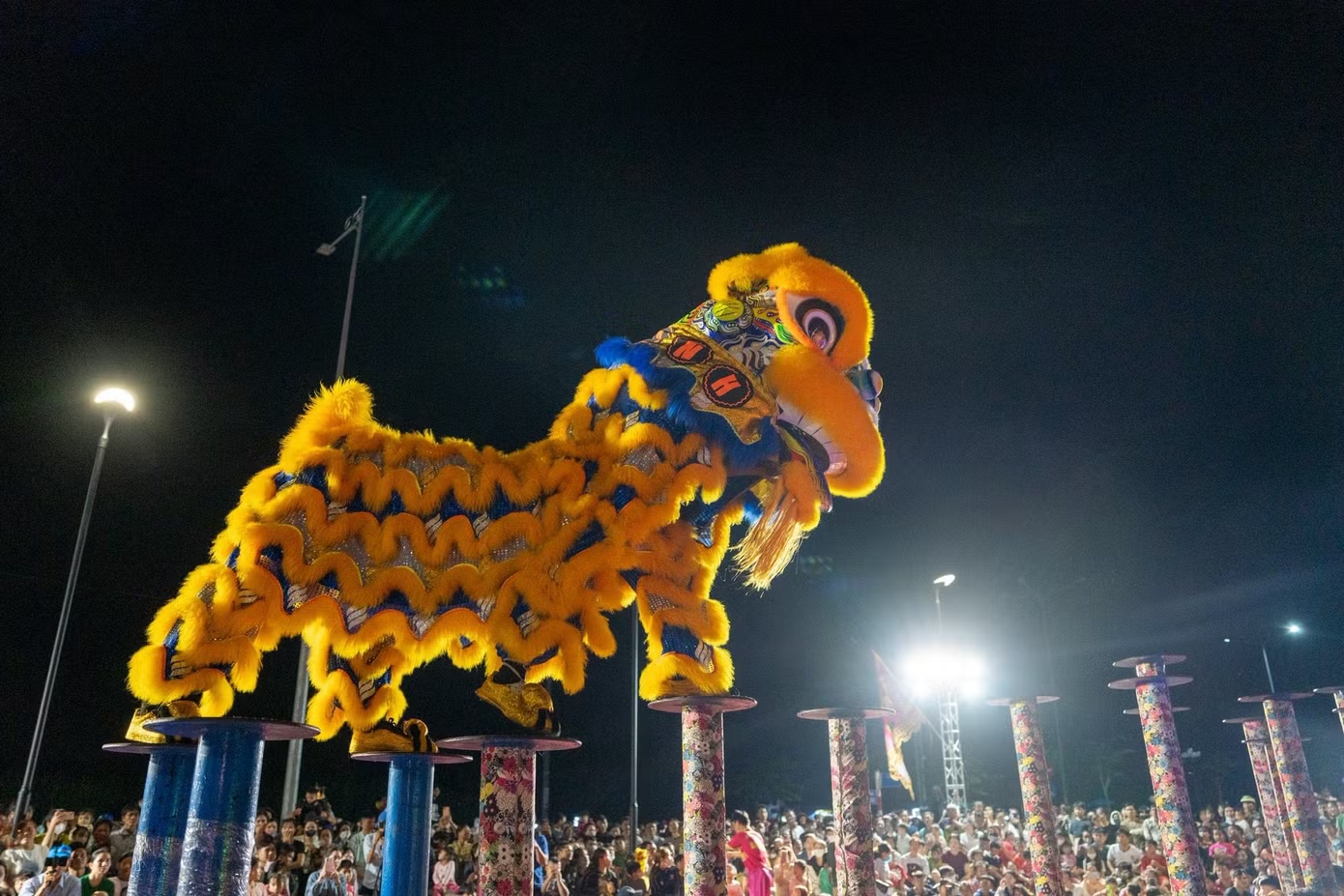
The art of lion dance has no formal written curriculum; everything is passed down through hands-on instruction. To give the lion "life," the dancer must learn to convey emotion through each head shake, each blink of the eye, or the way they control their strength when leaping onto the high pole.
Mr. Tộ asserted: "Without technique, the lion dance is soulless; only with technique can the lion dance come to life." The word "live" here doesn't just refer to the precision of the movements, but also to the way the artist infuses the fabric with agility, grace, strength, yet still retains a gentle and playful quality.
Innovation has never been easy.
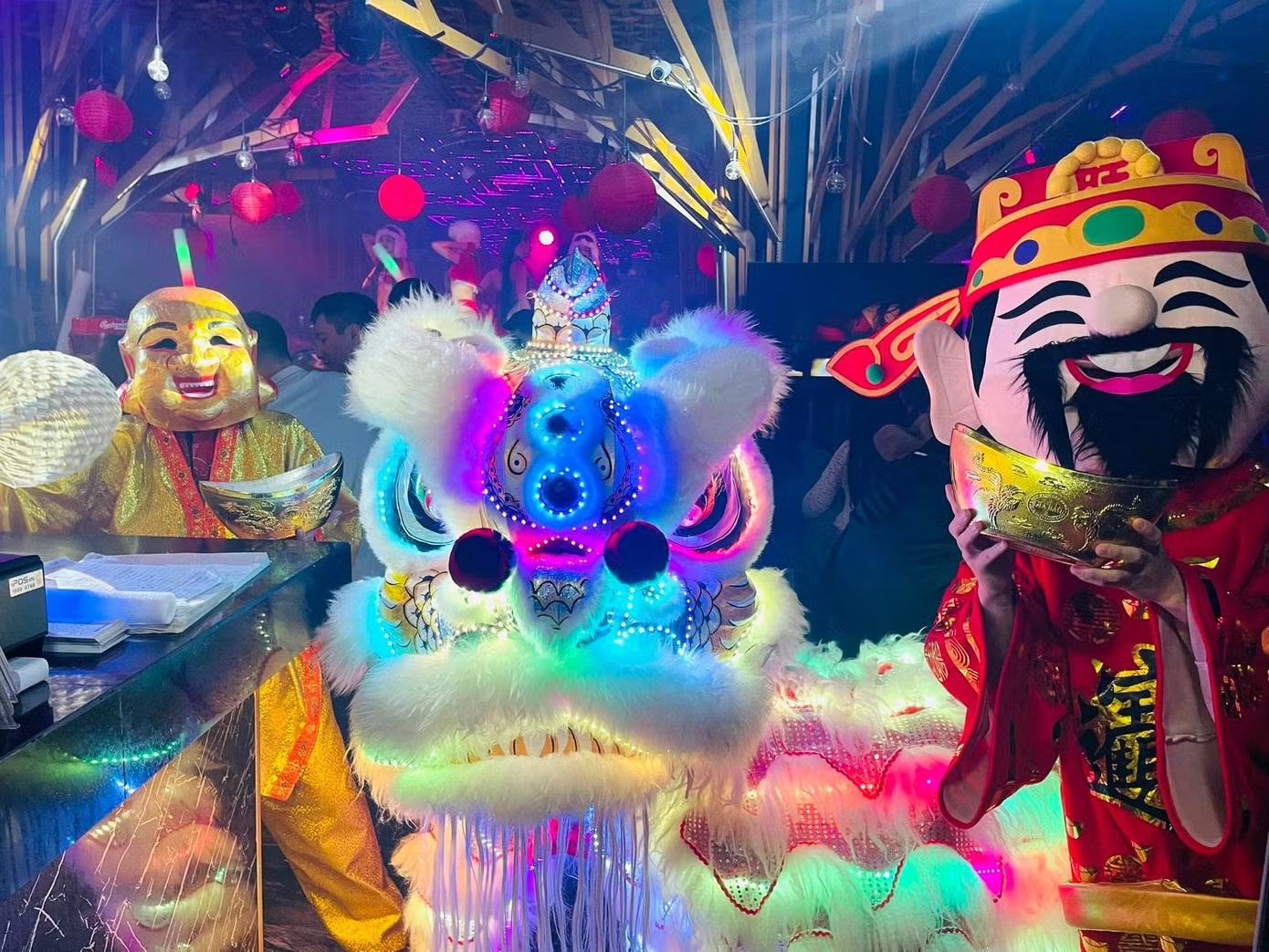
As we enter the digital age, the lion dance has had to innovate to avoid being left behind in the modern flow. Lion heads adorned with dazzling LED lights, combined with vibrant EDM music and hip-hop dance moves, have created a fresh new look, attracting millions of views on platforms like TikTok and YouTube.
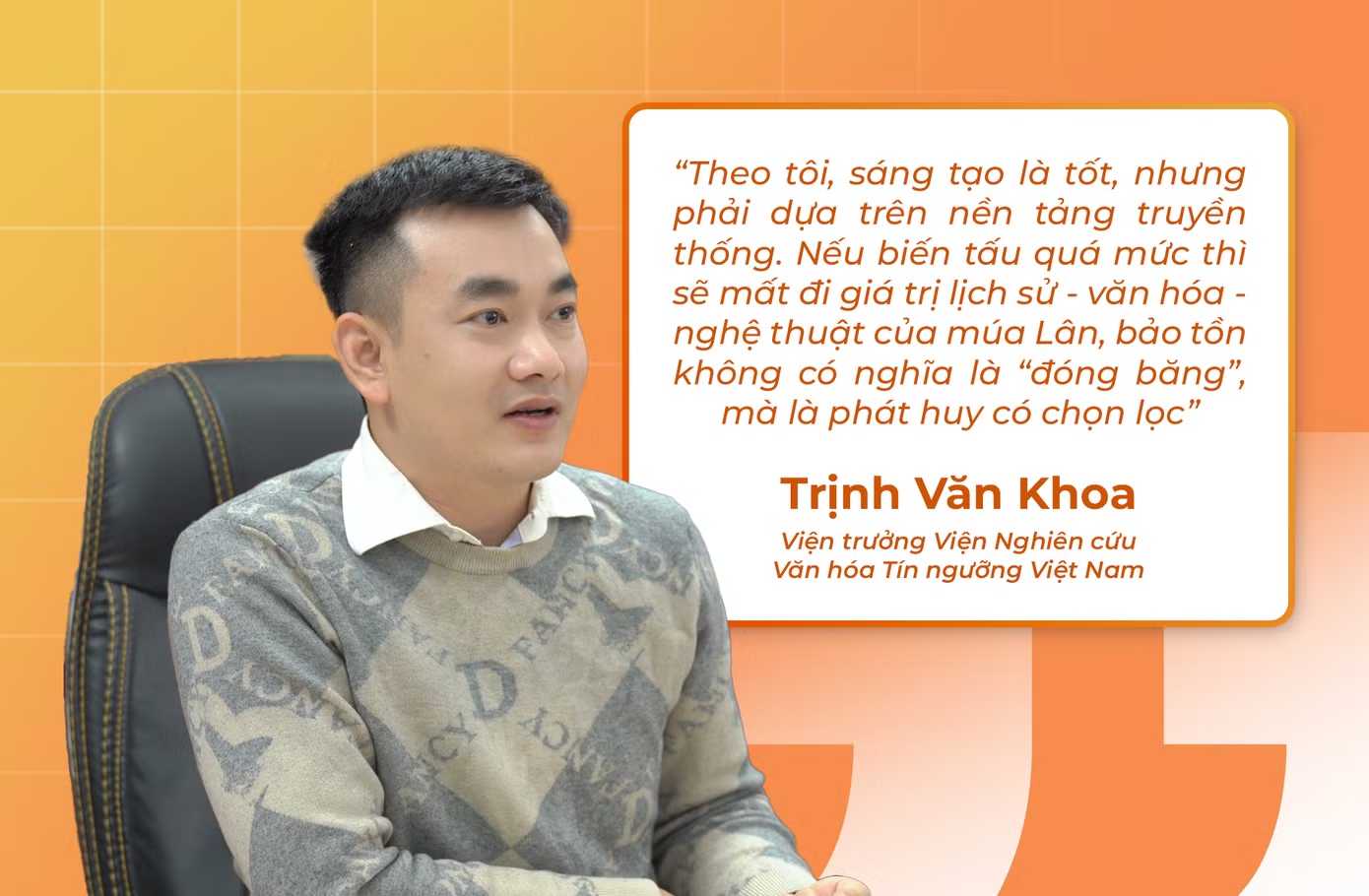
However, the line between innovation and complete replacement can lead to the loss of the lion dance's essence. Mr. Trinh Van Khoa, Director of the Vietnam Institute for Intangible Cultural Heritage Research, expressed his concern: “Lion dance is not just an artistic performance. It is a symbol of good fortune and warding off evil. Modern lighting and music should only play a supporting role, not overshadow the martial spirit.” He worries that if only short-term trends are pursued, the lion dance could easily become purely entertainment – visually appealing but lacking cultural depth.
From a practical professional perspective, Mr. Hung believes that combining lion dance with LED lighting is an inevitable adaptation; the LED elements are useful for stage performances at festivals and commercial events requiring strong visual effects. Meanwhile, traditional lion dance still holds a dominant position in spiritual ceremonies, openings, or groundbreaking ceremonies. "Adding new lighting or music isn't about breaking with tradition, as long as the artist retains the essence of the lion dance. The soul doesn't lie in the lights or music, but in the technique and demeanor of the performer," he stated.
In fact, adding these new elements has made lion dance more accessible to younger audiences – those accustomed to fast-paced lifestyles and modern forms of entertainment. Today, the lion dance is no longer just a memory for the older generation, but is truly vibrant on the phone screens of Generation Z.
The continuation of the younger generation
Lion dance is facing a severe staffing problem; trainees need at least 3-6 months of continuous training to be confident enough to perform on stage, while the unstable income prevents them from fully making a living from the profession full-time.
However, the passion for the craft is still being passed on quietly but intensely within the city. A clear example is the 2024 Lion and Dragon Dance Club Championship, which saw nearly 300 young athletes participate.
In April 2026, the 2nd National Lion and Dragon Dance Competition took place in Lam Dong province, attracting nearly 500 participants, including nearly 300 athletes competing in 8 categories.
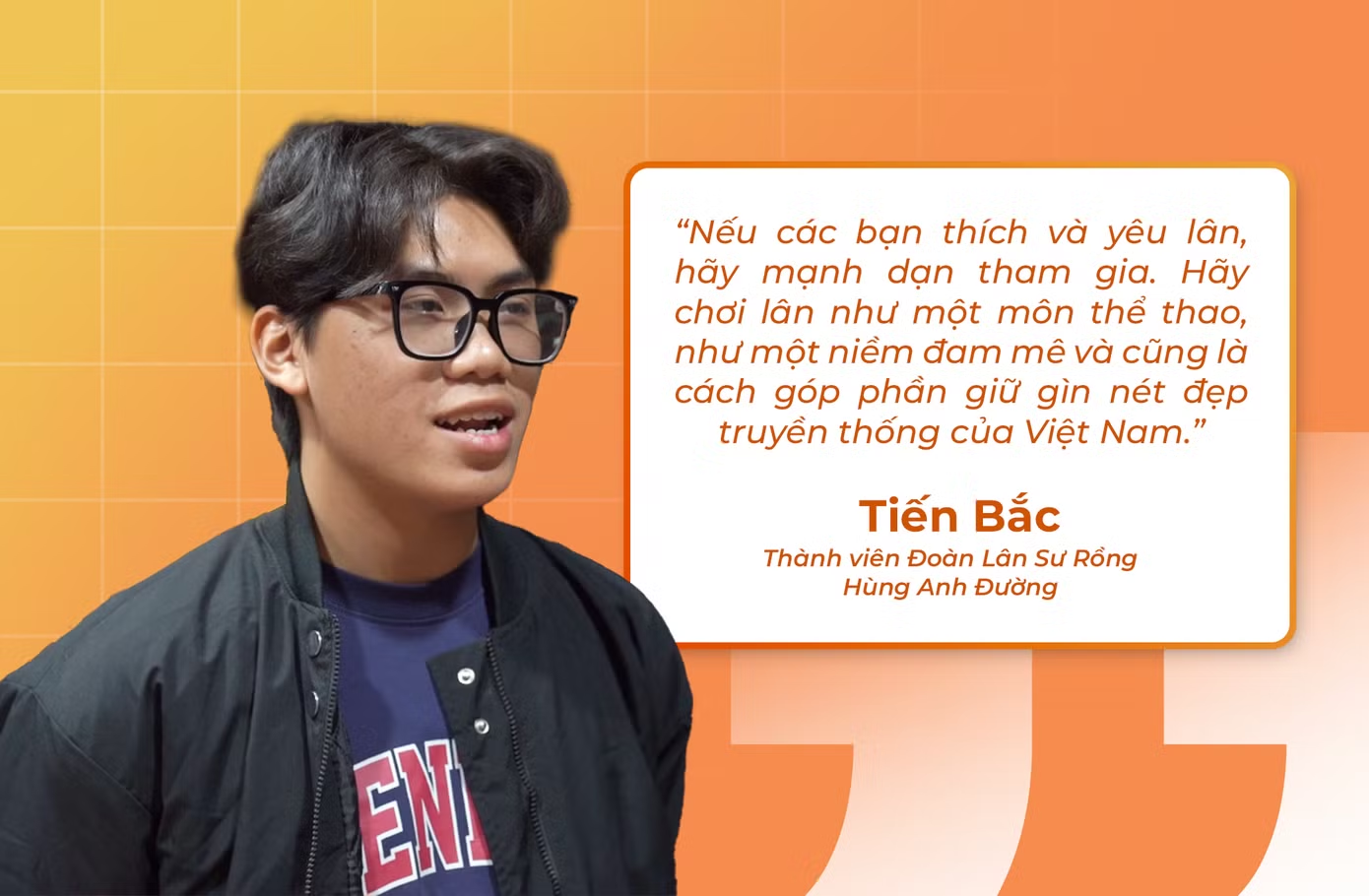
Nguyen Tien Bac, a young artist from the Hung Anh Duong Lion Dance Troupe, recounts his experience performing at the National Concert on September 2nd, 2025. The large stage made the 17-year-old boy nervous, but he ultimately performed successfully because "lion dancing helps me adhere to strict discipline and learn to put my ego aside to cooperate with my teammates." "I don't dare call myself an artist yet; I just think I need to practice a lot, correct my mistakes, and improve," Bac confided.
Young people are not only preserving the craft by standing on the high platform, but also by using creative thinking in the digital age. Technology has now become an extended arm, bringing the image of lion dance artists to millions of viewers through digital platforms.
However, for individual sparks like Bac's to ignite into a sustainable flame of a community, passion alone is not enough. Experts like Mr. Trinh Van Khoa argue that heritage needs an "ecosystem" to survive.
This is thanks to supportive government policies and, in particular, the introduction of lion dance into schools as an experiential extracurricular activity. According to him, when each ward and commune has its own self-managed lion dance troupe and every student gets to touch a lion's head at least once from their school days, the heritage will no longer be a distant concept but will become a part of daily life.
Source: https://tienphong.vn/nhung-buoc-lan-vuot-khoi-san-dinh-post1845260.tpo


![[Image] Close-up view of the interchange connecting the two expressways and Long Thanh Airport.](https://vphoto.vietnam.vn/thumb/1200x675/vietnam/resource/IMAGE/2026/05/25/1779703378210_ndo_br_z7863716673926-224453a31600126cce10622af6290afd-4549-jpg.webp)

![[Image] Hanoi's urban life under the challenge of a "scorching hot" environment](https://vphoto.vietnam.vn/thumb/1200x675/vietnam/resource/IMAGE/2026/05/25/1779706979265_nang-nong-t5-2026-minh-duy-7-4636-jpg.webp)




















































































Comment (0)