

Strolling beneath the vast, lush canopy of ancient trees, the story of the "Ma Da mountain range" during the heroic years of resistance is retold through the words of Mr. Nguyen Van Ha, Director of the Ecological-Cultural-Historical Center of War Zone D, part of the Dong Nai Nature-Cultural Reserve.
A steadfast revolutionary "fortress".
Being a forest lover and having been closely associated with forests for many years, Mr. Ha began his story with a song: "Who has passed through the red soil forests of the Eastern region/ Hear how many times the blood has stained the land red...", then he recounted: "The Ma Da forest bears the distinctive characteristic of 'a forest sheltering soldiers, a forest encircling the enemy.' This place has witnessed countless legends of the land and people of the D War Zone. Research into numerous historical documents shows that: After the Dong Khoi Movement in 1960, to ensure leadership and guidance of the revolutionary movement in the South, the 3rd Conference of the Central Committee of the Party (3rd term) decided to establish the Central Bureau of the South, with its base in the D War Zone, centered in the Ma Da forest (now Phu Ly commune, Vinh Cuu district). This was the base for building the central organs, resistance forces, and transmitting revolutionary directives in the South."
On October 10, 1961, the first meeting of the Central Committee of the Southern Region took place in Ma Da, establishing and consolidating the leadership apparatus; 12 advisory bodies for the Central Committee leadership. At that time, this "sacred forest and poisonous waters" only had footpaths, no roads for automobiles, making travel extremely difficult. Even the French colonialists and the American imperialists, with their modern war equipment, found it very difficult to deploy troops to capture Ma Da. Therefore, American military researchers once assessed: "If the D War Zone remains, Saigon will be lost."
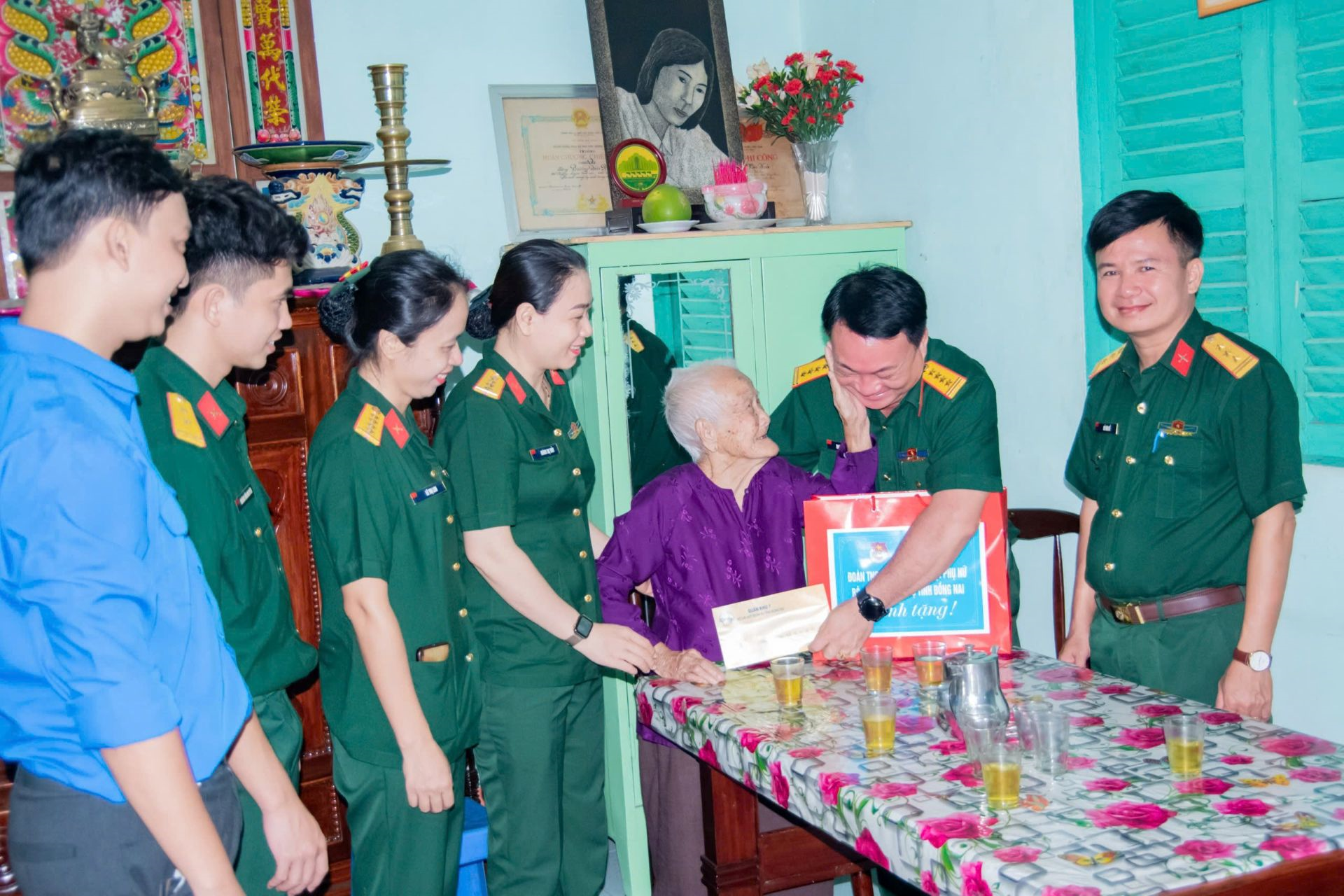 |
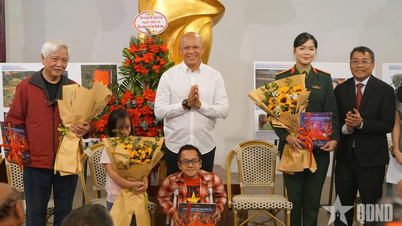
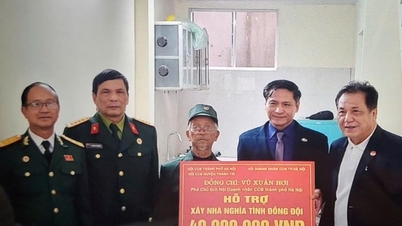
Representatives from the Political Department of the Dong Nai Provincial Military Command paid tribute to families of war veterans in the former revolutionary base area. |
During the war against the US, the Zone D War Zone became a crucial base for the South Vietnamese Liberation Army, housing the Regional Command and revolutionary leadership agencies in the South. It also served as a concentration point for armed forces, providing logistical support, training cadres, training troops, and developing new branches of the military; it was a center for weapons and ammunition production and the organization of major military campaigns throughout the Southeastern battlefield. The Zone D War Zone was also an important rear base supporting major battles in the Central Highlands, the Mekong Delta, and Saigon. In victories such as Tua Hai, Binh Gia, Dong Xoai, the bombing of Bien Hoa airport... and the historic Ho Chi Minh Campaign, the military and people of Zone D played a vital role in supporting major campaigns and directly participating in battles in the Southeastern region, contributing to the final victory in liberating the South and unifying the country.
As Associate Professor, Dr. Ha Minh Hong, Vice President of the Ho Chi Minh City Historical Science Association, rightly pointed out: In the resilient land of the Southeast region, the Zone D War Zone stood out as a steadfast revolutionary "fortress," a place that forged the patriotic spirit and indomitable fighting will of our army and people. From the early days of the arduous resistance war, Zone D War Zone affirmed its role as a strategic base, the center of people's war, and the place that created glorious victories, contributing to writing a golden chapter in the nation's history.
A burst of new vitality
The base area of the D War Zone suffered heavily from the devastating effects of wartime bombing. After the country was liberated, the leaders of Dong Nai province pondered ways to improve the lives of the people, combining the preservation of the Ma Da primeval forest with the promotion of historical relics to educate the younger generation about revolutionary traditions. According to Comrade Phan Van Trang, 94 years old, former Secretary of the Dong Nai Provincial Party Committee: As early as 1986, each household of the Cho Ro ethnic minority in the D War Zone area received housing, a well, and 1 hectare of agricultural land from the province.
Ten years later, the Vinh An Forestry Farm invested in a complete lighting system for each household; and employed many ethnic minority people as workers. In particular, implementing the project to build sustainable ethnic minority villages, in 2005, the Command of Military Region 7, together with Dong Nai province, implemented the construction of 64 new houses for poor households, 40 sanitation facilities, traditional longhouses, a clean water supply station, lighting, and over 2.2 km of paved roads to develop the economy and stabilize the lives of people in the revolutionary base area. However, to ensure long-term stability, the Provincial People's Committee directed the establishment of the Vinh Cuu Nature and Historical Site Conservation Area (now the Dong Nai Nature-Cultural Conservation Area).
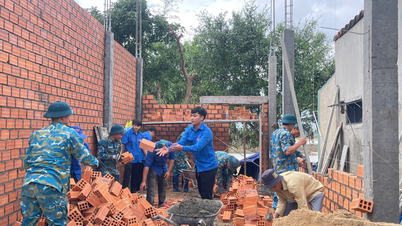
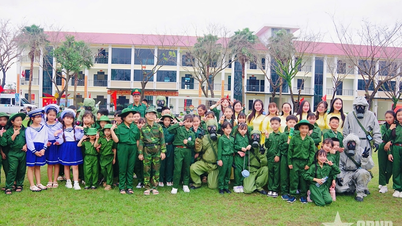
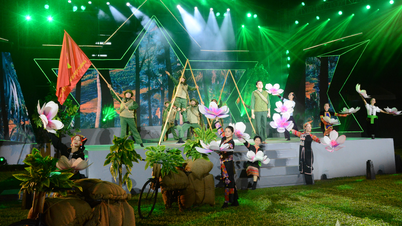
Since its establishment, the Conservation Area has carried out many activities to promote forest economic development, connect historical tourism routes, coordinate efforts to improve the lives of local people, and preserve and promote the historical and cultural value of the D War Zone. The armed forces of Dong Nai province also join hands in caring for policy beneficiary families, protecting the environment, and disseminating the historical value of this "red address".
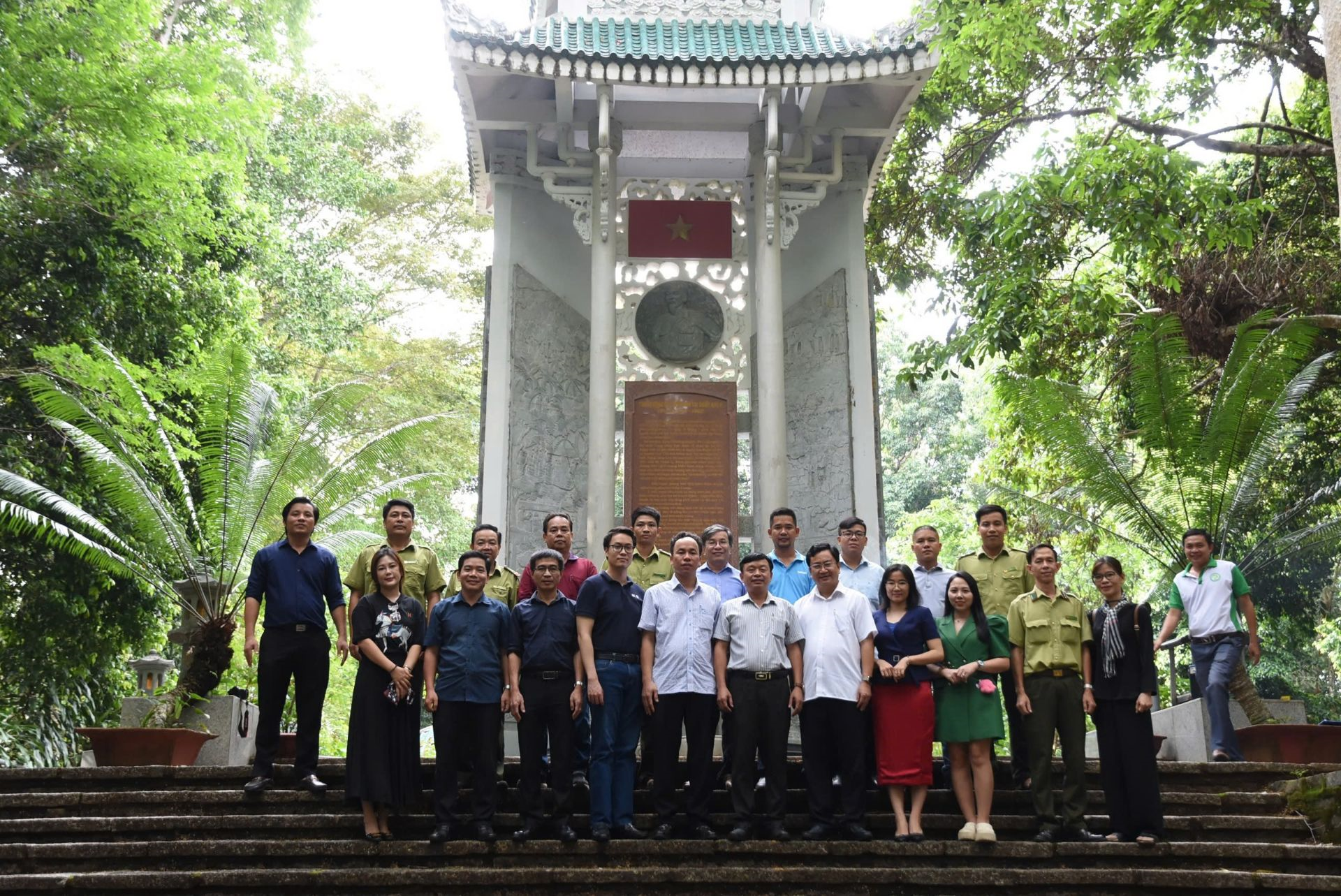 |
| Tourists visit the memorial site in War Zone D (Dong Nai). Photo provided by Dong Nai Nature and Culture Reserve. |
With the aim of promoting the tourism industry linked to historical and cultural sites, at the end of 2023, the People's Committee of Dong Nai province approved the Project on Ecotourism, Resort, and Entertainment in the Dong Nai Nature-Cultural Reserve, giai đoạn 2021-2030. The implementation of this project has breathed new life into and brought about many changes to ecotourism, cultural tourism, and historical tourism in Dong Nai, with the Dong Nai War Zone being a highlight.
Along the route adorned with vibrant pink and pristine white bougainvillea blossoms that blanket the mountains and forests of the D War Zone, Dr. Nguyen Hoang Hao, Director of the Dong Nai Nature and Culture Reserve, shared: "The Reserve's management board directs and hosts many beneficial programs and activities to attract tourists to visit, experience, and learn about history and culture; actively explores and innovates unique tourism products, creating highlights in each connected tour to promote the historical and cultural values of the D War Zone. We are determined to realize the poetic vision of poet Huynh Van Nghe: 'Mountains joyfully change their colors / Green streams sing a string of pearls' so that the D War Zone will forever shine as a symbol of the steadfast and indomitable spirit of the Vietnamese nation."
Text and photos: CHAU GIANG
Source: https://www.qdnd.vn/phong-su-dieu-tra/phong-su/suc-song-moi-o-vung-chien-khu-d-826236

![[Photo] Prime Minister Pham Minh Chinh presides over a meeting on private sector economic development.](/_next/image?url=https%3A%2F%2Fvphoto.vietnam.vn%2Fthumb%2F1200x675%2Fvietnam%2Fresource%2FIMAGE%2F2025%2F12%2F20%2F1766237501876_thiet-ke-chua-co-ten-40-png.webp&w=3840&q=75)


































































Comment (0)