

The leader of Syria's new ruling forces promises a completely new state, while the US and UN are opening the possibility of recognizing the Damascus government.
No more war
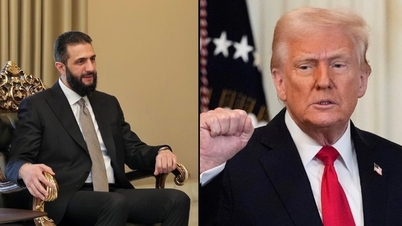
Yesterday, Abu Mohammed al-Jolani, the leader of the opposition Hayat Tahrir al-Sham (HTS), made his first statements to Western media since leading the coalition to overthrow the government of Syrian President Bashar al-Assad.
Speaking to Sky News from Damascus, al-Jolani attempted to dispel outside doubts about HTS's past and emphasized that Syria was moving toward development, reconstruction, and stability. "The people are exhausted by war. The country is not ready and will not engage in another war," al-Jolani pledged, adding that the world "has nothing to fear."
An uncertain future awaits Syria after opposition forces overthrew President al-Assad.
The leader, whose real name is Ahmed al-Sharaa, fought against the US military in Iraq in the 2000s. His organization was once a branch of al-Qaeda in Syria and is listed as a terrorist group by the US and many other countries, but in recent years has tried to sever ties with its extremist past to claim a more moderate stance. HTS's sweep across Syria in just two weeks has stirred fear among minority groups in the country, such as the Kurds, Alawites, and Christians. However, al-Jolani asserts that the source of this fear stems from the al-Assad regime and its allies, and therefore "eliminating them is the solution for Syria."
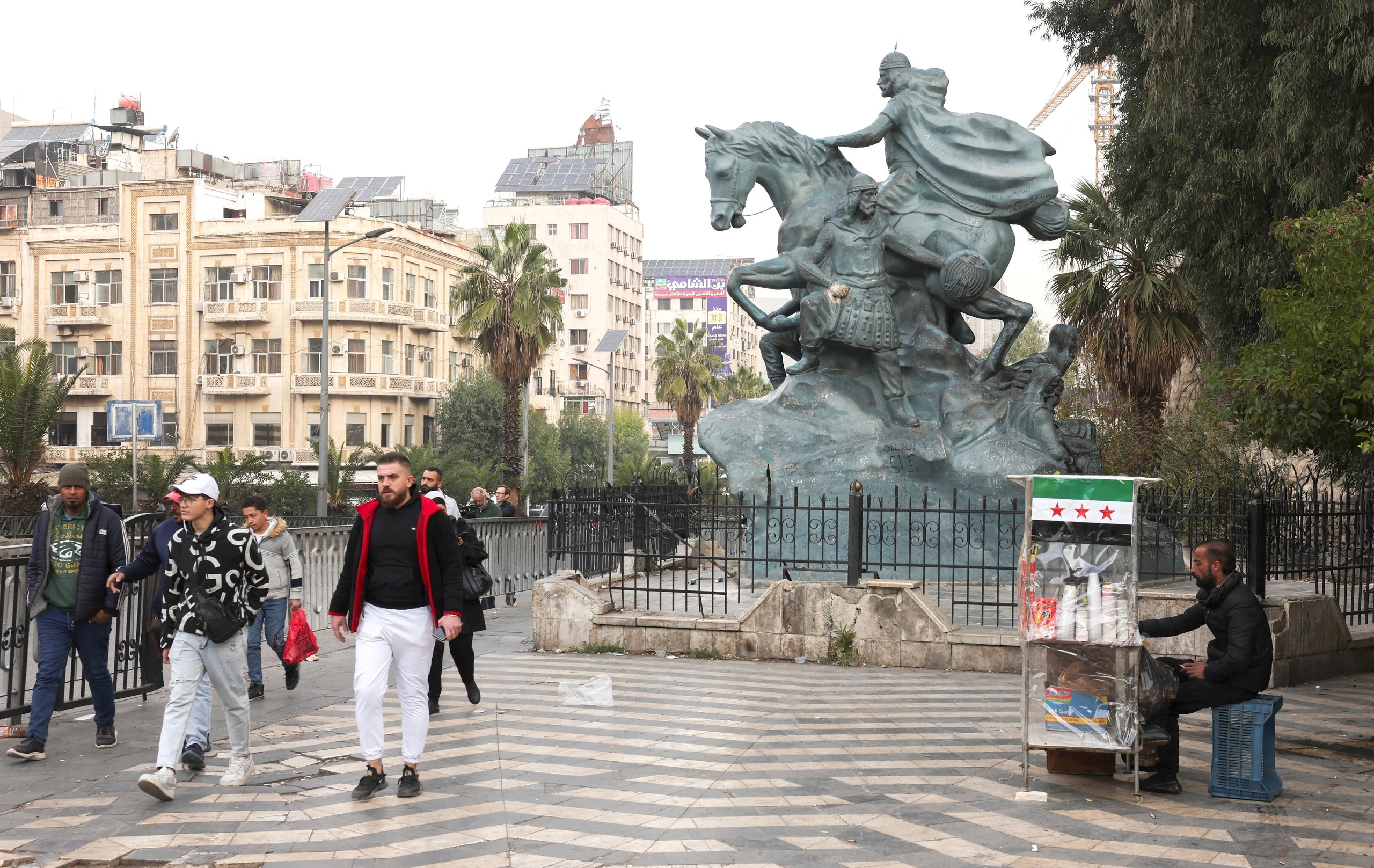
Syrian citizens in the capital Damascus on December 11.
On the same day, the new Prime Minister Mohammad al-Bashir, backed by HTS, declared that it was now time for the people to "enjoy stability and peace," pledging to lead the transitional government until March 2025.
US fires signal
The overthrow of al-Assad's regime marks a new turning point, forcing the US to reassess its interests in Syria. Observers note that the US has lacked a clear policy regarding Syria for at least the last three presidential administrations. While condemning al-Assad's regime, the US has not prioritized forcing him out due to suspicions about the main opposition groups. In Syria, the US maintains approximately 900 troops and supports Kurdish forces.
US President-elect Donald Trump recently called Syria a "mess" and said Washington should not get involved. However, observers do not rule out the possibility of him changing his mind, as he has previously been willing to negotiate with adversaries of the US such as the Taliban and North Korea, according to AFP.
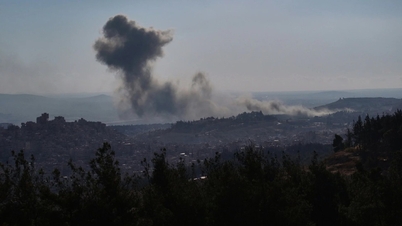
Israel says it does not want conflict with the new government despite its airstrikes in Syria.
US Secretary of State Antony Blinken has suggested the possibility of recognizing a future Syrian government if it is truly credible, inclusive, and secular, and commits to respecting minority rights, allowing humanitarian aid, and preventing terrorists from using the territory as a base. The UN has also said it would remove HTS from its terrorist list if it commits to building an inclusive government.
Reuters reported yesterday that Blinken will visit Ankara on December 13 to meet with Turkish Foreign Minister Hakan Fidan to discuss the situation in Syria. Clashes are believed to be ongoing between Turkish-backed groups and Kurdish factions, who are partners of the US in the fight against the self-proclaimed Islamic State (IS).
Iran accuses the US and Israel over Syria.
Meanwhile, on December 11, Iran's Supreme Leader Ali Khamenei delivered his first speech on Syria since Bashar al-Assad was overthrown as president and flew to Russia.
"It is clear that what happened in Syria was a joint plan of the US and the Zionist regime (referring to Israel). A neighboring government of Syria has also played a clear role in this. Everyone sees this, but the mastermind and command center is in the US and the Zionist regime," Iranian media quoted Khamenei as saying, adding that he has clear evidence.
Source: https://thanhnien.vn/syria-truoc-buoc-ngoat-lich-su-185241211221253047.htm


![[Image] Shipbuilders exposed to steel and record-breaking heat.](https://vphoto.vietnam.vn/thumb/1200x675/vietnam/resource/IMAGE/2026/06/04/1780545781745_ndo_br_img-5402-4683-jpg.webp)




































![[Video] Sunset at Lap An Lagoon – Where the sun sets over the fishing nets](https://vphoto.vietnam.vn/thumb/1200x675/vietnam/resource/IMAGE/2026/05/31/1780192137701_beach-landscape-sea-water-nature-grass-745871-pxhere-com.jpeg)






























Comment (0)