


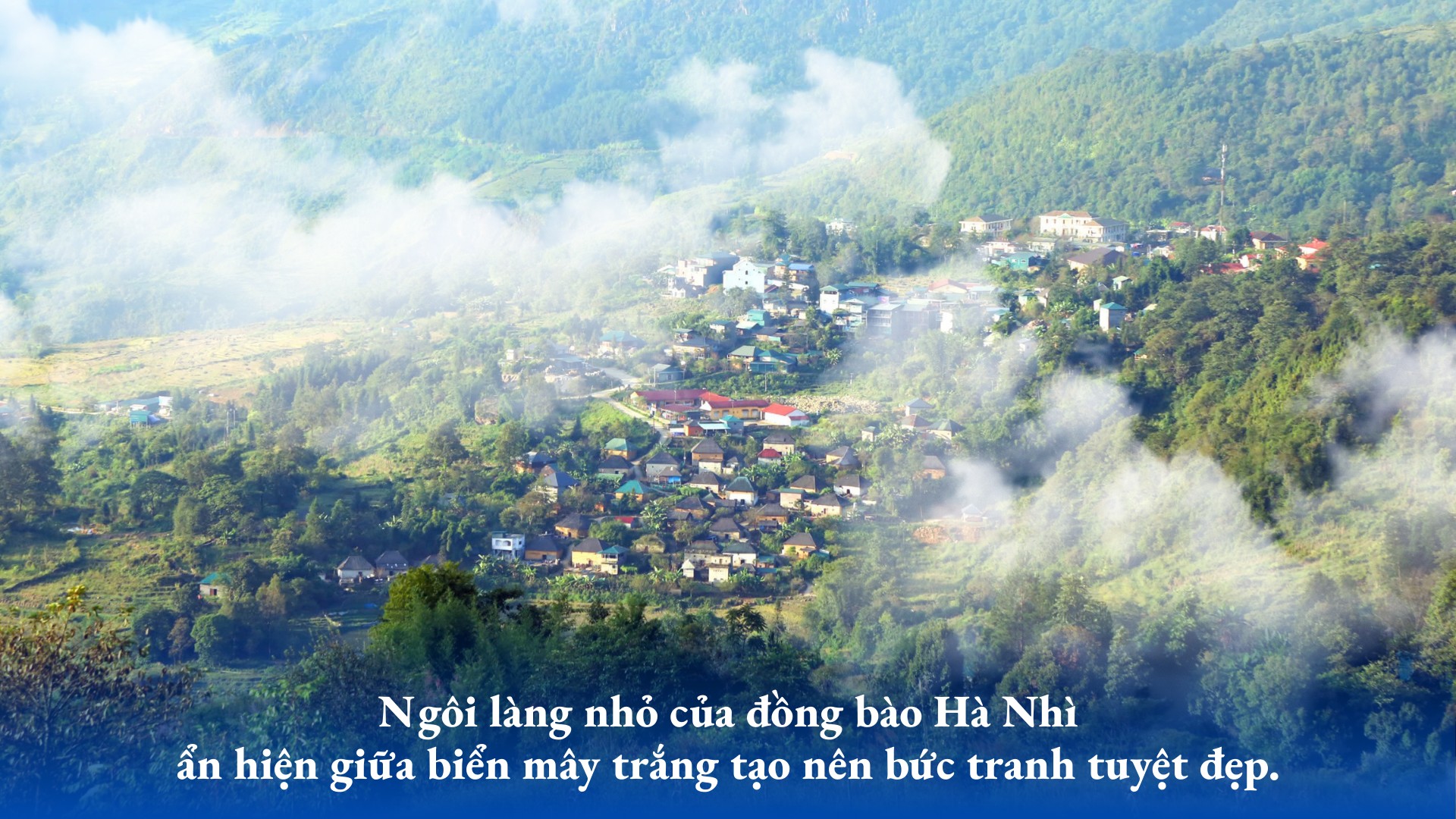
From Lao Cai city, whether traveling via Trinh Tuong to Y Ty or via Muong Hum to Y Ty, many tourist groups stop to take photos and admire the scenery at the top of Mo Phu Chai village, captivated by the beauty of the small village hidden in the mystical mist and clouds. From here, you can see the entire Ta Gi Thang village with its nearly 60 traditional houses of the Ha Nhi people.
The Ha Nhi people have a strong sense of community, so their four-roofed, earthen-walled houses are often built close together, with the main door and windows facing the same direction. The most beautiful moment in Ta Gi Thang is when the clouds gather; each wave of white clouds, carried by the wind, resembles a silken ribbon embracing the village. When the clouds dissipate, the earthen houses with their yellow walls gradually appear in the mesmerizing sunlight.
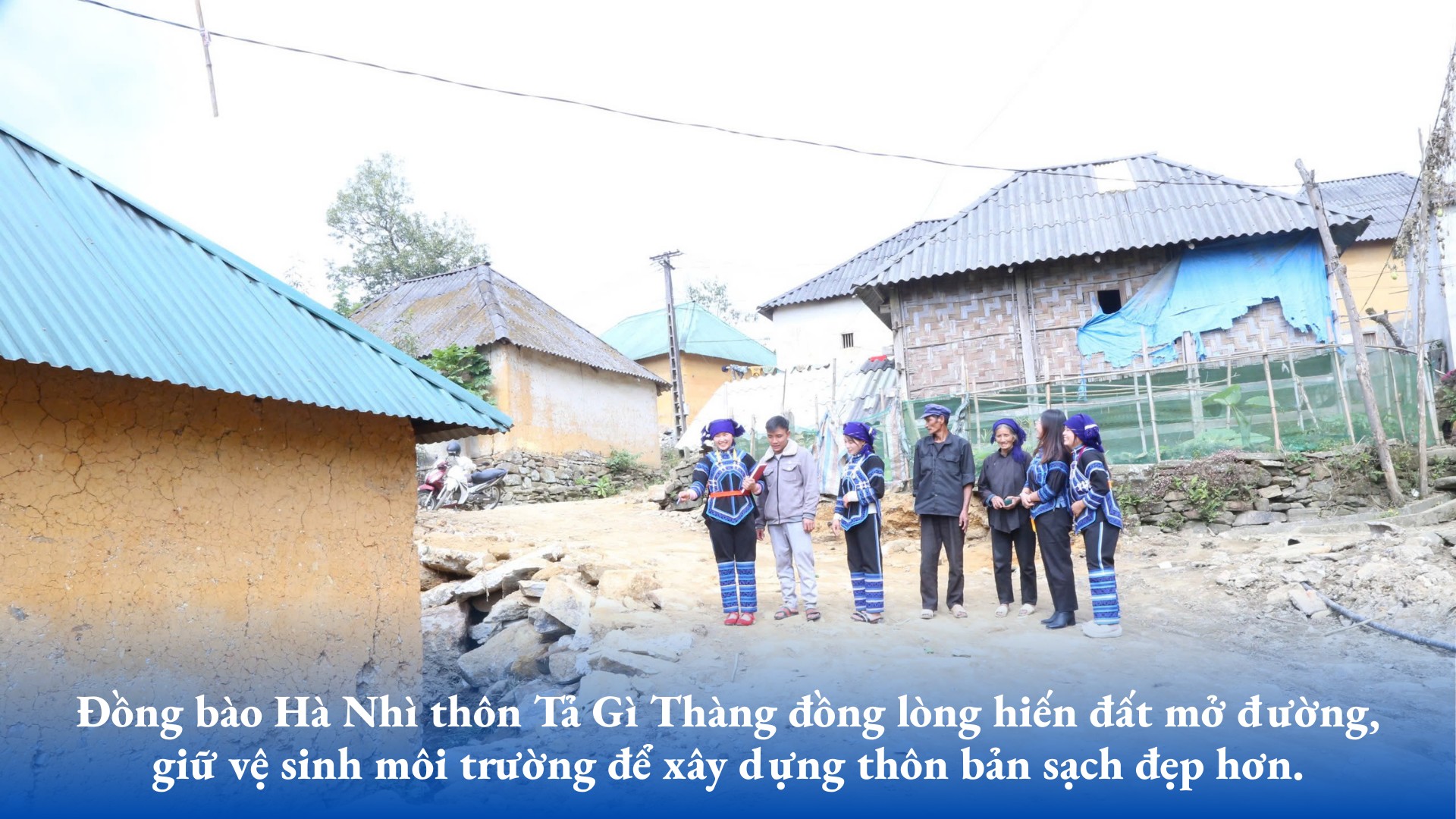
Upon arriving in Ta Gi Thang, I had the opportunity to walk along the ancient stone path leading into the village. Ta Gi Thang is situated on a steep mountainside; before the concrete road was built, all the paths were dirt, making travel very difficult for the locals. For hundreds of years, the Ha Nhi people here have diligently arranged each stone to lengthen the stone path year after year, connecting the village to the Y Ty market.
To this day, the ancient stone road remains relatively intact, with a width of about 2 meters and a length of about 2 kilometers. The locals have renovated it for tourists to experience. In addition, the small paths around the village, leading from one house to another, are paved with stone, bordered by stone fences, and covered in lush green moss, creating a pristine, ancient charm rarely found elsewhere.
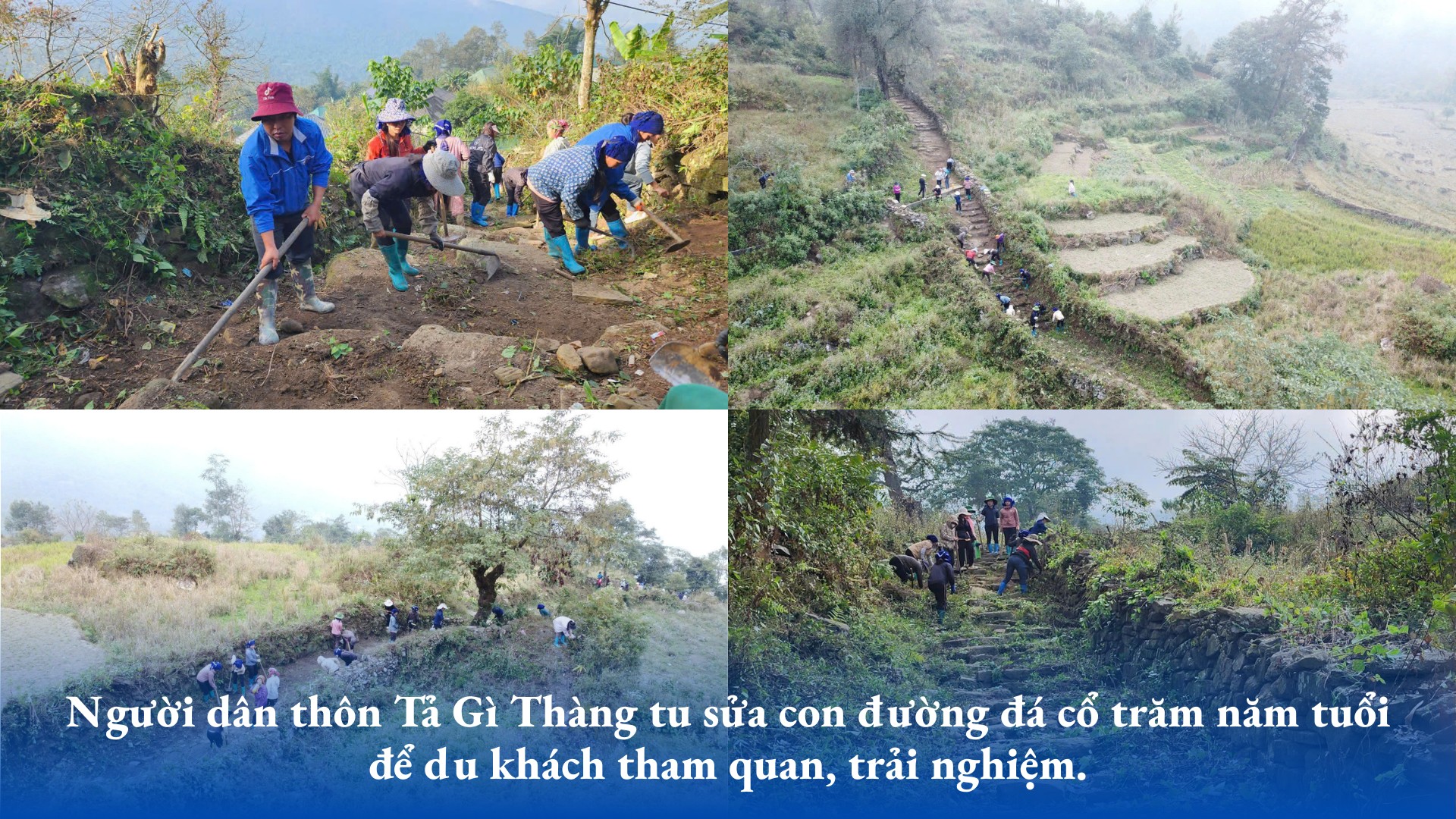
Taking us on a tour of Ta Gi Thang, Mr. Ly Ca Gio, the village head, said that the village currently has 53 Ha Nhi households. What's special is that 100% of the households here still retain the traditional earthen-walled houses of their ethnic group, unlike some other villages where they build brick houses or townhouses. Previously, these earthen-walled houses were often thatched with grass, but now they have been replaced with corrugated iron roofs, yet they still preserve the traditional village architecture of the Ha Nhi people. Some of these earthen-walled houses were built more than 50 years ago, belonging to Mr. and Mrs. Ly Lo Gio, Pha Ca Be, Ly Ho Me, So Xuy Xa, So Tho Suy…
I asked why the houses here have four roofs, very thick walls, small front doors and windows, and some houses have no windows at all? Mr. Gió explained that Tả Gì Thàng is a windy place, cold all year round, with frequent fog in winter. The houses have four enclosed roofs and small wooden doors to protect against the wind, and the walls are up to 50 cm thick, making them warmer inside.
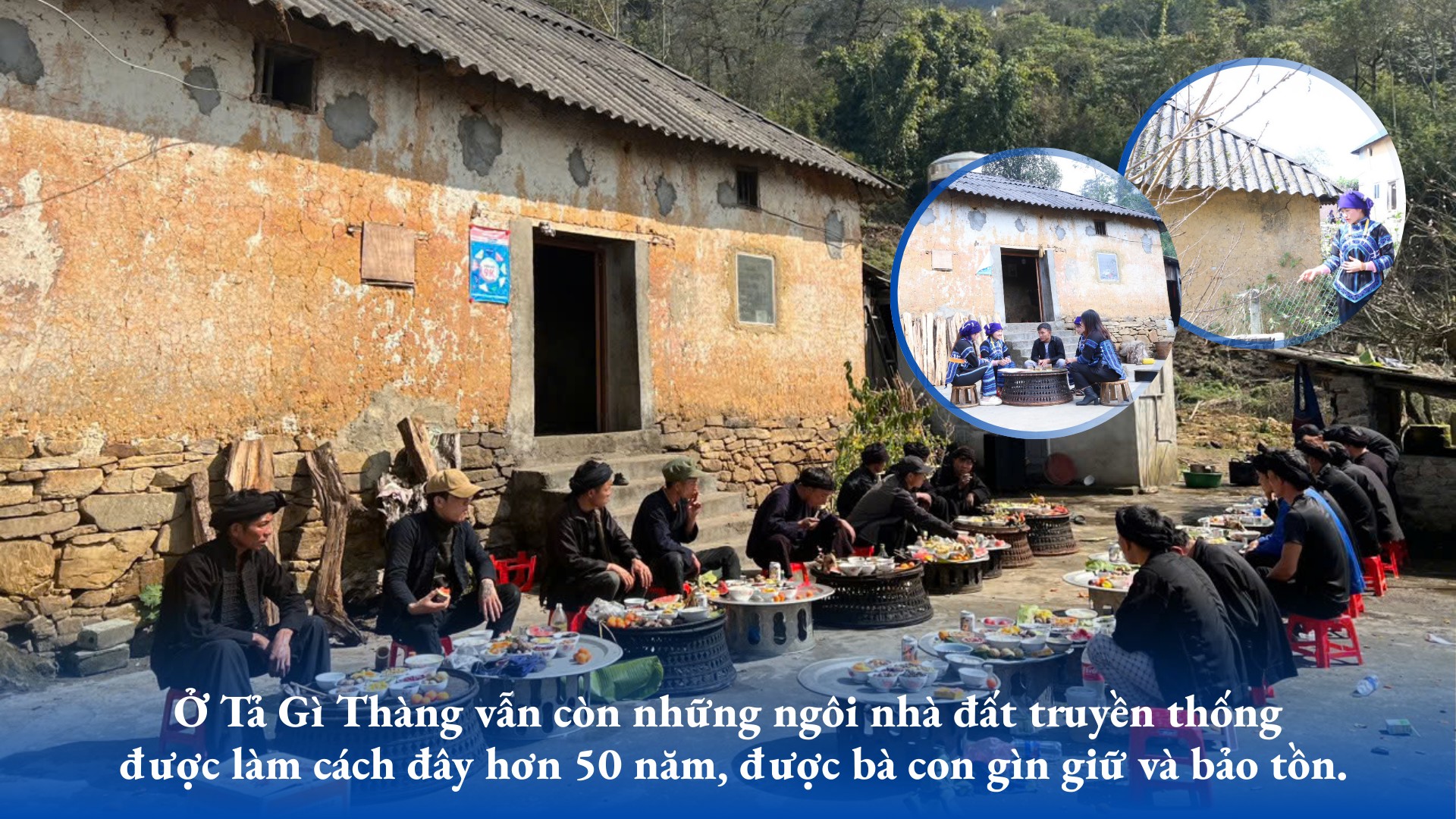
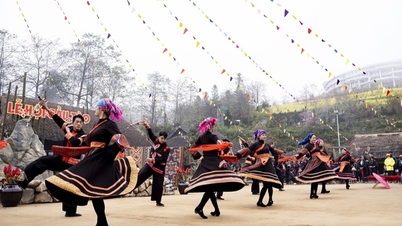
Along with preserving traditional house architecture, the Ha Nhi people in Ta Gi Thang also preserve and promote the beautiful cultural features of their ethnic group.
Visiting during the Lunar New Year, tourists can experience the Ga Ma O festival with the rituals of worshipping the sacred water source Lu Khu Su, worshipping the forbidden forest Ga Ma Do, and the Children's Festival Du Do Do. In the third lunar month, there is the Mu Thu Do forest worship ceremony to pray for the rice seeds to sprout and a bountiful harvest. In the sixth lunar month, the Ha Nhi people enthusiastically slaughter buffaloes to organize the Kho Gia Gia festival - the biggest harvest festival of the year. In the tenth lunar month, the Ha Nhi people joyfully celebrate the traditional Ga Tho Tho festival to worship their ancestors and thank the deities, summarizing a year of labor and production.
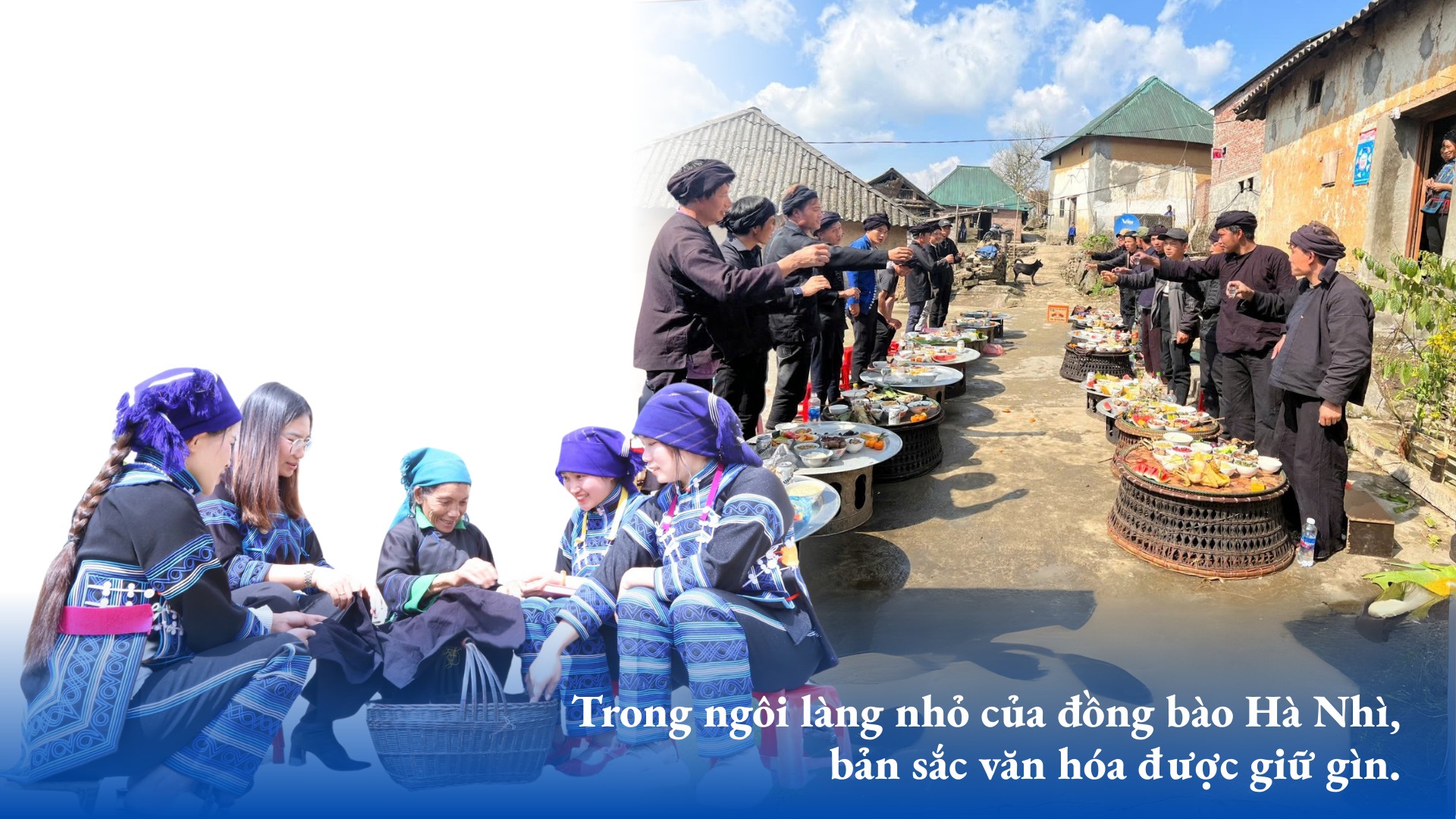
In recent years, Ta Gi Thang village has become a popular destination for tourists exploring the unique culture of the Ha Nhi ethnic group. Several Ha Nhi households in the village have opened homestays to welcome tourists . The mushroom-shaped earthen houses, the moss-covered stone paths, the year-round festivals, the unique folk songs and dances of the Ha Nhi people, and the friendliness and warmth of the locals have left a deep impression on visitors to Ta Gi Thang – a beautiful village nestled in the clouds.
Source: https://baolaocai.vn/ta-gi-thang-lang-dep-trong-may-post401189.html




































































Comment (0)