1. Identifying bamboo leaves used in medicine.
- 1. Identifying bamboo leaves used in medicine.
- 2. Uses of bamboo leaves
- 3. Dosage and method of use
In traditional medicine, bamboo leaves are called "Truc Diep" and were used by ancient physicians to reduce fever, relieve heat, promote urination, treat mouth ulcers, cure colds and flu, and many other common ailments.
To use bamboo leaves correctly as medicine, it is first necessary to identify and distinguish three forms of the herb that are often confused:
Identifying bamboo leaves: Bamboo leaves are lance-shaped, about 7-16 cm long and 1-2 cm wide. The upper surface is smooth and glossy, while the lower surface is slightly rough with fine hairs. The leaf veins are parallel. Bamboo leaves can be harvested year-round, but are most commonly harvested in summer or autumn/winter, when their medicinal properties are at their peak. When harvesting, choose fresh, semi-ripe leaves – neither too old nor too young. After washing, the leaves can be used fresh directly (the commonly used form) or dried.
Distinguishing between different types of bamboo leaves:
Bamboo leaves: These are the leaves of bamboo species belonging to the genus Bambusa, most commonly the thorny bamboo ( Bambusa blumeana ). This is a woody, hollow-stemmed tree, about 10-18 meters tall, growing in thickets around Vietnamese villages.
Lophatherum gracile (bamboo leaf grass): This refers to the entire above-ground part of a perennial grass species with the scientific name Lophatherum gracile . This species has swollen, tuberous roots, and its stem only grows to about 0.6-1.5 meters tall. Although both are used as a cooling medicine, Lophatherum gracile is a separate herb and should not be confused with bamboo leaves.
Bamboo leaf buds: These are the young leaves of the bamboo plant that are still curled up, not yet fully unfolded. This type is often preferred by physicians in remedies that clear heat from the heart, especially when treating mouth ulcers and tongue sores.
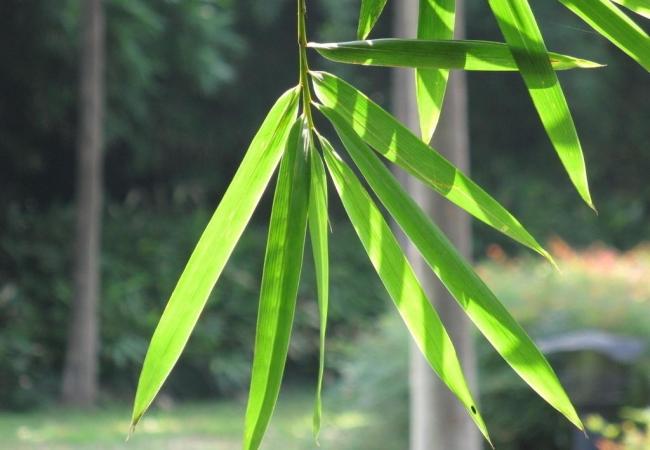
The medicinal herb is bamboo leaf.
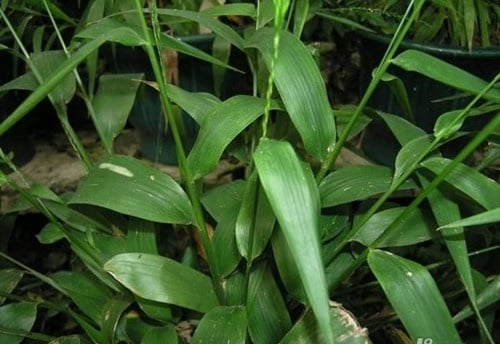
The medicinal herb *Dan Zhu Ye* (bamboo leaf grass)
2. Uses of bamboo leaves
According to Traditional Chinese Medicine: Bamboo leaves are classified as a heat-clearing medicine, meaning they can soothe the body's "heat." This herb has a sweet, slightly bland taste; some texts also note a slightly bitter taste; its nature is cool or cold. According to the meridian theory of Traditional Chinese Medicine, bamboo leaves enter four main meridians: Heart, Lung, Stomach, and Small Intestine.

The medicinal uses of bamboo leaves are quite diverse, including:
Clears heat and relieves restlessness: Helps soothe high fever, dry mouth and thirst, restlessness, and anxiety.
Diuretic and urinary tract clearing: Helps expel heat toxins through the urinary tract, primarily treating symptoms such as reddish urine, painful urination, frequent urination, and even blood in the urine caused by heat accumulation in the bladder.
Bamboo leaves also have detoxifying and anti-inflammatory properties: They are often used in cases of inflamed and suppurating boils, measles, or chickenpox during the eruption phase. Another benefit of bamboo leaves is their ability to stimulate fluid production, helping to replenish fluids lost after high fevers and dehydration.
Specifically, young bamboo shoots (bamboo leaf buds) have similar effects to mature bamboo leaves, but are especially favored by physicians for clearing heat in the heart, treating heart meridian-related symptoms of excess heat causing mouth ulcers and tongue ulcers.
According to modern medicine: Modern pharmacological studies have helped us better understand why bamboo leaves have the effects recorded in traditional medicine. Chemical analysis shows that bamboo leaves contain many flavonoids such as orientin, vitexin, isoorientin, luteolin, along with phenolic acids, chlorophyll, choline, and polysaccharides. They are also a rich source of minerals including silicon, selenium, magnesium, calcium, and potassium. In addition, bamboo leaves contain vitamin C and B vitamins.

Regarding pharmacological effects, animal studies have shown that bamboo leaf extract has antipyretic and diuretic properties. The flavonoids in bamboo leaves also have antioxidant properties, dealing with free radicals, helping to protect cells from oxidative stress and slowing down the aging process.
Additionally, bamboo leaf extract possesses antibacterial and anti-inflammatory properties. Studies show that it inhibits the growth of various bacteria such as E. coli, S. aureus, and B. subtilis, while also reducing inflammatory agents by inhibiting nitric oxide production.
Notably, some active compounds in bamboo leaves have the ability to inhibit the alpha-glucosidase enzyme, helping to control postprandial blood sugar. Bamboo leaves are also being studied for their potential in supporting the treatment of cardiovascular diseases and hypertension. Regarding the nervous system, bamboo leaf extracts have a calming effect, reduce stress, and show initial potential in improving memory and supporting the treatment of conditions such as Alzheimer's.
3. Dosage and method of use
To maximize the effectiveness of bamboo leaves, users need to adhere to the correct dosage and usage instructions for each treatment purpose. For fresh bamboo leaves, the usual dose ranges from 10-30 grams per day, sometimes increasing to 50-100 grams in necessary cases. For dried bamboo leaves, the dose is lower, around 6-10 grams, but can be increased to 25-50 grams depending on the specific remedy.
Common uses:



Decoction - This is the most common method of use. After washing the bamboo leaves, they are boiled with water and other medicinal herbs, usually until the water is reduced to about one-third or one-quarter of the original amount to concentrate the active ingredients.
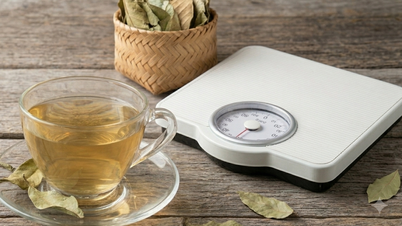
Brewing tea: Wash fresh bamboo leaves thoroughly, then steep them in boiling water for about 20 minutes to create a refreshing drink that helps relax the mind.
Steam inhalation for colds: This method using bamboo leaves is often applied when suffering from colds, fever, and headaches. In the past, people often combined bamboo leaves with other leaves containing essential oils such as pomelo leaves, lemongrass, basil, mint, and chrysanthemum... to make a steam inhalation solution.
For external use: Besides drinking and steaming, a concentrated decoction of bamboo leaves can be used as a mouthwash to treat bleeding gums; or to wash areas of skin affected by ulcers or rectal prolapse. In traditional folk medicine, young bamboo leaves were combined with rice and tobacco, dried, crushed, and sieved into a fine powder. This powder was sprinkled directly onto the wound and bandaged to stop bleeding.
Source: https://suckhoedoisong.vn/tac-dung-chua-benh-cua-la-tre-169260507150903753.htm


































![[Photo] Thousands of people participate in a run to show their support for the campaign "Sharing a common determination to build drug-free communes, wards, and special zones".](https://vphoto.vietnam.vn/thumb/1200x675/vietnam/resource/IMAGE/2026/06/27/1782554475933_0673e2a3df7b5e25076a-8283-jpg.webp)