


OLED TVs offer sharp display and energy efficiency (Photo: ST).
While many mainstream TV models have their prices adjusted throughout their product lifecycle, OLED TVs generally remain in the higher price segment, with a significant price difference compared to traditional LCD TVs.
This fact raises questions about the factors that contribute to the higher production costs and selling prices of OLED panels.
The production process is complex and high-risk.
The key factor lies in the substrate manufacturing process.
Unlike LCDs, which use a backlight system with multiple light-filtering layers, OLED technology relies on self-illuminating organic materials. The process of depositing these material layers requires a strictly controlled manufacturing environment and very high precision.
Even a small deviation in the manufacturing process or a single ultrafine dust particle can render the substrate substandard. Therefore, the percentage of finished products meeting requirements becomes a crucial factor, directly impacting production costs.
According to published figures, in 2022, the production yield of Samsung's QD-OLED panels was approximately 68%. When this figure improves to around 84% in 2023, the production cost of new 65-inch OLED panels is likely to decrease significantly.
A similar situation is occurring with LG Display. Despite optimizing many stages in the production line, this manufacturer still has to bear large fixed costs for the production system, even when the factory is not operating at full capacity.
Furthermore, costs increase with screen size. On the same 8.5-inch base panel, significantly fewer large screens can be cut compared to smaller sizes. This makes very large OLED models, such as 97 inches, sell for tens of thousands of dollars.
Differences in display experience
The high cost of OLED comes with different display characteristics compared to LCD.
Thanks to their ability to control each pixel individually, OLED TVs have a distinct advantage in contrast and the ability to display dark areas. Meanwhile, LCD TVs still rely on a backlight system, so in some display situations, it's unavoidable that light will leak through unwanted areas.

OLED is not the right choice for every need (Photo: ST).
OLEDs also have a fast response time, which helps reduce blurring in fast-moving scenes such as sports or video games. This is a point of interest for many users, although in reality, current high-end LCDs have also significantly improved in this aspect.
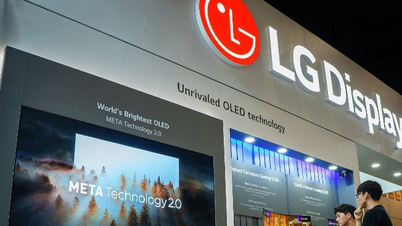
Additionally, advancements such as microlens array (MLA) technology are helping OLED TVs increase brightness, thereby expanding their usability in brighter environments compared to previous generations.
When should you consider an OLED TV?
Despite its many advantages, OLED is not the right choice for every need.
In home entertainment spaces, where users prioritize image quality when watching movies or high-resolution content, OLED is a worthwhile option if the budget allows.
Conversely, for the same cost, LCD TVs typically offer larger screen sizes. For families who prioritize screen space or use the TV for multiple purposes, LCD remains a more economical option.
In public environments such as cafes, gyms, or places where TVs need to operate continuously with static content, LCDs are also considered more suitable due to their durability and ability to maintain stable brightness over long periods.
Limitations to consider
Despite its advantages in display quality, OLED still has certain limitations.
While OLED displays have improved maximum brightness thanks to new technologies like MLA, they still struggle to maintain high brightness levels for extended periods compared to LCDs using Mini LED backlighting. In environments with plenty of natural light or during daytime TV viewing, this advantage of LCDs remains quite pronounced.
Image burn-in, although better controlled by manufacturers compared to earlier generations, is fundamentally still associated with OLED technology. In specific use cases such as displaying static content for extended periods or as advertising displays, LCD is generally considered a safer and more durable option.
From a cost perspective, the difference between OLED and high-end LCD isn't just in the initial purchase price. Current Mini LED LCDs offer high display quality, sufficient for most users' needs for watching movies, sports, and gaming, while costing significantly less compared to other screens of the same size.
Finally, the technology lifecycle is also a factor to consider. With the rapid pace of innovation in the display industry, not all users will be able to fully exploit the advantages of OLED before new generations of technology emerge.
Source: https://dantri.com.vn/cong-nghe/tai-sao-tv-oled-luon-dat-do-20260202121801829.htm































































































Comment (0)