

Does your car experience hesitation, jerking, or stalling when using E10 gasoline for the first time?
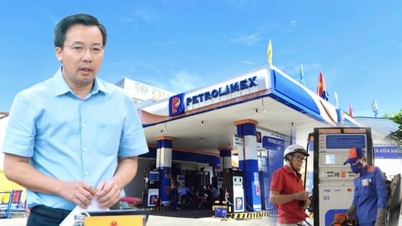
Regarding the phenomenon of vehicles experiencing engine hesitation, jerking, or stalling when first using E10 gasoline, Mr. Do Van Tuan, Chairman of the Biofuel Association, stated that a small percentage of vehicles, especially older motorcycles, may be experiencing this. However, he argued that E10 gasoline does not cause engine damage.
Accordingly, ethanol is a strong solvent. When using E10 gasoline, ethanol can loosen long-accumulated deposits in the fuel tank and fuel lines. These deposits can then clog fuel injectors or other parts of the fuel supply system, affecting the fuel delivery process to the combustion chamber. Therefore, the vehicle may experience symptoms such as jerking, loss of power, or engine stalling.
To remedy this situation, according to Mr. Do Van Tuan, vehicle owners simply need to take their cars to a garage to clean the fuel tank, fuel lines, carburetor, or fuel injectors; if necessary, some deteriorated parts of the fuel system can be replaced. After cleaning and maintenance, the vehicle will operate normally, and subsequent uses of E10 gasoline will usually not encounter this problem again.
 |
| Mr. Do Van Tuan, Chairman of the Biofuel Association. Photo: VGP |
E10 gasoline is not the cause of damage to car or motorcycle engines.
Chairman of the Biofuel Association, Do Van Tuan, also stated that the characteristics of E10 gasoline mainly affect non-metallic materials, while not affecting metallic materials and metal parts in the engine.
Some parts of a vehicle are made from non-metallic materials, such as fuel lines, seals, and certain components of the fuel system. For motorcycles and cars manufactured in recent years, especially from around 2009 onwards, manufacturers have been using materials compatible with E10 gasoline. For older vehicles, if non-metallic parts like fuel lines or seals are damaged, they can be easily replaced at repair shops; the repair process is relatively simple.
"Therefore, it can be confirmed that E10 gasoline is not the cause of damage to car or motorcycle engines," said the Chairman of the Biofuel Association.
According to Do Van Tuan, Chairman of the Biofuel Association, E10 gasoline does not cause engine overheating during operation. This is because E10 gasoline has a higher oxygen content than regular gasoline. With a higher oxygen content, combustion is more efficient and the combustion temperature is lower. Therefore, theoretically, E10 gasoline tends to help the engine run cooler rather than causing it to overheat. Consequently, information circulating online claiming that using E10 gasoline causes engines to overheat is scientifically unfounded.
Regarding concerns about E10 gasoline causing fires and explosions, according to Mr. Do Van Tuan, to date, there have been no opinions from experts or from countries that have used E10 gasoline suggesting that this type of fuel increases the risk of vehicle fires and explosions.
“In fact, some fire and explosion incidents were recorded before 2015, when Vietnam implemented E5 gasoline. However, the cause mentioned at that time was the production of counterfeit gasoline by mixing methanol with gasoline instead of ethanol. Methanol can cause serious damage to fuel systems, especially fuel lines, and may be one of the causes of some fire and explosion incidents. Meanwhile, E10 gasoline has not been recorded as causing a fire and explosion risk to vehicles,” said Do Van Tuan, Chairman of the Biofuel Association.
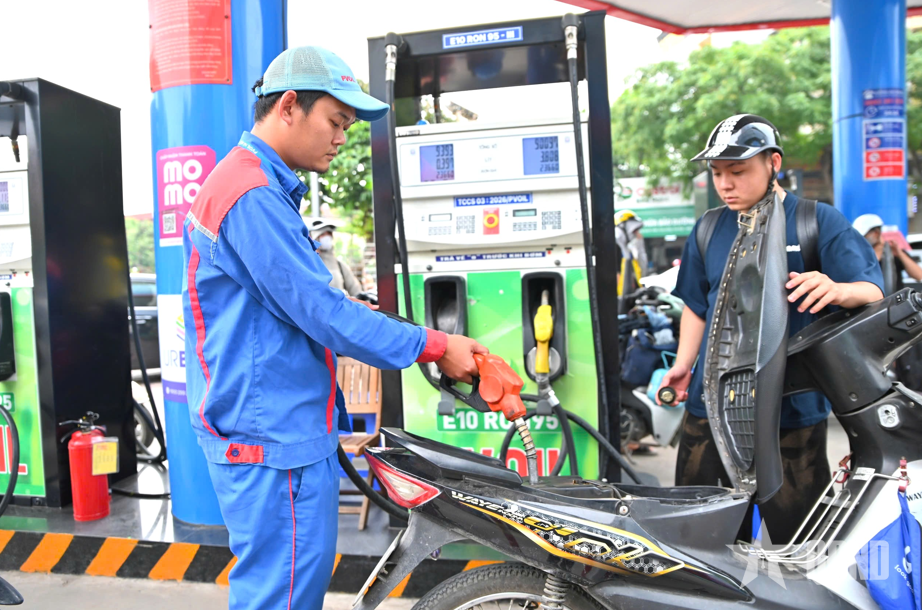 |
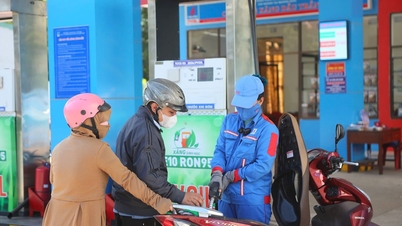
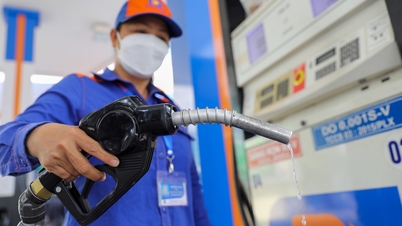
There is currently no basis to confirm that E10 gasoline consumes more fuel than RON95 gasoline. (Illustrative image) |
Is E10 gasoline more fuel-efficient than RON95 gasoline?
Regarding the claim that E10 gasoline consumes more fuel, Do Van Tuan, Chairman of the Biofuel Association, stated that the energy content in E10 gasoline is about 3% lower than RON95 gasoline. Therefore, theoretically, fuel consumption could be about 3% higher.
However, E10 gasoline has an octane rating about 2-3% higher than RON95 gasoline. A higher octane rating helps the engine run more smoothly and efficiently. Thus, there are two opposing factors: one that can increase fuel consumption, while the other can improve engine performance.
Therefore, it is not yet possible to definitively say which factor will play a dominant role in actual usage. Furthermore, the timing of E10 gasoline's market launch coincided with a period of widespread hot weather, particularly in the North and Central regions. Harsh weather conditions can cause engines to consume more fuel, leading some to associate this phenomenon with the use of E10 gasoline.
"Therefore, from a scientific standpoint, there is currently no basis to confirm that E10 gasoline consumes more fuel than RON95 gasoline," said Mr. Do Van Tuan.
Source: https://www.qdnd.vn/kinh-te/cac-van-de/tai-sao-xe-chet-may-khi-su-dung-xang-e10-1042256
![[Photo] General Secretary and President To Lam presides over a meeting on preparations for the review of one year of operation of the three-tiered government system.](https://vphoto.vietnam.vn/thumb/1200x675/vietnam/resource/IMAGE/2026/06/02/1780391821195_a1-bnd-4595-9717-jpg.webp)



































































































Comment (0)