Shaping a prosperous and livable Dak Lak.
According to the plan, Dak Lak aims to become a dynamically developing province of the country by 2030, striving to become a green economic center and service center of the South Central Coast and Central Highlands regions; a unique, distinctive, and attractive destination for domestic and international tourists.
Furthermore, the infrastructure system has been developed synchronously and modernly, ensuring convenient connectivity within the province, inter-regionally, and internationally. The growth model is innovatively oriented towards science and technology , innovation, digital transformation, green economy, circular economy, marine economy, and closely integrates socio-economic development with strengthening national defense and security.
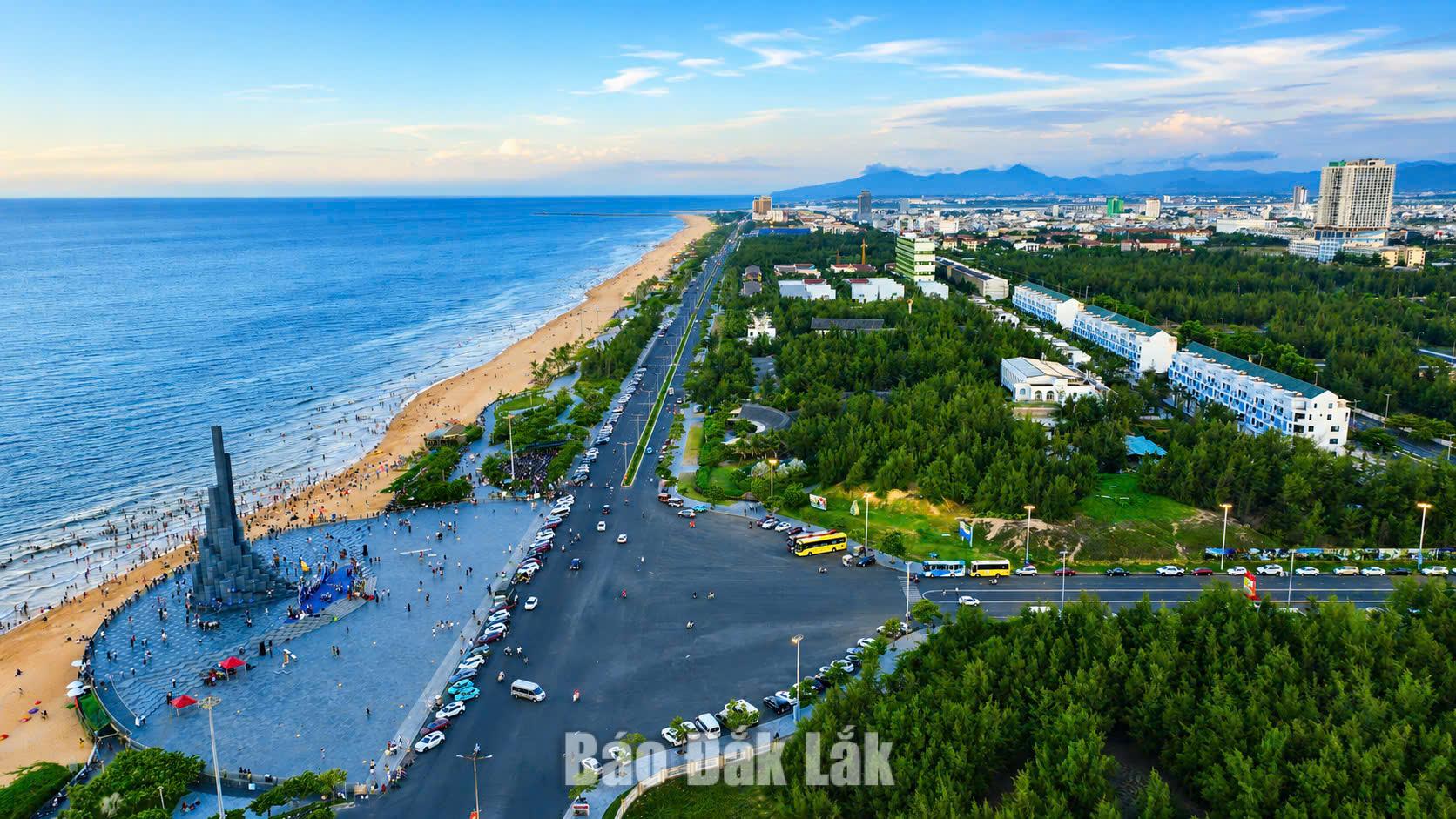 |
| A view of the coastal city of Tuy Hoa. |
According to long-term planning guidelines, by 2050, Dak Lak strives to become a moderately developed province in the country, possessing a modern economy with a rational structure, green and sustainable growth. The province affirms its position as a development nucleus and an important connecting core of the Central Highlands sub-region, playing a strategic role in closely linking this region with the South Central Coast region and national economic corridors, contributing to the formation of an effective inter-regional development space.
The province also positions itself as a modern, smart, and distinctive livable city, where people, technology, and majestic nature converge in harmony.
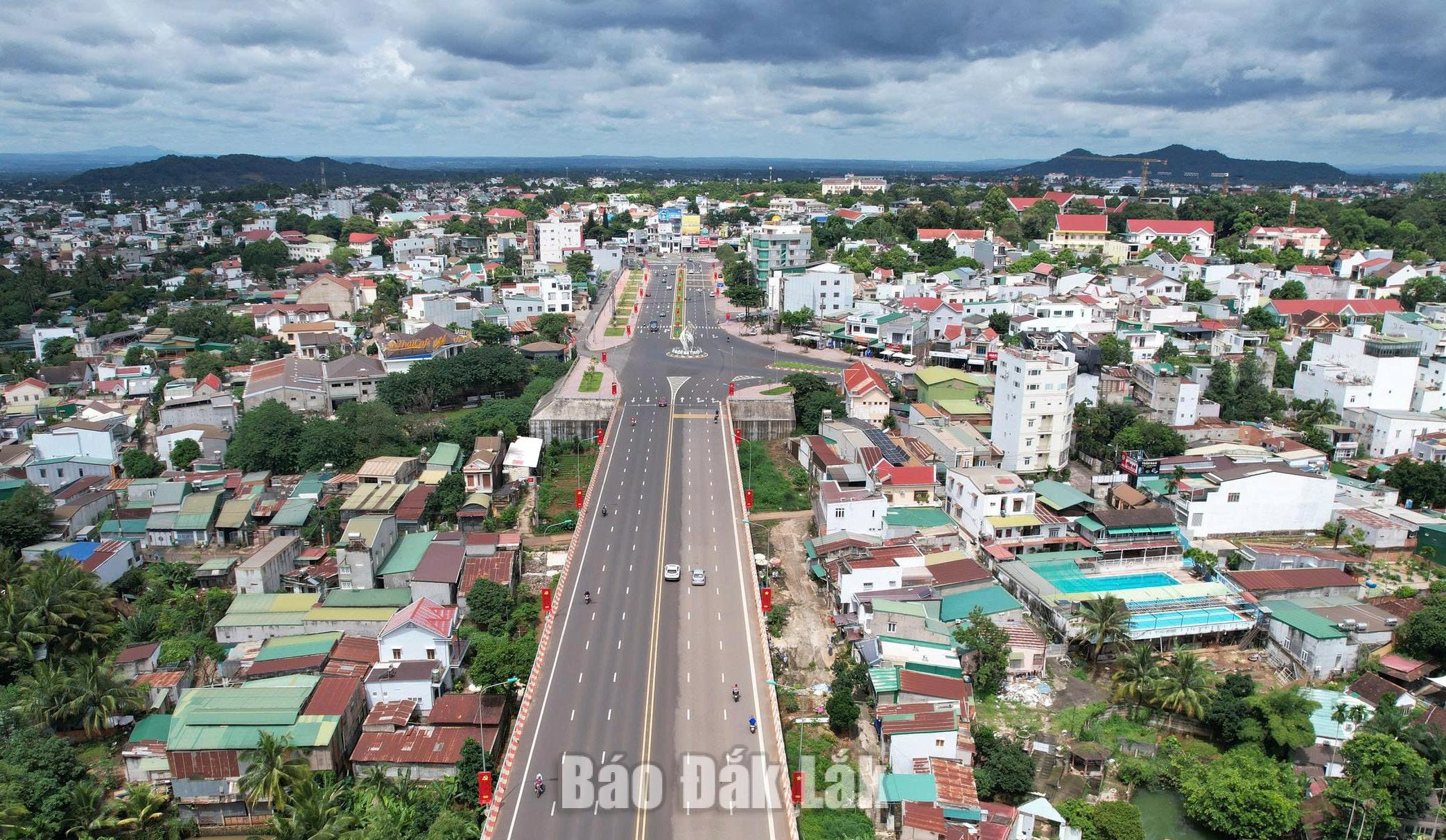 |
| This transportation route connects the city center and Buon Ma Thuot Airport. |
Furthermore, the province's socio-economic infrastructure has been invested in a comprehensive and modern manner, ensuring seamless connectivity between production areas, urban centers, service centers, seaports, and airports; enhancing transportation and logistics capabilities and linking domestic and international markets. The province has become an important center for agricultural production, processing, and logistics in the Central Highlands sub-region; strongly developing processing industries, renewable energy, trade, logistics, and tourism, gradually forming an economic structure oriented towards modern industry and services. The province's agriculture is developing in an ecological direction, applying high technology, linking value chains, and adapting to climate change; forest, land, water resources, and biodiversity are managed, protected, and used sustainably.
The new Dak Lak province boasts a plateau-sea landscape, connecting the Central Highlands to the South Central Coast, encompassing forests, rivers, seas, borders, urban areas, ports, and highways all within a single integrated development system. This is a "living" plan, a clear development map, a strong commitment between the government, businesses, and people to the future of a province with double-digit growth, greener, more digitalized, richer in identity, and where no one is left behind. Alternate Member of the Central Committee of the Party, Deputy Secretary of the Provincial Party Committee, Chairman of the Provincial People's Committee Do Huu Huy |
It is evident that the province's long-term goals are built on a philosophy of sustainable development, with people at the center and culture as the foundation. Beyond focusing on the economy, the province places special emphasis on improving the happiness index of its people, ensuring social security for ethnic minorities and those in particularly disadvantaged areas. The healthcare and education systems are being developed in a modern direction. The local governance system is modern, effective, and efficient, creating a stable foundation for the province's long-term development.
Focused and targeted development
In its development journey, Dak Lak will organize socio-economic development space in a unified and effective manner, based on exploiting its unique advantages, ensuring synchronous connection of infrastructure systems, linked with the sustainable exploitation and use of natural resources; developing key industries and regions; mobilizing, allocating, and using resources effectively; and enhancing provincial competitiveness.
The province's development space is organized according to the model of: 3 economic zones, 3 development corridors, 2 dynamic growth centers, and 3 growth poles. Along with this, the locality has identified key development breakthroughs as science and technology, innovation and digital transformation, human resources, especially high-quality human resources, and mobilizing all resources to invest in and complete a comprehensive socio-economic infrastructure.
In particular, the Party Committee, the government, and the entire political system of Dak Lak province consistently maintain a focused and targeted approach to development, closely adhering to the spatial organization orientations of higher-level plans to form dynamic zones and economic corridors with high linkage and spillover effects. The development space is organized in a way that expands regional and sectoral linkages, effectively exploiting East-West, North-South, and trans-regional economic corridors to form a tightly integrated value chain and effectively connect with neighboring areas; becoming a center for high-quality healthcare, education and training, science and technology, and services for the South Central Coast and Central Highlands regions.
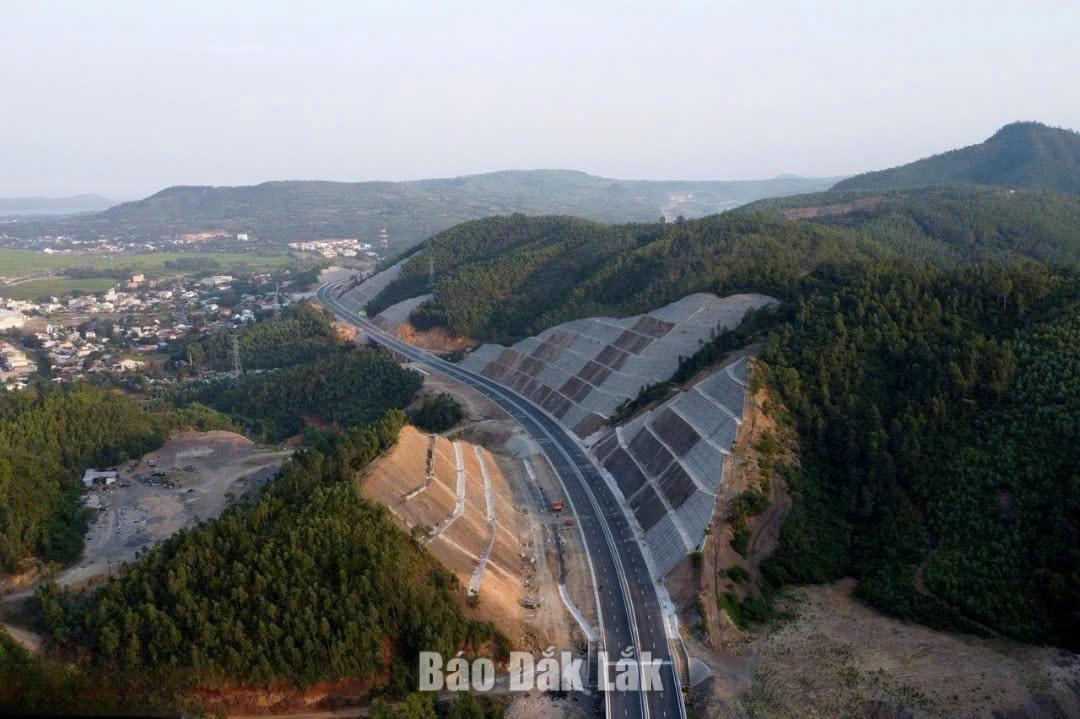 |
| Dak Lak is developing a comprehensive transportation infrastructure to facilitate investment attraction. In the photo: Component project 2 of the Khanh Hoa - Buon Ma Thuot expressway construction project, phase 1, has been basically completed. |
To realize its development goals, Dak Lak province will focus on effectively exploiting its unique potential, advantages, and new position to develop its economy rapidly, comprehensively, and sustainably on the foundation of green growth, circular economy, and digital economy; and synchronously developing pillars with comparative advantages: high-tech agriculture, forestry economy, deep processing industry, renewable energy, marine economy, port services, logistics, and ecotourism with unique cultural identity.
Furthermore, the locality has identified innovation, science and technology, and digital transformation as core drivers for improving labor productivity, product quality, and the competitiveness of the economy. Other important tasks emphasized include the effective and sustainable management, exploitation, and utilization of land, water, forest, and other resources; environmental protection and improvement; and the promotion of comprehensive administrative reform, building a digital government, and using citizen and business satisfaction as a measure of operational efficiency.
Minh Chi
Source: https://baodaklak.vn/kinh-te/202606/tam-nhin-xa-khat-vong-lon-d6e2483/

![[Photo] General Secretary and President To Lam receives Palestinian Ambassador Saadi Salama](https://vphoto.vietnam.vn/thumb/1200x675/vietnam/resource/IMAGE/2026/06/25/1782365384740_a1-bnd-9423-8322-jpg.webp)
![[Image] Ho Chi Minh City: Ma Lang area, Chicken-Rice Market about to change its appearance](https://vphoto.vietnam.vn/thumb/1200x675/vietnam/resource/IMAGE/2026/06/25/1782377698627_ndo_br_m1-jpg.webp)
![[Image] Schools organize meetings and introduce teaching models to students admitted to grade 10.](https://vphoto.vietnam.vn/thumb/1200x675/vietnam/resource/IMAGE/2026/06/25/1782368077271_ndo_br_z7970052192242-1ec8daeb77a6eed1a4e9f58c564ddd3e-jpg.webp)