


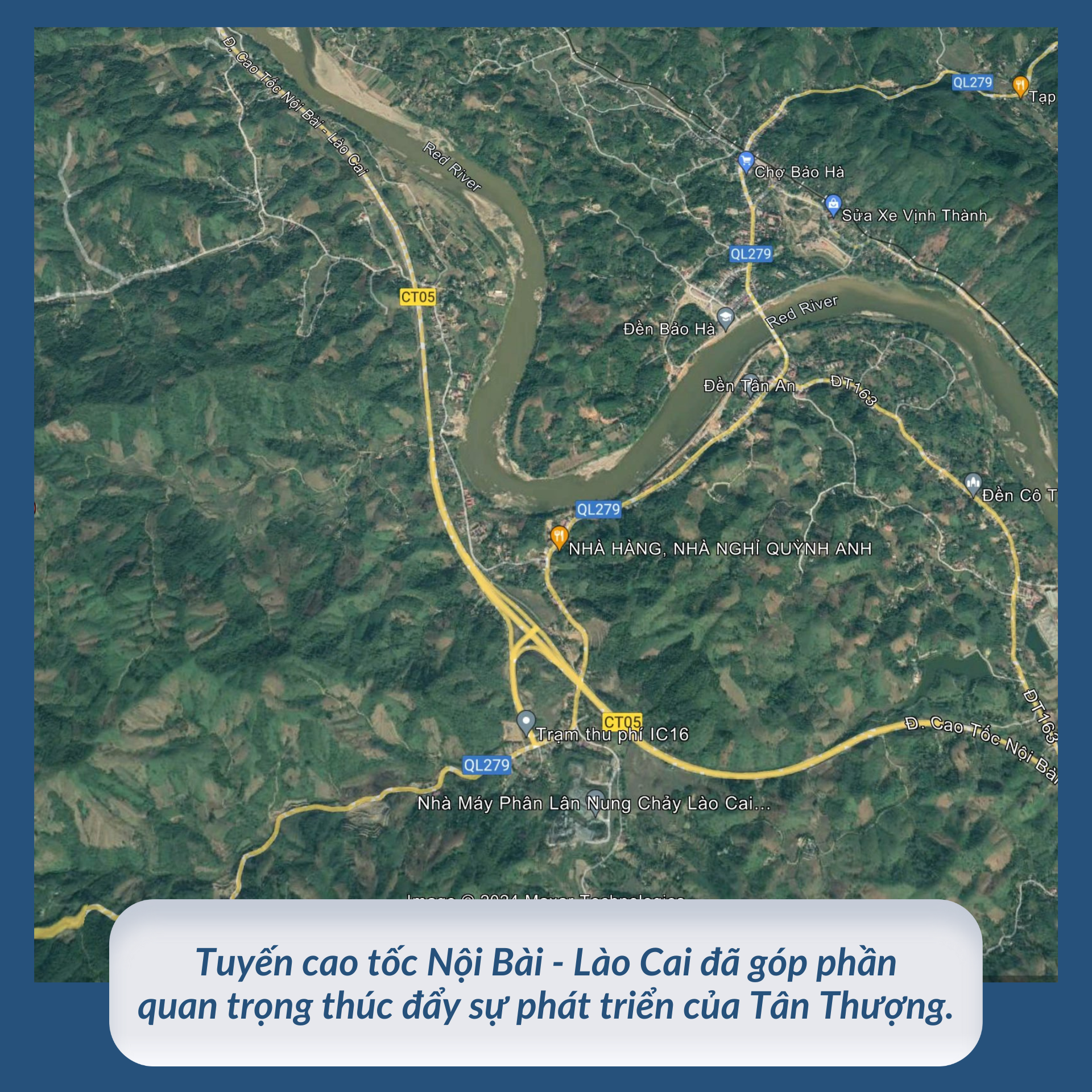
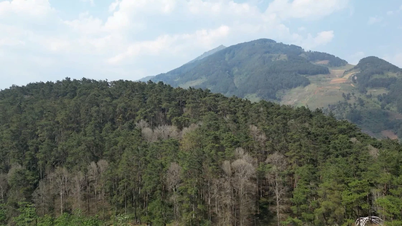
From Lao Cai, take the Noi Bai - Lao Cai expressway, exit at the IC16 interchange, and after a short distance on National Highway 297, turn into Tan Thuong commune. The road to the commune center follows the banks of the Red River, passing through lush green rice fields and villages nestled among ancient, verdant persimmon orchards. This scenery gives Tan Thuong the rich beauty of a riverside land.
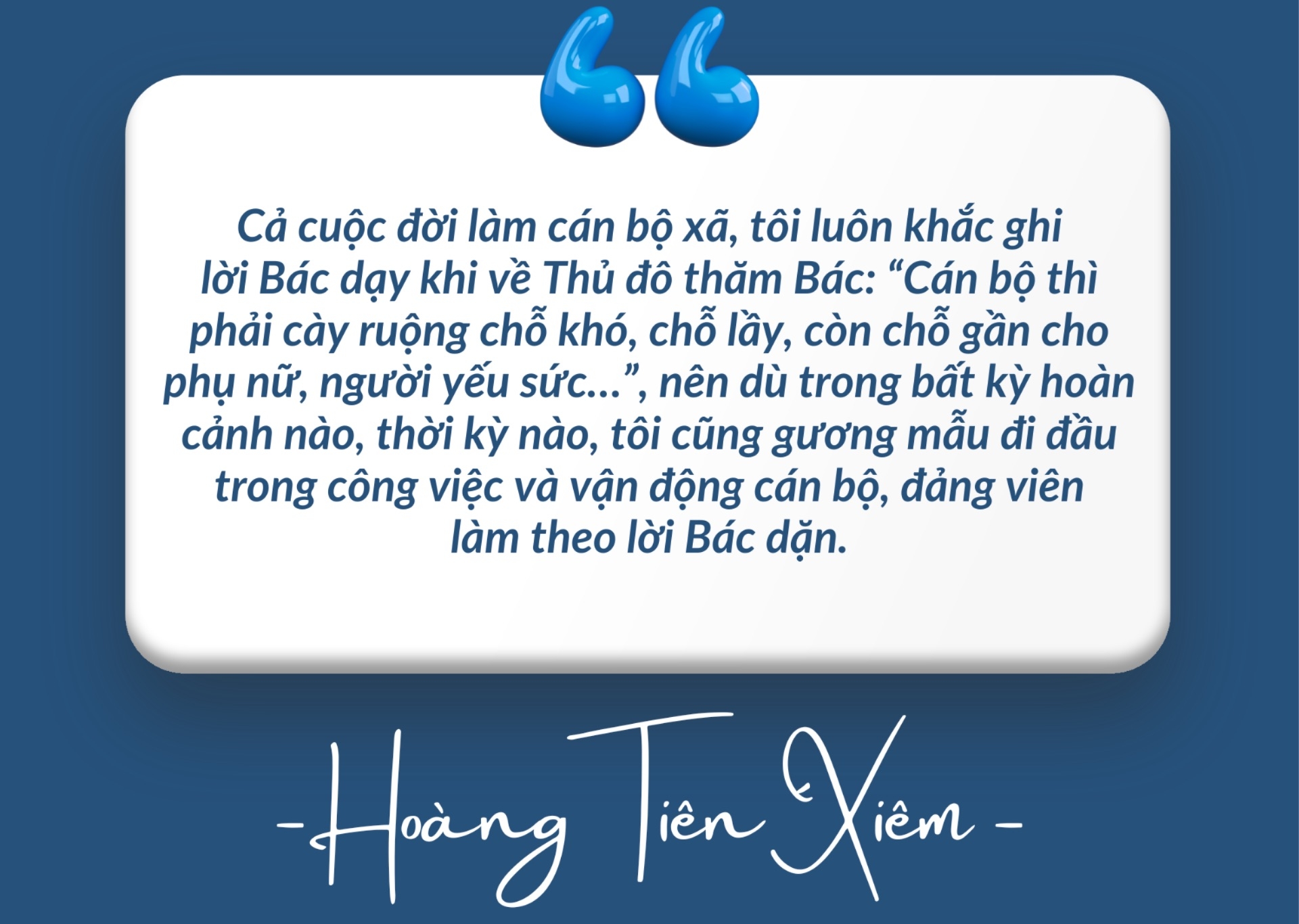
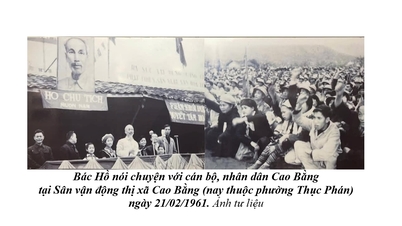
We stopped in Tan Truc village, which, according to the Party Secretary of Tan Thuong commune, is an ancient land with a revolutionary tradition. And in Tan Truc, we met a special person, Mr. Hoang Tien Xiem (85 years old) - a former official of Tan Thuong commune, who had the opportunity to meet President Ho Chi Minh in the capital in 1963, when he was just 21 years old.
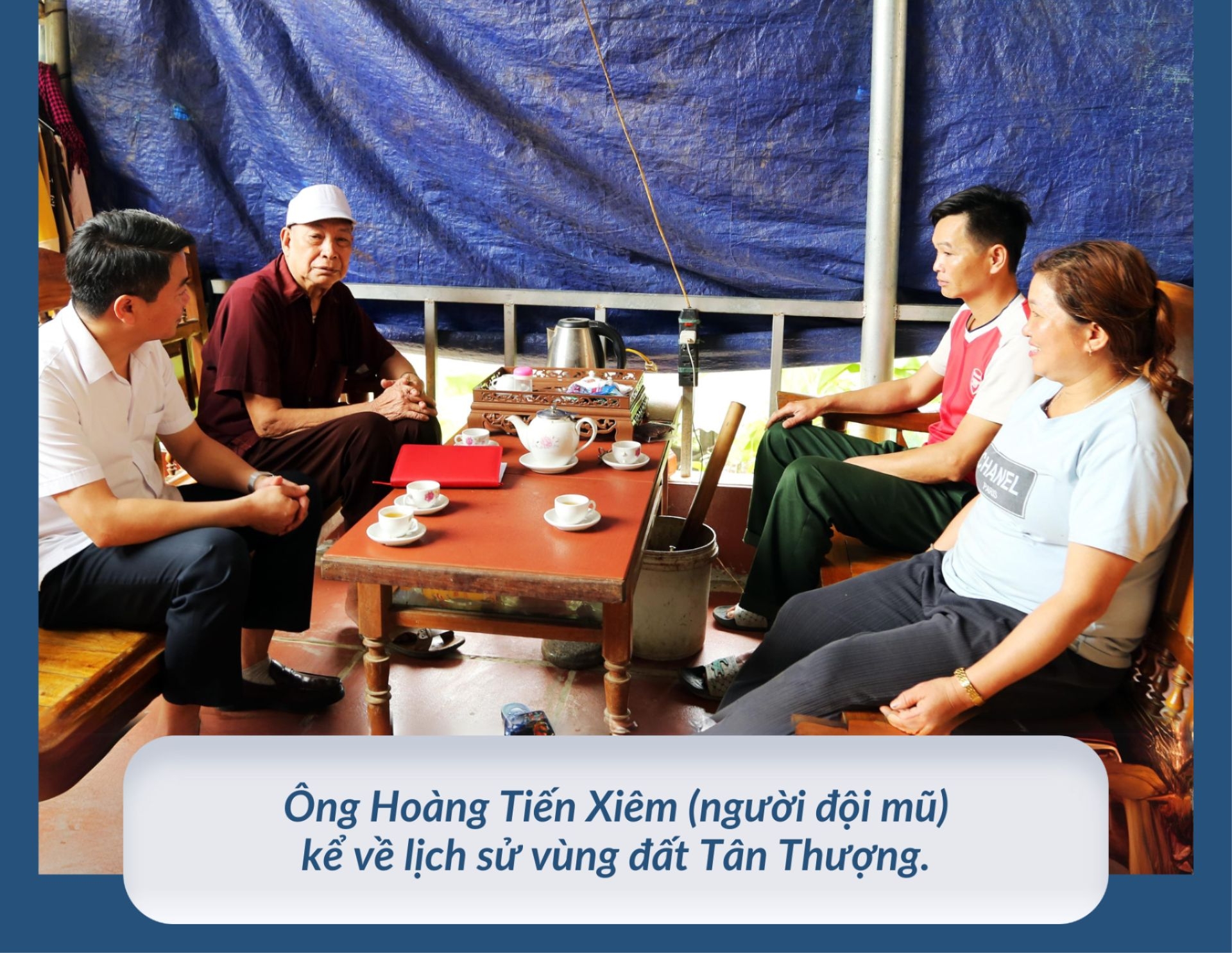
While brewing tea for his guests, Mr. Xiêm leisurely recounted: Throughout history, the Tân Thượng area has undergone many name changes. During the period under the Vietnamese feudal dynasties, Tân Thượng was called Chân Đăng, Văn Bàn district, Quy Hóa prefecture. After the August Revolution of 1945, Tân Thượng belonged to Tân An commune, Trấn Yên district, Yên Bái province; in 1976, the Hoàng Liên Sơn Provincial Party Committee issued a resolution establishing Tân Thượng commune, Văn Bàn district, and that name has remained unchanged to this day. Tân Thượng previously had 14 villages; after the administrative reorganization, it now has 8 villages.

Pointing towards the villages nestled along the Red River alluvial plain, Mr. Hoang Tien Xiem said: "The Tan Thuong area has many special features because it is located on the banks of the Red River, along with Cam Con (Bao Yen) and Son Ha (Bao Thang), and was once a settlement of ancient Vietnamese people. Later, the Dao and Nung people also came to live here, with the majority being the Dao people. The Dao people in Tan Thuong not only have a strong sense of preserving their culture and way of life but also wholeheartedly follow the Party and President Ho Chi Minh. I remember when preparing for the Dien Bien Phu Campaign, following the call of the Party and President Ho Chi Minh, countless young people enthusiastically participated in transporting food and weapons from the Bao Ha - Tan An riverbank to Van Ban to be sent to the Northwest to fight the French, contributing to the glorious victory of Dien Bien Phu."
In particular, in early 1963, when the US imperialists sent planes carrying paratroopers to bomb the Yen Bai and Lao Cai areas, the people of Tan Thuong and Tan An, along with the army, ambushed the enemy from Tan An to Khanh Yen Thuong commune (Van Ban district), capturing many enemy soldiers and bringing them back to Yen Bai for the main army to extract information to counter their sabotage campaign in the North.

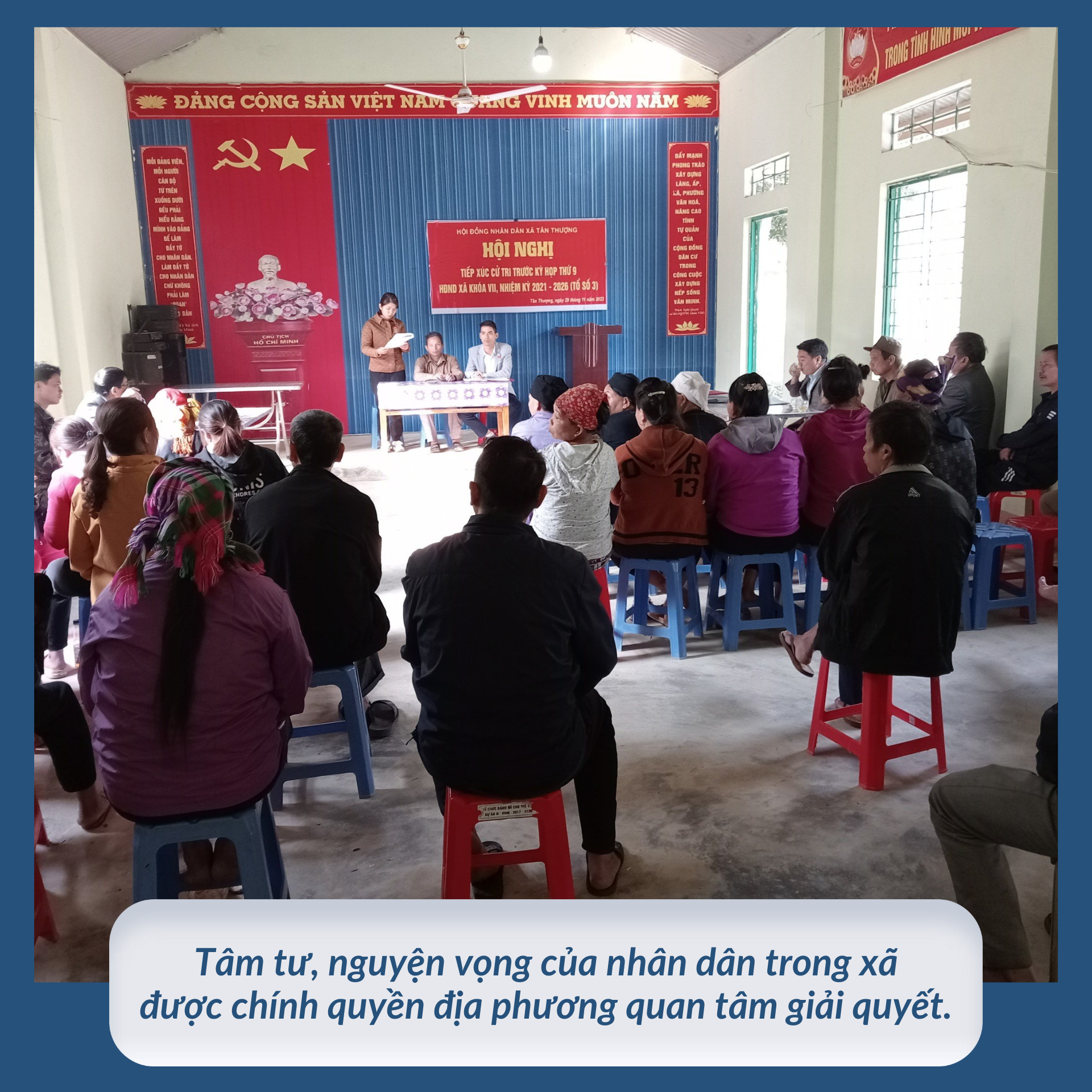
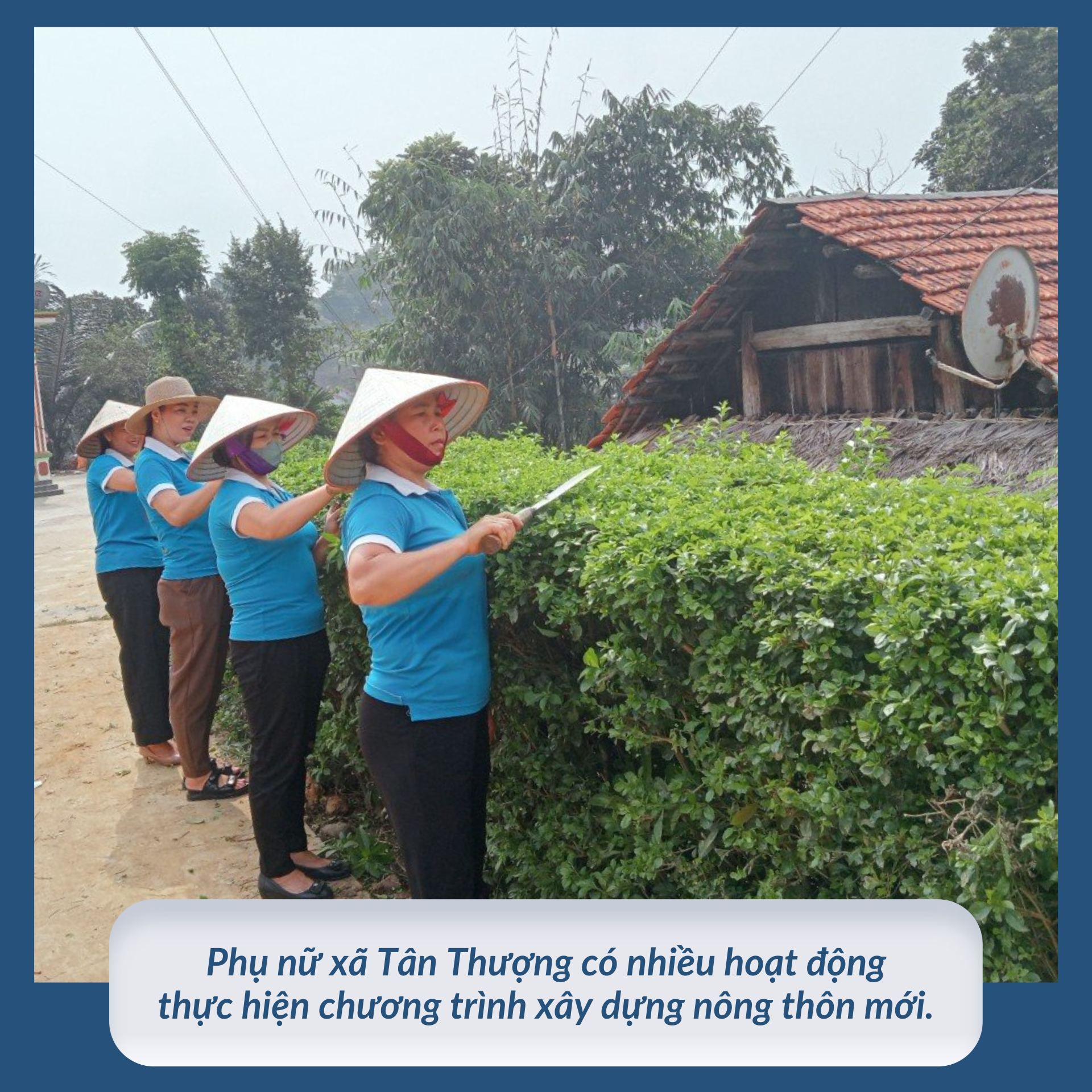
“Although the commune has many advantages, before 2015, the transportation infrastructure was underdeveloped, and 7 out of 8 villages were still classified as extremely disadvantaged. The entire commune has nearly 900 households with more than 4,300 people belonging to 8 ethnic groups, mainly Dao, Thai, Mong, Nung, Cao Lan… (ethnic minorities account for 78%), so the lives of the people were still very difficult, with the poverty and near-poverty rate exceeding 25%. Now, the appearance of Tan Thuong has been changing every day, especially since the Noi Bai - Lao Cai expressway came into operation, and the IC16 interchange was built in the area leading to the Bao Ha - Tan An spiritual tourism area and to Van Ban and Bao Yen, contributing to “awakening” the land of Tan Thuong. In 2020, Tan Thuong “reached the finish line” of the new rural development program and is currently completing the criteria for advanced new rural development. This will be a solid foundation for the locality to make breakthroughs,” emphasized Comrade Vu Xuan Thuy.
Speaking about the commune's development orientation in the coming time, Comrade Chu Hong Ha, Chairman of the Commune People's Committee, said: Tan Thuong has been preparing the conditions to enter a new phase of development. In just a short time, when Lao Cai province implements the General Planning for the construction of the Red River axis connecting Pho Lu urban area with Tan An - Bao Ha urban area, especially when the waterway, railway, road and air transport systems are completed, Tan Thuong will be an important link - a bridge between Bao Thang with Bao Yen and Van Ban, and more broadly between the lowland provinces and Lao Cai and the Northwest region, and between Vietnam and Yunnan province (China).
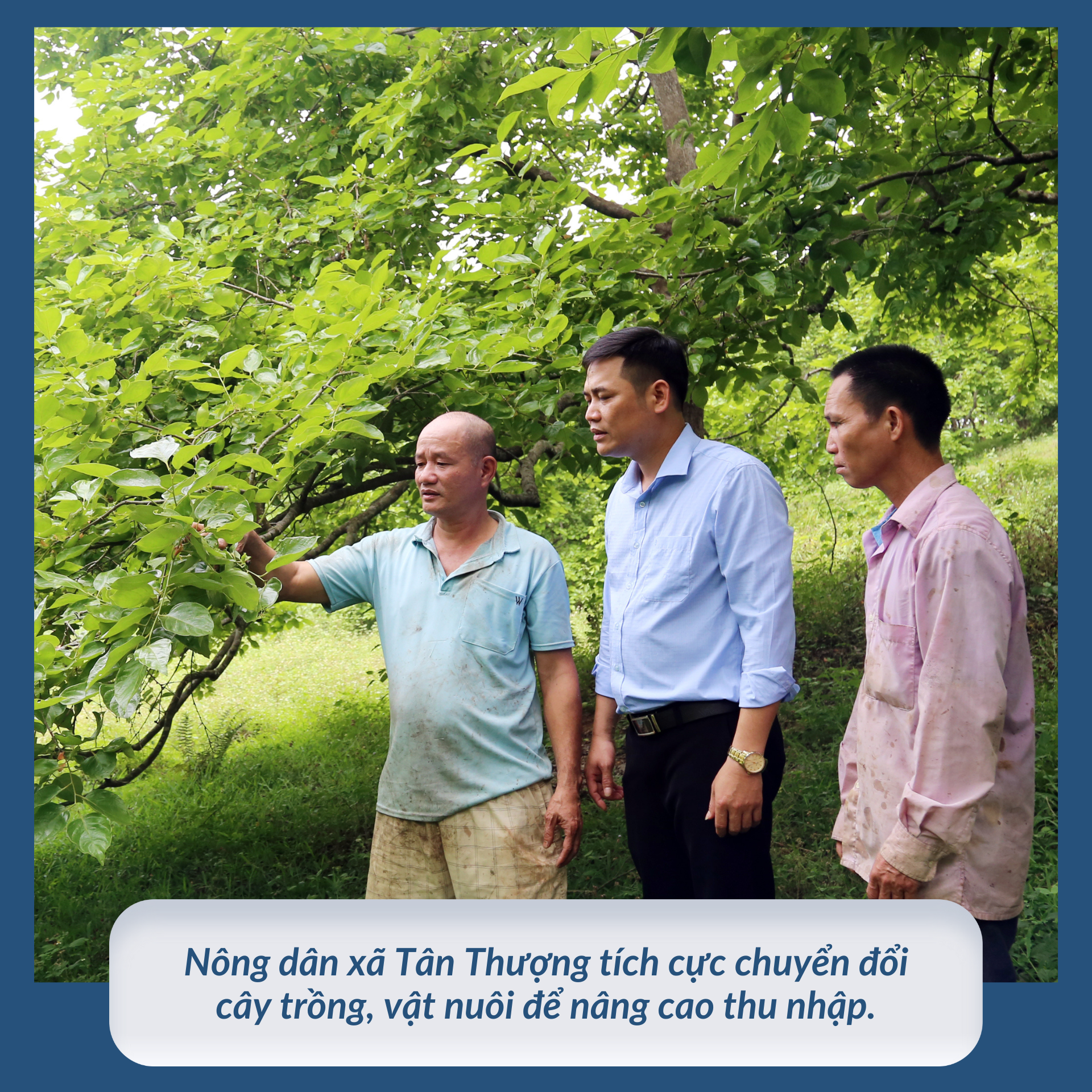
“For Tan Thuong, the main goal now is still to achieve the advanced new rural development status, and most importantly, to increase people's income. To address this, the commune government has a trump card: developing the area of seedless persimmon trees – a local specialty. Currently, the entire commune has over 110 hectares of persimmon trees (nearly 50 hectares are already producing fruit), and it is expected that by 2030, the area will increase to 250 hectares. This will be a source of increased income for households, as each hectare of persimmon trees yields an average of 250 million VND per year,” affirmed Comrade Chu Hong Ha, Chairman of the Commune People's Committee.
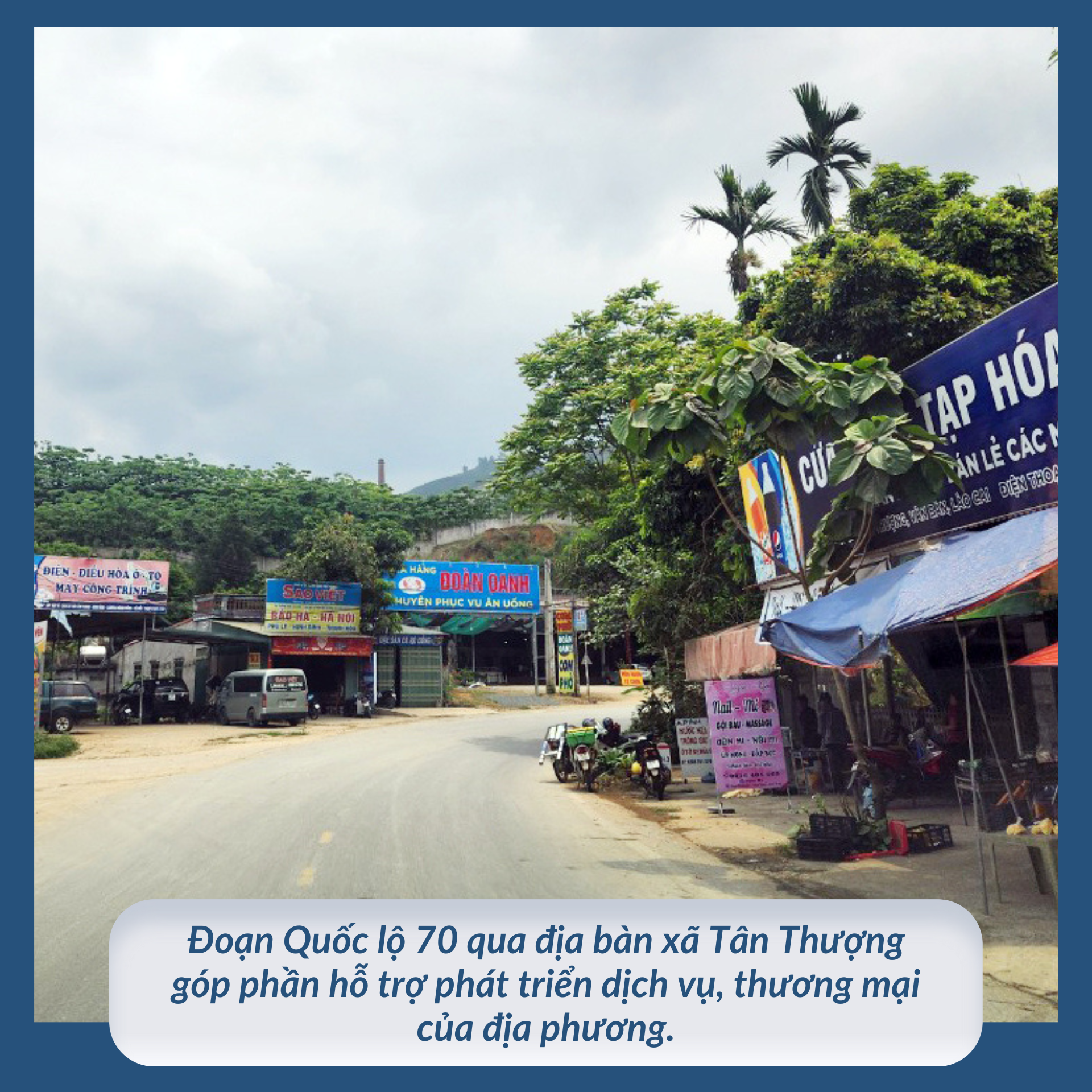
Traveling along National Highway 279 from the IC16 interchange of the Noi Bai - Lao Cai Expressway (the section passing through Ngam Thin village), both sides of the road are lined with bustling restaurants and guesthouses, indicating the formation of a "mini-city" here. In the not-too-distant future, when the provincial-level bus station, as planned, is built in this area, Tan Thuong will attract investors and experience strong development.
Source


![[Image] National Assembly discusses the implementation of the socio-economic development plan.](https://vphoto.vietnam.vn/thumb/1200x675/vietnam/resource/IMAGE/2026/04/20/1776696707422_ndo_br_img-20260420-185419-jpg.webp)

![[Photo] General Secretary and President To Lam meets with National Assembly delegates from ethnic minorities.](https://vphoto.vietnam.vn/thumb/1200x675/vietnam/resource/IMAGE/2026/04/20/1776696701056_a1-bnd-8331-3342-jpg.webp)






























































Comment (0)