

Ho Chi Minh City – Through a small 5 mm incision in his back, doctors inserted specialized instruments into the kidney of 71-year-old Mr. Nam to break up and suction out the coral-shaped kidney stones.
Mr. Nam, residing in Long An province, had a high fever and chills. Two months prior, he was diagnosed with a urinary tract infection by a local hospital. He underwent antibiotic treatment for two weeks without improvement and subsequently sought treatment at Tam Anh General Hospital in Ho Chi Minh City.
On April 16th, Dr. Pham Thanh Truc, a specialist in Urology at the Center for Urology, Nephrology, and Andrology, stated that Mr. Nam's left kidney had a multi-branched coral-shaped kidney stone measuring 10x5 cm, about the size of a large ginger root, almost completely filling the renal pelvis. He also had underlying conditions of hypertension, diabetes mellitus, and stage 3 chronic kidney failure.
Due to the patient's advanced age and multiple underlying conditions, particularly kidney failure, Dr. Truc prescribed percutaneous nephrolithotomy (PCNL) via a small tunnel approach to minimize invasiveness and preserve kidney function.
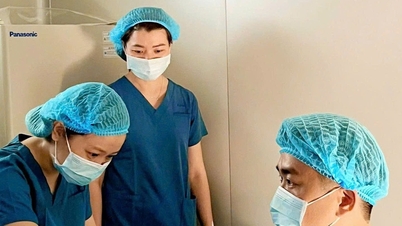
Under the guidance of a C-Arm X-ray machine and a 3D ultrasound machine, Dr. Truc used a small needle (about 2 mm) with a probe attached to puncture a hole in the patient's back. A larger, specialized metal tube was inserted to widen the opening, creating a "tunnel" only 5 mm in diameter leading into the renal pelvis. From this "tunnel," a laser lithotripsy instrument was inserted to break up the stones.
Observing on the endoscopic screen, the coral-shaped stone was gradually broken down into small fragments by the laser energy. The fragments were then suctioned out through a "tunnel." The surgery was completed in 180 minutes. Two days after the surgery, Mr. Nam was eating, walking normally, and experiencing no pain, and was discharged from the hospital.
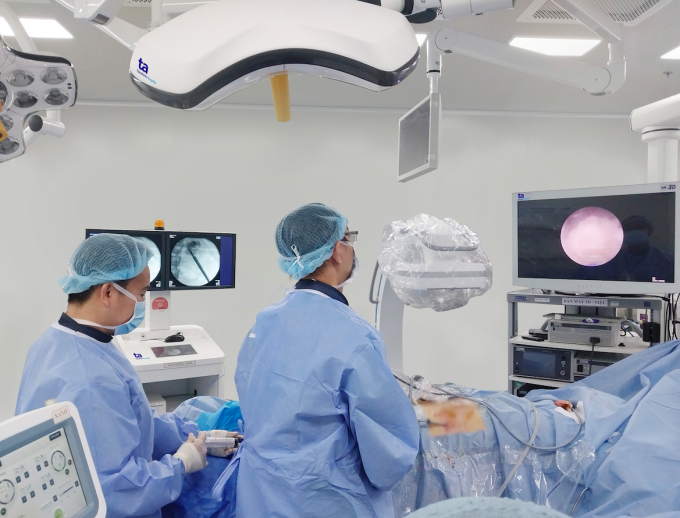
Doctors from the Urology Department, Center for Urology - Nephrology - Andrology, perform percutaneous lithotripsy on a patient. (Illustrative image: Tam Anh General Hospital, Ho Chi Minh City)
According to Dr. Truc, before laparoscopic surgery became widely used, cases of large staghorn kidney stones like Mr. Nam's could only be treated with open surgery. The disadvantages of this method are that patients have to undergo a long surgery with a 12-15 cm incision on the abdomen. After surgery, patients need a long recovery time, the large incision causes pain, is prone to infection, forms unsightly scars, causes paresthesia (tingling or stinging sensation) in the lower back and flank for life, and damages 10-25% of kidney function due to the need to open the kidney.
"Currently, only 1-1.5% of staghorn calculi require open surgery," said Dr. Truc.
With percutaneous lithotripsy, the surgery is performed through a very small incision, resulting in minimal blood loss, less pain, faster recovery, and a quicker return to normal life. It also reduces the risk of post-operative infection and minimizes damage to kidney function. Thanks to the application of modern equipment, doctors can examine the entire renal pelvis during lithotripsy, ensuring complete stone removal and reducing the risk of recurrence.
Percutaneous nephrolithotomy (PCNL) carries several potential complications, such as damage to surrounding organs and damage to large blood vessels leading to significant bleeding. Therefore, it requires highly skilled and experienced surgeons, supported by modern equipment.
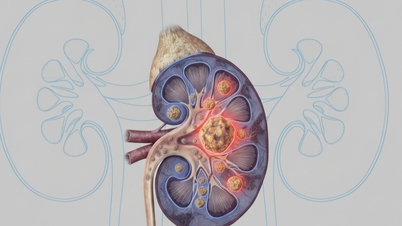
Coral-like stones are stone masses that fill the renal calyces from both sides upwards, forming a shape resembling coral. The composition of coral-like stones is usually calcium and oxalate. Dr. Truc stated that although they account for only about 30% of kidney stones, coral-like stones are the most complex and dangerous. If left untreated, large stones can cause purulent kidney infections, even bloodstream infections, impaired kidney function, and threaten the patient's health and life.
Treatment of staghorn calculi is complex, with a high recurrence rate; even a small fragment of stone remaining after treatment can quickly develop into a new stone. Percutaneous nephrolithotomy (PCNL) is the specialized solution for this type of stone. At the Urology Department, Center for Urology - Nephrology - Andrology, Tam Anh General Hospital, Ho Chi Minh City, an average of 8-10 cases of PCNL are treated each month.
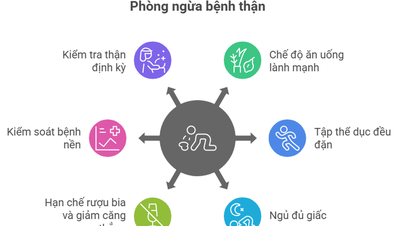
To prevent staghorn calculi in particular, and urinary stones in general, Dr. Truc advises people to drink 1.5-2 liters of water per day (increase water intake during hot weather) to dilute urine and reduce the likelihood of stone formation. Limit salty foods, animal protein, and foods rich in oxalates (chocolate, white radish, spinach, etc.).
People experiencing symptoms such as blood in the urine, painful urination, difficulty urinating, frequent urination, weight loss, fever, chills, and recurrent urinary tract infections should seek prompt medical attention to avoid serious health and life-threatening complications.
Thang Vu
| Readers can submit questions about kidney disease here for doctors to answer. |
Source link
![[Photo] Prime Minister Pham Minh Chinh presides over a meeting on private sector economic development.](/_next/image?url=https%3A%2F%2Fvphoto.vietnam.vn%2Fthumb%2F1200x675%2Fvietnam%2Fresource%2FIMAGE%2F2025%2F12%2F20%2F1766237501876_thiet-ke-chua-co-ten-40-png.webp&w=3840&q=75)

![[Photo] Prime Minister Pham Minh Chinh presides over the conference announcing the establishment of the International Finance Centre in Vietnam.](/_next/image?url=https%3A%2F%2Fvphoto.vietnam.vn%2Fthumb%2F1200x675%2Fvietnam%2Fresource%2FIMAGE%2F2025%2F12%2F21%2F1766309817714_ndo_br_dsc-3400-jpg.webp&w=3840&q=75)




























































































Comment (0)