

High income from growing gourds
With over 13 years of experience in growing gourds, Mr. Le Van Suu from Tan Phu ward, Dong Xoai city, said: Growing gourds doesn't require overly complex techniques; however, to achieve high yields, one must master proper care techniques such as irrigation, pest and disease control, rational fertilization, and harvesting at the right time. In particular, the application of modern technology and science also contributes to improving the yield and quality of gourds. The growth period of gourds is short, from sowing to harvesting only about 3-4 months, and multiple harvests can be made throughout the year, resulting in high economic efficiency.
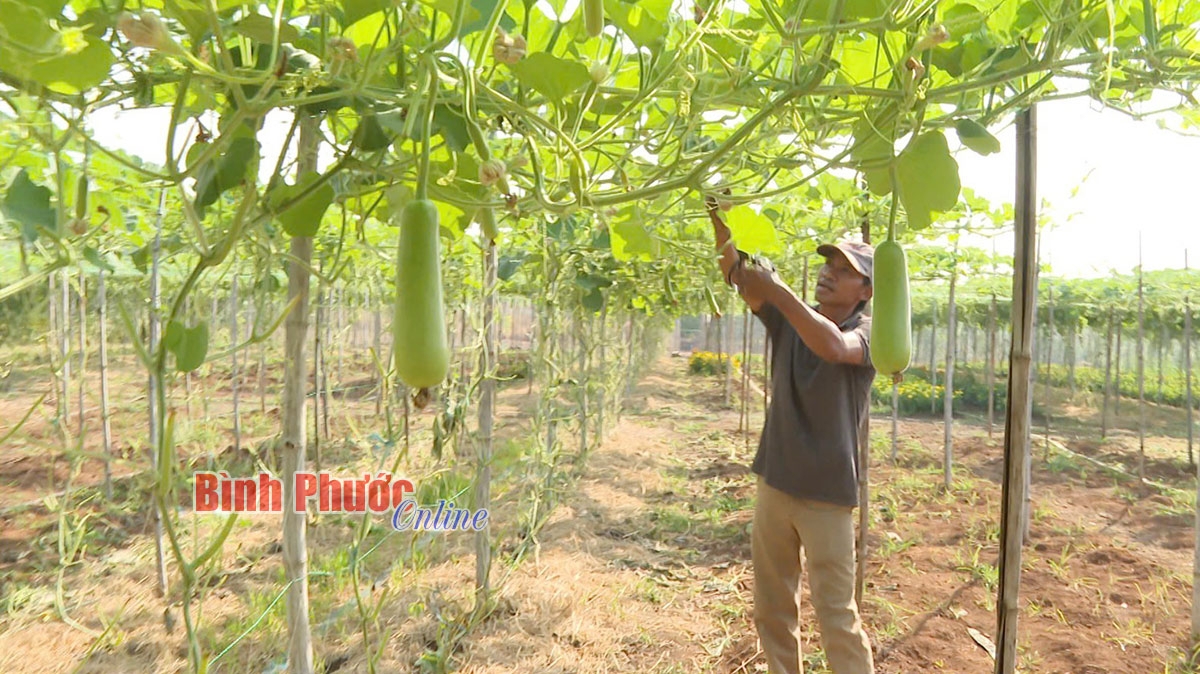
Mr. Suu added: Gourd plants are suitable for planting from April to September or up to November. In the dry season, gourd plants are less susceptible to pests and diseases than in the rainy season, but straw must be used to cover the base of the plant to retain moisture. Gourd plants can be harvested after 75-90 days. With good techniques, growers can harvest fruit within 3 months, or even 4-5 months. Importantly, growing gourds requires low investment costs and offers a short payback period.
Money for jam
Making optimal use of his land, Mr. Suu also intercrops various types of gourds, pumpkins, bitter melons, etc., helping to bring high economic efficiency. Mr. Suu shared: "One of the biggest advantages of the intercropping model is optimizing land use efficiency and increasing income. Short-term crops have a short growing season, so it is possible to grow many types of crops in one season, avoiding the situation of bumper harvest - low prices, or high prices - poor harvest."

According to Mr. Suu, when combining crops with different nutritional requirements, they do not compete directly but rather complement each other. In particular, when planting many types of crops interspersed, the habitat of pests and diseases is disrupted, thus reducing the likelihood of disease outbreaks across the entire area. Furthermore, pests and diseases will not easily spread from one plant to another, thereby minimizing the use of pesticides.
Mr. Suu emphasized that gourds, bitter melons, and loofahs are three types of plants that share similar diseases and pests, making them suitable for intercropping. Furthermore, intercropping flowers with gourds and loofahs helps attract butterflies and reduces pesticide use.
Intercropping is a model that not only saves land space and increases income but also contributes to environmental protection. Besides the economic benefits, this model must focus on selecting suitable plant species that do not compete for nutrients. Chairman of the Tan Phu Ward Farmers' Association, Nguyen Minh Phu |
Following the principle of "short-term gains to support long-term growth," Mr. Nguyen Van Tay, residing in Ward 5, Minh Thanh Commune, Chon Thanh Town, has intercropped cowpeas and long beans in his young rubber plantation. Having practiced intercropping for many years, Mr. Tay explains that short-term crops are suitable for intercropping in young rubber plantations because of their short growth cycles and quick harvest times. Importantly, caring for these short-term crops indirectly contributes to the care of the long-term crops.
By intercropping green beans and long beans in his 1,000m2 young rubber plantation, Mr. Tay harvests about 70kg of pods every two days for about two months, earning a profit of 15 million VND per month. According to Mr. Tay, intercropping requires careful spacing to ensure the rubber trees grow well, while also providing space for the short-term crops to thrive. Furthermore, caring for the intercropped plants requires a specific procedure to avoid negatively impacting the rubber tree's growth.
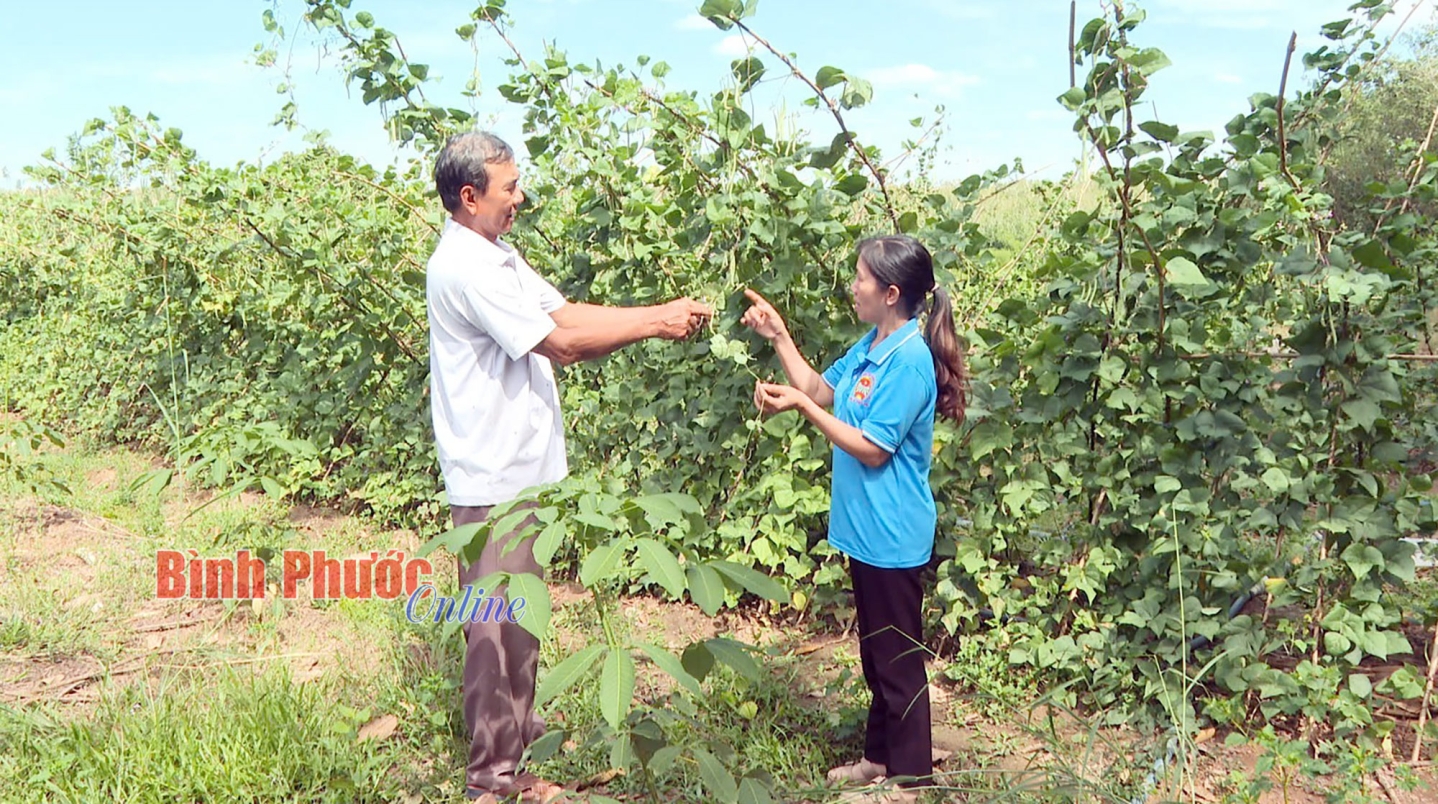
According to Pham Thi La, Vice President of the Minh Thanh Ward Farmers' Association: Intercropping short-term crops in young rubber plantations is an effective agricultural model that helps increase land use value, improve productivity, and create stable income. However, to achieve high efficiency, farmers need to have a good understanding of planting techniques, choose suitable plant varieties, and apply scientific and sustainable care methods. In addition to short-term crops, many farmers also intercrop corn, rice, tomatoes, etc., to increase their income.
Source: https://baobinhphuoc.com.vn/news/4/170920/tang-thu-nhap-tu-trong-xen-canh



![[Photo] Prime Minister Pham Minh Chinh receives the Chinese Ambassador to Vietnam](https://vphoto.vietnam.vn/thumb/1200x675/vietnam/resource/IMAGE/2026/04/05/1775397481797_ndo_br_dsc-5512-jpg.webp)

















































































Comment (0)