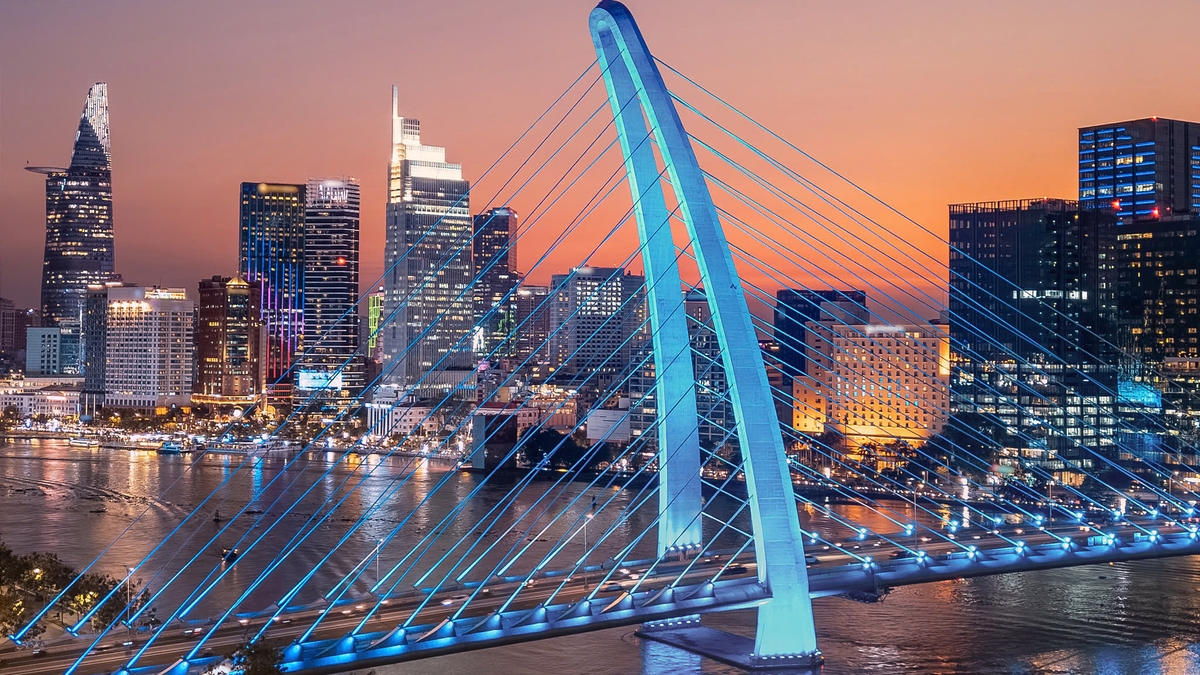
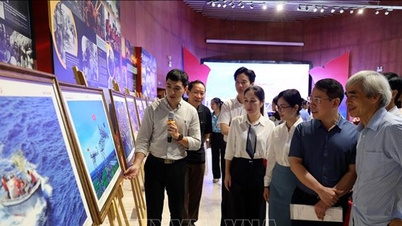
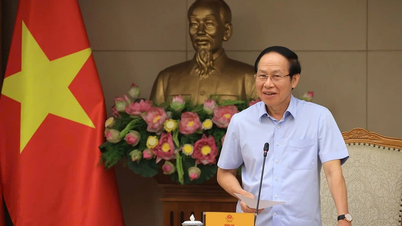
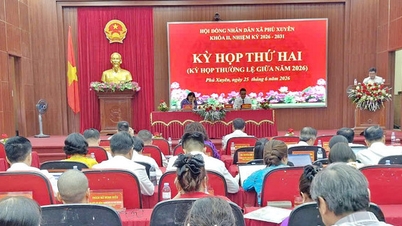
This was the central topic at the consultation meeting with provinces and cities in the Southeast and Mekong Delta regions, recently organized by the Ho Chi Minh City People's Committee.

A special urban area is defined as an urban area of international stature.
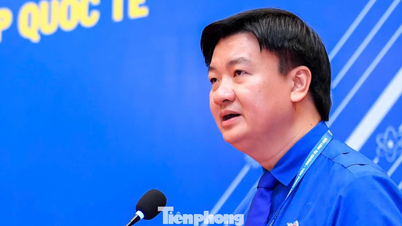
Vice Chairman of the Ho Chi Minh City People's Committee Nguyen Manh Cuong emphasized that the city's development cannot be separated from the overall development of localities in the Southeast region, the Mekong Delta, and the South Central provinces. The development of the Law on Special Urban Areas aims not only to create a legal framework specifically for Ho Chi Minh City but also to build a model of governance and regional linkages for the future.
The draft Law on Special Cities aims to create superior mechanisms, policies, and legal frameworks to enable Ho Chi Minh City to develop in a manner commensurate with its status as a special city. Simultaneously, the law also aims to enhance the city's coordinating and leading role in the development of localities in the region. According to the draft, a special city is defined as an international-level city with global competitiveness based on a multi-polar, multi-center model, possessing smart and modern infrastructure and governance; a coordinating center for governance models, the nucleus of the special urban region; and a crucial innovation and integration hub for the entire country.
Special urban areas play a crucial role in shaping institutions, development quality, governance standards, and new growth models based on science , technology, innovation, digital transformation, labor productivity, and competitiveness. The draft law, comprising 9 chapters and 45 articles, comprehensively regulates the position, role, mechanisms, policies, authority, and responsibilities in urban construction, management, and development. According to the Ho Chi Minh City People's Committee, the law aims to concretize the major policies and orientations of the Party and State, creating stable and long-term momentum for the city's development in the new phase.
At the conference, many opinions focused on solutions to strengthen regional linkages, especially in the areas of infrastructure, planning, data, and human resources. Professor Nguyen Trong Hoai, former Vice Rector of the University of Economics Ho Chi Minh City, argued that developing a regional infrastructure system is of particular importance. The top priority should be the synchronized connection of the transportation system between Ho Chi Minh City and localities in the Southeast region and the Mekong Delta.

According to Professor Hoai, Ho Chi Minh City, as the core urban area and growth center of the region, has the potential to create a strong ripple effect thanks to its advantages in economics, science and technology, innovation, finance, trade, and logistics.
However, to effectively fulfill this role, it is necessary to build a regional linkage mechanism based on the principles of sharing benefits, sharing responsibilities, and joint development. In the context of rapid digital transformation, he also suggested that localities should strengthen connectivity, sharing, and effective utilization of common data to improve governance quality, optimize resources, and serve the goal of sustainable growth.
Establish a regional infrastructure development fund.
One notable proposal is the establishment of a Regional Infrastructure Development Fund. According to Professor Nguyen Trong Hoai, this fund should be built on the basis of mobilizing diverse sources of capital from the state budget, social resources, and other legitimate sources of capital to create sustainable resources for investment in regional infrastructure.
Sharing the same view, Mr. Pham Tuan Anh, Deputy Director of the Department of Finance of Dong Nai City, believes that establishing a regional infrastructure development fund is necessary to create additional investment resources for inter-regional connectivity projects. The fund also contributes to diversifying capital mobilization channels and enhancing the competitiveness of the entire region.
Representing Vinh Long province, Vice Chairman of the Provincial People's Committee Nguyen Truc Son stated that to enhance regional linkages, it is essential to ensure synchronization and uniformity in planning among localities. He proposed that regional infrastructure should be prioritized for investment from the central government budget, local budgets, and other legitimate resources to help Ho Chi Minh City better fulfill its role as the engine of growth and increase its ripple effect throughout the region.
In addition, Mr. Son suggested focusing investment on the coastal road connecting localities in the region to expand development space, effectively exploit the potential of the marine economy, logistics, and tourism, creating new growth drivers for the Mekong Delta and the Southern region. Regarding human resources, the Vinh Long provincial leader noted that Ho Chi Minh City is currently the largest training and employment center in the region. Therefore, it is necessary to strengthen coordination mechanisms and share high-quality human resources between the city and localities, especially in the fields of healthcare, education, science and technology, and digital transformation.
The consultation process with localities on the draft Law on Special Urban Areas is taking place in the context of the Politburo having just issued Resolution No. 09 on building and developing Ho Chi Minh City in the new era. The resolution sets the goal of making Ho Chi Minh City a global city, a leading economic, financial, and science-technology center in the region and Asia in the coming decades.



The Politburo requested the development and promulgation of a Law on Special Cities to create a superior special institution, a synchronized and appropriate legal framework, becoming a "breakthrough of breakthroughs," creating the most favorable conditions for Ho Chi Minh City to maximize the effectiveness of its potential and strengths, mobilize all resources to accelerate rapid and sustainable development. The city will be strongly decentralized and empowered; proactively piloting new mechanisms, policies and new development models under a controlled testing mechanism.
Feedback from localities shows that the common expectation for the Law on Special Urban Areas lies not only in creating new mechanisms for Ho Chi Minh City, but also in contributing to the formation of a more effective regional linkage model, thereby creating momentum for the development of the entire Southern region in the coming period.
Source: https://baovanhoa.vn/doi-song/tao-dong-luc-phat-trien-cho-ca-vung-236977.html

![[Photo] "Hanoi Lotus Festival" honors the lotus flower that has been associated with Vietnam for thousands of years.](https://vphoto.vietnam.vn/thumb/1200x675/vietnam/resource/IMAGE/2026/06/27/1782516943048_sen-ha-noi-2026-minh-duy-1-jpg.webp)