

To commemorate the 80th anniversary of the successful August Revolution (August 19, 1945 - August 19, 2025) and the National Day of the Socialist Republic of Vietnam (September 2, 1945 - September 2, 2025), the Tehran Times published an article by the Vietnamese Ambassador to Iran, Nguyen Luong Ngoc, titled "Vietnam - 80 Years of Journey for National Independence, Peace and Development," which introduces the 80-year journey of the Vietnamese people in their struggle for independence, peace protection, and national construction and development.
The article reviewed the glorious milestones in Vietnamese history over the past 80 years. In 1945, when the Vietnamese revolutionary movement was at its peak, the Vietnamese people seized the opportunity to rise up and regain power in the August Revolution. On September 2, 1945, in Hanoi , President Ho Chi Minh solemnly read the Declaration of Independence, giving birth to the Democratic Republic of Vietnam, the first workers' and peasants' state in Southeast Asia, marking a historical turning point in the national liberation struggle.
During nine arduous years (1945-1954), the Vietnamese army and people waged a heroic resistance war, culminating in the historic victory at Dien Bien Phu, "renowned throughout the world and shaking the earth" (May 7, 1954), forcing France to sign the Geneva Accords, recognizing Vietnam's independence, sovereignty , unity, and territorial integrity, ending nearly a century of French colonial rule in Vietnam. However, the United States quickly replaced France, establishing a puppet regime in the South with the intention of dividing Vietnam.
Faced with countless difficulties and challenges, the Vietnamese people demonstrated unwavering will, fervent patriotism, and a burning love for peace, united and bravely fighting against foreign invaders, under the wise leadership of the Communist Party of Vietnam and President Ho Chi Minh, along with the support and assistance of friends and peace-loving people around the world.
On January 27, 1973, the United States was forced to sign the Paris Agreement, ending the war and restoring peace in Vietnam.
The Vietnamese army and people launched a general offensive to overthrow the puppet regime, liberate the South, and unify the country on April 30, 1975. This was a great victory, ushering in a new era of independence, peace, and national unity.
However, the war left behind extremely devastating consequences, with a ravaged, backward, and impoverished economy. In this context, with a spirit of self-reliance and self-improvement, Vietnam rebuilt the country from the ashes of war, gradually overcoming crises, breaking through the blockade, opening up and integrating internationally, and steadily building a prosperous nation on the path of industrialization and modernization.
In 1986, the Sixth Congress of the Communist Party of Vietnam adopted a historic decision, initiating the Doi Moi (Renovation) policy. This was a comprehensive reform program, transforming the centrally planned economy into a socialist-oriented market economy, focusing on developing the private sector, empowering farmers, opening up the economy, expanding foreign relations, and implementing a friendly policy towards all countries, regardless of their political systems.
Over the 40 years of implementing the Doi Moi (Renovation) policy, Vietnam has become a developing country deeply integrated into the global political and economic landscape. Vietnam has maintained a peaceful and stable environment for development, protected its sovereignty and territorial integrity, ensured national defense, security, and social order, and consistently pursued its "Four No's" national defense policy.
On the international stage, Vietnam has always been a responsible member of the international community, committed to maintaining and promoting sustainable peace in Asia and the world. Vietnam currently maintains diplomatic relations with 194 countries, has established strategic partnerships and comprehensive strategic partnerships with dozens of countries, including all five permanent members of the United Nations Security Council, and is an active and responsible member of more than 70 international organizations.
From 1986 to 2024, Vietnam's Gross Domestic Product (GDP) grew at an average rate of 6-7% per year, from US$8 billion to US$476.3 billion, nearly 60 times. GDP per capita increased from under US$74 to US$4,700, 63 times higher. Foreign direct investment (FDI) reached nearly US$520 billion from 151 countries and territories between 1987 and 2025. The poverty rate decreased from 60% to just 1.93% (according to UN standards). Over the past 40 years, Vietnam has consistently balanced development goals with social equity, ensuring that "no one is left behind."
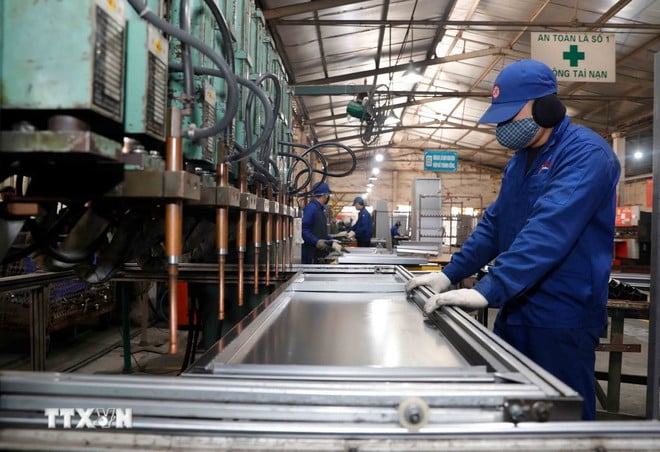
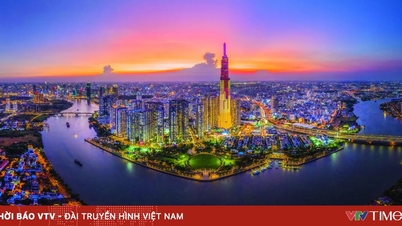
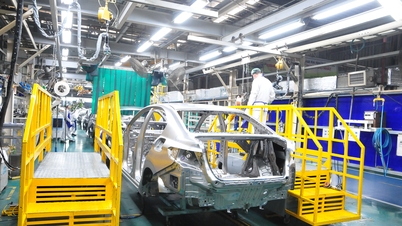
In 2024, Vietnam's economy ranked 32nd globally, with total international trade exceeding US$786 billion. (Photo: Tran Viet/VNA)
In 2024, Vietnam's economy ranked 32nd globally, with total international trade exceeding US$786 billion, placing Vietnam among the top 20 economies in the world in terms of trade volume.
Vietnam leads the world in cashew and pepper exports; ranks second in coffee, footwear, and furniture; and third in rice and garment exports. Vietnam ranks 71st out of 193 countries in the United Nations' E-Government Development Index (EGDI), with the digital economy accounting for 18.3% of GDP.
The national brand value has increased to US$507 billion, ranking 32nd globally. Vietnam has been recognized as a "World's Leading Heritage Destination" for many consecutive years. In 2024, Vietnam welcomed 17.5 million international tourists and aims to welcome 22-23 million tourists in 2025.
From 2024, the Communist Party of Vietnam has determined that the country is on the threshold of a new stage of development, entering a decisive "era of self-improvement" to overcome the middle-income trap, aiming to become a modern industrialized country with upper-middle income by 2030 and a high-income country by 2045.
To achieve this goal, in the first half of 2025 alone, Vietnam streamlined its administrative apparatus, improved efficiency, and saved budget resources by reducing the number of central ministries and agencies from 22 to 17, merging 63 provincial-level administrative units into 34, and establishing a two-tiered local government system nationwide, thereby cutting approximately 100,000 administrative civil servant positions.
Science, technology, and innovation are identified as "strategic breakthroughs." Vietnam has adopted a new growth model that uses science, technology, innovation, and digital transformation as drivers, contributing to improved productivity, quality, efficiency, and competitiveness.
The private sector is identified as the most important driving force of the national economy.
The green transition is considered an inevitable trend, with the goal of renewable energy accounting for 28-36% of GDP by 2030 and 75% by 2050.
Regarding social welfare, Vietnam has waived tuition fees for all students from kindergarten to high school in public schools, rebuilt 330,000 dilapidated houses, and is building at least one million social housing units for low-income earners. By 2030, the Vietnamese government aims to provide free healthcare for all citizens.
Regarding Vietnam-Iran relations, the article affirms that the two countries have a traditional friendship, emphasizing that Vietnam and Iran share many similarities as both countries hold important geopolitical positions in Southeast Asia and the Middle East. The two countries have enormous potential for cooperation. Vietnam wishes to further deepen cooperative relations with Iran in all fields, especially politics, economics, culture, and people-to-people exchanges.
Under the wise leadership of the Communist Party of Vietnam, the 80-year journey of struggle for independence and national reconstruction has affirmed that the Vietnamese people have always yearned for independence and freedom, nurtured fervent patriotism, a burning love for peace, and a resilient spirit to overcome adversity and build an increasingly prosperous country. Vietnam wishes to contribute wholeheartedly to the protection and cultivation of peace.
Vietnam is always ready to be a friend, a reliable partner, and a responsible member of the international community. It wishes to continue learning, strengthening cooperation, and sharing development experiences with the world, including Iran, in order to contribute to building a peaceful, unified, and prosperous future for humanity, for each nation, and for each individual on this beautiful planet.
(VNA/Vietnam+)
Source: https://www.vietnamplus.vn/tehran-times-dang-bai-viet-cua-dai-su-ve-hanh-trinh-phi-thuong-cua-viet-nam-post1059649.vnp

![[Photo] Prime Minister Pham Minh Chinh presides over a meeting on private sector economic development.](/_next/image?url=https%3A%2F%2Fvphoto.vietnam.vn%2Fthumb%2F1200x675%2Fvietnam%2Fresource%2FIMAGE%2F2025%2F12%2F20%2F1766237501876_thiet-ke-chua-co-ten-40-png.webp&w=3840&q=75)


![[Photo] Prime Minister Pham Minh Chinh presides over the conference announcing the establishment of the International Finance Centre in Vietnam.](/_next/image?url=https%3A%2F%2Fvphoto.vietnam.vn%2Fthumb%2F1200x675%2Fvietnam%2Fresource%2FIMAGE%2F2025%2F12%2F21%2F1766309817714_ndo_br_dsc-3400-jpg.webp&w=3840&q=75)













































Comment (0)