

Vietnamese Tet (Lunar New Year) brings everyone back to the roots of national culture – a place where the colors of peach blossoms and apricot blossoms, the fragrance of kumquats, the spring flower vendors, and the beloved images of Vietnam converge – a place where everyone can slow down, listen to the traditional spring rhythm, and deeply feel the value of togetherness, love, and sharing.
It's not just Vietnamese people who love the Vietnamese Lunar New Year; for international friends living and studying in Vietnam, the Lunar New Year holds a special significance and evokes sacred feelings.
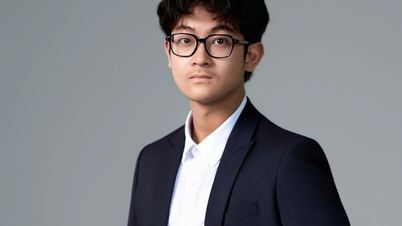
For Matěj Bíma, an intern at the Czech Republic Embassy in Vietnam, 2026 will be the first time he gets to celebrate the traditional Vietnamese Lunar New Year. The feeling of being immersed in the spring atmosphere and welcoming the new year with his Vietnamese friends makes him extremely happy.
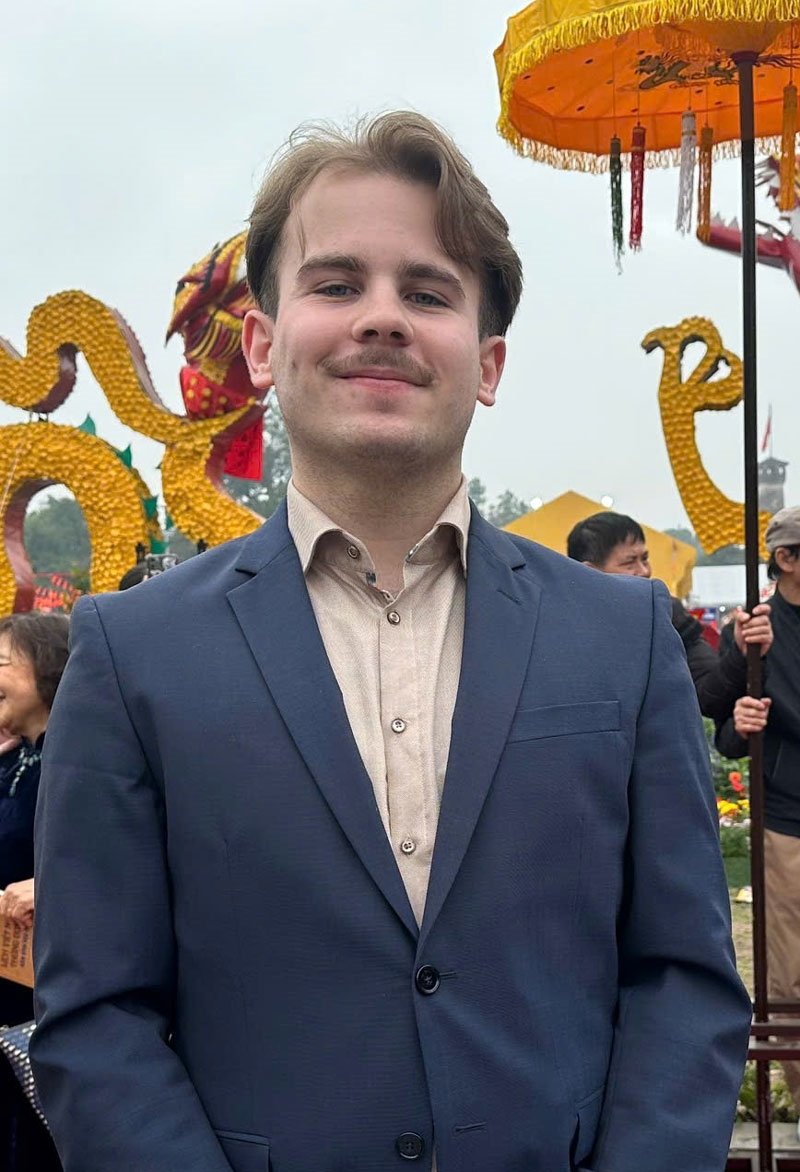 |
| Matěj Bíma, an intern at the Embassy of the Czech Republic in Vietnam. |
“I feel very happy to be in Vietnam to celebrate the traditional Vietnamese New Year. Witnessing and experiencing the traditional customs of Tet in Vietnam is very interesting. This is an experience I have never had before. I like Vietnamese Tet because of the warmth in every home. People who live far from home often return to their homeland to celebrate Tet, which is a unique characteristic of the traditional Tet. In Vietnam, I find people very open and friendly; when I go out, if I need help, people of all ages are always ready to assist. I hope to celebrate Tet in Vietnam again,” Matěj Bíma shared.
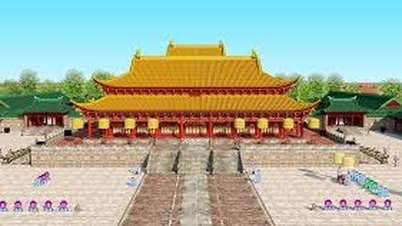
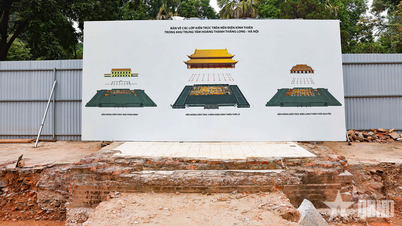
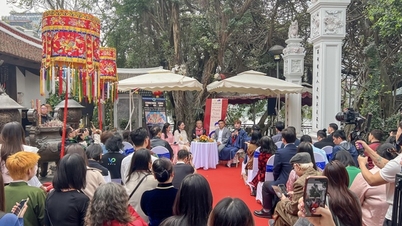
Having participated in a traditional Vietnamese ceremony during the days leading up to Tet (Lunar New Year) at Thang Long Imperial Citadel ( Hanoi ), Mr. Jonathan Wallace Baker, Head of UNESCO's Representative Office in Vietnam, stated: UNESCO always highly appreciates initiatives that help preserve and promote cultural heritage in a vibrant, accessible, and engaging way for the community. The combination of traditional ceremonies, heritage spaces, and public participation clearly demonstrates that intangible cultural heritage is not only preserved but also continues to develop and adapt to urban life. UNESCO is committed to continuing to work alongside Vietnam in preserving, promoting, and disseminating the rich values of its cultural heritage to present and future generations.
 |
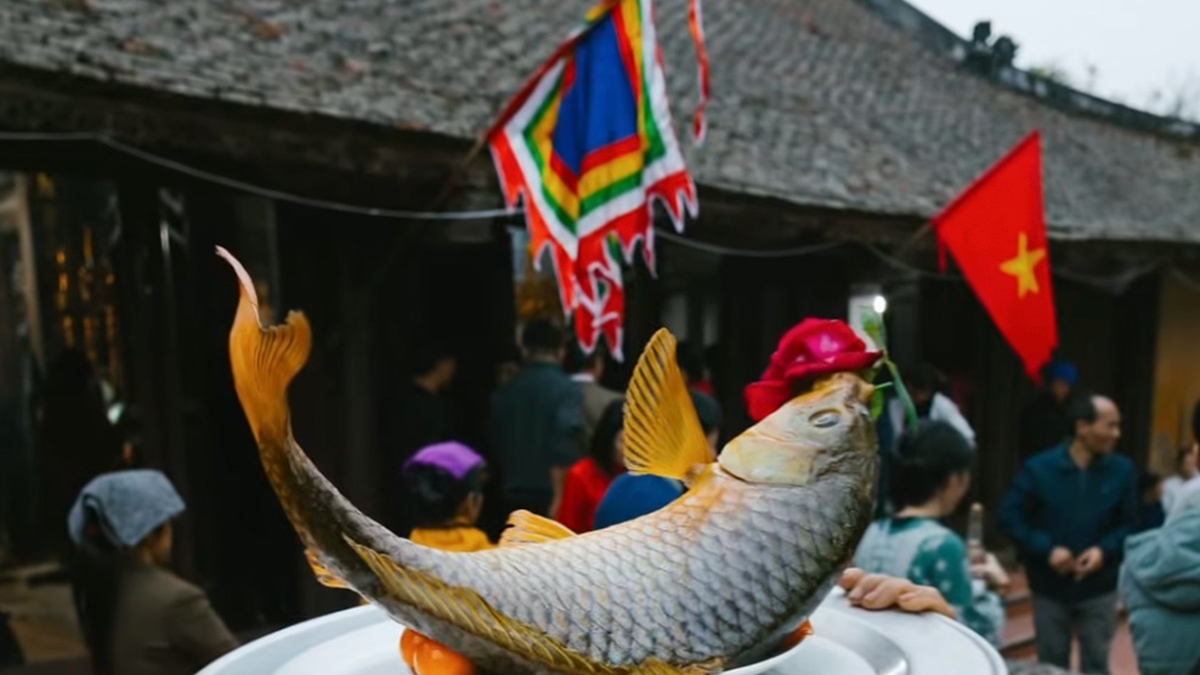
| The symphony of Tet. |
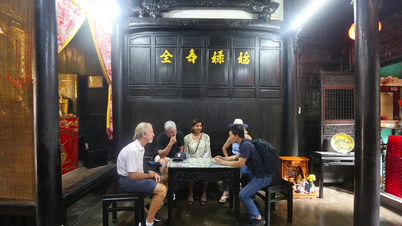
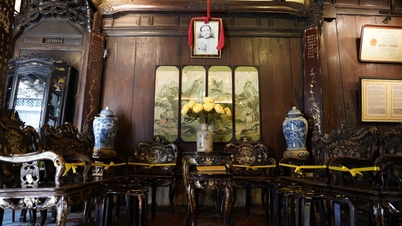
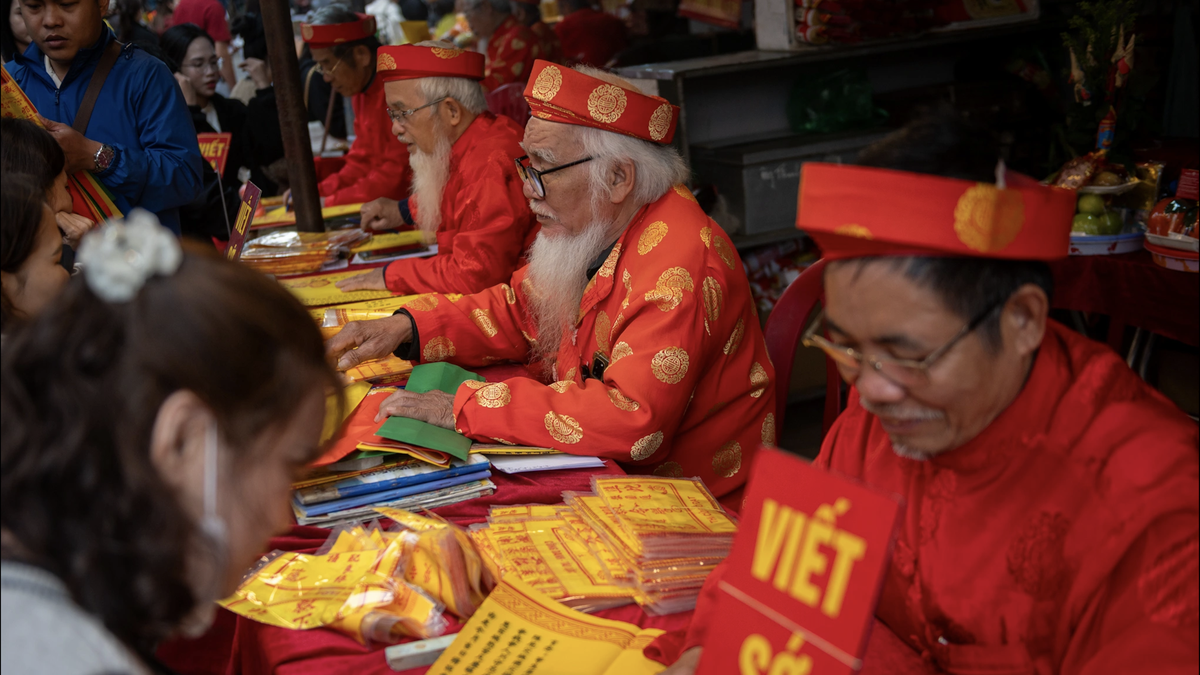
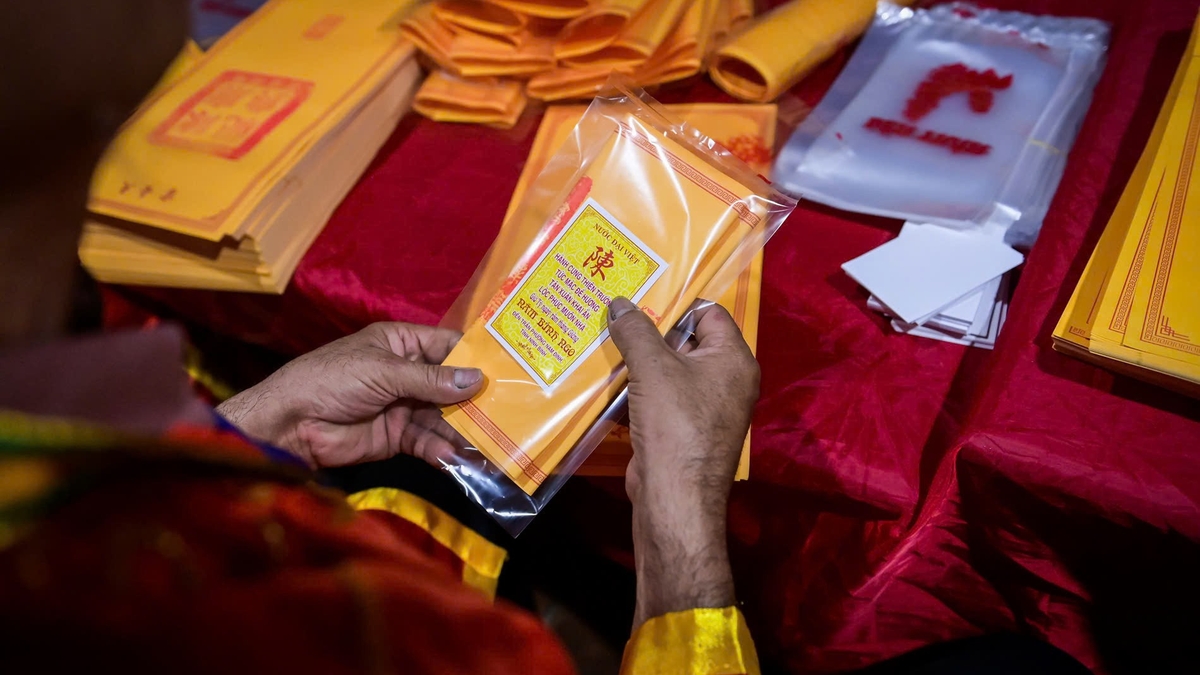
The exhibition space showcasing traditional folk Tet (Lunar New Year) customs at Thang Long Imperial Citadel is one of the highlights that attracts many visitors. Do Minh Anh, a student at Hanoi Law University, said: "The images and artifacts about Tet, such as the Tet living space of a city family in ancient Thang Long with customs of ancestor worship and deities, hanging Tet paintings and couplets, setting off firecrackers, making banh chung (traditional rice cakes), asking for auspicious calligraphy at the beginning of the year, wishing Happy New Year, giving lucky money, and enjoying Tet flowers... have given me interesting experiences. The ancient exhibition space, bearing the strong imprint of the culture and architecture of the old capital city, helps viewers better understand the traditional culture of the nation."
Attending the Lunar New Year celebrations at Thang Long Imperial Citadel, Ms. Vu Thu Ha, Vice Chairman of the Hanoi People's Committee, emphasized: "We are very honored to experience the beauty of the traditional Vietnamese Tet holiday in the heritage space of Thang Long Imperial Citadel. The presence of delegates, international guests, scientists, and the people not only demonstrates the spread of Vietnamese culture but also affirms our shared commitment to preserving and promoting the value of heritage—an invaluable asset of humanity."
 |
| The space exudes the essence of spring. |
Amidst the hustle and bustle of modern life, where the relentless pace of work and technology seems to sweep people along at an incredible speed, the traditional Lunar New Year remains a sacred moment in the soul of the Vietnamese people.
Tet, the Lunar New Year, not only marks the transition from the old year to the new, but also provides an opportunity for everyone to slow down, reflect on their roots, and listen to the traditional values that have nurtured them since childhood. In the incense smoke of Tet, in the family reunion meal, and in the warm New Year's greetings, Vietnamese cultural identity is preserved and continued naturally and profoundly.
Tet, the Lunar New Year, is a time for family reunions, when geographical distances are bridged by kinship and love. Customs such as ancestor worship, New Year greetings, and giving lucky money are not only symbolic but also embody the principle of "remembering the source when drinking water," and the importance of community cohesion.
Despite the ever-changing nature of society, the traditional Lunar New Year continues to ignite faith in good things, conveying wishes for health, prosperity, and peace for each family and for the entire nation in the new year.
Source: https://www.qdnd.vn/van-hoa/doi-song/tet-la-su-gan-ket-cong-dong-1026587
![[Photo] Prime Minister Pham Minh Chinh meets with representatives of female leaders and managers of central agencies and presents the Kovalevskaia Award 2025.](https://vphoto.vietnam.vn/thumb/1200x675/vietnam/resource/IMAGE/2026/03/06/1772789429283_ndo_br_dsc-1149-jpg.webp)
![[Image] Me So Bridge - an important connecting point on the Ring Road 4](https://vphoto.vietnam.vn/thumb/1200x675/vietnam/resource/IMAGE/2026/03/06/1772781627165_ndo_br_dji-0917-jpg.webp)
![[Photo] People in Ho Chi Minh City experience the green space at Ly Thai To Park No. 1.](https://vphoto.vietnam.vn/thumb/1200x675/vietnam/resource/IMAGE/2026/03/06/1772783731988_01-9003-png.webp)
![[E-Magazine]: Leaning on January](https://vphoto.vietnam.vn/thumb/402x226/vietnam/resource/IMAGE/2026/03/06/1772799934602_e-magazine-nghi-w1200t0-di2609d199d5155355t11920l1-nvtg-104.webp)














































Comment (0)