



The labor and employment sector is one of the components reflecting the "health" of the economy . According to the Provincial Statistics Office, the province's workforce has maintained its growth momentum in recent years, both in size and quality. The quality of the workforce has also improved through the effectiveness of education and vocational training policies.
By the end of the first quarter of 2025, the province had a labor force of 346,751 people. Of these, 107,278 people were in urban areas, accounting for 30.94%, while 233,472 people were in rural areas, accounting for 69.06% of the labor force. The proportion of men participating in the labor force was 51.82% (179,669 people); this proportion for women was 48.18% (167,081 people).
Employed workers account for 99.48% of the total workforce in the province (equivalent to 344,950 people). Of these, the majority are employed in rural areas, with 238,848 people (69.24%), due to the fact that the majority of Kon Tum province's population lives in rural areas.
The rate of underemployment and unemployment continues to decrease, remaining low compared to other provinces in the Central Highlands region in particular and nationwide in general. The estimated number of unemployed people by the end of the first quarter of 2025 was 1,801, representing an unemployment rate of 0.52% of the total workforce in the province, a decrease of 0.12% compared to the same period last year.
Reducing the unemployment rate to below the current national average (2.2%) demonstrates the tremendous efforts of all levels and sectors, and the effectiveness of labor and employment policies.
At the same time, it also reflects the continued stable development of the socio-economic situation in the province, creating job opportunities for workers and thus reducing unemployment.
Activities connecting supply and demand, addressing employment issues, and monitoring labor market development support in the area are implemented down to each district and city. Resources are mobilized and used effectively, with a focus on key areas, thereby creating job opportunities for many workers.
Notably, we are witnessing a significant shift in the current employment structure, from low-productivity jobs to higher-productivity jobs. Even those seeking unskilled or overseas employment now possess experience and skills in their chosen fields.
Despite these changes, the majority of jobs in the province are still in small-scale, low-quality production, with limited coverage.
The main characteristics of jobs suitable for unskilled labor are low productivity, low wages, lack of social welfare benefits, and virtually no job security.
The low skill level of the workforce can hinder integration into more profitable value chains, or into higher-value jobs within those chains.
Of course, it cannot be said that the province's workforce is limited in terms of educational qualifications. According to statistics, the province currently has 11 vocational education institutions, including 1 college, 8 vocational education and continuing education centers, and 2 vocational training centers.
However, the number of high-skilled jobs has increased only slightly and at a slower pace than jobs requiring medium skills. The number of high-quality jobs remains limited – or the country's human capital potential is not being utilized effectively.
In particular, the biggest challenge for the labor and employment sector is that new technologies, such as robotics, artificial intelligence (AI), digital platforms, or digital transformation in general, have become inevitable trends, strongly impacting labor productivity. This, in turn, affects employment by replacing or displacing low-skilled workers.
The current challenge regarding labor and employment is to improve the quality of jobs as well as the skill level of the existing workforce.
We have many favorable conditions for implementing this process. These include the continued strong and sustained economic growth in recent years; the effective implementation of policies on labor market development and vocational training; and the leveraging of opportunities arising from the digital economy.
Furthermore, the technological revolution and digital transformation present both challenges and opportunities. Increased labor productivity thanks to technology and automation not only replaces manual labor but also facilitates the expansion of production scale, creating more jobs for skilled workers or encouraging a shift in mindset among manual laborers.
Digital platforms also encourage the improvement of the quality of the workforce, forcing a segment of the rural workforce, previously engaged in simple jobs, to shift to newly emerging jobs where digital technology is applied.
However, to have a workforce with the right skills and expertise to meet the demands of the digital age, comprehensive and effective human resource training solutions are needed. This includes focusing on vocational training to support the development of high-tech agriculture, integrated mechanization, processing, and production linkages along the value chain.
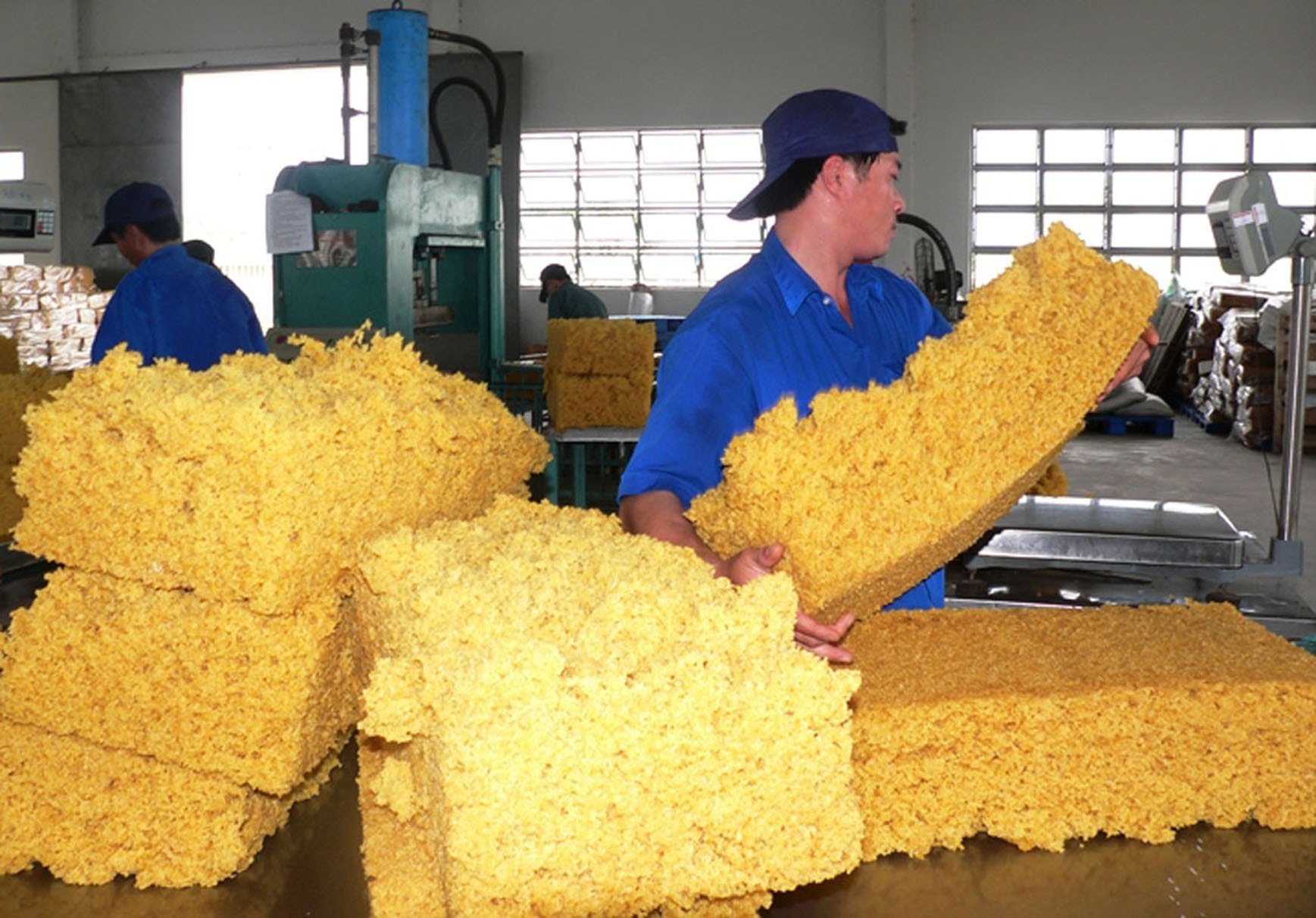
Workers need to be equipped with deeper soft skills, digital skills, and technical skills to support new technologies; and they need to be facilitated in their mobility between fields, industries, and geographical locations.
Finally, job requirements increasingly demand technological knowledge and digital skills; most professions and training fields will inevitably involve the application of technology. By mastering technology, workers will more easily integrate into the work environment in the digital age.
Source: https://baodaknong.vn/thach-thuc-viec-lam-trong-thoi-dai-so-251228.html





![[Photo] The General Secretary presents the title of Hero of the People's Armed Forces to the Navy.](https://vphoto.vietnam.vn/thumb/1200x675/vietnam/resource/IMAGE/2026/02/28/1772251730336_vna-potal-tong-bi-thu-to-lam-du-va-trao-danh-hieu-anh-hung-llvt-nhan-dan-cho-quan-chung-hai-quan-8612073-jpg.webp)






































































































Comment (0)