


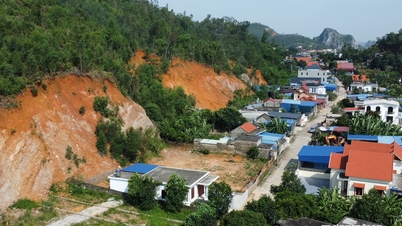
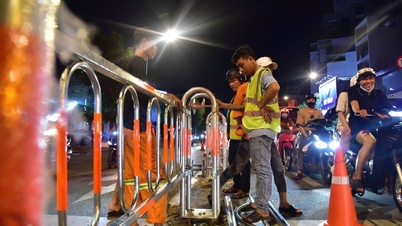
Enforcement officers of the provincial Enforcement Agency are implementing operational measures in recovering debt from Thuan Hoa Trading Company Limited for VietinBank .
Inter-agency coordination to address obstacles
In an effort to improve the rate of debt recovery, the case of Thuan Hoa Trading Company Limited for VietinBank has been identified as one of the key tasks. According to the first-instance and appellate judgments, Thuan Hoa Trading Company Limited must repay VietinBank over 8.105 billion VND in loan amounts as of December 13, 2023. In addition, Thuan Hoa Trading Company Limited must continue to bear interest on the principal debt until it is fully repaid. The collateral for the debt recovery is the land use rights and assets on the land registered under the names of Mr. Do Cong Hoa and Ms. Mai Thi Thuy in Ha Trung commune.
Upon entering the enforcement agency, the enforcement officer faced a legal challenge: discrepancies in the area and characteristics described by the court regarding the property. The decisions in two judgments declared the secured property to be two separate four-story houses built on two different plots of land, each measuring 100m². However, the court's on-site property assessment described it as a single, reinforced concrete house built on two plots of land, with 103.4m² located within the traffic safety corridor.
Recognizing the lack of consensus, the Provincial Enforcement Agency proactively sent a document requesting the Provincial People's Court to correct the judgment. Simultaneously, it petitioned the Supreme People's Court to review the case under supervisory review procedures to ensure accuracy. In September 2025, the Provincial People's Court and the Supreme People's Court issued guiding documents to the Provincial Enforcement Agency. Specifically, the Provincial People's Court explained that, despite discrepancies in the area and description of the property's characteristics, based on the documents and evidence in the case file and the verification results, the Provincial Enforcement Agency should handle the property according to its current state. The Supreme People's Court also affirmed that both plots of land and the assets attached to them must be auctioned off simultaneously, therefore the Enforcement Agency's claim that the judgment cannot be enforced is unfounded. Since the court's judgment has become legally effective, the enforcement agency will base its execution on the judgment, the actual status of the assets subject to enforcement, and the provisions of the Law on Enforcement of Judgments.
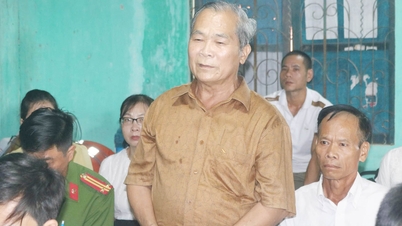
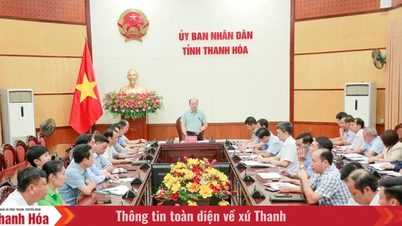
Although the policy bottleneck has been removed, administrative procedural pressure remains, requiring inter-agency coordination. To address overlapping property issues, the Provincial Enforcement Agency held an inter-agency meeting at the end of December 2025. Based on the consensus reached by the agencies at the meeting, the Provincial Enforcement Agency organized a dialogue with the parties involved to explain the legal regulations to those subject to enforcement and those with mortgaged assets. The initial success in recovering the debt for VietinBank is proof of the Provincial Enforcement Agency's determination to remove the "bottleneck."
Identify the key "barriers".
Despite achieving many positive results in the implementation of civil judgment enforcement tasks, especially in 2025, with a breakthrough in monetary judgment enforcement compared to previous years, civil judgment enforcement work in the province still faces many "obstacles". Through inspection and supervision, the provincial civil judgment enforcement agency has frankly pointed out limitations, such as delays in notifying and posting judgment enforcement decisions; and the occasional delay in publishing the list of individuals who are unable to fulfill their obligations. Notably, inaccurate case classification and prolonged processing times in some cases have directly affected overall efficiency. Furthermore, the biggest difficulty remains in cases related to credit and banking. The process of handling collateral to recover bad debts, as stipulated in Resolution 42/2017/QH14 dated June 21, 2017, of the National Assembly on "piloting the handling of bad debts of credit institutions," remains a difficult "problem" due to the lack of cooperation from those obligated to fulfill their obligations. Many individuals and organizations exploit legal loopholes, using their right to appeal or denounce to delay or evade their enforcement obligations.
From July 1st, 2025, the civil judgment enforcement system will officially operate under a two-tiered local government model. In Thanh Hoa , this change is taking place significantly with the termination of the district-level civil judgment enforcement sub-departments and the transition to a single-tier model. Currently, the provincial civil judgment enforcement system is streamlined with 5 specialized departments and 13 regional civil judgment enforcement departments. The formation of regional civil judgment enforcement departments not only simplifies the organizational structure but also creates a centralized and consistent management mechanism.
Determined to overcome difficulties and obstacles considered "bottlenecks," the Provincial Enforcement Department has strengthened its leadership and guidance in implementing numerous solutions to improve the enforcement rate in both cases and monetary value. Specifically, the unit has resolutely reformed the processes of case handling, decision-making, enforcement notification, and verification of enforcement conditions, ensuring all procedures are followed correctly and thoroughly. Alongside this, the enforcement of debts owed to credit institutions and banks, as well as corruption and economic crimes, has been identified as a top priority by the Provincial Enforcement Department. Closely adhering to assigned tasks, the enforcement officers have proactively developed detailed plans and prepared coercive measures and seizures for eligible cases to expedite enforcement progress.
To adapt to the new system, the Provincial Enforcement Agency continues to promote the application of information technology and digital transformation in enforcement. Initially, the unit has digitized files from the stage of receiving and processing requests to issuing enforcement decisions. Currently, the Provincial Enforcement Agency is actively reviewing and importing all data from paper files into the digital platform to ensure operations meet the criteria of "accurate, complete, clean, and active." This transparency has created a new momentum, helping the Provincial Enforcement Agency resolve many cases with significant economic value right from the beginning of the year. In 2026, the Provincial Enforcement Agency must enforce 15,329 cases, of which 11,082 are enforceable. From October 2025 to the present, out of the enforceable cases, the Provincial Enforcement Agency has completed 6,286, achieving a rate of 56.72%. Regarding monetary matters, the Provincial Enforcement Department has to enforce over 4,874.375 billion VND, of which over 2,966.036 billion VND is enforceable. Of the enforceable amount, the Provincial Enforcement Department has already completed the enforcement of 608.284 billion VND.
In particular, the administrative enforcement work has demonstrated the decisive leadership of the provincial Civil Judgment Enforcement Agency. Of the 21 administrative enforcement decisions transferred by the People's Court, the unit has publicly posted all of them and issued written recommendations for disciplinary action against 11 cases of violations of enforcement obligations. As a result, the provincial Civil Judgment Enforcement Agency has completed the enforcement of 4 cases.
Through appropriate solutions, the Provincial Enforcement Department is gradually removing "obstacles" in enforcement work. Although there are still many pressures ahead from credit, banking, and corruption cases, the qualitative transformation in management and operation is creating a solid foundation for the Provincial Enforcement Department to enforce justice strictly and effectively.
Text and photos: Hoa Binh
Source: https://baothanhhoa.vn/thao-go-diem-nghen-nang-cao-ty-le-thi-hanh-an-287500.htm






















































































Comment (0)