Born in 1976, Ta Van Thuong is often affectionately called Peter (the name he used when he studied in Singapore). Sitting with me, sipping coffee in the nostalgic atmosphere of Cong Coffee, with the rain falling outside, Mr. Thuong recalled his early days "falling in love" with the land of Sa Pa...
 |
| Teacher Peter and the children are taking care of the vegetables. |
It was a winter day in 2006, during a trip to Sa Pa, when he was captivated by the mysterious beauty shrouded in mist, the wild and majestic nature, and the kind and simple nature of the working people. But in stark contrast to this beauty was the sight of homeless children huddled under the eaves of shops in the freezing winter. At night, he witnessed many children, still of school age, accompanying their mothers selling goods, chasing after groups of tourists, trying to sell small bracelets. Among them were two Hmong children, about 7 or 8 years old, holding skewers of embroidered bracelets, standing hesitantly in front of a small shop, their eyes fixed on a small television. The shop owner angrily chased the two children away, fearing they would hinder his sales. “Witnessing this scene, the only thing that compelled me was to do something to help the future of these children,” Mr. Thuong shared. Sa Pa, a beautiful land considered a "tourist paradise," has many children who lack education and are forced to struggle for survival at a young age. Concerned about their future, he decided to stay in Sa Pa, rent a place, and open a free English class for underprivileged children.
Mr. Thuong was born and raised in Hanoi, graduated from Hanoi Foreign Trade University with a major in Sociology, then studied abroad in Singapore. Upon returning to Vietnam, he worked for a non-governmental organization focused on education . Having been away from Hanoi for eight years, his love for the city remains deep and poignant. But perhaps fate has bound him to this land of Sa Pa. Mr. Thuong jokingly recounts: "Many friends said I was 'crazy' for abandoning my career and family to open a free school for children in the mountains. I just smiled and said, 'If before I loved the poetic beauty of Sa Pa's scenery, now I love the children here even more. This is my second home and the place where I have decided to spend the rest of my life.'"
Peter's Special Class
Seeing the rain, Mr. Thuong offered to take me to visit the classroom in his small truck. From the turnoff to Ta Phin commune, every child who saw the car excitedly waved and shouted, "Teacher Peter! Teacher Peter!" Mr. Thuong pulled open the car door, waved back, and then reminded each child: "Pao, remember to come to English class tomorrow, the teacher will be checking your homework. Bring Lo along so she can get used to the class," "A Lu, come to class early tomorrow to help the teacher weed and feed the fish!"… The voices of the teacher and students echoed along the small road. I saw an indescribable happiness shining in Mr. Thuong's eyes. The classroom, named "Free English Class - Sa Pa Hope School," stood small and charming in a flat area of land in Giang Tra village, Ta Phin commune. A wooden sign, meticulously painted in lovely and whimsical shades of blue and red, was neatly erected in front of the gate. This was the third classroom after the change of location. 2011 marked the beginning of the free English class at "Cafe Peter Sa Pa" at the foot of Ham Rong Mountain. Thuong recalled: "When we first established the free English class for children in Sa Pa, it was very difficult. I had to handle everything myself, and I was also the main teacher for the children. I started attracting and gathering the children by opening a cafe. I provided drinks for them, set up a TV for them to watch comfortably, and left food there so that when they were hungry, they could come to me for help and learn English to help them sell better. That's how the class was formed."

Later, the class was moved to 6 Ham Rong Street, Sa Pa town, and from 2014, he moved it to Ta Phin and named it "Free English Class - Sa Pa Hope School". There, there is a warehouse storing instant noodles, teaching and learning materials, and a temporary classroom built with bamboo poles, furnished with about a dozen desks.
The classroom floor is still covered in green grass, with nothing to provide shade. Despite the lack of resources, the children consider it their second school, wanting to come even on days when they don't have to study. Besides teaching himself, Mr. Peter connects with foreign volunteers to teach English to the children. The classes are divided into levels, based on themes: animals, colors, food, restaurants, etc. Teaching activities include interactive games, singing, and student presentations in English. This makes learning simple and stress-free, inspiring a love of English in the children. Many children, initially shy and hesitant to communicate, become confident and fluent in introducing themselves and their family members after just two weeks of classes.
After eight years, the class has welcomed hundreds of students, many of whom have grown up and found stable jobs. Some work as hotel receptionists, others open souvenir shops, and many have been fortunate enough to receive coveted scholarships and study abroad. But wherever they are, I believe that in their hearts, those children will always hold a large place of love for their teacher.
 |
| Volunteers participated in building Sa Pa Hope Garden. |
Many dreams remain unfulfilled.
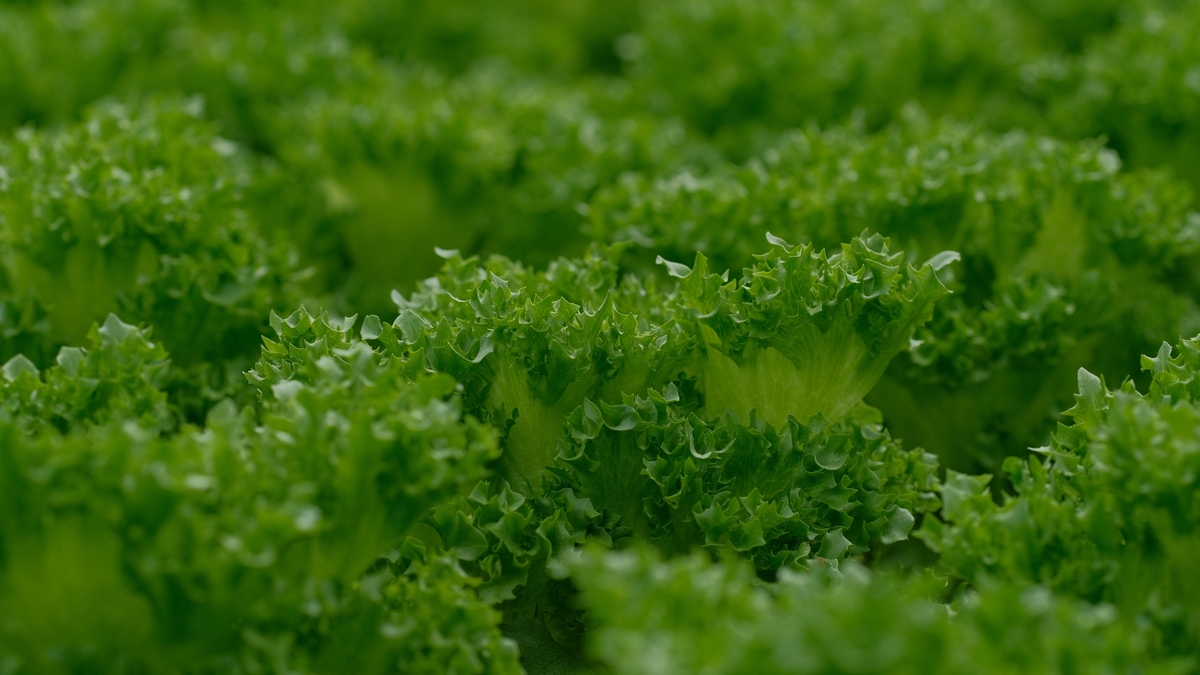
Peter's Sa Pa Hope Garden, located a few kilometers away, spans 3.5 hectares and is cultivated in greenhouses according to organic farming standards. The garden features a variety of local vegetables such as cabbage, cucumbers, and pumpkins. After each class, teachers and students go down to the garden to participate in the farming activities. The garden not only provides economic value, but the greater meaning Mr. Thuong wants to convey is the expansion and preservation of local agricultural products. Sa Pa Hope Garden also provides free potato seeds, capital, fertilizer, and technical assistance to six households in Sa Pa commune, hoping to help people improve their lives and escape poverty.

Sharing his plans, Mr. Thuong seems to be solely devoted to the poor Dao and Hmong children struggling to make a living in Sa Pa. He said: “First, I want them to have foreign language skills so they can be more confident and have more job opportunities to escape poverty. After that, I also dream of a green and clean Sa Pa, where cultural values are preserved and promoted.” Currently, Mr. Thuong is fulfilling his biggest wish: to build a community center for children in Sa Pa, where street vendors can learn English, experience practical activities such as growing vegetables, raising chickens and pigs, and learn traditional crafts like embroidery and weaving, thus providing them with a foundation for future careers. Driven by this dream, he is campaigning for organizations and individuals both domestically and internationally to build the center. He also helped many students receive scholarships so they could study and develop in an advanced educational environment, and helped some schools in poor villages of Sa Pa build small libraries. For his contributions to education, Mr. Peter received a Certificate of Commendation from the Chairman of the People's Committee of Sa Pa District. This is a great source of encouragement, helping both teacher and students to overcome difficulties and realize their dreams.
As spring approaches, Peter's new school, the Sa Pa Hope Center and Homestay, is gradually taking shape. Within this school lies the warm heart of a teacher who is always striving to help many underprivileged children realize their dreams and soar high and far…
Source: http://laocai.edu.vn/hoc-tap-lam-theo-tam-guong-dao-duc-ho-chi-minh/thay-giao-peter-355739
![[Image] Ho Chi Minh City: Ma Lang area, Chicken-Rice Market about to change its appearance](https://vphoto.vietnam.vn/thumb/1200x675/vietnam/resource/IMAGE/2026/06/25/1782377698627_ndo_br_m1-jpg.webp)
![[Photo] General Secretary and President To Lam receives Palestinian Ambassador Saadi Salama](https://vphoto.vietnam.vn/thumb/1200x675/vietnam/resource/IMAGE/2026/06/25/1782365384740_a1-bnd-9423-8322-jpg.webp)

![[Image] Schools organize meetings and introduce teaching models to students admitted to grade 10.](https://vphoto.vietnam.vn/thumb/1200x675/vietnam/resource/IMAGE/2026/06/25/1782368077271_ndo_br_z7970052192242-1ec8daeb77a6eed1a4e9f58c564ddd3e-jpg.webp)