

Due to supply disruptions, businesses are lacking raw materials for production.
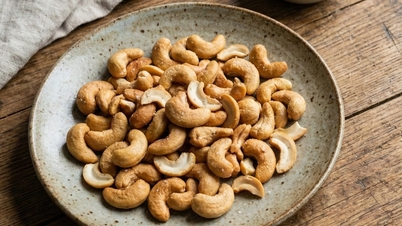
According to the latest report from the Ministry of Agriculture and Rural Development, in the first five months of this year, Vietnam exported 288,000 tons of cashew kernels, earning $1.55 billion. Compared to the same period last year, cashew exports increased sharply by 30.6% in volume and 19.3% in value.
Last year, Vietnam's cashew exports reached 644,000 tons, valued at $3.64 billion, a 24% increase in volume and over an 18% increase in value compared to 2022. Accordingly, Vietnam's cashew industry has maintained its position as the world's number one exporter for many consecutive years.
Mr. Bach Khanh Nhut, Vice President of the Vietnam Cashew Association, predicts that cashew exports will continue to maintain high growth momentum, aiming for a new record of 3.8 billion USD this year.
However, on the evening of May 31st, during a press conference on the cashew industry, Mr. Nguyen Minh Hoa - Vice Chairman of the Vietnam Cashew Association (Vinacas) - stated that Vinacas had recently received feedback from its members regarding the insufficient supply of raw materials from partners in West African countries due to the sharp increase in raw cashew prices.
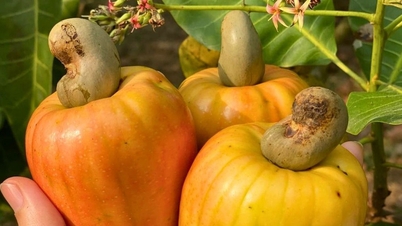
Vietnam imports approximately 3 million tons of raw cashew nuts annually, with about 2.2 million tons coming from Africa (primarily West Africa). Notably, the price of raw cashew nuts from West Africa is increasing daily. In February of this year, the price was only 1,000-1,050 USD/ton, but it has now risen to 1,500-1,550 USD/ton. This is due to crop failure in the region, and some countries have implemented policies to temporarily suspend raw cashew exports to support domestic factories.
Therefore, exporters sought to delay deliveries and demanded price increases. According to preliminary statistics, only about 50% of the goods were delivered according to signed contracts.
Mr. Ta Quang Huyen, General Director of Hoang Son I Company, said that the company signed a contract to buy 52,000 tons of raw cashew nuts from West Africa but only received 25,000 tons at the agreed price, with about 12,000 tons being "defaulted" on. The company had to accept a higher price for the remaining amount to use in production.
Cashew shipments currently at sea are being offered at higher prices, but some processors still have to buy them to ensure they have enough raw materials to fulfill production contracts with customers, Vinacas reported.
Currently, some cashew processing factories in Vietnam are facing a shortage of raw materials. This is because many shipments of raw cashews are arriving late or in smaller quantities than stipulated in signed contracts.
According to Mr. Hoa, when purchasing raw cashews, businesses sign export contracts for cashew kernels corresponding to the raw material price. However, with the current fluctuating raw material prices, from the end of the third quarter of 2024, many contract disputes will occur between Vietnamese businesses and importers. Because of the high production costs, many companies are unable to fulfill the contracts they have signed.
Up to 90% of the raw materials are imported.
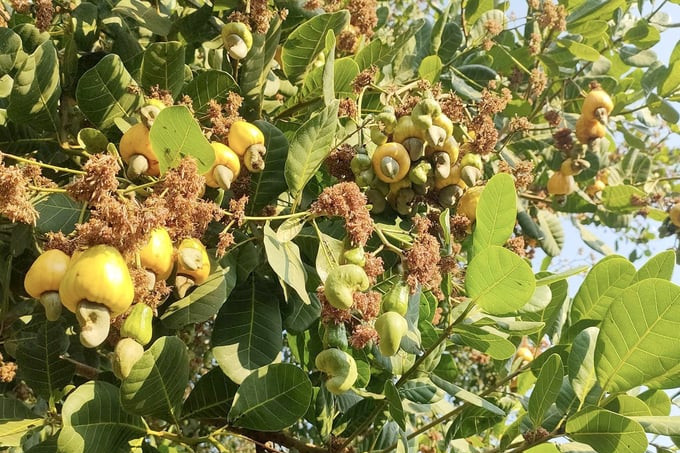
For the past 16 years, Vietnam has consistently held the number one position in the world for processed cashew kernel exports. However, approximately 90% of the raw materials used in Vietnam's cashew industry are imported from Africa and Cambodia. Domestic raw material sources are quite limited due to shrinking cultivation areas.
According to data from the General Department of Customs, Vietnam imported approximately 2.77 million tons of cashew nuts, valued at US$3.19 billion in 2023. Compared to 2022, cashew nut imports increased by 46.2% in volume and 19.6% in value.
The item that accounts for a large proportion of imports in the import structure is fresh, unshelled cashew nuts.
There are five major cashew nut suppliers to Vietnam: Ivory Coast, Cambodia, Nigeria, Ghana, and Tanzania. Of these, cashew nuts imported from Ivory Coast and Cambodia accounted for 54.7% of the total value of cashew nut imports in 2023.
However, Vietnam reduced imports from Cambodia and Tanzania, while increasing imports from Ivory Coast, Nigeria, and Ghana.
This year, up to the end of April, Vietnam imported 1.063 million tons of raw cashew nuts, worth up to 1.322 billion USD, an increase of 32% and 23.1% respectively compared to the same period last year. Compared to the 1.16 billion USD in exports, the Vietnamese cashew industry continues to experience a trade deficit.
The dependence on imported raw materials puts this industry at greater risk. This warning has been mentioned many times before.
In recent years, the policy of cashew-producing countries in Africa and Cambodia has been to develop domestic processing industries and gradually reduce raw cashew exports. Therefore, they have introduced many preferential policies to attract investment in cashew processing plants. For raw cashew exports, they strictly regulate and monitor minimum export prices and apply high export tax rates. Conversely, they exempt exported cashew kernels from taxes.
At the Vietnam Cashew Association's congress for the 2021-2026 term, Vinacas expressed concern that Vietnam's leading position in the global cashew supply chain and value chain is being shaken and will certainly be lost if we do not change.
Previously, the global cashew market was primarily supplied by Vietnam and India, with Vietnam accounting for over 80%. However, other sources have recently emerged, especially from some African countries, causing Vietnam's market share of cashews in the global market to decline.
Vinacas fears that cashew processing and export businesses, mainly FDI factories, will gradually block the supply of raw cashew nuts to Vietnamese factories, causing small and medium-sized factories in our country to go bankrupt, and ultimately dominating the global cashew kernel market.
Vinacas leaders believe that businesses must proactively secure their raw material supply. Given the difficulty in increasing acreage, they could cooperate in exploiting and developing cashew growing areas in Cambodia and southern Laos, including collaborative research, seed transfer, and cultivation techniques. Businesses could then import this raw cashew into Vietnam for processing.
Source: https://vietnamnet.vn/nhap-90-hat-dieu-nguyen-lieu-dn-lao-dao-vi-doi-tac-be-keo-2286725.html














































































Comment (0)