

Statistics from real estate companies show that in 2025, despite a more than 214% increase in the number of new apartments launched onto the market and an absorption rate remaining above 70%, selling prices did not cool down but instead set a new benchmark, with apartment prices in the central area of Ho Chi Minh City exceeding 103 million VND/m2.
As supply increases, so does the price.
According to Avison Young Vietnam, in the fourth quarter of 2025, the supply of apartments in Ho Chi Minh City will increase cautiously as developers closely monitor absorption capacity and price trends. The absorption rate in this market is expected to reach approximately 65%-75%.
Conversely, Hanoi recorded a surge in supply with over 10,000 new apartments launched, mainly from large-scale projects. Despite the sharp increase in supply, the absorption rate in Hanoi remained high, fluctuating between 70% and 80%, indicating continued positive demand for housing and investment. In particular, the mid- and high-end segments continued to play a leading role, causing the housing market structure to increasingly lean towards high-priced products.
Avison Young forecasts that in 2026, despite an increase in apartment supply, primary market prices will continue to rise and show clear differentiation between regions, albeit at a slower pace than in previous periods. It is projected that Ho Chi Minh City will have approximately 15,000 new apartments, Hanoi 10,000, and Da Nang 4,000. Primary market prices could increase by 20%-25% in Ho Chi Minh City and Hanoi, while Da Nang will see an increase of around 10%-15%.

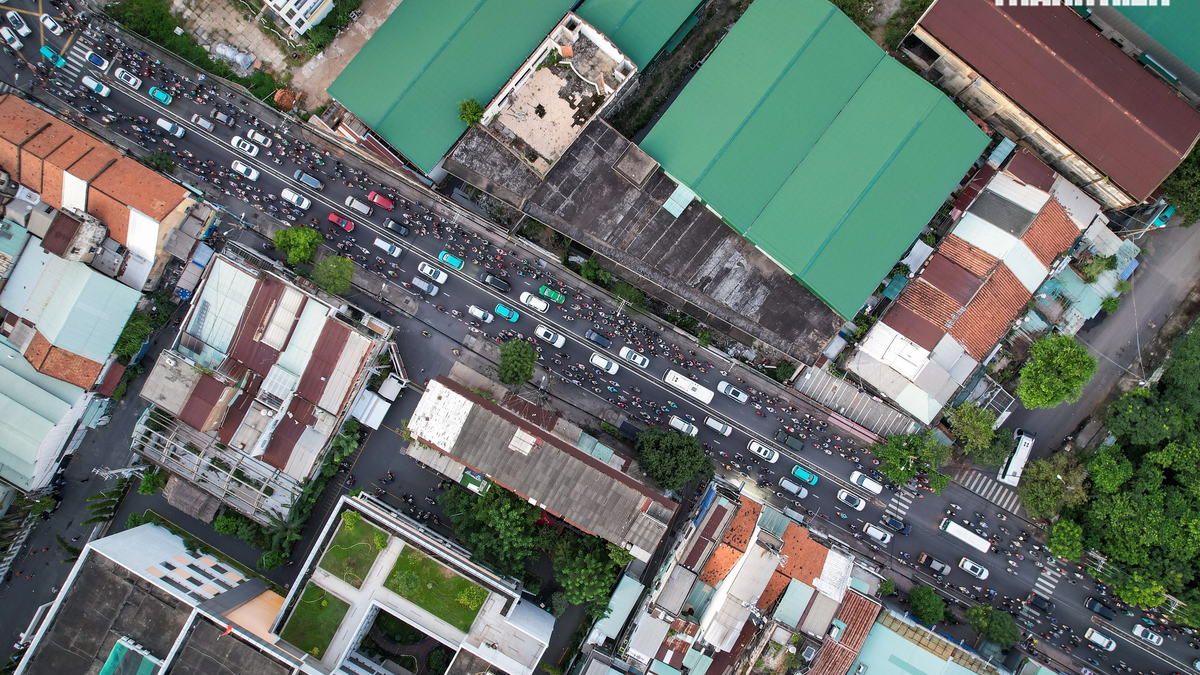
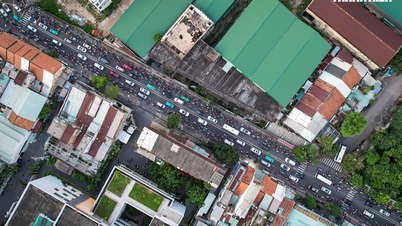
The luxury apartment market is likely to cool down as interest rates tend to rise again. Photo: TAN THANH
The Ho Chi Minh City apartment market report for 2025 and forecast for 2026 by One Mount Market Research and Customer Insights Center also shows a boom in both supply and demand. In 2025, the new supply in Ho Chi Minh City is expected to reach approximately 30,600 apartments, a 214% increase compared to the previous year. The number of apartments sold is also projected to increase sharply by 124%, reaching approximately 30,400 units. The average absorption rate in the central area of Ho Chi Minh City remains high, at around 70%.
In particular, the apartment market has established a new price level despite abundant supply. In the heart of Ho Chi Minh City, the average selling price has exceeded VND 103.2 million/m2, while the former Binh Duong area reached an average of VND 51.8 million/m2. This unit forecasts that in the coming period, primary market prices may continue to increase by an average of 10%-15% per year.
Explaining the reasons for the continued rise in apartment prices, One Mount points out four core factors. Firstly, increased input costs due to changes in land policy, especially the application of a new land price list from 2026 and the abandonment of the old land price framework. Secondly, a skewed market segment structure with the near absence of affordable and mid-range housing in the center of Ho Chi Minh City. Thirdly, positive impacts from transportation infrastructure and the formation of an international financial center. Finally, pressure from capital costs as interest rates are expected to increase in 2026.
Buyers are becoming more cautious.
In reality, the apartment segment, especially high-end apartments priced above 100 million VND/m2, has attracted a lot of attention recently, with many projects seeing buyers competing to place deposits and invest for speculative purposes. However, since the end of 2025, with rising interest rates, developers have become more cautious, and many projects have slowed down their market launches. Buyers are also wary of the risks, as the 3-5 percentage point increase in interest rates per year creates significant financial pressure over loan periods of 5-10 years.
In its latest announcement to customers, a branch of Vietcombank stated that interest rates for loans to purchase apartments and townhouses with certificates of ownership or sales contracts, and for refinancing loans (buying debt) in Ho Chi Minh City, start from a minimum of 9.6% per year and reach a maximum of 13.9% per year if the borrower chooses a fixed rate for the first 24 months.
Not only Vietcombank, but many other banks have also significantly increased interest rates on real estate loans. At BIDV, in the latest real estate loan interest rate schedule, the bank has also increased interest rates for housing loans to a minimum of 9.7%/year for the first 6 months; a minimum of 10.1%/year for the first 12 months; and up to 13.5%/year for the first 18 months.
Some banks have also stopped offering preferential home loan packages to young people or those under 35; while others continue to offer them despite adjusting interest rates upwards.
At ACB, the interest rate for home loans is currently 8.3% per annum with a preferential rate for the first 12 months and 8.8% per annum with a preferential rate for the first 24 months. If customers borrow to buy a house in a project through ACB's partner banks, the interest rate will be further reduced by 0.5 percentage points.
Speaking with reporters from the Nguoi Lao Dong newspaper, leaders of many commercial banks acknowledged that an increase in lending interest rates is unavoidable given that deposit interest rates have reached a new level since the end of last year. Therefore, an increase in lending interest rates is inevitable, especially in the real estate sector, which is currently under control to prioritize credit flows for production, business, and other priority sectors.
It will cool down soon.
According to Mr. Doan Quoc Duyet, Director of Tin Thanh Real Estate Company, the high-end apartment market is likely to cool down as interest rates tend to rise again. This segment has seen the strongest price increases during the real estate market's growth cycle over the past 2-3 years, so a correction is inevitable. In fact, some newly launched or soon-to-be-launched projects have already begun to show signs of slowing liquidity.
Mr. Duyet believes that the real estate market will continue to rotate across segments, rather than experiencing a uniform increase like in the previous period. "When interest rates rise, money will be reallocated. Those with idle funds can still buy houses for living or long-term investment, while short-term investment capital will tend to shift to other channels such as gold," Mr. Duyet said.
Regarding real estate, Mr. Duyet believes that segments that haven't seen significant growth recently will gradually attract more attention. Specifically, land plots in suburban areas with reasonable prices, clear legal status, and benefits from planning and infrastructure are considered to have room for growth. "Many investors in this segment are not overly dependent on bank loans, so they are less pressured by interest rate fluctuations. Conversely, in the high-end apartment segment, developers are forced to offer more substantial pricing and incentives to stimulate demand. For older apartment projects, when loan repayments reach maturity, some investors will have to sell, creating additional secondary supply and putting pressure on the overall price level," analyzed the Director of Tin Thanh Real Estate Company.
According to Mr. Duyet, this will negatively impact new projects, limiting the potential for price increases in the high-end segment. Selling prices will have to be carefully considered, leaving no room for inflated pricing or buying based on herd mentality as before. This is because buyers now prioritize products that generate real value, which can be used for living, renting, or generating cash flow, rather than simply expecting price appreciation.
Add more influencing factors
According to Mr. Vo Hong Thang, Deputy General Director in charge of DKRA Consulting and Investment Director of DKRA Group, the lack of credit room coupled with the sudden increase in interest rates has made both investors and homebuyers using borrowed capital hesitant. This is because once interest rates rise, it's difficult for them to cool down within just 1-3 months. Furthermore, not all banks have available credit room, as loan growth is controlled quarterly, preventing credit institutions from freely expanding lending. When buyers and investors have difficulty accessing capital, the market will inevitably cool down. Not to mention, some factors related to the requirement for transparency of information regarding owners of 1-3 properties, although not yet fully clear, also make some investors hesitant to "reveal their identities" in the initial stages of development.
Source: https://nld.com.vn/thi-truong-can-ho-gap-ap-luc-lon-196260202201937749.htm



























































































Comment (0)