

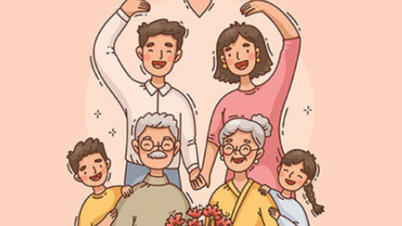
Tet Nguyen Dan (Lunar New Year) is a deeply ingrained cultural tradition in the minds of Vietnamese people for generations. It's a time for families to reunite after a year of hard work. Tet is a time for those who live far from home to come together. It's also an occasion to express gratitude to parents, grandparents, and ancestors.
Space of integration
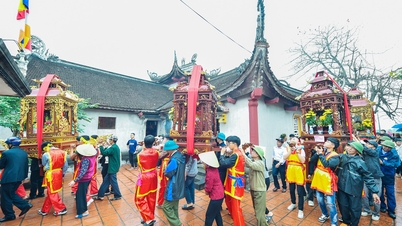
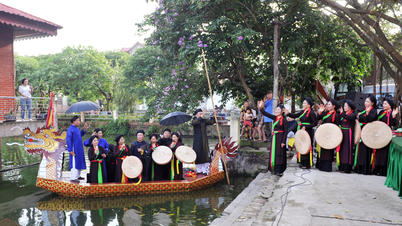
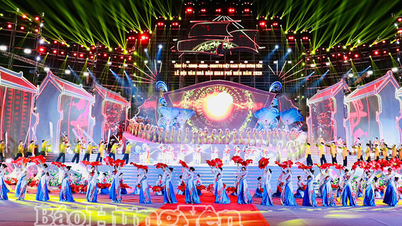
Tet Nguyen Dan (Lunar New Year) is a special custom of the Vietnamese people. This traditional custom has accompanied the people through thousands of years of history. Throughout the periods and stages of the country's development, Tet culture has changed, but it always contains messages and beautiful aspects of the nation's spiritual life. In recent years, alongside the restoration of many traditional cultural values, many cultural spaces have also been integrated into the modern world.
In Hanoi, a city with a thousand-year tradition as the imperial capital, preserving the most ancient customs, traditions, and rituals of the Lunar New Year, many aspects that are incompatible with modern life have been significantly reduced in recent years. In major cities, many people have also started traveling far away for the "three days of Tet," both to broaden their horizons and as a way to start the year off on a long journey, hoping for good fortune and business expansion in the coming year.
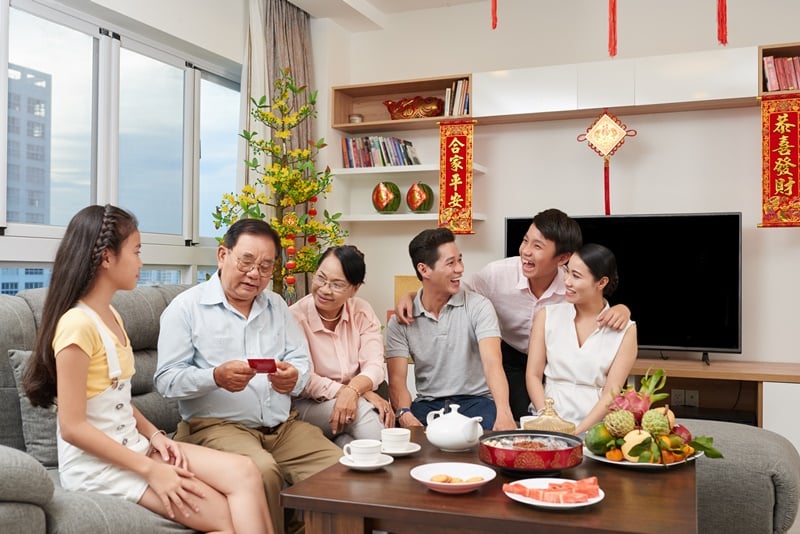
Associate Professor Bui Thi An, a member of the 13th National Assembly , believes that most Vietnamese people, still descended from the Hung Kings, want the Vietnamese Tet (Lunar New Year) to survive, in a new style, following new customs that are in line with the trends of modern civilization, but without losing the unique identity of the Vietnamese nation. Accordingly, Tet in the past encompassed the entire month of January, with all its humanistic meanings: family reunions, visiting relatives and neighbors, wishing grandparents a happy new year, offering sacrifices to ancestors, and engaging in festive activities to connect with deities and the heavens…

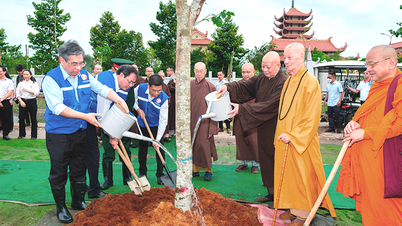
Today, those humanistic meanings remain intact, but the Tet (Lunar New Year) celebrations have been simplified. In many places, the custom of picking lucky branches on New Year's Eve has been adapted in a civilized and cultured way. For many years now, we no longer see trees bare on New Year's Eve because all the young shoots and branches have been broken, stripped, and picked. Instead, temples and places holding spring celebrations display many branches of lucky bamboo (Dracaena fragrans) for people to take home and use as a way to bring good luck, creating a beautiful custom at the beginning of the year.
In particular, the Lunar New Year in Vietnam today no longer involves extravagant and wasteful customs, nor does it adhere to unreasonable and outdated rules. It does not encourage superstitious practices, nor does it promote wasteful and uncivilized forms of "spring excursions" that deprive people of energy and resources. Vietnamese people have skillfully transformed the "three days of Tet" and the entire Tet week into a beautiful period of the new year, focusing on practical matters for themselves, their communities, and society. Vietnamese Tet is also a way to introduce Vietnam, its land and people, to international friends as a form of cultural exchange and dialogue with other civilizations around the world .
Irreplaceable values
The culture of Tet (Lunar New Year) has been intertwined with the Vietnamese people for generations. Regardless of the context or era, Tet has always held immense spiritual value. Even today, while Tet has changed, it still embodies the messages and beautiful aspects of the nation's spiritual life. Many believe that only by preserving these beautiful traditional cultural features can we achieve sustainable development and avoid being diluted in the process of modernization and integration.
“Tet Nguyen Dan (Lunar New Year) is a unique and special cultural feature of Vietnam, recognized and appreciated by many international friends, tourists, and foreigners living and working in Vietnam. The view that Tet integrates but doesn't assimilate is, in my opinion, an extremely correct concept. Vietnamese Tet, with its many distinctive cultural aspects, encourages people to let go of all the misfortunes and unpleasant things of the past year. Therefore, this is also a very meaningful way of living and teaching life,” Ms. Bui Thi An expressed.
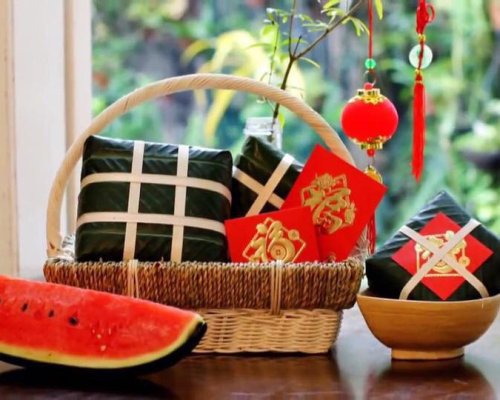
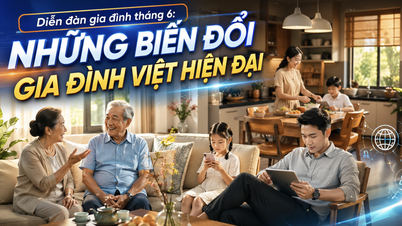
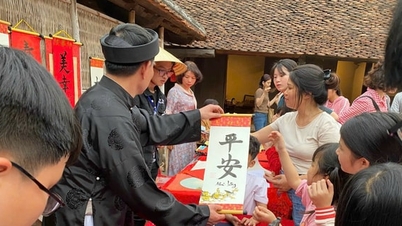
In keeping with the pace of modern life, many convenient and modern forms of celebration have been introduced during the Lunar New Year. However, many young people are still determined to "keep the flame alive" for traditional Tet, so that the holiday does not lose its value in today's hectic life. The cultural values of Tet today are still preserved and promoted through traditional customs such as: visiting ancestral graves, making banh chung (traditional rice cakes), and offering sacrifices on New Year's Eve...
For Nguyen Ha Phuong (from Nam Dinh province), it's the same. Returning home to go shopping for Tet with her mother, washing banana leaves with her parents to wrap banh chung (traditional Vietnamese rice cakes), and cleaning the house to welcome Tet have become things Phuong enjoys. Phuong shared: “For me, the feeling of the whole family gathering around the pot of banh chung, sharing stories of joys and sorrows from the past year, is a happiness that is not easily found. It's only once a year that I get to wrap banh chung, so I cherish and treasure these beautiful and precious memories.”
Despite being very busy during Tet (Lunar New Year), the family of Ms. Le Thi Thu (Cau Giay, Hanoi) still teaches their children about the values of traditional Tet. Every year, she makes time to buy ingredients and lets her children make jam and some kinds of cakes. While making the cakes, the children listen to Ms. Thu tell stories associated with Tet.
Tet (Vietnamese Lunar New Year) embodies traditional values and unique characteristics that define the cultural identity of the Vietnamese people, values that no other holiday can replace. The soul of Tet lies in warm reunions, with the whole family preparing to welcome the new spring. While the way Tet is celebrated may change over time, Vietnamese Tet customs remain unchanged. Therefore, young people today, despite choosing different ways to celebrate Tet, still harmoniously combine tradition and modernity to create a warm and joyful Tet atmosphere with family and friends. "Integrating but not dissolving," young people are striving every day to "reawaken" the traditional values of Tet in their own unique ways.
Source: https://giadinhonline.vn/thieng-lieng-ngay-tet-nguyen-dan-d204333.html




























![[Video] Sunset at Lap An Lagoon – Where the sun sets over the fishing nets](https://vphoto.vietnam.vn/thumb/1200x675/vietnam/resource/IMAGE/2026/05/31/1780192137701_beach-landscape-sea-water-nature-grass-745871-pxhere-com.jpeg)






















Comment (0)