

According to him, journalism is a profession that involves a lot of travel and contact with many aspects of life. And it is precisely because of this extensive travel that journalists have the opportunity to absorb more emotions, more life experiences, and more insights...
In Vietnam, from a professional perspective, Vu Toan (a former reporter for Tuoi Tre Newspaper in Ho Chi Minh City) is a prime example! Thanks to his passion for journalism, after his famous investigative reports, Vu Toan wrote very topical poems, bearing both his personal imprint and the imprint of the times. Three poems: "The Mother of Quon Long," "Poems Written at Tan Ky Mental Hospital," and "Drugs" are concrete examples. "The Mother of Quon Long" describes a woman with "one husband and three sons who are martyrs," and she is also a "cemetery caretaker" who "cherishes each grave with shared sorrow." "Poems Written at Tan Ky Mental Hospital" is about soldiers whose heads are still riddled with shrapnel from the war, and who suffer from mental illness to the point that: "They write with the handle of a soup spoon / With a chopstick they accidentally hid / The words scribbled on the wall: Mother! Mother! Forward! Charge!" And the author could only watch as "they spoke, they laughed, and I turned to stone in silent despair." The poem "Drugs" is actually a "poetic reportage" written by the author in 1992 in the "drug capital" of Kỳ Sơn: "In 1992, three thousand hectares / Sixteen communes of Kỳ Sơn planted opium / On average, 4 tons per year / Where did they hide after fleeing to the lowlands? / The opium growers and drug dealers / Were more numerous than the rice farmers and vegetable growers..." This poem won third prize in a two-year poetry competition from 1998-2000 organized by the Văn Nghệ Weekly.
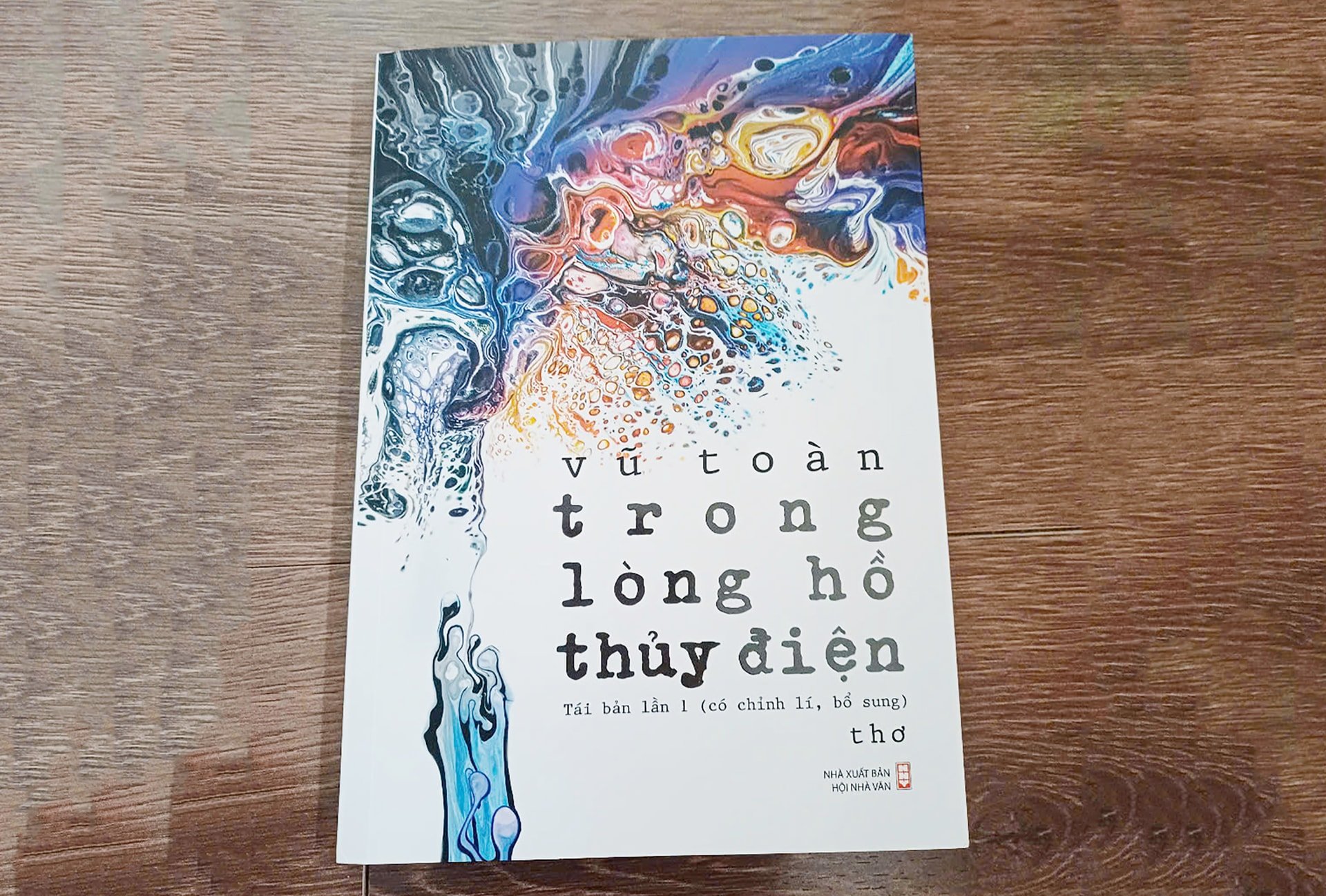
Following "Nine Moon Seasons," "Self-Ignition," "Remembering Grass," and "Salty River," Vu Toan presents a new poetry collection to readers, "In the Heart of the Hydroelectric Reservoir" (first printed at the end of 2023 and reprinted in the first quarter of 2025). The world of "In the Heart of the Hydroelectric Reservoir" seems both limited and infinite. Because it encompasses both the natural and social worlds, both the here and now of the contemporary. In other words: The entirety of Vu Toan and his poetry seems to reveal the full dimensions of his message and emotions from a snapshot within the hydroelectric reservoir. This includes profound sadness at environmental destruction, "standing and watching the death of the forest" in "On the Peak of the Pơmu Tree," sharing with "the vengeful spirits flying after the dead trees" in "Sleeping by the Nậm Típ Stream at Night," and feeling the pain and recognizing "the tears of the forest trickling into the river" in "Forest." And when writing about the pain and loss of the forest, few could write as beautifully and heartbreakingly as Vu Toan: "Who will wear mourning clothes for the forests / When illegally logged timber from the forest - blood flows? "
I consider "The Well" a discovery in Vu Toan's poetry: "The well is like a stream of ink / Writing history on this land / The well is mistaken for a hollow in the earth / Looking up at the world ," I consider "The Soldier Returning from Gac Ma" another discovery about the submerged island: "Gac Ma is a submerged island in my heart / I carry it with me through endless days ," I consider "April 30th" a clever way of speaking about war, about the ferocity of war, yet remaining calm and composed: "At 18 I joined the army / My soul like a white cloud, what's the point of talking? / I don't understand why I'm still alive on April 30th / Backpack. Gunsmoke. Private ," I consider "Fame" a poetic theme with great contemplation and emotion: "Love enchants love / Fame enchants the flying paper kite / The sound of birds enchants the forest / Fame enchants the shadow of clouds in the sky . "
Vu Toan's poetry is simple yet profound, unpretentious yet comprehensive and all-encompassing. This is a valuable quality in his poetry and also the goal that modern poetry should strive for.
Source: https://hanoimoi.vn/tho-cua-nguoi-lay-bao-nuoi-van-706431.html
![[Image] Nguyen Tat Thanh Street is expected to be widened, reducing traffic congestion.](https://vphoto.vietnam.vn/thumb/1200x675/vietnam/resource/IMAGE/2026/03/24/1774326200262_ndo_br_3-6869-jpg.webp)

























































Comment (0)