

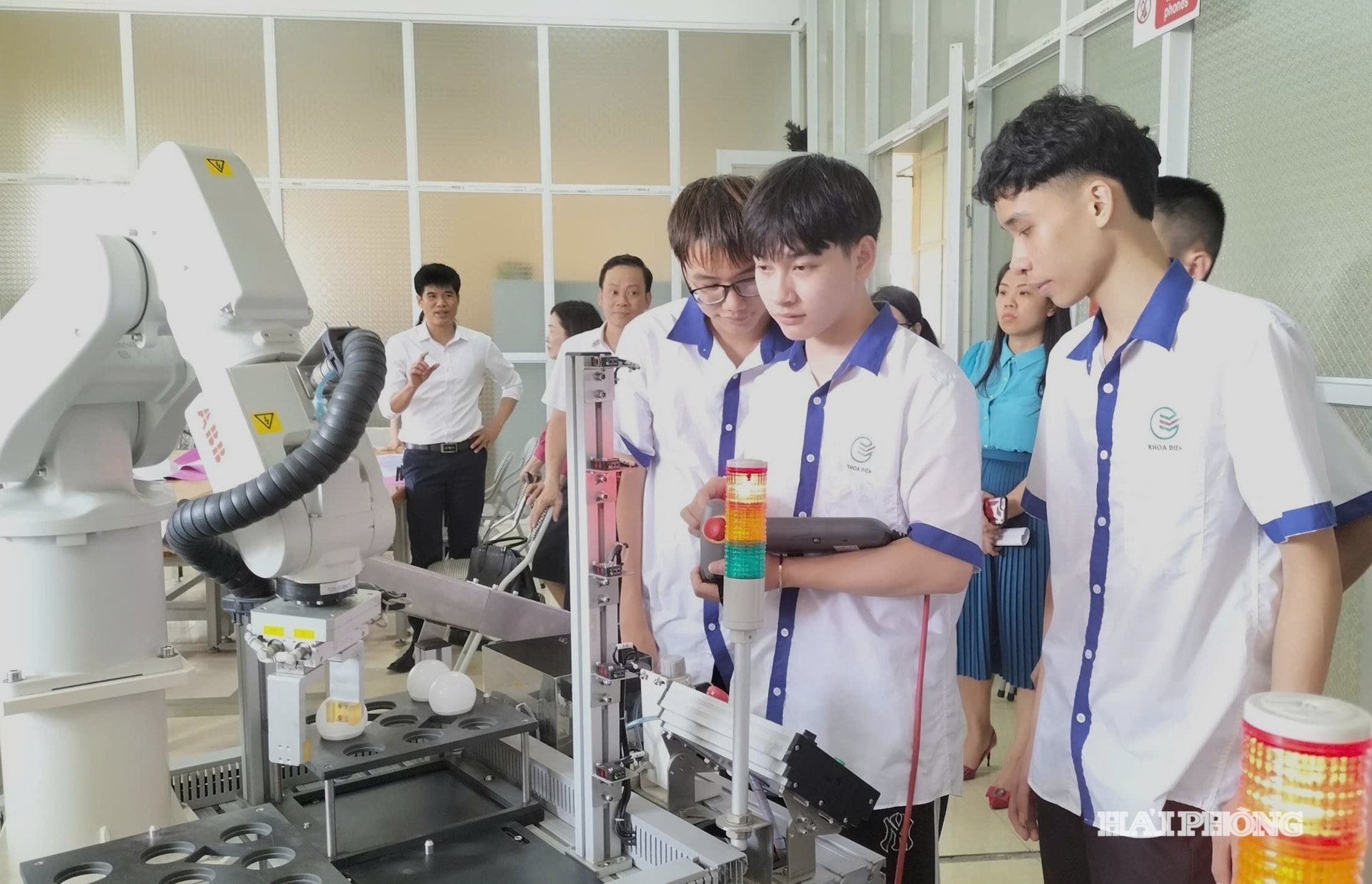
This is a crucial condition for ensuring competitiveness and creating room for breakthroughs for the city in the new development phase.
High demand
According to forecasts from specialized agencies, by 2030, the city will need to add approximately 127,800 workers, mainly focusing on high-knowledge and high-tech fields such as information technology, science and engineering, logistics, healthcare , and high-quality services. This is a huge pressure given that the current quality of human resources has not kept pace with the rate of development.
In reality, many businesses find it relatively easy to recruit enough unskilled laborers, but finding experienced engineers, specialists, and managers is a challenging problem. Some businesses have invested in modern production lines and equipment but cannot utilize them to their full capacity due to a lack of qualified personnel to operate and manage them. Many key positions have to be filled by recruiting from other localities or require lengthy retraining, increasing costs and impacting production and business progress.
Ms. Nguyen Thi Lien, Director of Strategy and Digital Transformation at Viindoo Technology JSC (Hong Bang Ward), said that recruitment practices show that businesses often need 6 to 24 months to retrain their staff.
According to Ms. Lien, Hai Phong does not lack people with technological capabilities, but most have to self-improve and seek opportunities for further education. This shows the necessity of more effective mechanisms for connecting management agencies, businesses, training institutions, and domestic and international support programs, in order to create a foundation for developing high-quality human resources for the city.
In the public sector, the demand for high-quality personnel is also increasing, especially in new fields such as digital transformation, urban management, logistics, and high-quality healthcare. Personnel need not only strong professional expertise but also innovative thinking and the ability to adapt quickly. The first City Party Congress, for the 2025-2030 term, set a vision for 2030: to build Hai Phong into a modern, civilized, ecological, and livable industrial port city of regional significance in Southeast Asia; a pioneer in industrialization, modernization, digital transformation, green transformation, and innovation. This goal places an increasingly high demand for high-quality human resources.
"Rolling out the red carpet" to attract high-quality talent.
Based on that practical need, on December 11, 2025, at the 32nd session of the 16th City People's Council, a Resolution was passed stipulating policies to attract and utilize talented individuals and high-quality human resources in the city until 2030, with a vision to 2050. This is considered a step that inherits previous policies while adjusting and supplementing them to suit the new development requirements of the city after the merger.
According to the resolution, the city is expanding the target group for attracting high-quality human resources, ranging from students who have won national and international awards; outstanding graduates; to those with master's and doctoral degrees, specialist doctors, as well as experts, scientists, and managers with practical skills and experience. Human resources for key sectors such as high technology, semiconductors, artificial intelligence, logistics, and high-quality healthcare are identified as top priorities. Along with expanding the target group, the city is implementing a comprehensive set of support policies regarding training, income, living expenses, housing, and working conditions.
According to Dr. Dinh Thi Dieu Hang, Chairwoman of the Board of Directors of Hai Duong Medical Technical University, in the current context, policies to attract talent are essential, especially for specialized fields like healthcare, where the trend of human resource migration from the public to the private sector is clearly evident. However, besides financial support, the working environment and career development opportunities are the decisive factors for high-quality human resources to feel secure and committed to long-term employment.
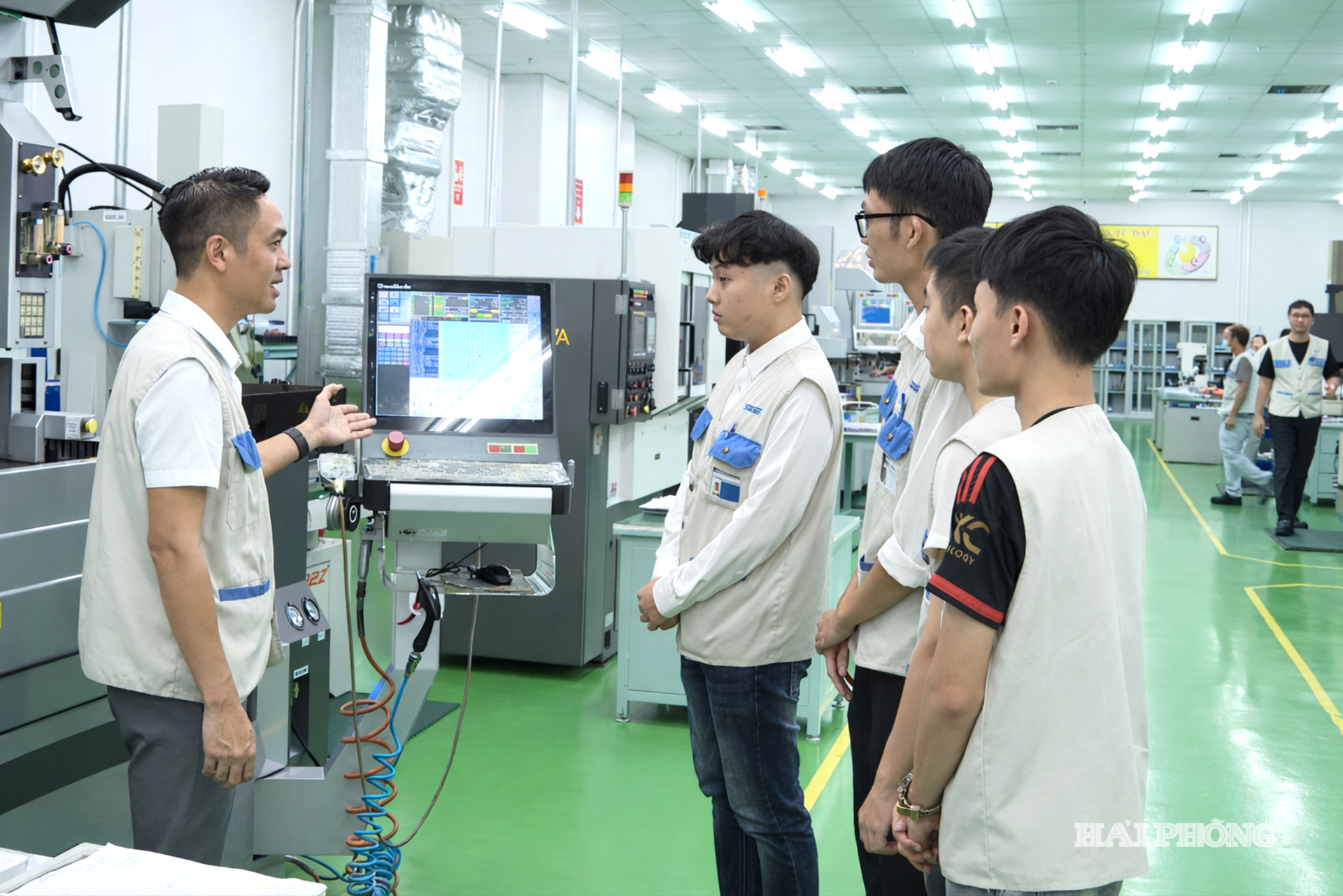
Along with attracting talent from outside, the city continues to focus on improving the quality of its local workforce. The vocational and higher education systems are oriented towards closely aligning with the needs of the labor market and key economic sectors. Currently, the city has 8 universities and 50 vocational training institutions with an increasingly diverse range of professions, many of which are recognized as key national and ASEAN regional occupations.
Associate Professor, Dr. Bui Xuan Hai, Rector of Hai Phong University, assessed that when the curriculum closely aligns with the needs of the job market, the quality of human resources is improved, and conditions are created to attract and retain talent from an early stage. Along with training and recruitment, social welfare is identified as a crucial factor in retaining employees.
In reality, many workers, including highly skilled workers, still face difficulties in housing, healthcare, and education for their children. Recognizing this, Hai Phong is promoting the development of social housing, service infrastructure, and cultural and social facilities around industrial zones and economic zones, creating conditions for workers to feel secure in their jobs, stay long-term, and contribute to the sustainable development of the city.
HAI MINHSource: https://baohaiphong.vn/thu-hut-nhan-luc-chat-luong-cao-534058.html



























































































Comment (0)