

However, determining how to collect fees effectively remains a problem that needs a solution.
Two fee collection models
According to the Vietnam Road Administration, the need for new highway investment capital over the next 10 years will reach nearly 240,000 billion VND, while maintenance capital only meets about 40% of that need.
The workforce for managing and operating expressways is also a challenging issue, with 10,000 workers needed by 2030.
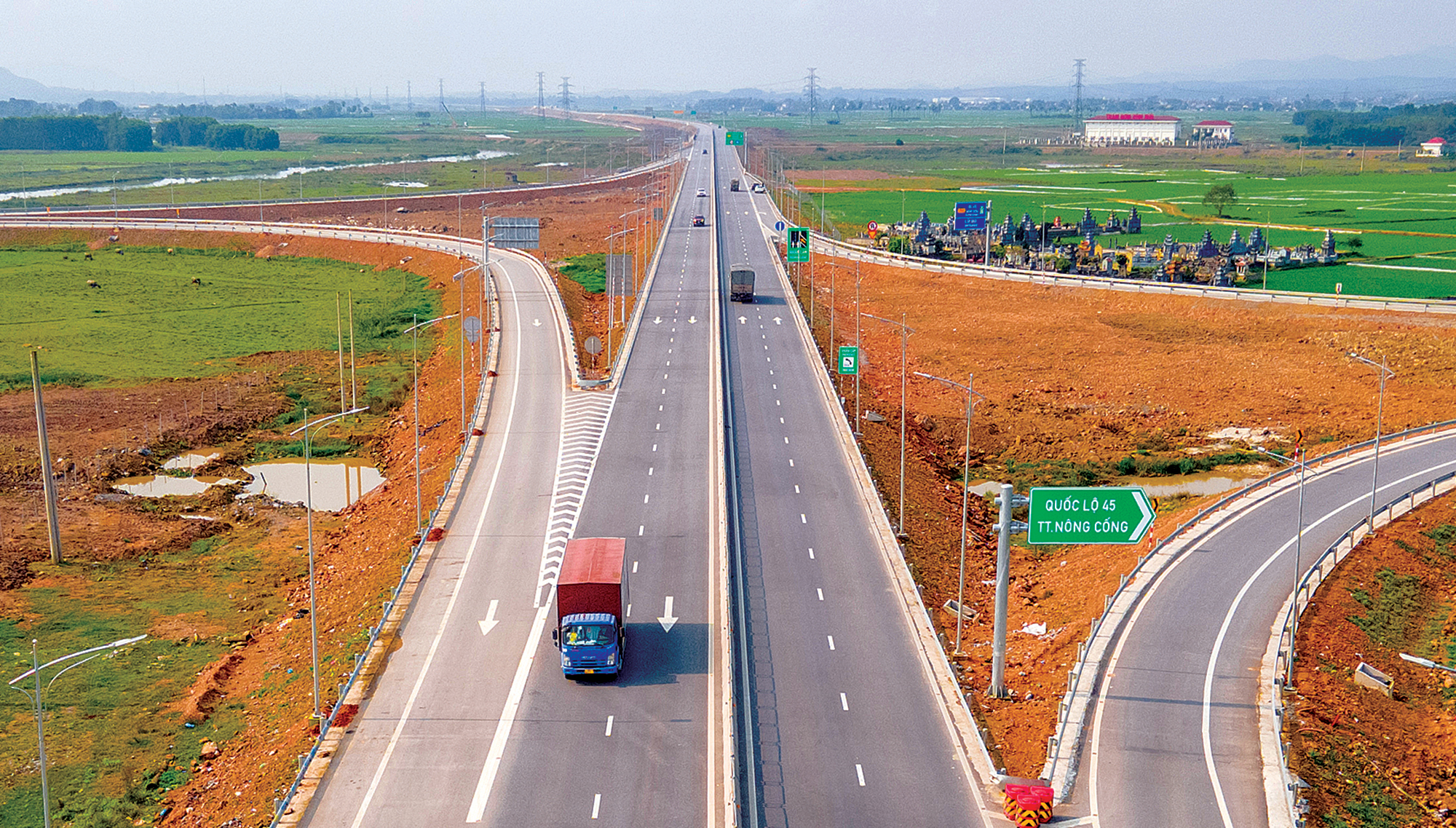
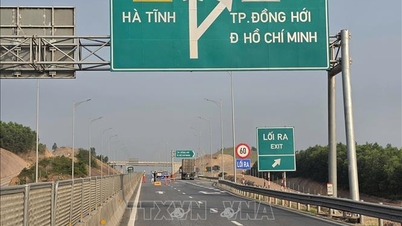
The Road Law recently passed by the National Assembly includes provisions for collecting usage fees from vehicles traveling on expressways invested in, owned, managed, and operated by the State (In the photo: North-South Expressway section from National Highway 45 to Nghi Son). Photo: Ta Hai.
According to Mr. Le Hong Diep, Head of the Infrastructure Management and Maintenance Department of the Vietnam Road Administration, after the investment and construction are completed, the expressway will be handed over to the owner or manager of the project for management, operation and exploitation.
However, many project owners entrusted with managing and operating these highways lack expertise and highly qualified personnel. The allocation of funds for managing and operating the highways has also been untimely and inadequate.
To address this issue, the Road Law (effective from January 1, 2025) has added many new regulations aimed at mobilizing resources for the construction, management, operation, and maintenance of expressways, including provisions allowing the collection of tolls on expressways invested in by the State.
According to Mr. Bui Quang Thai, Director of the Vietnam Road Administration, the current issue is choosing between two forms of management, operation, and toll collection for expressways.
Firstly, the State can organize and implement it itself. Secondly, it can grant the right to manage and operate it to private entities.
According to Mr. Thai, under the first method, the agency managing highway assets, the Vietnam Road Administration, organizes the collection itself.
Through a bidding process, a contractor will be selected to provide toll collection services on the automated non-stop toll collection system platform.
This option has the disadvantage of collecting fees gradually, with the remaining amount going to the state budget after deducting collection costs.
The second method is to tender for highway management under a business-management (O&M) contract.
The investor will be responsible for collecting tolls and managing and maintaining the road. The state sells the right to collect tolls on the expressway for a specified period and receives an immediate sum of money.
This option has many advantages, but it will be difficult to attract investors to highways with low traffic volume.
Public investment, private management?
Analyzing the two models from an investor's perspective, a leader of Phuong Thanh Investment and Transportation Joint Stock Company argued that if the Vietnam Road Administration implements the plan of organizing the collection itself, capital recovery will not be focused, making it difficult to achieve the goal of rapid recovery to have resources for reinvesting in transportation infrastructure projects and works.
According to Article 50 of the Road Law, the State collects tolls for the use of expressways from vehicles traveling on expressways invested in, owned, managed, and operated by the State, including: expressways invested by the State in the form of public investment; and expressways invested in under other forms that are transferred to the State upon completion of the contract.
Regarding the management and use of revenue from highway tolls, the Law stipulates: The road management agency directly responsible for exploiting the assets shall remit the collected fees to the state budget in accordance with the law on fees and charges.
The franchisee collects fees and manages the franchise operation by paying the franchise fee as stipulated into the State budget. Fees collected during the franchise agreement period are not required to be paid into the State budget, except for the portion of revenue that must be shared with the State as prescribed by law.
With the option of selling toll collection rights, investors can count vehicles to make preliminary calculations and consider whether to invest. However, it is easy for traffic volume to increase before toll collection begins, but decrease once tolls are implemented.
In particular, commercial transport vehicles often choose to travel on national highways to save costs, but the financial risks remain.
"The government could consider implementing option 1 for about 1-2 years. After that, based on actual traffic volume, they would sell the right to collect tolls."
Investors can also easily measure and evaluate the effectiveness and stability of traffic flow on the route to make investment decisions.
"This is the most optimal and balanced solution, ensuring that the State does not suffer any losses and investors can also feel secure," this person suggested.
Meanwhile, Associate Professor Tran Chung, Chairman of the Vietnam Association of Road Transport Infrastructure Investors, argues that the model of the State building roads and then selling the right to collect tolls and tendering management under the O&M (Operations, Maintenance, and Repair) model has been effectively applied for a long time in many countries.
In Vietnam, O&M is one of six forms of public-private partnership (PPP) stipulated in the PPP Law, but currently only the BOT investment model has been applied in practice.
According to Mr. Chung, the O&M model has many advantages, such as the state not having to maintain a management and toll collection apparatus, and having an immediate source of funds for reinvesting in new expressways.
The challenge is how to choose a professional contractor with expertise in technology and equipment.
"Public investment and private management is an effective model in many fields, not just transportation."
"With this model, the State manages and supervises the exploitation and operation process through economic contracts and public bidding, clearly defining the rights and obligations between the parties," Mr. Chung said, adding that for expressways with low traffic volume, which are difficult to attract investors, it is necessary to establish appropriate pricing, and the toll collection period can be longer to ensure the financial feasibility for investors.
Transparency and openness regarding fees.
According to Mr. Le Quynh Mai, Vice Chairman of the Board of Directors of Deo Ca Group, the O&M (Owning and Maintenance) approach needs to be diverse and flexible because no two expressways are alike.
The government can select financially capable investors to sell the right to collect tolls for a specific period (5 years, 10 years, or other periods depending on the nature of each highway).
Alternatively, you could choose a contractor to manage, operate, and collect fees, then make periodic payments quarterly or annually.
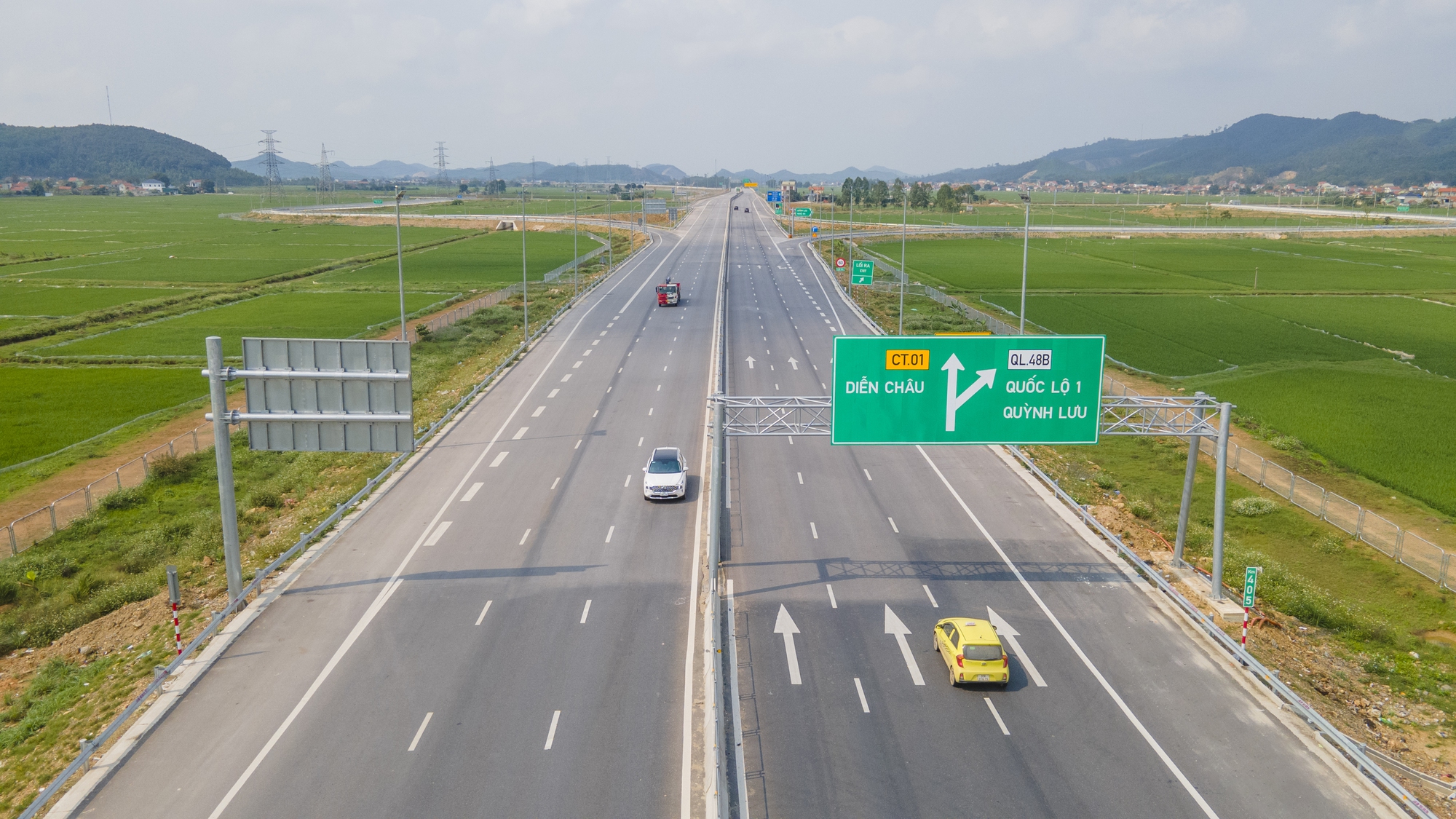
The North-South Expressway section from National Highway 45 to Nghi Son is one of the routes expected to charge tolls. Photo: Ta Hai.
According to National Assembly Deputy Pham Van Hoa, a member of the National Assembly's Law Committee, many countries around the world have already adopted and implemented toll collection on roads invested in by the State.
With two fee collection options available, Mr. Hoa suggested combining both.
Specifically, for busy routes with high traffic volume, the right to collect tolls can be sold, while for routes with low traffic volume, the State should collect the fees.
National Assembly Deputy Pham Van Thinh, a member of the National Assembly's Economic Committee, also believes that both options have their own advantages and disadvantages.
Regardless of the method used, the principle of transparency regarding the fees collected and operating costs must be observed.
"I lean towards the option where the State directly collects the fees, only hiring an operating unit to collect them, and then paying them a percentage of the revenue."
"If we sell the toll collection rights outright, it will be difficult to attract domestic investors. Because the amount of money that businesses have to spend to bid for toll collection rights is very large," Mr. Thinh said.
There should be a clause to adjust bid prices.
Considering option 2 to be appropriate, expert Le Xuan Nghia, a member of the National Financial and Monetary Policy Advisory Council, affirmed that this option ensures both market principles and the goal of "the State and the people working together," while also being transparent and reducing the burden on management agencies.
These routes are expected to charge tolls.
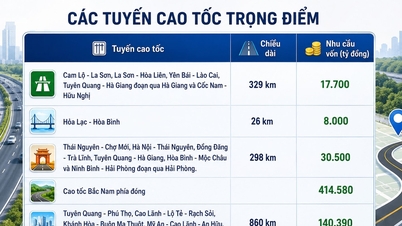
The expressways currently in operation include: Lao Cai - Kim Thanh, Hanoi - Thai Nguyen, Ho Chi Minh City - Trung Luong, Cao Bo - Mai Son, Mai Son - National Highway 45, National Highway 45 - Nghi Son, Nghi Son - Dien Chau, Cam Lo - La Son, La Son - Tuy Loan, La Son - Hoa Lien, Vinh Hao - Phan Thiet, Phan Thiet - Dau Giay, Ben Luc - Trung Luong, My Thuan 2 Bridge and its approach roads.
Routes under construction until 2025: Bai Vot - Ham Nghi, Ham Nghi - Vung Ang, Vung Ang - Bung, Bung - Van Binh, Van Ninh - Cam Lo, Hoa Lien - Tuy Loan, Quang Ngai - Hoai Nhon, Hoai Nhon - Quy Nhon, Quy Nhon - Chi Thanh, Chi Thanh - Van Phong, Van Phong - Nha Trang, Can Tho - Ca Mau.
However, he noted that to attract investors, transparency and simpler procedures are needed, as this is not an overly complex issue: "We just need a technological solution to know exactly how much fees are collected and the annual revenue of investors," Mr. Nghia said, adding that instead of allowing consortiums of contractors to bid, individual contractors should be selected.
Because the bidding process is to select the administrator, not the technical field or the supplier, so there's no possibility of "borrowing" each other's expertise.
Sharing the same view on option 2, Mr. Nguyen Quoc Viet, Deputy Director of the Vietnam Institute for Economic and Policy Research (VEPR), explained that only private investors can calculate profits most accurately and be responsible for the money they invest.
According to Mr. Viet, drawing on lessons learned from previous BOT toll stations, it is advisable to assign independent consultants to research and develop a plan, after which the Ministry of Transport will set criteria and make appropriate adjustments.
"Everything has international experience; the most important thing is to gather feedback from stakeholders to identify obstacles and determine what changes are needed," Mr. Viet said.
Option 2 is also the choice of Dr. Nguyen Bich Lam, former Director General of the General Statistics Office (Ministry of Planning and Investment).
According to him, this option is a win-win situation: "With private management, they can quickly decide on repairs and maintenance without having to go through many procedures, and the State can collect a sum of money right away."
However, Mr. Lam noted that a clause regarding bid price adjustments is needed: "Suppose after the bidding, the number of vehicles increases, and the investor's revenue increases, what happens then? Or what if the investor's revenue is lower, leading to losses, how will that be handled?"
According to him, a certain threshold for price increases should be set; if the increase exceeds this threshold, the excess amount must be returned to the state budget. Similarly, price decreases should also be within a certain range, and investors should report promptly so that solutions can be considered before it's too late.
Regarding the impact on the CPI, Mr. Lam stated that this would certainly be carefully considered: "The CPI issue is very small compared to the nature of the fee collection."
How do other countries charge tolls on highways?
Some countries around the world invest in highway development using public funds. After commissioning, tolls are collected to cover operating, maintenance, and investment costs, as well as to reinvest in expanding the highway network.
Currently, China is implementing toll collection on approximately 150,000 km of expressways using automated non-stop toll collection technology.
China employs a model of transferring toll collection rights for expressways. After the transfer, the receiving party collects tolls and operates the expressway.
The term for transferring the right to collect fees is subject to agreement, and shall not exceed the number of years stipulated by the State.
In the United States, the government owns and is responsible for investing in and constructing highways, and for organizing the bidding process.
Private companies are responsible for maintaining, collecting tolls, and operating federally funded highways through concession agreements for periods ranging from 5 to 15 years.
State highways are built with federal funding through the Highway Trust Fund, which is formed from fuel tax revenue across the federal government.
In South Korea, the government has established a model of state-owned highway corporations, or state-owned highway companies.
The corporations are responsible for developing highway development plans.
To accelerate highway development, South Korea implemented a model where the government subsidized 50% of the total investment and the corporation was responsible for the remaining 50%.
State-funded investment capital is used to pay for land compensation and site clearance for the project and to invest in the construction of the road.
For expressways constructed and put into operation by businesses, the corporation will directly manage, operate, and collect tolls.
All of this revenue is collected into a fund and used for the management and maintenance costs of the route.
Trang Tran
Source: https://www.baogiaothong.vn/thu-phi-cao-toc-do-nha-nuoc-dau-tu-the-nao-192240702055945127.htm

































































































Comment (0)