

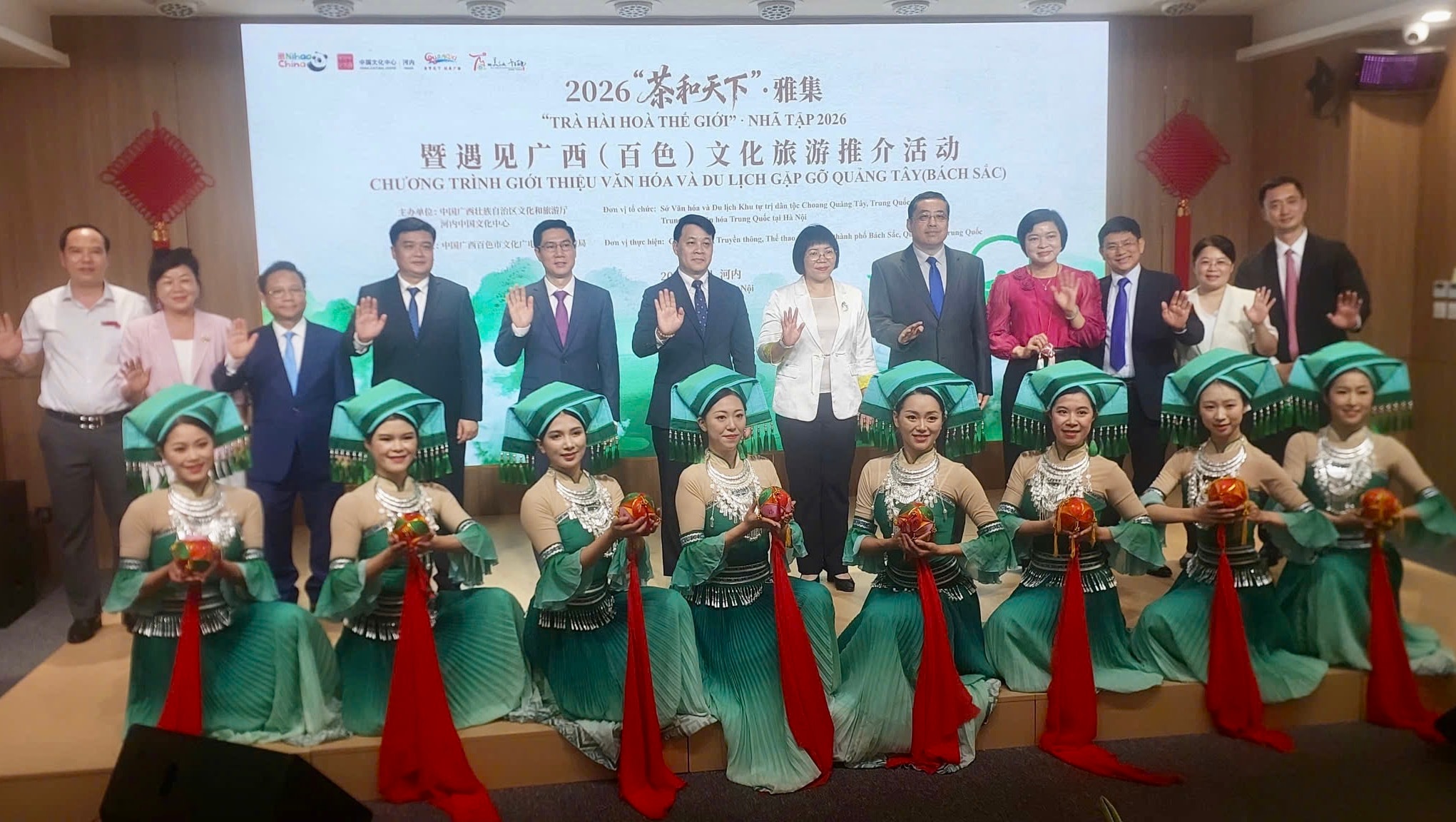
The program was organized by the Department of Culture and Tourism of the Guangxi Zhuang Autonomous Region (China) in collaboration with the Chinese Cultural Center in Hanoi on May 14th.
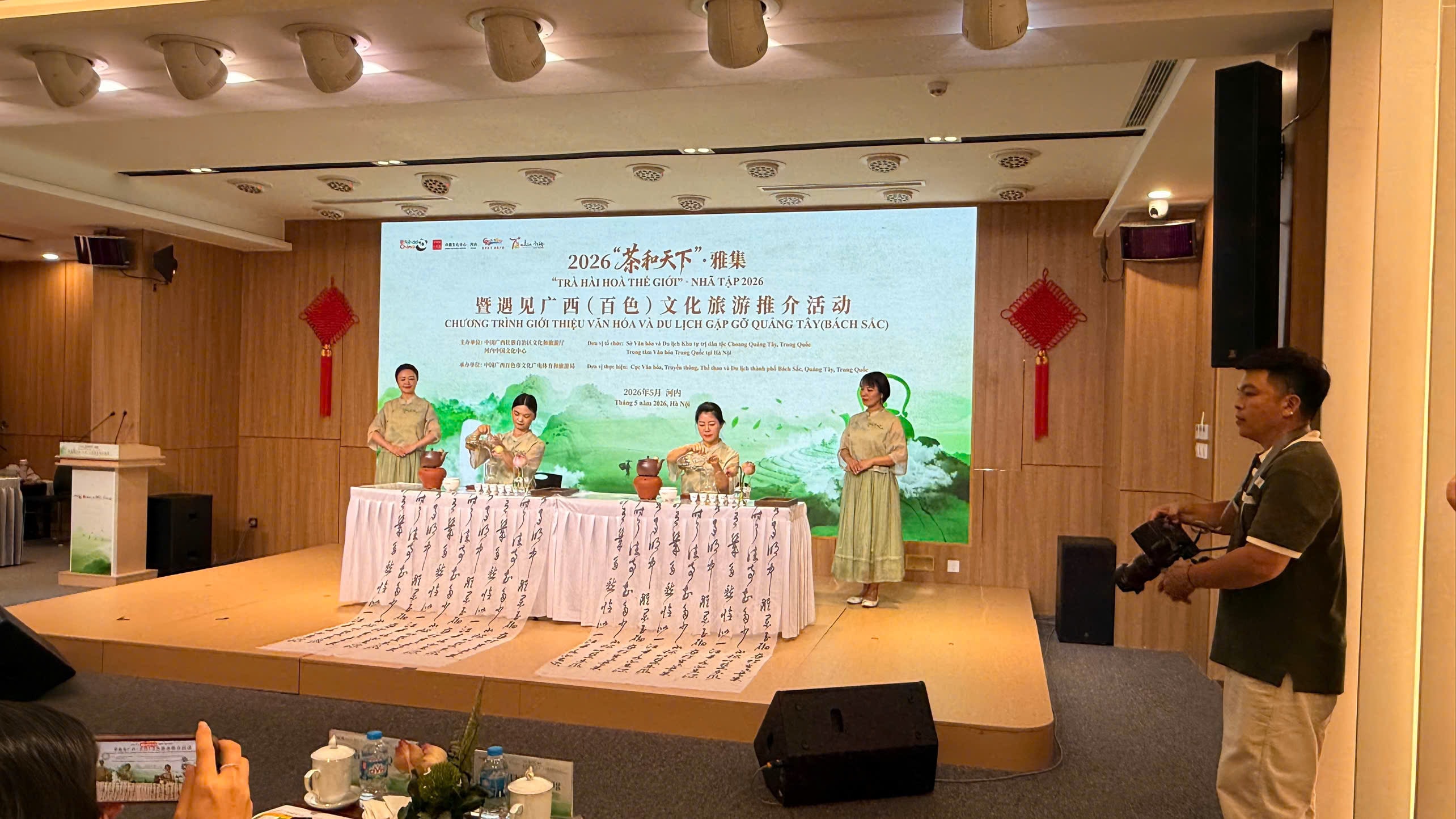
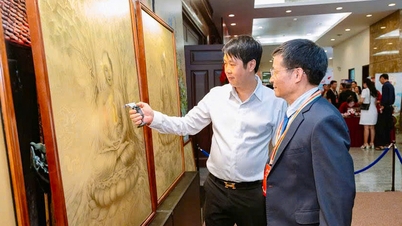
The Chinese Cultural Center in Hanoi , together with the Guangxi (Baise) cultural and tourism delegation, brings to Hanoi the unique features of Zhuang ethnic culture, historical revolutionary sites, and high-quality ecological tea from China; especially designed four experiential spaces including: "Tea Exchange Area," "Intangible Cultural Heritage Experience Area," "Cultural and Tourism Exhibition Area," and "Guangxi Flavor Tasting Area."
Speaking at the event, Counselor of the Chinese Embassy in Vietnam, Xing Jiuqiang, said that Guangxi has majestic mountains and rivers, beautiful scenery, rich folk customs, and a diverse culture; it is a gateway for exchanges and cooperation between China and Vietnam, and also an important bridge to promote open exchanges between China and ASEAN. In particular, it is also a red soil region preserving the revolutionary footprints of President Ho Chi Minh ...
Statistics from the Vietnam National Tourism Administration show that China is one of the largest tourist markets for Vietnam. In 2025, more than 5.28 million tourists from mainland China visited Vietnam, accounting for 25% of the total international tourist market share. In the first four months of 2026, Vietnam welcomed more than 1.85 million tourists from mainland China (out of a total of 8.8 million international tourists).
According to Nguyen Tien Dat, Vice President of the Hanoi Tourism Association, compared to other Southeast Asian countries such as Singapore, Malaysia, and Thailand, Vietnam has the advantage of being closest to China. Therefore, in addition to air and sea routes, there are also land routes for tourists entering the two countries, which are both convenient and less expensive.
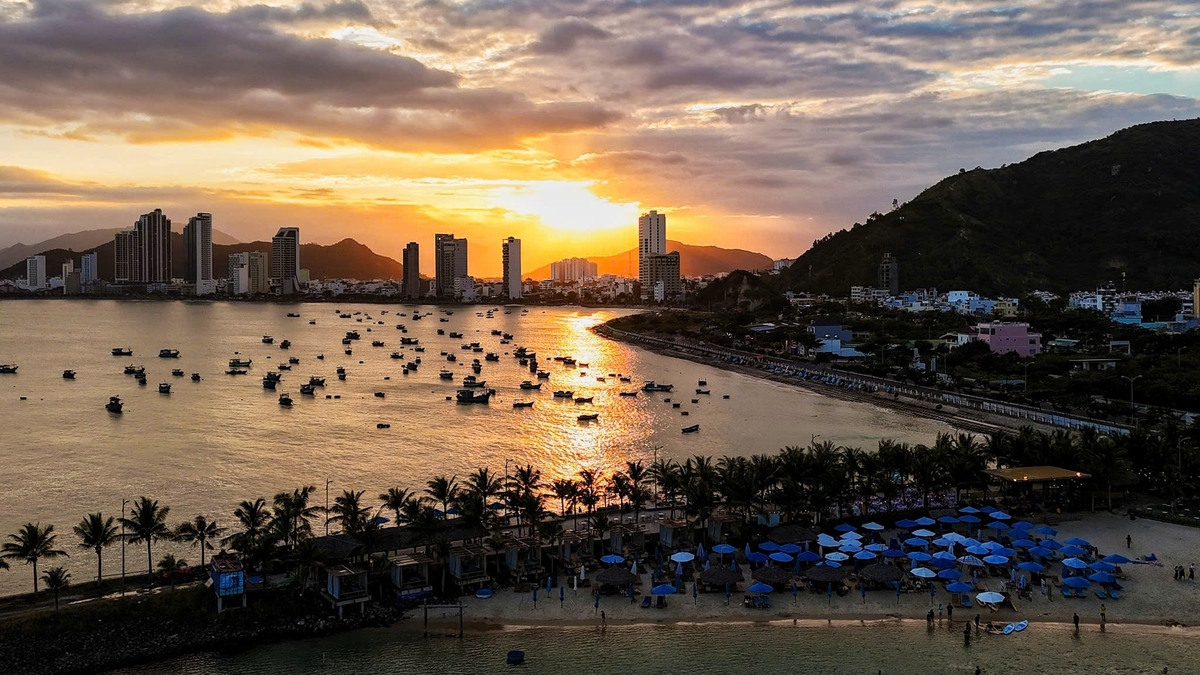
Pham Anh Vu, Deputy General Director of Viet Travel Company, further informed that in Vietnam, Chinese tourists mainly visit coastal areas and high-end resorts such as Da Nang, Nha Trang, and Phu Quoc. In addition, tours exploring Vietnamese culture and history in Hanoi and Hue also attract a large number of Chinese tourists.
At the local level, according to Nguyen Tran Quang, Deputy Director of the Hanoi Department of Tourism, in 2025, the capital city is expected to welcome 601,658 Chinese tourists, a 33.6% increase compared to the previous year, accounting for approximately 11% of the total number of international tourists to Hanoi. In the first four months of 2026, the number of Chinese tourists to Hanoi reached 272,559, a 59% increase compared to the same period last year.
These positive figures show that there is still great potential for cooperation and tourist exchange between Hanoi in particular and Vietnam in general with localities in China; at the same time, they affirm the attractiveness of Vietnamese destinations to Chinese tourists as well as the strong recovery of tourism exchange activities between the two countries.
The "Vietnam-China Tourism Cooperation Year 2026-2027" is a significant milestone, opening up many new opportunities for the tourism industry of both countries in general and for localities in particular in promoting more comprehensive, effective, and sustainable cooperation.
Based on this, the Hanoi Department of Tourism and the Vietnam National Tourism Administration wish to continue strengthening cooperation with agencies, units, and localities in China, especially Baise City, in tourism promotion activities, market information exchange, travel business networking, tourism product development, and organizing cultural and tourism exchange programs between the two sides.
Source: https://daibieunhandan.vn/thuc-day-luong-khach-hai-chieu-viet-nam-trung-quoc-10416981.html



































































Comment (0)