

- Bringing clean food to every family meal.
- Stronger penalties are needed to prevent unsafe food.
- Food management right from the production stage.
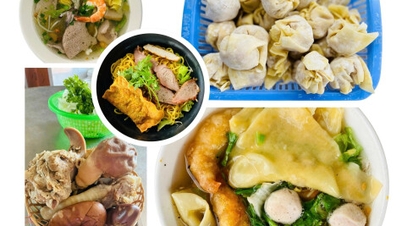
In the hustle and bustle of life, many parents choose to feed their children pre-prepared meals from restaurants and roadside stalls before school – places where food safety and hygiene are almost completely neglected. Even more concerning, in the communal kitchens of kindergartens and boarding schools, the quality control of incoming food such as meat, eggs, fish, and vegetables still relies primarily on "trust" between the supplier and the school, rather than being clearly inspected by specialized agencies. This loophole allows contaminated food to easily infiltrate students' daily meals.

“To provide daily meals for the children, we mainly have long-term contracts with some local slaughterhouses and some farmers in the commune who we know rarely use pesticides or growth hormones in their farming and livestock raising. The assessment of food safety and hygiene is mainly based on ‘trust,’ because honestly, it’s very difficult for us to know what constitutes clean food…,” shared Ms. Tran Thi Trinh, a kindergarten teacher at Khanh Hung Commune Kindergarten, with concern.
According to health experts, consuming foods with excessive additives, preservatives, or residues of antibiotics and pesticides can lead to many unpredictable consequences in the long run, especially for young children during their developmental years, such as: acute poisoning (which can lead to death if not treated promptly); cancer; and even infertility.
Dr. Huynh Thanh Su, Head of the Department of Environmental Health, School Health and Occupational Diseases at the Center for Disease Control (CDC) of Ca Mau province, stated: “Children regularly consuming contaminated food, especially food containing high levels of toxins and heavy metals such as arsenic, lead, and mercury, can damage the liver, kidneys, and nervous system. Furthermore, it can cause anemia, bone marrow failure, and leukopenia. More seriously, it can even lead to cancer. Because young children have relatively weak immune systems, consuming contaminated food weakens their resistance, making them more susceptible to illness than adults, especially certain incurable and chronic diseases.”

In recent times, the country has recorded numerous cases of food poisoning, leading to heartbreaking consequences. However, food safety control seems to remain too lax. Public awareness campaigns are necessary, but merely advocating, advising, or issuing warnings as administrative penalties is insufficient to eradicate unsafe food. The fundamental solution must begin with a strict and rigorous inspection and control mechanism right from the initial stages, along with improving the ethics and responsibility of food businesses. Simultaneously, independent inspections of school cafeterias need to be strengthened; relying solely on "trust" as a measure of food safety is unacceptable.
Phuong Vu
Source: https://baocamau.vn/thuc-pham-sach-cho-mua-tuu-truong-a122152.html




![[Photo] National Assembly Chairman Tran Thanh Man successfully concludes his participation in IPU-152](https://vphoto.vietnam.vn/thumb/1200x675/vietnam/resource/IMAGE/2026/04/18/1776502638199_vna-potal-chu-tich-quoc-hoi-ket-thuc-tot-dep-chuong-trinh-tham-du-ipu-152-8709975-jpg.webp)





































































Comment (0)