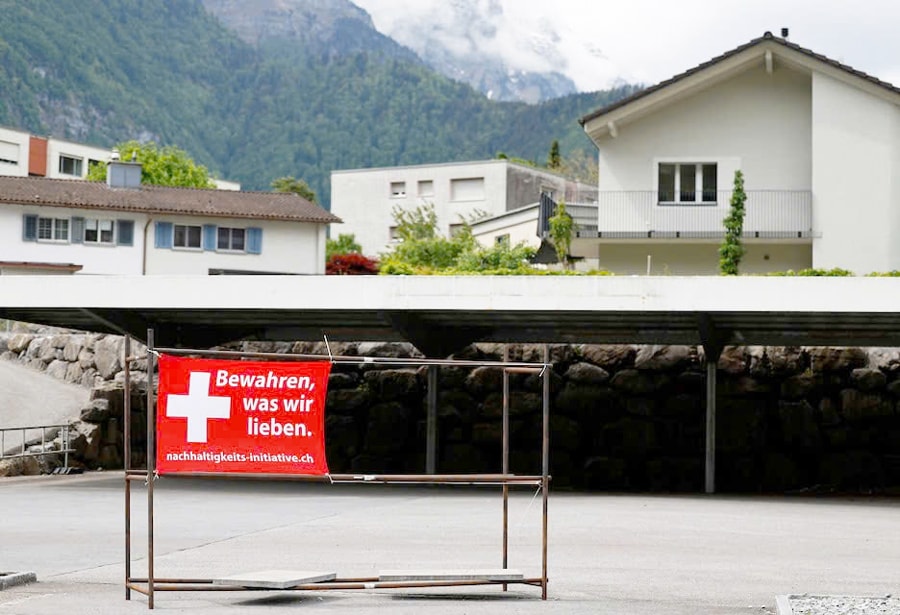
On June 14th (local time), Swiss voters will vote on an initiative proposed by the Swiss People's Party (SVP) that the country's permanent resident population should not exceed 10 million by 2050. If the population reaches 9.5 million, the Federal Government will implement immigration restrictions, tightening regulations on asylum and family reunification. If these measures prove ineffective, Switzerland will be forced to consider terminating its Free Movement Agreement with the European Union (EU).
The proposal comes as Switzerland's population has grown from 7.2 million in 2000 to approximately 9.1 million today, representing an increase of nearly 27% in 25 years. Much of this increase has come from immigration following the free movement agreement with the EU, which came into effect in 2002.
According to the SVP, the current rate of population growth is putting immense pressure on the nation. The party argues that mass immigration is causing housing shortages, soaring rents, traffic congestion, strain on public services, and environmental degradation. In its campaign message, the SVP emphasizes that this is not an anti-foreigner issue, but rather a story about sustainability, national sovereignty , and the ability to control the country's future.



However, behind these concerns lies a major paradox of modern Switzerland. Its openness to international labor is one of the key foundations of its economic success. Foreigners now make up nearly 28% of Switzerland's permanent population and play a vital role in many sectors, from finance, pharmaceuticals, and scientific research to tourism, hospitality, and healthcare. Over 73% of immigrants come from EU and European Free Trade Association (EFTA) countries, primarily for employment.
A recent study also showed that nearly 40% of new businesses in Switzerland are founded by foreigners. Meanwhile, like many other developed countries, Switzerland is facing an aging population and a low birth rate. Business organizations warn that restricting immigration could exacerbate labor shortages, directly impacting the competitiveness of the economy.
This initiative not only impacts the labor market but also risks altering relations between Switzerland and the EU. The Free Movement of People Agreement is one of the pillars of the bilateral agreement network between the two sides, covering areas such as trade, transport, scientific research, and market access. Experts warn that if Switzerland terminates the free movement of EU citizens, many other agreements could also be affected under the existing legal association mechanism.
The current debate also reflects a broader trend unfolding in Europe: right-wing populist parties are increasingly exploiting demographic, immigration, and national identity concerns to advance more isolationist policies. For the SVP, population limits are not merely a tool for controlling immigration, but also a symbol of protecting Swiss sovereignty and uniqueness from supranational structures.
However, many experts argue that building long-term policies based on a fixed number like 10 million is a risky approach. Factors such as economic growth, geopolitical instability, war, epidemics, or demographic changes can significantly alter future migration trends. A rigid limit could leave Switzerland with the flexibility necessary to adapt to such changes.



Regardless of the final outcome, this referendum has exposed a core question for Switzerland: How to maintain quality of life, identity, and social control while retaining the elements that have contributed to the prosperity of one of Europe's most successful economies? It's not just a debate about population size, but a choice about Switzerland's future path in the coming decades: Continue to be an open economy closely integrated with Europe, or prioritize population control even at the cost of some economic advantages and international integration.
Source: https://hanoimoi.vn/thuy-si-trung-cau-dan-y-ve-gioi-han-dan-so-bai-toan-giua-bao-ve-ban-sac-va-duy-tri-thinh-vuong-1160357.html







































![[Live] Hanoi in motion: Preventing "Holiday Contracts" from becoming a trap.](https://vphoto.vietnam.vn/thumb/402x226/vietnam/resource/IMAGE/2026/06/28/1782648132075_2026-06-28-at-18-27-25.png)





































![[INFOGRAPHICS] Can Tho implements the Strategy for Ethnic Affairs until 2030, with a vision to 2045](https://vphoto.vietnam.vn/thumb/402x226/vietnam/resource/IMAGE/2026/06/28/1782658308447_1782658217.webp)