

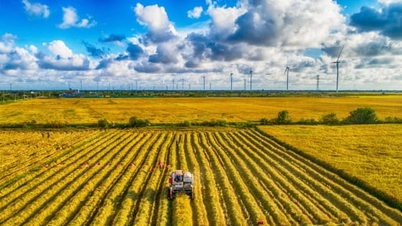
For the 2024-2025 winter-spring crop season, the entire province will plant 25,500 hectares of rice. Currently, the weather is gradually warming up, which is quite favorable for crop development. The early rice crop is beginning to enter the tillering stage, so farmers throughout the province are carrying out thinning, replanting, and applying the first round of fertilizer to accelerate the growth of crops, especially rice.
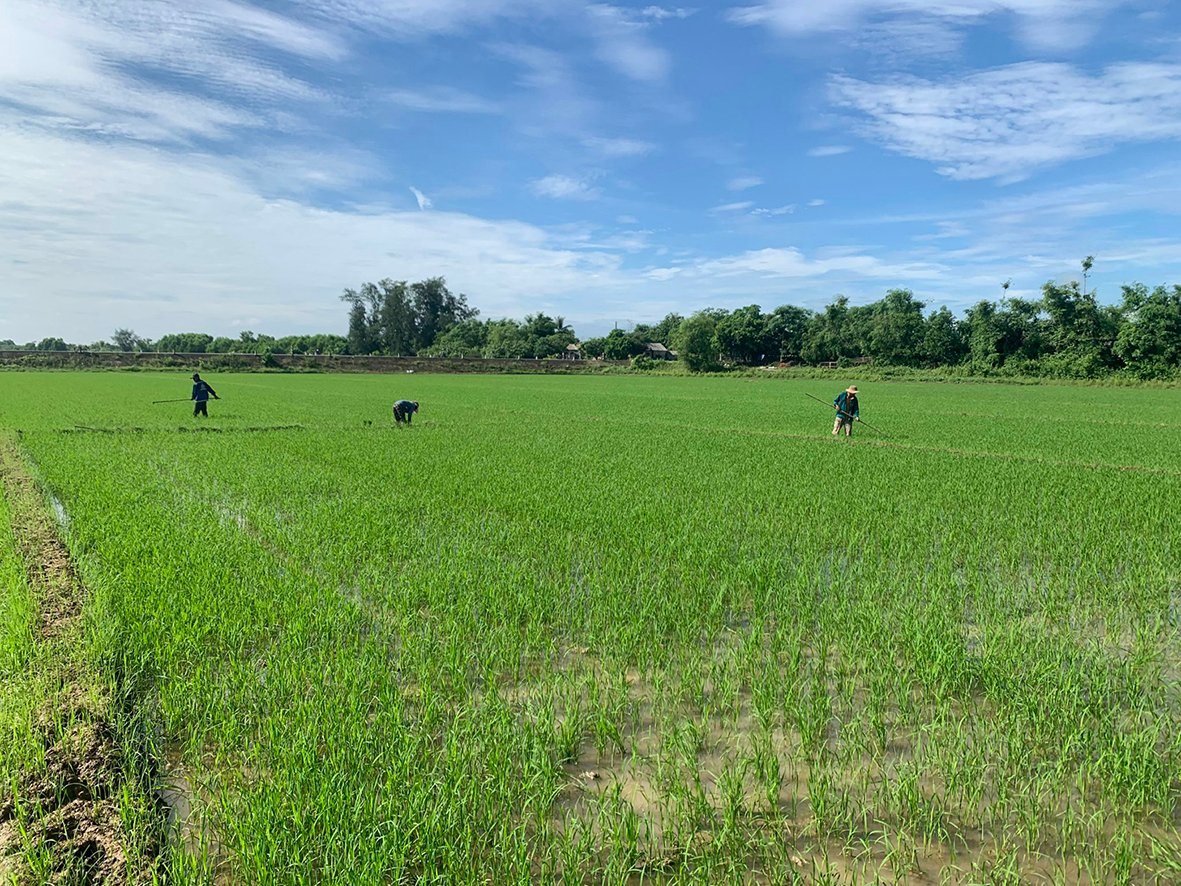
Farmers in Hai Que commune, Hai Lang district, are thinning out rice seedlings for the winter-spring crop - Photo: TCL
Right from the beginning of the year, after the completion of the winter-spring rice planting season, the Department of Agriculture and Rural Development and local authorities have provided close guidance to farmers, encouraging them to actively care for their crops. Early in the season, cold spells occurred when the crops had just been sown, affecting their development, especially rice, which experienced slower growth.
To proactively manage production and accelerate crop growth, districts, towns, cities, and units within the provincial agriculture and rural development sector have strengthened the deployment of personnel to the grassroots level to direct production, inspect, and guide farmers in implementing crop care solutions; promptly detecting pests and diseases on crops to take effective control measures.
For rice cultivation, it is necessary to regulate the water level in the field appropriately, avoiding excessively high levels. Water should only be applied lightly, about 1-2 cm, especially for newly sown rice, to promote good tillering. Increase the use of growth stimulants and foliar fertilizers such as potassium humate, atolic acid, and super potassium to help the rice plants withstand unfavorable weather conditions and shorten the growing season.
During days when temperatures drop below 15°C, absolutely do not apply nitrogen fertilizer to rice plants. Instead, supplement with wood ash, well-rotted manure, and foliar sprays of phosphorus and potassium fertilizers... creating favorable conditions for strong, concentrated tillering and healthy growth. On warm, sunny days, take advantage of the opportunity to thin out seedlings to promote faster development of the rice plants.
Besides rice, localities are currently accelerating the planting of dryland crops such as peanuts, corn, and cassava. For short-term dryland crops, industrial crops, and fruit trees, trenches are being dug to prevent waterlogging; supplementary application of well-rotted manure, phosphorus fertilizer, potassium fertilizer, cooled wood ash, and micronutrient fertilizers is being done for vegetable crops that are not yet ready for harvest.
Carry out weeding, fertilization, and replanting in areas where peanut and corn density is low. Simultaneously, intensify inspections to detect and promptly address pests and diseases. When weather conditions are favorable, increase care and balanced fertilization for pepper plants, such as: increasing the use of decomposed organic fertilizer, microbial preparations, potassium and phosphorus fertilizers, and spraying foliar fertilizers containing Fe, Bo, Ca, Cu, B, Zn... Lightly till the soil, breaking up the surface crust under the canopy to improve soil aeration, repair damage, and regenerate new roots to prevent cracking, fruit drop, and flower drop.
Carry out maintenance during dry, warm weather, collecting diseased plants in the garden for burning. Pay attention to creating good drainage ditches to limit humidity in the pepper garden during heavy and prolonged rains; focus on controlling major pests and diseases such as: sudden wilt, slow wilt, anthracnose, nematodes... Regularly inspect the fruit orchard to promptly drain water, detect and effectively treat pests and diseases.
The Department of Agriculture and Rural Development has also directed its subordinate units, such as the Crop Production and Plant Protection Sub-Department and the Agricultural Extension Center, to strengthen close coordination with localities in directing production. At the same time, they have assigned technical staff to closely monitor the situation at the grassroots level, guiding measures for caring for and controlling pests and diseases on various crops.
The provincial Department of Agriculture and Rural Development and local authorities also pay attention to disseminating information to the people about weather developments and technical measures for care and pest control, helping people understand and implement them in the production process to achieve the highest efficiency.
Information and communication work is carried out through many channels, especially on mass media such as Quang Tri Newspaper, the Provincial Radio and Television Station, and local stations to promptly publish and broadcast articles on weather developments, production guidance; technical measures for caring for winter-spring crops; disaster and disease prevention and control for various crops... so that grassroots officials and farmers are aware and comply with all directives from specialized agencies and local authorities.
Farmers throughout the province are strictly adhering to the close guidance of the agricultural sector and local authorities on winter-spring crop production, focusing on high-investment winter-spring production to promote good growth of crops.
Taking advantage of favorable weather conditions and the guidance of the government and relevant agencies, farmers are highly conscious of their agricultural work, focusing on caring for crops to develop high resistance and minimize the negative impact of unfavorable weather, thereby promoting the highest possible yield for the 2024-2025 winter-spring crop.
Tran Cat Linh
Source: https://baoquangtri.vn/tich-cuc-cham-care-cac-loai-cay-trong-vu-dong-xuan-191308.htm

![[Photo] Prime Minister Pham Minh Chinh presides over a meeting on private sector economic development.](/_next/image?url=https%3A%2F%2Fvphoto.vietnam.vn%2Fthumb%2F1200x675%2Fvietnam%2Fresource%2FIMAGE%2F2025%2F12%2F20%2F1766237501876_thiet-ke-chua-co-ten-40-png.webp&w=3840&q=75)


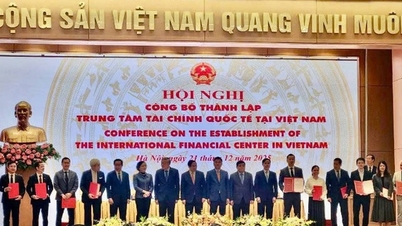
![[Photo] Prime Minister Pham Minh Chinh presides over the conference announcing the establishment of the International Finance Centre in Vietnam.](/_next/image?url=https%3A%2F%2Fvphoto.vietnam.vn%2Fthumb%2F1200x675%2Fvietnam%2Fresource%2FIMAGE%2F2025%2F12%2F21%2F1766309817714_ndo_br_dsc-3400-jpg.webp&w=3840&q=75)






































































Comment (0)