In general, regarding the literature of Southern Vietnam during the early period of the Quốc ngữ script, there are still many authors whose works have been overlooked or not thoroughly discussed in current research; or, even if known, their works are not fully understood. Among these, I would like to mention the poet Nguyễn Liên Phong, whose recent reprints of his books, "Điếu cổ hạ kim thi tập" and "Nam Kỳ phong tục nhân vật diễn ca ," contribute to a better understanding of the customs, history, and prominent figures of Southern Vietnam in the past.
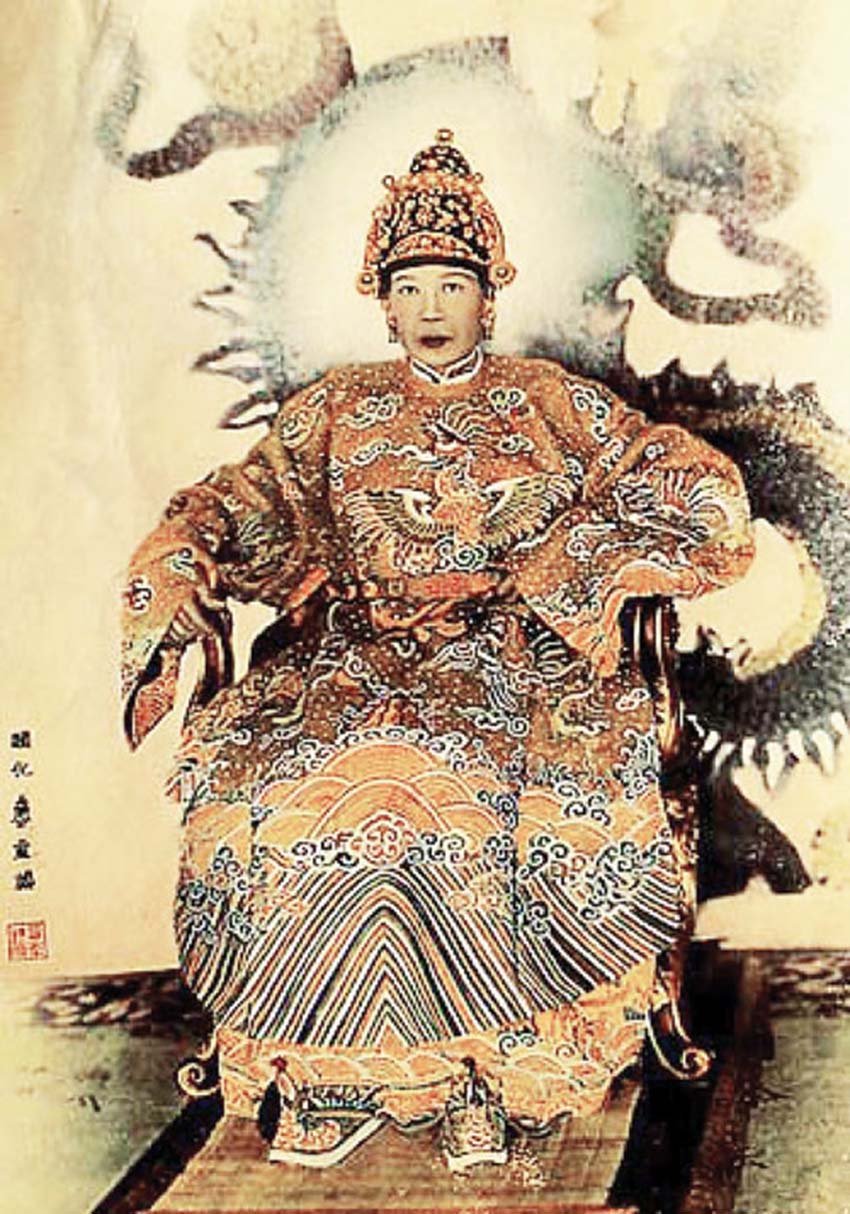
Empress Dowager Từ Dũ
However, in the unpublished posthumous work "To Man Hoa Dinh Tung" by Mr. Vuong Hong Sen, another work by Mr. Nguyen Lien Phong, " Tu Du Empress Dowager ," published in 1913, is mentioned. Based on this book, Mr. Sen recounted the life of Empress Tu Du, and we find some interesting details. According to it, in the past, in Go Cong - the birthplace of Empress Tu Du - there was a couplet passed down:
Le Thuy Trinh Tuong Thoai
Quy Khau Truc Phuoc Co
(Sweet water brings good fortune)
Turtle Hill, a blessed land.
This sentence refers to an event that took place in Go Cong in 1810, on the 19th day of the 5th lunar month, when the wife of Duke Pham Dang Hung gave birth to a daughter named Pham Thi Hang, who later became Empress Dowager Tu Du, wife of Emperor Thieu Tri, mother of Emperor Tu Duc, and died in 1902 during the reign of Emperor Thanh Thai, at the age of 92. Empress Tu Du was the second woman from the South to become empress under the Nguyen dynasty: before her was Ho Thi Hoa - wife of Emperor Minh Mang; and after her was Empress Nam Phuong - wife of Emperor Bao Dai.


When Empress Từ Dũ was 12 years old, her mother fell ill, and she tirelessly attended to her, taking care of her and providing medicine day and night. When her mother passed away, she wept incessantly. Her reputation spread far and wide. In the capital, Empress Thuận Thiên Cao – also known as Trần Thị Đang, wife of Emperor Gia Long and mother of Emperor Minh Mạng – also heard of her.
One day, Empress Cao summoned the Minister of Rites, Pham Dang Hung, to her presence and said, "I have heard good things about your daughter. I allow you to bring her to the palace so I can see her face."
At that time, in 1824, the daughter of Duke Nguyen Van Nhan of Kinh Mon, Consort Le, was also summoned to the palace. Both beauties had the chance to be chosen by the king to later become the consort for the eldest son, Emperor Mien Tong. Between these two beauties, both talented and virtuous, whom would Emperor Minh Mang choose and how would he make the choice? One day, Emperor Minh Mang bestowed upon each a silk robe with a gold embroidered collar. When they were about to leave, Empress Cao gave each a gold button, one carved with a phoenix, the other with a branch of flowers, but sealed it with paper and prayed to heaven: "Whoever receives the one with the phoenix will have children first."
Then, a female attendant was sent to bestow gifts, instructing each person to choose one envelope, but not to open it; they were to present it as is. She yielded to Consort Ling first, and when she opened the package, she received a button carved with flowers; she herself received a button carved with a phoenix. Because of this, she became the "intimate companion" of the eldest prince, Mien Tong. In 1841, Emperor Minh Mang passed away, and Mien Tong ascended the throne, taking the reign name Thieu Tri.
In his posthumous writings, Mr. Sển remarked: "King Thiệu Trị was a good king, but unfortunately he did not live long, reigning for only seven years. He was gentle but hot-tempered. Historical accounts say he greatly admired Western-style porcelain, particularly hexagonal and octagonal pieces, pen holders in the style of French soap dishes (with octagonal bases), and tobacco pipes adorned with nine dragons. When the Western army destroyed Thuận An, he flew into a rage, ordering the destruction of Western-style porcelain, venting his anger on inanimate objects—a waste of precious, inanimate items."
This interesting detail, to some extent, reflects the "loyal and patriotic" mentality of the Vietnamese people at that time. As we know, later, when Southern Vietnam fell to the French colonialists, it is said that Mr. Do Chieu hated the enemy so much that he refused to use French soap, instead using only the traditional method of washing clothes with ash water, and refused to walk on the asphalt roads built by the French...
Empress Dowager Từ Dũ's name will be remembered for generations to come.
Scholar Vương Hồng Sển continued: "Regarding the story of Empress Từ Dũ, let me tell you that: Emperor Thiệu Trị had a habit of reading history books, sometimes reading until midnight without resting, and she would still attend to him, sometimes only being allowed to have her evening meal when the rooster crowed at dawn… She was intelligent and quick-witted, and had an excellent memory. She knew all the old stories, ancient tales, and classical poems by heart. (Emperor Tự Đức was a talented writer, and the officials who passed the imperial examinations all feared his talent, perhaps thanks to the knowledge passed down from her)."
Let me recount a detail from the occasion of Emperor Tự Đức's 50th birthday celebration: "Empress Dowager Từ Dũ ordered a royal banquet, which included a dish of raw vegetables and fermented fish sauce. She also bestowed upon the Emperor a piece of brocade and a jewel." The presence of this "raw vegetables and fermented fish sauce" on the table of this lavish banquet was truly fascinating. That's why Mr. Sển quoted her "exhortation": "The food I taught you to cook is pure, each dish hot, fragrant, and delicious, but I fear that the young ones may not find it appealing. As for the vegetables and fermented fish sauce, I think it's convenient; people find it fragrant and pleasing, and it's fortunate that you, my son, will have plenty of rice." This detail demonstrates that Empress Dowager Từ Dũ hadn't forgotten the familiar and palatable dishes of the migrants from the Ngũ Quảng region when they came to reclaim land and establish settlements in the South.



Regarding Empress Dowager Từ Dũ, scholar Vương Hồng Sển remarked: "Russia had Empress Catherine II la Grande de Russie (1729 - 1796), England had Empress Elisabeth Ière (1533 - 1603), the Qing Dynasty of China had Empress Dowager Cixi; all had scandals, but scandals outweighed fame. In Vietnam, we have Empress Dowager Từ Dũ, whose reputation endures through generations, with fame but no scandals—truly rare and extraordinary."
One of the "rare" things for us later generations is that she always reminded us: "Luxury is the source of poverty, frugality is the source of blessings." This teaching is always relevant and timely.
Currently, Ho Chi Minh City has a maternity hospital that is honored to bear the name of Empress Dowager Tu Du.
(to be continued)
Source link
![[Image] A look back at the capital's preparations for the century-long master plan.](https://vphoto.vietnam.vn/thumb/1200x675/vietnam/resource/IMAGE/2026/06/29/1782750453122_quy-hoach-100-nam-minh-duy-1-2118-jpg.webp)
![[Photo] National Assembly Chairman Tran Thanh Man attends the Conference to announce the Master Plan for Hanoi Capital City with a 100-year vision.](https://vphoto.vietnam.vn/thumb/1200x675/vietnam/resource/IMAGE/2026/06/29/1782709639728_ndo_br_1-jpg.webp)

![[Photo] General Secretary and President To Lam works with the Party Committee of the Government on the work of preventing and combating storms, floods, extreme natural disasters and climate change.](https://vphoto.vietnam.vn/thumb/1200x675/vietnam/resource/IMAGE/2026/06/29/1782729441945_a1-bnd-0385-9454-jpg.webp)